
Wikimedia Commons
Top 10 US Semiconductor Companies 2026
The US semiconductor industry sits at the intersection of national security, AI supremacy, and economic competitiveness — and the $280B CHIPS and Science Act signed in 2022 has triggered the largest US manufacturing investment since the Interstate Highway System. The AI chip market alone is projected to exceed $500B by 2028, with NVIDIA currently capturing 70%+ of that demand. Intel's faltering manufacturing leadership, AMD's remarkable resurgence, and the geopolitical battle over TSMC's advanced nodes have made chipmaking the defining industrial story of the 2020s. These 10 companies control the technology that literally powers the modern world.
Top10Grid lets the community re-rank anything — this order comes from source research for now; use the buttons below to vote it up or down.

Current Rankings
- 0#1

NVIDIA's GPU architecture has become the de facto hardware standard for AI — its CUDA ecosystem, with 4+ million registered developers, represents the most powerful software moat in semiconductor history. The H100 (Hopper) and H200 GPU clusters power every major foundation model including GPT-4, Gemini, and Claude, with single H100 servers listed at $30,000+. NVIDIA's fiscal 2026 revenue hit $130B — a 5x increase from $26B in fiscal 2023 — almost entirely driven by data center AI demand. The company holds 70-80% share of the AI training accelerator market and is developing its next-generation Blackwell architecture for further AI scale. Jensen Huang's story is chronicled in 'The Nvidia Way' by Tae Kim.
- 0#2

Intel is fighting the most consequential turnaround in semiconductor history — attempting to reclaim its manufacturing leadership after losing the process node race to TSMC and Samsung while simultaneously launching an ambitious contract foundry business (Intel Foundry Services). CEO Pat Gelsinger's IDM 2.0 strategy has attracted $8.5B in CHIPS Act grants for new US fabs in Ohio and Arizona. Intel's client CPU business retains 60%+ PC market share, and its Xeon server processors still dominate enterprise data centers with 70M+ units sold annually. Revenue hit $54B in fiscal 2025 and the company employs 110,000+ people globally, making it one of the largest semiconductor employers in the world.
- 0

AMD's resurrection under CEO Lisa Su is one of the great corporate turnaround stories of the modern era — from near-bankruptcy in 2014 to a $250B market cap company that now outperforms Intel CPUs on virtually every benchmark. Its EPYC server processors have captured 25%+ of the lucrative data center CPU market, displacing Intel across major hyperscaler deployments at AWS, Google, and Microsoft. The Instinct MI300X GPU accelerator is AMD's direct bid for NVIDIA's AI market, and its 2023 acquisition of Xilinx ($49B) added reconfigurable FPGAs to its portfolio. Lisa Su's transformation of AMD is covered in the Harvard Business Review case 'AMD: The Turnaround' and she was Fortune's Businessperson of the Year 2019.
- 0#4

Qualcomm's Snapdragon chip architecture powers over 40% of the world's premium Android smartphones, generating $45B+ in annual revenue, but its most exciting bet is on AI at the edge — its Snapdragon X Elite laptop chips deliver on-device AI inference at speeds competitive with cloud APIs. The company holds essential patents on 4G and 5G standards, collecting royalties from virtually every smartphone sold globally — a uniquely powerful and legally defended business model. Its automotive division (Snapdragon Digital Chassis) has $45B in design wins from Volkswagen, BMW, and Honda, positioning Qualcomm for the connected vehicle boom. The company employs 50,000+ people and generates best-in-class AI chip performance per watt of power consumption.
- 0#5

Broadcom designs the silicon that underpins the internet — its networking chips route data inside virtually every enterprise switch and router, and its custom AI accelerators (XPUs) are deployed inside Google's TPU pods and Meta's MTIA data centers. The company generates $30B+ annually from its semiconductor division alone, with 90%+ gross margins on its networking ASICs. Broadcom's custom ASIC business for hyperscalers is growing 100%+ year-over-year as Google and Meta reduce their dependence on NVIDIA by designing proprietary AI chips. CEO Hock Tan's acquisition-driven growth strategy and ruthless operational efficiency have made Broadcom a $800B+ market cap company with only 20,000 employees.
- 0

Texas Instruments is the world's largest analog semiconductor company — a category so fundamental and unglamorous that most technology users have no idea TI chips are inside almost every electronic device they own, from dishwashers to medical imaging equipment to industrial robots. With $17B in annual revenue and over 80,000 unique analog chip products, TI's portfolio is essentially impossible to replicate. Its long-cycle manufacturing investments in 300mm analog fabs (a 20-year bet that competitors haven't matched) give it a structural cost advantage of 40%+ over peers. The company has returned $100B+ to shareholders via dividends and buybacks over the past decade, making it one of the most capital-efficient businesses in tech.
- 0
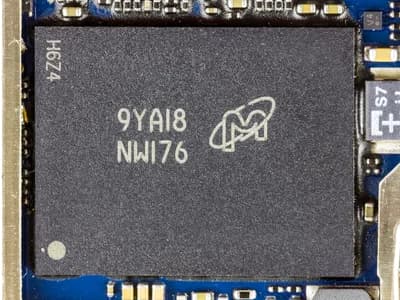
Micron is the only US company manufacturing DRAM and NAND flash memory at scale — technologies that store virtually all the world's data and are as critical as CPUs to modern computing. The company is the primary beneficiary of the AI memory boom: high-bandwidth memory (HBM) chips, which stack DRAM directly on AI accelerators, commands 4x the price of standard DRAM, and Micron is shipping HBM3E to NVIDIA for H200 and Blackwell GPUs. Micron received $6.1B in CHIPS Act grants for US fab expansion in Idaho and New York. With $35B in annual revenue and a $140B market cap, Micron's cycle-adjusted earnings power is vastly underappreciated by investors who focus on its historically volatile pricing.
- 0

Applied Materials is the semiconductor industry's invisible champion — it manufactures the deposition, etching, and inspection equipment that every chipmaker on earth (TSMC, Samsung, Intel, NVIDIA) uses to fabricate its chips. Without Applied Materials' CVD chambers and CMP tools, there are no chips; every sub-3nm node currently in production relies on its precision manufacturing systems. With $28B in annual revenue and a $170B market cap, Applied Materials captures a tax on every technological advancement in the industry. The company has 24,000+ patents and spends $3B+ on R&D annually, maintaining its position 2-3 technology nodes ahead of customer requirements and cementing what Warren Buffett would call a wide moat.
- 0

Lam Research dominates the etch and deposition equipment market for advanced logic and memory chips, with 45%+ market share in etch and 30%+ in deposition — together representing the two most critical steps in chipmaking. The company's equipment is essential for manufacturing 3D NAND flash (which stacks 200+ layers), and its technology is deployed at every major memory fab on earth. With $17B in annual revenue and a $100B market cap, Lam benefits enormously from the CHIPS Act-driven fab construction boom, with 40+ new semiconductor fabs announced globally since 2022. The company employs 18,000+ engineers and technologists, and its customer relationships span 5-year supply agreements that provide remarkable revenue visibility.
- 0

Marvell has reinvented itself over the past five years from a storage controller and networking company into a pure-play data infrastructure semiconductor specialist, with a $65B market cap driven by explosive demand for custom AI and 5G chips. Its custom ASIC business for Amazon (Trainium/Inferentia), Microsoft, and Google is growing faster than any other segment, as hyperscalers increasingly design their own specialized AI chips to escape NVIDIA's pricing power. Marvell's Teralynx Ethernet switches, PAM4 optical DSPs, and CXL interconnects form the connective tissue of next-generation AI data centers. CEO Matt Murphy's focus on data infrastructure has positioned Marvell as a critical supplier to all three hyperscalers simultaneously.
Image credits
- NVIDIA: Wikimedia Commons
- Intel: Wikimedia Commons
- AMD (Advanced Micro Devices): Flickr / CC
- Broadcom: Coolcaesar / Wikimedia Commons (CC BY-SA 4.0)
- Texas Instruments: Mataresephotos / Wikimedia Commons (CC BY 3.0)
- Micron Technology: Raimond Spekking / Wikimedia Commons (CC BY-SA 4.0)
- Marvell Technology: Marvell Logo.svg / Wikimedia Commons
Related Videos
Rank it your way
Remix this list into your own ranking, or head to the play hub for every game mode and community breakdown — blind mode, challenges, tier lists, and more.
You Might Also Like

Top 10 US Tech Giants by Market Capitalization 2026
Top 10 US Tech Giants by Market Capitalization 2026

Top 10 US Chip Design Companies
Top 10 US Chip Design Companies

Top 10 European Semiconductor Companies 2026
Top 10 European Semiconductor Companies 2026

Top 10 Most Popular Social Media Platforms
#1 Facebook · #2 YouTube · #3 WhatsApp

Top 10 US Climate Technology Companies
#1 NextEra Energy · #2 First Solar · #3 Sunrun

Top 10 Most Impactful Tech Inventions Ever
#1 The Internet · #2 The Transistor · #3 The Printing Press