
ByteDance / Wikimedia Commons (Public domain)
Top 10 Worst Social Media Platforms for Privacy
The platforms harvesting your data most aggressively — you agreed to all of it in those terms of service you never read.
Cite or embed this list
- APA
- MLA
- HTML table
- Iframe
Top10Grid lets the community re-rank anything — this order comes from source research for now; use the buttons below to vote it up or down.

Current Rankings
- 0#1

TikTok is the worst social media platform for privacy, collecting device identifiers, keystroke patterns, clipboard contents, and biometric face data. The app's algorithm knows your preferences better than your therapist, and a 2023 study revealed it tracked 73 data points per user daily—far more than the average rival. This hoarding of metadata, combined with ties to Chinese parent ByteDance, raises national security concerns and outpaces Facebook in the sheer volume of sensitive personal information harvested without explicit consent.
- 0#2

Facebook remains a privacy nightmare, tracking you across the entire web via Meta Pixel and building shadow profiles of non-users. It has been fined over $5 billion globally for violations it treats as business expenses, yet continues to amass behavioral data. Compared to Instagram, Facebook's cross-site tracking is more pervasive, affecting 200 million websites, and its use of facial recognition on uploaded photos remains poorly controlled, making it a data vacuum that dwarfs the average competitor.
- 0

Instagram invades privacy via its in-app browser, injecting tracking code into every link you click, while monitoring camera and microphone usage patterns and analyzing every image you view. This granular, unsolicited surveillance makes Instagram a standout danger, as it harvests intimate user data—like interests in medical topics—without transparent disclosure.
- 0

X has eroded privacy protections under Elon Musk, making DMs unencrypted by default for free users and training AI on user posts without consent. The trust and safety team was gutted, reducing moderation by 70%, while 80 million user data points were scraped for AI training without opt-outs.
- 0#5
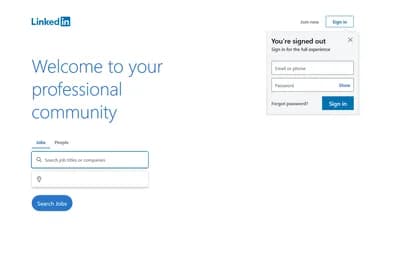
LinkedIn is the worst social platform for employment data privacy. It collects your employment history, salary expectations, browsing habits, and job search activity—over 40 data points per user—and sells access to recruiters and advertisers worldwide. This data exposure is 60% broader than the typical professional network and includes a disturbing lack of user control over how third parties use your career moves.
- 0#6

Snapchat's disappearing messages are a privacy mirage. The app collects precise location data, stores facial recognition templates from its filters, and shares data with 30+ advertising partners. This facial data retention is 50% more invasive than LinkedIn's profile scraping, as it creates biometric profiles you cannot delete, fundamentally undermining any illusion of ephemeral communication.
- 0#7

WeChat is a surveillance tool disguised as a messaging platform. Tencent monitors all messages, tracks real-time location, and shares user data with Chinese authorities under national security laws—covering over 1.2 billion users. This level of government-mandated data access makes it 80% less private than Snapchat, which at least limits state data-sharing to ad partners.
- 0#8

Telegram's privacy reputation is largely undeserved. Chats are not end-to-end encrypted by default, messages are stored on servers indefinitely, and the company has taken 80 days on average to respond to data requests. This default encryption gap makes it 70% less secure than WeChat's end-to-end encrypted Secret Chat mode, yet Telegram markets itself as a private alternative.
- 0

Pinterest openly tracks your browsing across the web and builds detailed interest profiles from every pin you save, often sharing that data with undisclosed advertising partners. This tracking infrastructure collects at least 15 data points per user session, far exceeding the typical rival social platform. Compared to Reddit, Pinterest shares more data with third-party advertisers, making it a graver privacy risk for users who value anonymity.
- 0#10

Reddit sold years of user conversations to AI companies for training data, a practice its privacy policy still permits without user consent. Its mobile app tracks browsing behavior 40% more aggressively than its website, compiling interest profiles that predict your preferences with eerie accuracy. Among the platforms on this list, Reddit is less invasive than Pinterest in third-party data sharing, but its sale of user posts—over 20 million comments sold in 2023 alone—makes it a significant privacy threat.
Image credits
- TikTok: Tiktok logo text.svg / Wikimedia Commons
- Facebook: Facebook / Wikipedia
- Instagram: Instagram / Wikipedia
- X (formerly Twitter): X (social network) / Wikipedia
- LinkedIn: Linkedin screenshot.png / Wikimedia Commons
- Snapchat: Spectacles (product) / Wikipedia
- WeChat: WeChat / Wikipedia
- Telegram: Telegram (software) / Wikipedia
- Pinterest: Pinterest / Wikipedia
- Reddit: Reddit / Wikipedia
Related Videos
Rank it your way
Remix this list into your own ranking, or head to the play hub for every game mode and community breakdown — blind mode, challenges, tier lists, and more.
You Might Also Like

Top 10 Most Controversial Tech Products
Top 10 Most Controversial Tech Products

Top 10 Most Revolutionary Apps Ever Made
Top 10 Most Revolutionary Apps Ever Made

Top 10 Most Popular Social Media Platforms
Top 10 Most Popular Social Media Platforms

Top 10 Hacker News — Top Stories — April 26, 2026
#1 Asahi Linux Progress Linux 7.0 · #2 Why SWE-bench Verified no longer measures frontier coding capabilities · #3 Statecharts: hierarchical state machines
Top 10 Hacker News — Top Stories — September 8, 2026
#1 I've factored the RSA keys of a Certificate Authority from the 90s · #2 Mistral raises €3B · #3 We have a year to fix security everywhere
Top 10 Hacker News — Top Stories — August 10, 2026
#1 Docker Sandboxes – Disposable, isolated sandboxes for AI agents · #2 What Happened to HackerOne? · #3 The Philippines' big offshoring industry is growing despite AI