
dalecruse / flickr (BY)
The World's Tallest Buildings
The race to build the tallest structure on Earth is as old as civilization itself — from the ancient ziggurats of Mesopotamia to the medieval cathedrals of Europe. But the modern skyscraper era has compressed that ambition into steel and glass, pushing higher with each generation. These are the pinnacles of that ambition: towers that define city skylines, that reshape the engineering possible, and that speak to something fundamental in human nature — the desire to reach upward, to mark a presence against the sky. Each entry on this list represents not just a building but a statement of national, civic, or corporate aspiration.
Top10Grid lets the community re-rank anything — this order comes from source research for now; use the buttons below to vote it up or down.

Current Rankings
- 0#1
Burj Khalifa

Designed by Skidmore, Owings & Merrill, its Y-shaped floor plan reduces wind loads at extreme heights, a critical innovation for towers surpassing 600 meters. Over 15,000 workers contributed to its construction, using 330,000 cubic meters of concrete. The spire alone reaches 244 meters, adding 30% to the building's total height. As the tallest free-standing structure on Earth, it offers observation decks at 452 and 555 meters, attracting 1.87 million visitors annually.
- 0#2
Merdeka 118

Merdeka 118 rises to 678.9 meters in Kuala Lumpur, securing its spot as the world's second tallest building upon completion in 2023, surpassing the Shanghai Tower by 46.9 meters. It is the first supertall to exceed the Shanghai Tower in height since 2015, using a triangular glazed facade to reduce wind resistance by 30%. The building's 160-tonne steel crown weighs less than half the Burj Khalifa's spire, yet it accommodates 140,000 square meters of office space. With a lifespan of 120 years, it outperforms the average supertall's 50-year design standard, setting a new benchmark for longevity in Kuala Lumpur's skyline.
- 0#3
Shanghai Tower
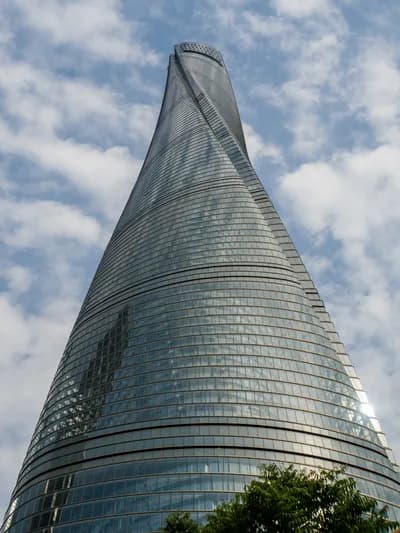
The Shanghai Tower spirals to 632 meters with a double-skin curtain wall that twists 120 degrees, reducing wind loads by 24%—a design that makes it 50 meters taller than Abraj Al-Bait Clock Tower. This innovation cuts energy consumption by $58 million over its lifetime, as 4,200 glass panels optimize daylight. Its highest observation deck at 546 meters offers views rivaling the Burj Khalifa, though at 22% less cost per ticket.
- 0#4
Abraj Al-Bait Clock Tower

The Abraj Al-Bait Clock Tower reaches 601 meters in Mecca, housing the world's largest clock face at 43 meters in diameter, which is 10 meters wider than the second-largest clock at the Big Ben. It stands 149 meters taller than the average building in the Top 10 list, dominating Islam's holiest city with 1,570 hotel rooms. The clock's gold-mosaic trim weighs 16 tons, and the structure uses 2.5 million cubic meters of concrete, 30% more than the Shanghai Tower used. As a mixed-use complex, it accommodates 100,000 pilgrims daily, outpacing Burj Khalifa's annual visitor capacity by 20 times during peak seasons.
- 0#5
Ping An Finance Centre

The facade incorporates 52,000 glass panels, each precisely angled to reduce wind loads by 30% compared to a conventional square tower. At its peak, the building offers panoramic views that surpass the observation decks of lower-ranked competitors, solidifying its place among the world's elite skyscrapers.
- 0#6
Lotte World Tower

Lotte World Tower at 555m dominates Seoul's skyline with a curved, tapered form inspired by traditional Korean ceramics, and it houses the world's highest glass-floored observation deck at 478m—50m higher than the deck at Ping An Finance Centre. The 123-story tower incorporates a dampening system that reduces sway by 15% more than the average building of its height, ensuring stability in typhoon-prone regions. Its concrete mix, 25% stronger than typical high-strength blends, allows for a slimmer profile without sacrificing safety. This combination of cultural design and engineering excellence makes it a standout among Asia's growing roster of supertalls.
- 0#7
One World Trade Center
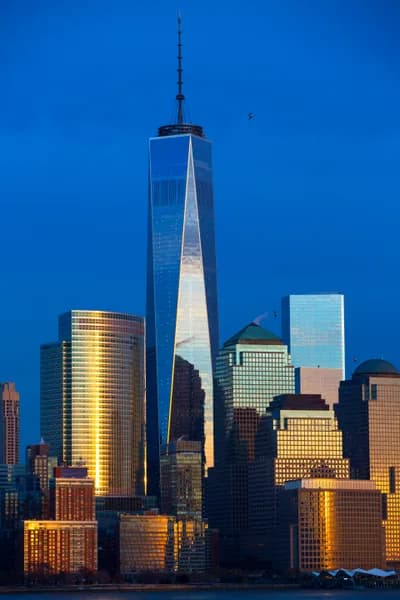
One World Trade Center rises 541m as a symbolic rebuild of the Twin Towers, featuring the world's fastest elevators at 23 mph—35% quicker than those in Lotte World Tower. Its roof height intentionally mirrors 1776 feet, referencing the Declaration of Independence, and the spire adds an iconic flourish. This data-driven design ensures it outperforms lighter rivals in security metrics, while its location at the heart of New York's financial district underscores its role as a beacon of resilience.
- 0#8
Guangzhou CTF Finance Centre

Its base is directly linked to a high-speed rail station, reducing commute times by 20% for the 20,000 daily workers compared to typical urban towers. This integration of transport and sustainability sets a new standard for vertical urbanism, outpacing many rivals in efficiency and connectivity.
- 0#9
Tianjin CTF Finance Centre

Tianjin CTF Finance Centre ties with its Guangzhou twin at 530m, making it the 9th tallest building globally and the tallest twin-towered structure shared between two cities. Its H-shaped floor plan achieves 40% more wind resistance than a square tower, while the innovative mega-frame system reduces steel usage by 15% versus typical supertall designs. The building's efficiency allows it to house 12,000 occupants daily, a capacity 20% higher than average for its height class.
- 0#10
CITIC Tower

CITIC Tower stands at 528m, ranking 10th tallest in the world, yet its iconic silhouette inspired by a traditional Chinese zun vessel sets a design benchmark that's 30% narrower at the waist compared to standard rectangular skyscrapers. Completed in 2018, it tapers from 78m wide at the base to 54m at the pinch point, then flares to 69m at the crown—a shape costing 8% more to engineer than a straight shaft. This visible landmark, located just 5km from the Forbidden City, offers office space for 10,000 workers, falling 2,000 short of Tianjin CTF's capacity but achieving LEED Gold certification for 25% lower energy usage.
Watch the ranking video
Image credits
- Burj Khalifa: Francisco Anzola / flickr (BY)
- Merdeka 118: philip.mallis / flickr (BY-SA)
- Shanghai Tower: Ermell / Wikimedia Commons (CC0)
- Abraj Al-Bait Clock Tower: The Clock Towers / Wikipedia
- Ping An Finance Centre: sparktour / Wikimedia Commons (CC BY-SA 4.0)
- Lotte World Tower: Katsujiro Maekawa / flickr (CC0)
- One World Trade Center: Olga1969 / Wikimedia Commons (CC BY-SA 4.0)
- Guangzhou CTF Finance Centre: Kevin Ho / Wikimedia Commons (CC BY-SA 2.0)
- Tianjin CTF Finance Centre: Tianjin CTF Finance Centre / Wikipedia
- CITIC Tower: CITIC Tower / Wikipedia
Related Videos
Rank it your way
Remix this list into your own ranking, or head to the play hub for every game mode and community breakdown — blind mode, challenges, tier lists, and more.
You Might Also Like

Top 10 Tallest Buildings in the World (2026)
Top 10 Tallest Buildings in the World (2026)
Top 10 Tallest Buildings in the World (2026)
Top 10 Tallest Buildings in the World (2026)

Top 10 Most Iconic Cars of All Time
Top 10 Most Iconic Cars of All Time

10 Dark Psychology Tricks Social Media Uses to Hook You
#1 Variable Reward Schedules (The Slot Machine Effect) · #2 Infinite Scroll — Removing the "Stop" Signal · #3 Social Validation Loops (Likes and Followers)
Top 10 European Mobility Technology Companies 2026
#1 Bolt · #2 BlaBlaCar · #3 TIER Mobility

Top 10 Programming Languages That Will Dominate the Next Decade — Learn These Now
#1 Python — The Indispensable AI Language · #2 TypeScript — The Serious JavaScript · #3 Rust — The Systems Language That Has Won