
Ferrari 250 GTO / Wikimedia Commons (CC BY-SA 3.0)
Top 10 Most Iconic Cars of All Time
Some cars are more than machines — they are cultural monuments, engineering turning points, and objects of desire that defined entire eras. From Le Mans legends to silver-screen superstars, these ten iconic cars transcended their function to become symbols of human ambition, beauty, and speed. Which one would you park in your dream garage? Vote below and tell us if we missed your favourite!
Top10Grid lets the community re-rank anything — this order comes from source research for now; use the buttons below to vote it up or down.

Current Rankings
- 0
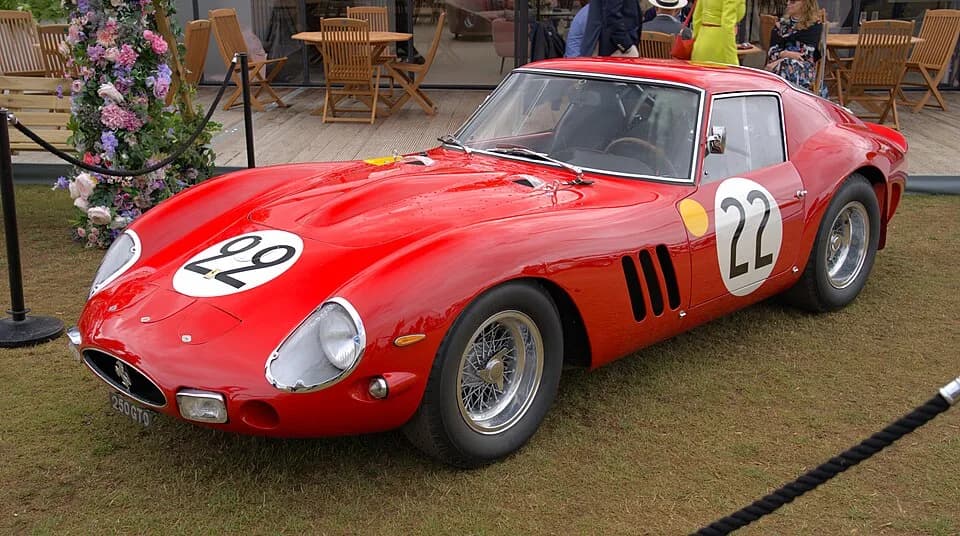
Built between 1962 and 1964, the Ferrari 250 GTO won the World Sportscar Championship three consecutive years and became the most valuable production car ever made, with examples selling at auction for over $70 million. Its 3.0-litre V12 engine produced around 302 horsepower in a body penned by Giotto Bizzarrini, combining racing ferocity with extraordinary proportional beauty. Only 36 were ever constructed, and its combination of competitive dominance, rarity, and aesthetic perfection makes it the definitive collector car of the 20th century.
- 0
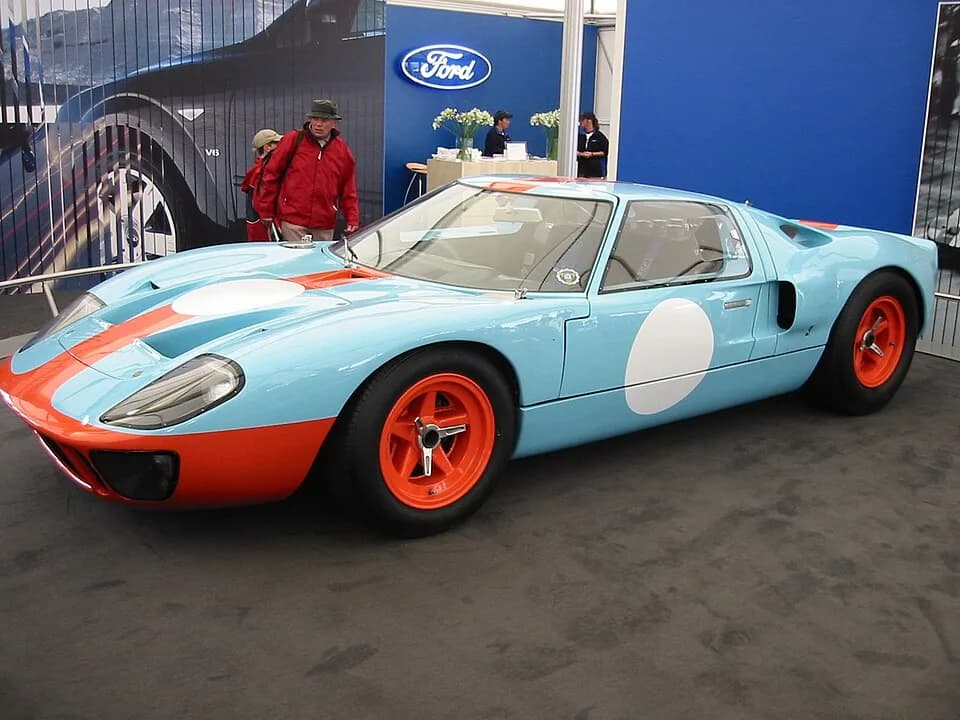
Built with the explicit purpose of defeating Ferrari at Le Mans, the Ford GT40 achieved one of motorsport's great revenge stories when it swept the top three positions at the 1966 24 Hours of Le Mans and went on to win four consecutive times from 1966 to 1969. Designed to a 40-inch roofline (hence GT40), its 7.0-litre V8 produced over 480 horsepower and achieved top speeds exceeding 200 mph. Henry Ford II's vendetta against Enzo Ferrari, sparked by a failed acquisition attempt in 1963, produced a racing car that transformed American automotive prestige worldwide.
- 0
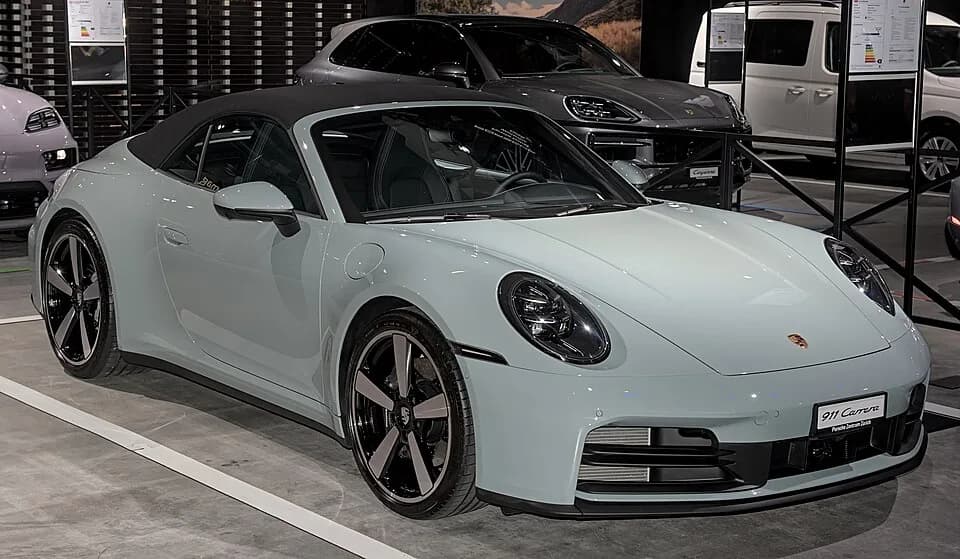
Introduced in 1963 and still in continuous production over six decades later, the Porsche 911 is the most successful sports car nameplate in history and the benchmark against which all driver's cars are measured. Its rear-mounted flat-six engine layout, initially derided as a handling compromise, was tamed by generations of Porsche engineers into one of the most exploitable and rewarding drivetrains in motorsport. The 911 has won the Monte Carlo Rally, the Dakar Rally, the Nurburgring 24 Hours, and Le Mans, while simultaneously remaining a practical daily driver — a combination no other car has matched.
- 0
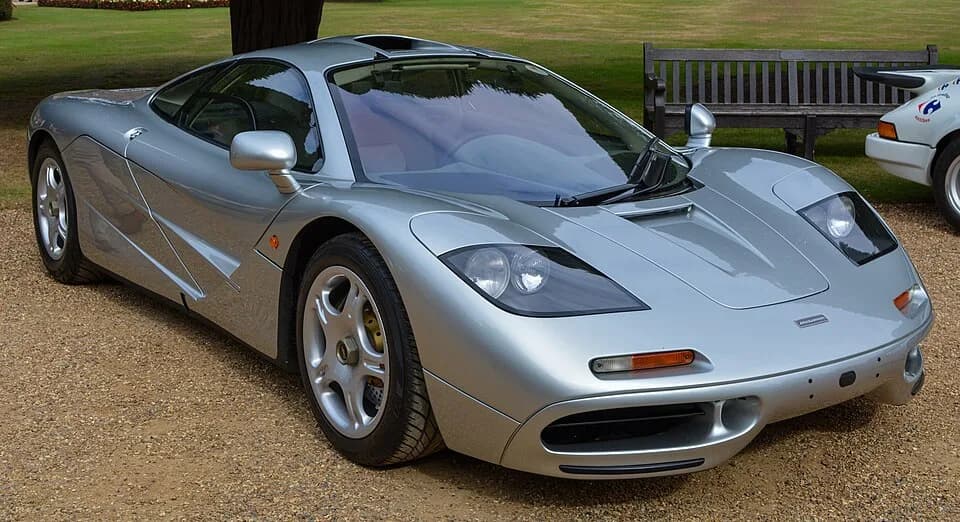
Gordon Murray's 1992 masterpiece was the fastest production car in the world for twelve years, reaching a top speed of 240.1 mph powered by a naturally aspirated BMW S70/2 V12 producing 627 horsepower. Its three-seat layout with the driver centrally positioned, gold-lined engine bay, and obsessive weight-saving programme — every component sourced for minimum mass — made it the definitive exercise in engineering philosophy applied to road use. The F1 GTR's unexpected outright victory at Le Mans in 1995, in its first attempt with a virtually stock engine, cemented its legend as the greatest driver's car ever built.
- 0

The Lamborghini Miura created the template for the modern supercar by placing its transverse V12 behind the driver, a layout that shocked an industry still building front-engined sports cars. In top P400 SV form, the engine produced 385 horsepower and propelled the car to 175 mph, making it the fastest road car of its era. Marcello Gandini’s Bertone body, with its eyelash headlamp covers and sweeping fastback, remains one of the most beautiful shapes ever designed, establishing Lamborghini as a genuine rival to Ferrari.
- 0
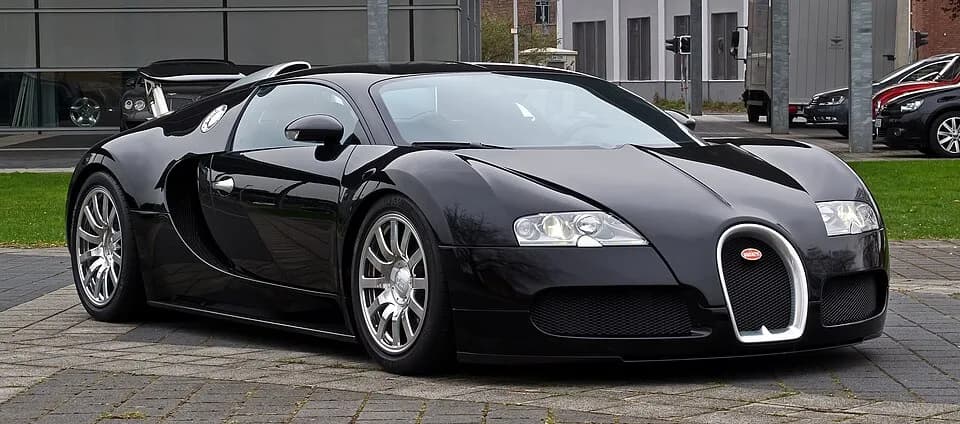
The Bugatti Veyron shattered automotive limits by proving a road car could exceed 250 mph, achieving a production-car world speed record of 267.856 mph in 2010. Its quad-turbocharged 8.0-litre W16 engine produced 1,001 horsepower in original form, more than double the output of Dodge Charger (1969)’s 425-hp Hemi V8. The Veyron’s technical complexity required years of development after its 2005 launch, but it redefined the hypercar segment and set a benchmark for powertrain integration that no rival matched until the advent of hybrid systems a decade later.
- 0
Its gullwing doors, dictated by the high sills of the space-frame chassis, became the most dramatic styling gesture of the postwar era. The engine, tilted 50 degrees to lower the bonnet, delivered performance that no other production car could match in 1954, cementing the 300 SL as a technical and aesthetic icon.
- 0
The 1969 Dodge Charger R/T defines the American muscle car, with a 7.2-litre Hemi V8 producing 425 horsepower that delivered raw acceleration. Its recessed grille, flying buttress C-pillars, and aggressive fastback silhouette made it the most visually distinctive car of the muscle-car era. Starring roles in The Dukes of Hazzard and Bullitt cemented its pop-culture legacy.
- 0
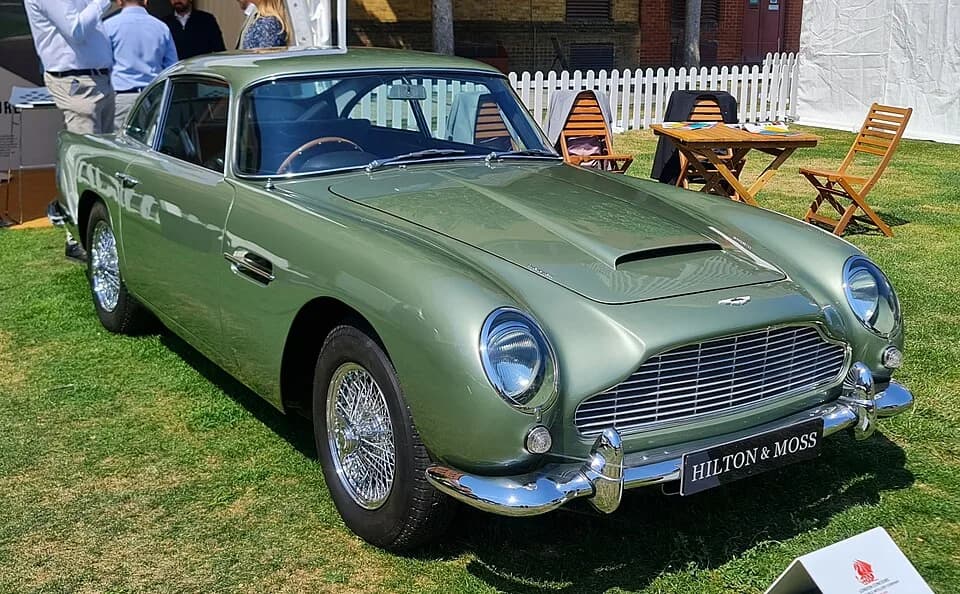
The Aston Martin DB5, introduced in 1963, became the most famous car in the world when Sean Connery drove it as James Bond in Goldfinger (1964), equipped by Desmond Llewelyn's Q with ejector seat, revolving number plates, and machine guns. Before and beyond its cinematic career, the DB5 was a genuine grand touring masterpiece — a 4.0-litre straight-six producing 282 horsepower in a body styled by Carrozzeria Touring that exemplified restrained British elegance. It combined genuine 150 mph performance with the long-distance refinement demanded by the grand touring tradition, and its DB5 designation has never stopped being synonymous with sophisticated, aspirational motoring.
- 0#10
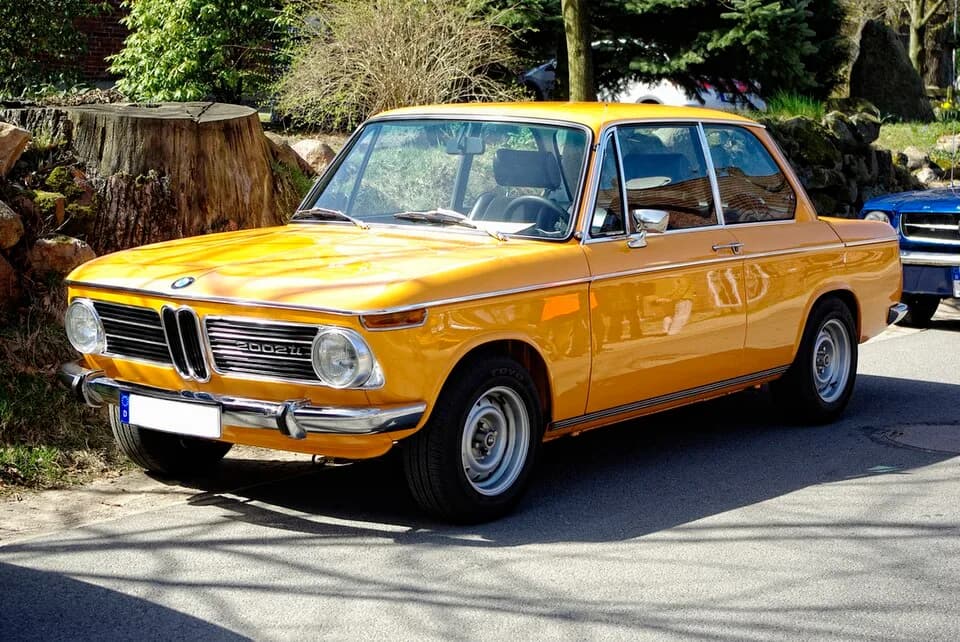
The BMW 2002, launched in 1968, invented the sports sedan as a concept and created the template that BMW has refined ever since. Its 2.0-litre four-cylinder engine, light body, and near-perfect weight distribution offered handling agility that contemporary larger saloons could not approach, while its practical two-door body meant it could be used daily. The 2002 turbo of 1973 was the first turbocharged production car sold in Europe, anticipating the turbo era by a decade. Automotive journalist David E. Davis Jr.'s famous 1968 Car and Driver review declaring it "one of the most beautiful sounds in the world" launched BMW's American market and changed the company's global trajectory.
Iconic Cars FAQ
What makes a car iconic? A car becomes iconic when it changes how cars are designed, raced, or perceived in popular culture — not simply when it sells well.
Which car on this list is the most valuable? The Ferrari 250 GTO regularly sets auction records, but value depends on provenance and condition.
Why is the Porsche 911 on a list of iconic cars? It has been in continuous production since 1963 and defined the rear-engine sports car layout.
Did we miss your favourite? Leave a comment or vote for the car you think deserves the top spot.
Image credits
- Ferrari 250 GTO: WIKIMEDIA_MIRRORED
- Ford GT40: WIKIMEDIA_MIRRORED
- Porsche 911: WIKIMEDIA_MIRRORED
- McLaren F1: WIKIMEDIA_MIRRORED
- Lamborghini Miura: Lamborghini Miura P400 SV / Wikimedia Commons (CC BY-SA 3.0)
- Bugatti Veyron: WIKIMEDIA_MIRRORED
- Mercedes-Benz 300 SL Gullwing: Mercedes-Benz 300 SL Gullwing and Roadster / Wikimedia Commons (CC BY-SA 2.0)
- Dodge Charger (1969): 1969 Dodge Charger R/T / Wikimedia Commons (CC BY-SA 4.0)
- Aston Martin DB5: WIKIMEDIA_MIRRORED
- BMW 2002: WIKIMEDIA_MIRRORED
Related Videos
Rank it your way
Remix this list into your own ranking, or head to the play hub for every game mode and community breakdown — blind mode, challenges, tier lists, and more.
You Might Also Like

The World's Tallest Buildings
tallest buildings in the world

Top 10 Worst Tech Product Launches
Top 10 Worst Tech Product Launches

Top 10 Cameras That Changed Photography Forever (From Brownie to iPhone)
iconic cameras that changed photography

Top 10 Most Influential Tech Entrepreneurs of 2025
#1 Elon Musk · #2 Sam Altman · #3 Jensen Huang

Top 10 US 5G Technology Leaders in 2025: Carriers, RAN Vendors & Tower Companies
#1 Verizon · #2 T-Mobile · #3 AT&T
Top 10 Hacker News — Top Stories — August 29, 2026
#1 Samsung's Processing-in-Memory (PIM) · #2 GUIs should be fully keyboard-driven · #3 Boot a Virtual iPhone via Apple's Virtualization.framework