
Wikipedia
Asia has become the engine room of global technology, home to some of the world's largest semiconductor fabs, consumer electronics giants, and internet conglomerates. From South Korea's chip and device titans to China's software and AI powerhouses, Southeast Asia's super-apps, and India's IT services leaders, the continent's tech sector now rivals Silicon Valley in scale, innovation, and global reach. These ten companies collectively represent trillions of dollars in market capitalisation and define how billions of people work, shop, communicate, and connect.
Curated by our tech editors. Practical, hands-on reviews weighted by community vote โ updated as the field evolves.
Create a free account or sign in to join the discussion.
Sign in to join the conversation

Founded in 1969 and headquartered in Suwon, South Korea, Samsung Electronics is the world's largest memory chip manufacturer and second-largest semiconductor company by revenue, generating over $200 billion in annual sales. The company produces roughly one in five smartphones sold globally through its Galaxy line, and its semiconductor division supplies DRAM and NAND flash to virtually every major tech company on Earth. Samsung's display panel arm (Samsung Display) is the dominant supplier of OLED screens, powering iPhones, Galaxy devices, and countless premium TVs โ a remarkable breadth that makes it both a fierce competitor and an essential supplier to rivals.
Founded by Morris Chang in 1987 in Hsinchu, Taiwan, TSMC invented the pure-play foundry model and today manufactures the world's most advanced chips โ including Apple's A-series and M-series processors, NVIDIA's AI GPUs, and AMD's data-centre CPUs โ at its leading-edge 3nm and 2nm nodes. With a market capitalisation exceeding $800 billion, it is the most valuable semiconductor company in the world and accounts for roughly 90% of global production of chips below 10nm. TSMC's dominance is so strategically significant that it has been called the "Switzerland of the semiconductor industry" โ a neutral manufacturer that every nation and company depends on.

Founded by Jack Ma and 17 co-founders in a Hangzhou apartment in 1999, Alibaba is China's largest e-commerce conglomerate, operating Taobao, Tmall, and Alibaba.com โ platforms that collectively handle more gross merchandise value than Amazon and eBay combined at their peak. The company's cloud division, Alibaba Cloud (Aliyun), is Asia's largest cloud infrastructure provider, and its logistics arm Cainiao manages one of the world's highest-volume parcel delivery networks. With over 1 billion annual active consumers across its digital economy, Alibaba remains a defining force in global retail and enterprise software despite intense regulatory scrutiny in China since 2020.
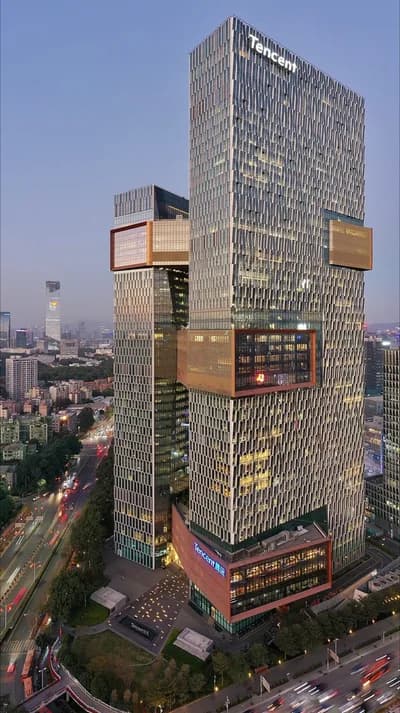
Founded in Shenzhen in 1998 by Ma Huateng (Pony Ma), Tencent is China's most valuable technology company and one of the top five largest internet companies globally by market cap, valued at over $400 billion. Its super-app WeChat serves over 1.3 billion monthly active users as a messaging platform, mobile payment system, social network, and app store all in one โ an integration of digital life with no Western equivalent. Tencent is also the world's largest video game company by revenue, owning Riot Games (League of Legends), majority stakes in Epic Games and Supercell, and publishing rights for hundreds of titles globally.

Founded by Ren Zhengfei in Shenzhen in 1987, Huawei grew from a telecom equipment reseller into the world's largest manufacturer of telecommunications infrastructure, supplying 5G base stations to over 170 countries and generating more than $99 billion in revenue in 2023 โ a remarkable recovery after US export controls nearly crippled its chip supply in 2019. Its HiSilicon division designs the Kirin series of mobile SoCs, which powered Huawei's premium smartphones before sanctions interrupted production; the 2023 Mate 60 Pro's domestic 7nm chip signalled a significant breakthrough in China's semiconductor self-sufficiency. Huawei remains the dominant vendor in global telecom infrastructure and enterprise networking despite geopolitical headwinds.

Founded in Tokyo in 1946 by Masaru Ibuka and Akio Morita, Sony has reinvented itself multiple times across eight decades โ from consumer electronics pioneer (Walkman, Trinitron, Blu-ray) to one of the world's most powerful entertainment conglomerates. Today Sony's PlayStation division is the global market leader in gaming consoles, with PlayStation 5 surpassing 50 million units sold, while Sony Music is the world's second-largest record label and Sony Pictures a top Hollywood studio. Sony's image sensor division (Sony Semiconductor Solutions) supplies over 40% of all smartphone camera sensors globally, including those in every iPhone โ making it an invisible but indispensable component of the mobile era.

Founded in Beijing in 2012 by Zhang Yiming, ByteDance is the world's most valuable private technology company, with a valuation estimated at $300 billion or more as of 2024. Its flagship product TikTok is the first Chinese consumer app to achieve true global mass adoption, reaching over 1.5 billion monthly active users across 150+ countries and fundamentally reshaping how short-form video, music discovery, and creator culture operate on the internet. ByteDance's algorithmic recommendation engine โ widely regarded as the most sophisticated content-matching AI in consumer technology โ drives engagement across TikTok, Douyin (its Chinese counterpart), Toutiao (news), and Lark (enterprise collaboration), collectively serving 2 billion users daily.
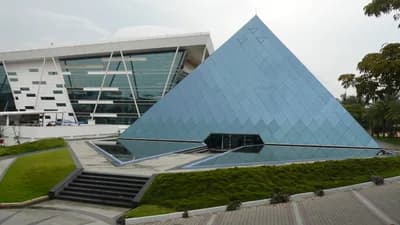
Founded in Pune in 1981 by Narayana Murthy and six co-founders with a starting capital of just $250, Infosys is one of India's most storied technology success stories and a founding pillar of the country's $250 billion IT services export industry. As of 2024 the company employs over 315,000 people worldwide and generates annual revenues exceeding $18 billion, delivering consulting, software development, cloud migration, and AI services to enterprises across banking, healthcare, manufacturing, and retail. Infosys helped pioneer the global IT outsourcing model and the visa-sponsored offshore delivery centre, transforming Bangalore into a world-class technology hub and inspiring generations of Indian engineering entrepreneurs.
Founded in Singapore in 2009 by Forrest Li under the name Garena, Sea Limited has evolved into Southeast Asia's largest technology conglomerate, operating three businesses: Shopee (the region's dominant e-commerce marketplace), SeaMoney (mobile payments and financial services), and Garena (online gaming and esports, home to Free Fire, one of the world's most downloaded mobile games). Shopee processes hundreds of millions of orders per quarter across Indonesia, Vietnam, Thailand, the Philippines, Malaysia, Taiwan, and Brazil, making Sea one of the few Asian tech companies to achieve genuine global scale. Listed on the NYSE, Sea Limited reached a peak market capitalisation of over $200 billion in 2021.
Founded in Kuala Lumpur in 2012 by Anthony Tan and Tan Hooi Ling as a taxi-hailing app, Grab has since expanded into the dominant "everyday super-app" across eight Southeast Asian nations โ offering ride-hailing, food and grocery delivery, package courier services, digital payments (GrabPay), and licensed digital banking across a region of 680 million people. After acquiring Uber's Southeast Asian operations in 2018, Grab became the undisputed regional leader in mobility and went public on NASDAQ in December 2021 via a $40 billion SPAC merger. By 2024 the company serves over 35 million monthly transacting users and partners with over 3 million merchants, drivers, and delivery partners across the region.
The most-voted lists across every category โ curated weekly. Join the early readers.
No spam. One email per week. Unsubscribe anytime.
Explore more Technology rankings on Top10Grid
Cast your vote above to unlock the real distribution
Tap the arrows on any item to vote
Because you're viewing Technology

Top 10 Free Productivity Apps to Use in 2026
401 views ยท 1 votes

The Papers Reshaping Artificial Intelligence in 2026
385 views ยท 1 votes
Top 10 Electric Chinese Cars
275 views ยท 0 votes
Top 10 Best AI Tools for Productivity 2026
249 views ยท 0 votes

Machine Learning Breakthroughs Worth Reading Right Now
230 views ยท 1 votes
Robots Learning to Think: Cutting-Edge Robotics Research
213 views ยท 1 votes

Founded in 1969 and headquartered in Suwon, South Korea, Samsung Electronics is the world's largest memory chip manufacturer and second-largest semiconductor company by revenue, generating over $200 billion in annual sales. The company produces roughly one in five smartphones sold globally through its Galaxy line, and its semiconductor division supplies DRAM and NAND flash to virtually every major tech company on Earth. Samsung's display panel arm (Samsung Display) is the dominant supplier of OLED screens, powering iPhones, Galaxy devices, and countless premium TVs โ a remarkable breadth that makes it both a fierce competitor and an essential supplier to rivals.
Founded by Morris Chang in 1987 in Hsinchu, Taiwan, TSMC invented the pure-play foundry model and today manufactures the world's most advanced chips โ including Apple's A-series and M-series processors, NVIDIA's AI GPUs, and AMD's data-centre CPUs โ at its leading-edge 3nm and 2nm nodes. With a market capitalisation exceeding $800 billion, it is the most valuable semiconductor company in the world and accounts for roughly 90% of global production of chips below 10nm. TSMC's dominance is so strategically significant that it has been called the "Switzerland of the semiconductor industry" โ a neutral manufacturer that every nation and company depends on.

Founded by Jack Ma and 17 co-founders in a Hangzhou apartment in 1999, Alibaba is China's largest e-commerce conglomerate, operating Taobao, Tmall, and Alibaba.com โ platforms that collectively handle more gross merchandise value than Amazon and eBay combined at their peak. The company's cloud division, Alibaba Cloud (Aliyun), is Asia's largest cloud infrastructure provider, and its logistics arm Cainiao manages one of the world's highest-volume parcel delivery networks. With over 1 billion annual active consumers across its digital economy, Alibaba remains a defining force in global retail and enterprise software despite intense regulatory scrutiny in China since 2020.
Founded in Shenzhen in 1998 by Ma Huateng (Pony Ma), Tencent is China's most valuable technology company and one of the top five largest internet companies globally by market cap, valued at over $400 billion. Its super-app WeChat serves over 1.3 billion monthly active users as a messaging platform, mobile payment system, social network, and app store all in one โ an integration of digital life with no Western equivalent. Tencent is also the world's largest video game company by revenue, owning Riot Games (League of Legends), majority stakes in Epic Games and Supercell, and publishing rights for hundreds of titles globally.

Founded by Ren Zhengfei in Shenzhen in 1987, Huawei grew from a telecom equipment reseller into the world's largest manufacturer of telecommunications infrastructure, supplying 5G base stations to over 170 countries and generating more than $99 billion in revenue in 2023 โ a remarkable recovery after US export controls nearly crippled its chip supply in 2019. Its HiSilicon division designs the Kirin series of mobile SoCs, which powered Huawei's premium smartphones before sanctions interrupted production; the 2023 Mate 60 Pro's domestic 7nm chip signalled a significant breakthrough in China's semiconductor self-sufficiency. Huawei remains the dominant vendor in global telecom infrastructure and enterprise networking despite geopolitical headwinds.

Founded in Tokyo in 1946 by Masaru Ibuka and Akio Morita, Sony has reinvented itself multiple times across eight decades โ from consumer electronics pioneer (Walkman, Trinitron, Blu-ray) to one of the world's most powerful entertainment conglomerates. Today Sony's PlayStation division is the global market leader in gaming consoles, with PlayStation 5 surpassing 50 million units sold, while Sony Music is the world's second-largest record label and Sony Pictures a top Hollywood studio. Sony's image sensor division (Sony Semiconductor Solutions) supplies over 40% of all smartphone camera sensors globally, including those in every iPhone โ making it an invisible but indispensable component of the mobile era.

Founded in Beijing in 2012 by Zhang Yiming, ByteDance is the world's most valuable private technology company, with a valuation estimated at $300 billion or more as of 2024. Its flagship product TikTok is the first Chinese consumer app to achieve true global mass adoption, reaching over 1.5 billion monthly active users across 150+ countries and fundamentally reshaping how short-form video, music discovery, and creator culture operate on the internet. ByteDance's algorithmic recommendation engine โ widely regarded as the most sophisticated content-matching AI in consumer technology โ drives engagement across TikTok, Douyin (its Chinese counterpart), Toutiao (news), and Lark (enterprise collaboration), collectively serving 2 billion users daily.
Founded in Pune in 1981 by Narayana Murthy and six co-founders with a starting capital of just $250, Infosys is one of India's most storied technology success stories and a founding pillar of the country's $250 billion IT services export industry. As of 2024 the company employs over 315,000 people worldwide and generates annual revenues exceeding $18 billion, delivering consulting, software development, cloud migration, and AI services to enterprises across banking, healthcare, manufacturing, and retail. Infosys helped pioneer the global IT outsourcing model and the visa-sponsored offshore delivery centre, transforming Bangalore into a world-class technology hub and inspiring generations of Indian engineering entrepreneurs.
Founded in Singapore in 2009 by Forrest Li under the name Garena, Sea Limited has evolved into Southeast Asia's largest technology conglomerate, operating three businesses: Shopee (the region's dominant e-commerce marketplace), SeaMoney (mobile payments and financial services), and Garena (online gaming and esports, home to Free Fire, one of the world's most downloaded mobile games). Shopee processes hundreds of millions of orders per quarter across Indonesia, Vietnam, Thailand, the Philippines, Malaysia, Taiwan, and Brazil, making Sea one of the few Asian tech companies to achieve genuine global scale. Listed on the NYSE, Sea Limited reached a peak market capitalisation of over $200 billion in 2021.
Founded in Kuala Lumpur in 2012 by Anthony Tan and Tan Hooi Ling as a taxi-hailing app, Grab has since expanded into the dominant "everyday super-app" across eight Southeast Asian nations โ offering ride-hailing, food and grocery delivery, package courier services, digital payments (GrabPay), and licensed digital banking across a region of 680 million people. After acquiring Uber's Southeast Asian operations in 2018, Grab became the undisputed regional leader in mobility and went public on NASDAQ in December 2021 via a $40 billion SPAC merger. By 2024 the company serves over 35 million monthly transacting users and partners with over 3 million merchants, drivers, and delivery partners across the region.
Top 10 Most Common Dreams and What They Mean
177 views ยท @admin

Top 10 YouTube Channels to Watch for Personal Finance & Investing in 2026
149 views ยท @admin
Top 10 Richest People in the World 2026
85 views ยท @admin

Top 10 Taiwan Tech Companies in 2026
74 views ยท @admin

Top 10 Sneakers That Changed Culture Forever
66 views ยท @admin
Top 10 Red Carpet Moments That Broke the Internet
62 views ยท @admin

Top 10 European Quantum Computing Companies 2026
10 items

Top 10 European Cybersecurity Companies 2026
10 items

Top 10 European Mobility Technology Companies 2026
10 items

Top 10 European PropTech Companies 2026
10 items

Top 10 German Technology Companies 2026
10 items
Top 10 UK Technology Companies 2026
10 items
If you liked this, you might love these