Grace Beverley / Wikipedia
The productivity app market is worth $102 billion, and 90% of it is noise. For every app that genuinely changes workflows, there are fifty that add complexity while pretending to reduce it. These ten apps survived the hype cycle, reached scale, and fundamentally altered how teams and individuals work. They're not "promising" โ they're proven, with hundreds of millions of users and measurable impact on how modern knowledge work gets done.
Community rankings for this product
Curated by our tech editors. Practical, hands-on reviews weighted by community vote โ updated as the field evolves.
Create a free account or sign in to join the discussion.
Sign in to join the conversation

Notion replaced wikis, project managers, spreadsheets, and note-taking apps with a single tool that does all of them adequately โ which turns out to be more valuable than four tools that each do one thing perfectly. Founded by Ivan Zhao, it hit 30 million users by 2023 and was valued at $10 billion. The template ecosystem is enormous: 10,000+ community templates cover everything from CRM to wedding planning. Notion AI (launched 2023) added GPT-powered writing and summarization. The app's flexibility is both its strength and weakness โ it takes 20 hours to set up and 2 hours to love.

Stewart Butterfield's team was building a video game called Glitch that failed. The internal chat tool they built for the game succeeded beyond anything imaginable. Slack launched in 2013 and reached $27.7 billion in value when Salesforce acquired it in 2021 โ making it the most expensive failed-game pivot in history. Slack didn't just replace email for 750,000+ organizations; it created "channel culture," where work conversations became searchable, organized, and asynchronous. The downside: Slack notifications have replaced email anxiety with a new, more persistent form of digital stress.

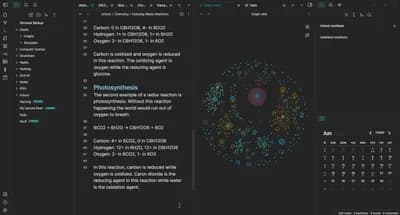
The anti-Notion. Obsidian stores everything as local Markdown files on your device โ no cloud lock-in, no subscription required for core features, no risk of a company going bust and taking your notes with it. The bi-directional linking and graph view create a "second brain" where notes connect to each other organically. The plugin ecosystem (1,800+ community plugins) rivals VS Code's. Obsidian has grown to 4+ million users without venture capital, proving that privacy-first, local-first software still has a massive market. The paid sync ($8/mo) and publish ($16/mo) services fund development.

Dylan Field dropped out of Brown University at 20 to build Figma, and it became the design tool that killed Adobe's monopoly. By making design collaborative (multiple designers editing the same file in real-time, like Google Docs), Figma replaced Sketch, InVision, and Adobe XD in most design teams. Adobe tried to acquire it for $20 billion in 2022 โ the deal was blocked by regulators. Figma remained independent and hit $600 million ARR by 2024. The free tier is genuinely usable for individuals. FigJam (whiteboarding) extended it beyond design into general brainstorming.

Linear took the bloated, slow, enterprise-grade issue tracker (Jira) and rebuilt it from scratch with obsessive attention to speed and keyboard shortcuts. Every action in Linear takes under 50ms. The tool was built by former Uber and Airbnb engineers who were tired of waiting for Jira to load. It reached $400 million valuation by 2023 and is now the default project management tool at most well-funded startups. The opinionated workflow (cycles, triage, roadmaps) forces teams to ship rather than endlessly categorize tickets. Jira does everything; Linear does less, faster.

Amir Salihefendic built Todoist in 2007 as a side project while working as a developer in Chile. It's now used by 40 million people across 150+ countries and is the most-installed task manager on every platform. The natural language input ("Meeting with Sarah tomorrow at 3pm #work p1") parses dates, projects, and priorities instantly. Todoist's Karma system gamifies task completion, and the API powers 100+ integrations. Doist (the parent company) is fully remote, profitable, and has never taken VC funding โ a rarity in SaaS. It does one thing (task management) and does it better than anyone.

Eric Yuan left Cisco's WebEx team because they wouldn't fix the product, then built Zoom and destroyed them. Pre-pandemic: 10 million daily meeting participants. April 2020: 300 million. Zoom's market cap hit $159 billion โ briefly worth more than ExxonMobil. The product won because it "just worked" when every other video call required IT support. The 40-minute free tier limit was a genius monetization move: long enough to be useful, short enough to make companies pay. "You're on mute" became the defining phrase of an era. Yuan went from immigrant engineer to $4 billion net worth.

Melanie Perkins pitched Canva 100 times before getting funded. The idea: make graphic design accessible to people who can't afford or learn Adobe Creative Suite. Canva now has 170+ million monthly users, a $26 billion valuation, and has become the default design tool for non-designers โ social media managers, teachers, small business owners, and anyone who needs a presentation that doesn't look like it was made in PowerPoint. The free tier is absurdly generous (250,000+ templates, millions of stock photos). Canva is to Photoshop what Google Docs was to Microsoft Word.

Using the same password everywhere is the most common security vulnerability in the world โ and 1Password has spent 18 years making the alternative painless. The app generates, stores, and auto-fills unique passwords for every site, synced across all devices. It stores credit cards, secure notes, SSH keys, and software licenses. The family plan ($5/mo for 5 users) is the most practical cybersecurity investment a household can make. 1Password hit $250 million ARR and a $6.8 billion valuation. The Watchtower feature alerts you to breached passwords. It's not exciting, but it's genuinely essential.

The most controversial productivity app on this list: an email client that costs $30/month and has a waitlist. Superhuman's value proposition is speed โ every action is sub-100ms, keyboard shortcuts for everything, and an AI that writes, summarizes, and triages email. The onboarding includes a mandatory 30-minute video call where a human teaches you how to use the product. It sounds insane, and yet the NPS score is 58 (for reference, iPhone is 47). Users report saving 4+ hours per week on email. Superhuman raised $633 million and is used by founders, VCs, and executives who value their time at > $30/month.
The most-voted lists across every category โ curated weekly. Join the early readers.
No spam. One email per week. Unsubscribe anytime.
Explore more Technology rankings on Top10Grid
Cast your vote above to unlock the real distribution
Tap the arrows on any item to vote
Because you're viewing Technology

Top 10 Free Productivity Apps to Use in 2026
401 views ยท 1 votes

The Papers Reshaping Artificial Intelligence in 2026
384 views ยท 1 votes
Top 10 Electric Chinese Cars
274 views ยท 0 votes
Top 10 Best AI Tools for Productivity 2026
249 views ยท 0 votes

Machine Learning Breakthroughs Worth Reading Right Now
230 views ยท 1 votes
Robots Learning to Think: Cutting-Edge Robotics Research
213 views ยท 1 votes

Notion replaced wikis, project managers, spreadsheets, and note-taking apps with a single tool that does all of them adequately โ which turns out to be more valuable than four tools that each do one thing perfectly. Founded by Ivan Zhao, it hit 30 million users by 2023 and was valued at $10 billion. The template ecosystem is enormous: 10,000+ community templates cover everything from CRM to wedding planning. Notion AI (launched 2023) added GPT-powered writing and summarization. The app's flexibility is both its strength and weakness โ it takes 20 hours to set up and 2 hours to love.

Stewart Butterfield's team was building a video game called Glitch that failed. The internal chat tool they built for the game succeeded beyond anything imaginable. Slack launched in 2013 and reached $27.7 billion in value when Salesforce acquired it in 2021 โ making it the most expensive failed-game pivot in history. Slack didn't just replace email for 750,000+ organizations; it created "channel culture," where work conversations became searchable, organized, and asynchronous. The downside: Slack notifications have replaced email anxiety with a new, more persistent form of digital stress.

The anti-Notion. Obsidian stores everything as local Markdown files on your device โ no cloud lock-in, no subscription required for core features, no risk of a company going bust and taking your notes with it. The bi-directional linking and graph view create a "second brain" where notes connect to each other organically. The plugin ecosystem (1,800+ community plugins) rivals VS Code's. Obsidian has grown to 4+ million users without venture capital, proving that privacy-first, local-first software still has a massive market. The paid sync ($8/mo) and publish ($16/mo) services fund development.

Dylan Field dropped out of Brown University at 20 to build Figma, and it became the design tool that killed Adobe's monopoly. By making design collaborative (multiple designers editing the same file in real-time, like Google Docs), Figma replaced Sketch, InVision, and Adobe XD in most design teams. Adobe tried to acquire it for $20 billion in 2022 โ the deal was blocked by regulators. Figma remained independent and hit $600 million ARR by 2024. The free tier is genuinely usable for individuals. FigJam (whiteboarding) extended it beyond design into general brainstorming.

Linear took the bloated, slow, enterprise-grade issue tracker (Jira) and rebuilt it from scratch with obsessive attention to speed and keyboard shortcuts. Every action in Linear takes under 50ms. The tool was built by former Uber and Airbnb engineers who were tired of waiting for Jira to load. It reached $400 million valuation by 2023 and is now the default project management tool at most well-funded startups. The opinionated workflow (cycles, triage, roadmaps) forces teams to ship rather than endlessly categorize tickets. Jira does everything; Linear does less, faster.

Amir Salihefendic built Todoist in 2007 as a side project while working as a developer in Chile. It's now used by 40 million people across 150+ countries and is the most-installed task manager on every platform. The natural language input ("Meeting with Sarah tomorrow at 3pm #work p1") parses dates, projects, and priorities instantly. Todoist's Karma system gamifies task completion, and the API powers 100+ integrations. Doist (the parent company) is fully remote, profitable, and has never taken VC funding โ a rarity in SaaS. It does one thing (task management) and does it better than anyone.

Eric Yuan left Cisco's WebEx team because they wouldn't fix the product, then built Zoom and destroyed them. Pre-pandemic: 10 million daily meeting participants. April 2020: 300 million. Zoom's market cap hit $159 billion โ briefly worth more than ExxonMobil. The product won because it "just worked" when every other video call required IT support. The 40-minute free tier limit was a genius monetization move: long enough to be useful, short enough to make companies pay. "You're on mute" became the defining phrase of an era. Yuan went from immigrant engineer to $4 billion net worth.

Melanie Perkins pitched Canva 100 times before getting funded. The idea: make graphic design accessible to people who can't afford or learn Adobe Creative Suite. Canva now has 170+ million monthly users, a $26 billion valuation, and has become the default design tool for non-designers โ social media managers, teachers, small business owners, and anyone who needs a presentation that doesn't look like it was made in PowerPoint. The free tier is absurdly generous (250,000+ templates, millions of stock photos). Canva is to Photoshop what Google Docs was to Microsoft Word.

Using the same password everywhere is the most common security vulnerability in the world โ and 1Password has spent 18 years making the alternative painless. The app generates, stores, and auto-fills unique passwords for every site, synced across all devices. It stores credit cards, secure notes, SSH keys, and software licenses. The family plan ($5/mo for 5 users) is the most practical cybersecurity investment a household can make. 1Password hit $250 million ARR and a $6.8 billion valuation. The Watchtower feature alerts you to breached passwords. It's not exciting, but it's genuinely essential.

The most controversial productivity app on this list: an email client that costs $30/month and has a waitlist. Superhuman's value proposition is speed โ every action is sub-100ms, keyboard shortcuts for everything, and an AI that writes, summarizes, and triages email. The onboarding includes a mandatory 30-minute video call where a human teaches you how to use the product. It sounds insane, and yet the NPS score is 58 (for reference, iPhone is 47). Users report saving 4+ hours per week on email. Superhuman raised $633 million and is used by founders, VCs, and executives who value their time at > $30/month.
117 views ยท @admin

Top 10 AI-Powered Productivity Apps
12 items

Top 10 Best AI Tools for Productivity 2026
10 items

Top 10 Best Free Software Tools 2026
10 items

Top 10 Most Overhyped Tech Products That Flopped
10 items
Top 10 Best Bible Study Apps and Tools
12 items

Top 10 AI Tools That Actually Save You Time in 2026
10 items
If you liked this, you might love these