
Wearable technology / Wikipedia
Top 10 AI Health Wearables and Smart Rings of 2026
This year's health wearables span rings, watches and a full continuous glucose monitor, all built around on-device AI rather than raw sensor counts. Oura Ring 4 remains the most rigorously validated option, now paired with a genuinely useful AI layer, while Apple Watch Ultra 3 brings the most powerful sensor suite of the group. Samsung's Galaxy Ring finally delivers meaningful AI health insights with no ongoing subscription, and RingConn's Gen 2 Air undercuts Oura and Ultrahuman by $150 with no subscription at all and a 10-day battery. At the far end sits Dexcom Stelo, the only entry that isn't a ring, watch or band but a continuous glucose monitor.
Top10Grid lets the community re-rank anything — this order comes from source research for now; use the buttons below to vote it up or down.

Compare by Dimension
Depth, usefulness, and conversational sophistication of the AI coaching, pattern recognition, and plain-language health interpretation each device provides.
| Rank | Item | Score | Notes |
|---|---|---|---|
| #1 | Oura Ring 4 | 9.5 | Oura Advisor's redesigned 2026 conversational coaching connects sleep, HRV, temperature, cycle, and alcohol into memory-aware daily guidance across 50+ metrics. |
| #2 | Whoop 5.0 | 9.3 | Whoop Coach is the most athletically sophisticated AI on any wearable, tracking strain and recovery with cross-session memory and injury-risk flagging. |
| #3 | Apple Watch Ultra 3 | 8.5 | Gemini-powered Fitbit coaching on Pixel Watch 3 provides contextual 'why did my sleep drop?' narratives that go beyond metric presentation to genuine explanation. |
| #4 | Samsung Galaxy Ring | 8.2 | Ultrahuman Jade biointelligence integrates ring biometrics with glucose and blood biomarkers for the most metabolically complete AI picture in the ring category. |
| #5 | Ultrahuman Ring AIR | 7.5 | Apple Watch Ultra 3 delivers solid on-device health insights and iOS Health integration but lacks the proactive conversational coaching of Oura, Whoop, or Gemini-powered rivals. |
| #6 | Garmin Venu 3 | 7.2 | Samsung Galaxy AI Energy Score is directionally useful for daily readiness but is less memory-aware and cross-domain than Oura Advisor or Whoop Coach. |
| #7 | Google Pixel Watch 3 | 7.0 | Dexcom Stelo's glucose pattern detection and food/activity impact AI is unmatched for metabolic intelligence but narrow in scope — it measures one thing deeply, not health holistically. |
| #8 | RingConn Gen 2 Air | 6.5 | Garmin Venu 3's training readiness and suggested workout AI is data-rich and well-calibrated for endurance athletes but is not conversational or proactively explanatory. |
| #9 | Withings ScanWatch 3 | 5.8 | RingConn Partner provides basic sleep staging, stress, and cycle predictions competently but lacks the cross-domain memory and coaching depth of premium AI layers. |
| #10 | Dexcom Stelo | 4.5 | Withings ScanWatch 3 offers clinical health-trend analysis but minimal conversational AI coaching — Health Mate presents data clearly without proactive guidance. |
Current Rankings
- 0

No device on this list has been more rigorously validated than the Oura Ring 4, and in 2026 that scientific foundation was finally matched by an AI layer worthy of it. The fourth-generation Oura arrived with a complete overhaul of its sensor architecture — 18 distinct LED pathways spanning red, infrared, and green wavelengths in what Oura calls Smart Sensing — alongside a redesigned Oura Advisor that can now hold a genuine coaching conversation rather than simply presenting a dashboard. A systematic review published in peer-reviewed literature reported heart rate r² of approximately 0.996, HRV r² of approximately 0.980, and sleep detection sensitivity between 93 and 96 percent. Overnight HRV agreement with ECG reference runs at roughly 92 to 95 percent. These are numbers that competing rings aspire to. The form factor remains the ring's deepest advantage: titanium construction, 100m water resistance, and a profile thin enough that most wearers forget it is there within a day. Battery life runs five to eight days in real-world testing, which means the ring is tracking you every night without the charging interruption that defeats the purpose of continuous sleep data on a smartwatch. The Readiness Score, Sleep Score, and Activity Score framework — now with more than 50 underlying metrics — gives casual users an actionable number each morning while giving data-curious users the ability to drill into temperature deviation, respiratory rate, and heart rate variability trends across weeks. Oura Advisor, redesigned in 2026, moves the device decisively into the AI-coaching tier. The conversational interface connects dots across domains: if your HRV dropped and your skin temperature rose, Advisor will tell you that pattern looks like early immune stress, suggest you ease today's training, and explain what recovery signals it would need to see to green-light hard effort tomorrow. Compared to Whoop Coach, the coaching is slightly less recovery-sport-specific but considerably more holistic — Oura connects sleep, illness, alcohol, menstrual cycle, and activity in a unified model that Whoop still segments. Compared to RingConn's Partner AI, Advisor is meaningfully more sophisticated in pattern memory and recommendation specificity. The one genuine friction point is subscription structure. The ring costs $349, the first year of membership is included, and after that you pay $5.99 per month or $69.99 per year. Most of the AI and advanced insights require that membership. That is not unusual in this category — Whoop charges considerably more — but it is worth factoring into the three-year cost calculation. Either way, the platform's accuracy advantage and coaching depth make it the benchmark by which every other health wearable on this list is measured.
- 0
Whoop 5.0 is the most opinionated device on this list, and that is precisely its strength. While every other wearable here tries to be a general health monitor, Whoop was designed around a single question: are you ready to perform today, and how should you train to be more ready tomorrow? That clarity of purpose, combined with the most sophisticated conversational AI coach currently available on a fitness tracker, is why it earns a place on this list despite having no display, no step counter in the traditional sense, and no hardware you own outright. Whoop Coach is memory-aware in a way that most AI health features are not. Ask it why your recovery dropped this week and it will trace the answer through your strain from Tuesday's session, the alcohol you logged Thursday, the two nights of fragmented sleep, and the elevated resting heart rate it has been watching since Friday morning — connecting variables across time that a static dashboard would never surface. The 5.0 generation adds musculoskeletal strain tracking alongside the established cardiovascular strain model, giving athletes a more complete picture of accumulated load. Fourteen-plus tracked activities and automatic detection round out the training layer. The hardware is deliberately minimal. A screenless band means zero notifications, zero social media, zero distractions — and a battery that lasts roughly five days. The genius of Whoop's charging design is that the battery pack slides onto the band while you wear it, so charging never requires removing the device. Continuous wear is the point: every data point captured during sleep, a workout, or a stressful meeting feeds the model with no gaps. Compared to Oura Ring 4, Whoop goes deeper on athletic performance but narrower on holistic health — Oura connects immune stress, cycle data, and alcohol with more nuance. Compared to Garmin Venu 3, Whoop's AI is dramatically more conversational and accessible, though Garmin offers GPS, ECG, and screen-based real-time metrics that Whoop simply does not attempt. The subscription model — roughly $199 per year for the One tier or $239 for Peak with Healthspan — means you never pay for hardware upfront, but a three-year commitment costs roughly $600 to $720. If you engage seriously with the coaching, those recommendations are worth it. If you are a casual tracker who checks the app weekly, a subscription-free ring will serve you better.
- 0

Apple Watch Ultra 3 is, by almost any objective sensor metric, the most powerful health-tracking device on this list. A 1.92-inch LTPO AMOLED display running Wear OS — sorry, watchOS — drives the most complete sensor stack in consumer wearables: FDA-cleared ECG, blood oxygen monitoring, wrist skin temperature, depth sensor, water lock, crash detection, fall detection, irregular rhythm notifications, and AFib classification. The titanium case and sapphire crystal are built for genuinely extreme environments, with Apple promoting it for open-water swimming, mountaineering, and multi-day wilderness expeditions in ways no smart ring can match. At roughly $799 without any required subscription, the upfront cost is steep but the ongoing ownership cost is actually among the lowest of the premium devices here. The health AI in Ultra 3 is woven into iOS Health rather than a standalone coach, which is simultaneously its greatest strength and its most notable limitation. The integration means that every health metric — sleep staging, activity trends, ECG readings, menstrual cycle data, mental health check-ins — feeds a unified longitudinal view in Apple Health that becomes more valuable the longer you use it. On-device processing keeps sensitive health data off external servers for many functions. But the coaching itself is less conversational than Oura Advisor or Whoop Coach — Apple presents insights and trends rather than proactively telling you what to do today based on your accumulated patterns. Battery life is the clearest trade-off. At approximately 36 hours in standard mode, the Ultra 3 stretches to roughly 72 hours in low-power mode — impressive for a full smartwatch, but still measured in hours while Oura Ring 4 and Withings ScanWatch 3 are measured in days. For continuous overnight sleep tracking without gaps, this requires either a disciplined charging schedule during the day or accepting the low-power trade-off. Compared to Garmin Venu 3's 14-day battery, the Apple Watch requires roughly 10 times more frequent charging. The iPhone exclusivity is a hard constraint. If you use Android, this watch is not available to you — the iOS dependency is total. For iPhone users, however, the Apple Watch Ultra 3 offers something no other device on this list can: seamless handoff from wrist to phone to Mac, emergency satellite SOS, the most mature third-party health app ecosystem on any wearable platform, and the peace of mind of FDA-cleared sensors backed by the company that has spent more on health hardware research than any other consumer tech firm. For that user, no other single device does more.
- 0
Samsung's entry into the smart ring category was watched closely, and the Galaxy Ring delivered something the rest of the segment had been reluctant to offer: meaningful AI health insights with no ongoing subscription fee. At approximately $299.99, it costs $50 less than Oura Ring 4 and Ultrahuman Ring AIR, and unlike those competitors, there is no $70-per-year bill arriving after year one. The charging case design — extending total battery beyond the ring's approximately seven-day standalone life — adds a layer of convenience that rivals like Oura don't offer. The Galaxy AI implementation centers on the Energy Score, a daily readiness metric synthesizing sleep quality, overnight heart rate, and activity history into a single actionable number. It is less comprehensive than Oura's Readiness Score — Samsung's sensor suite uses optical heart rate, accelerometer, and skin temperature without Oura's 18-path multi-wavelength PPG — but for the majority of users who want a clear morning answer about how hard to push today, it is genuinely useful. Integration with Samsung Health is tight, and for Galaxy phone users who have already invested in Samsung's ecosystem — Galaxy Watch, Galaxy smartphone health data, Samsung Health AI — the ring adds a passive overnight layer that complements those devices rather than replacing them. Gemini integration on Galaxy phones extends the AI layer further. Where Samsung Galaxy Ring loses ground versus Oura Ring 4 and Ultrahuman Ring AIR is in sensor depth and accuracy validation. The optical HR sensor handles resting-HR accuracy well in independent testing, but the lack of Oura's research-validated multi-wavelength PPG means HRV accuracy at the level competitors have published has not been independently confirmed to the same standard. The AI coaching is directionally correct but less conversational and memory-aware than Oura Advisor or Whoop Coach. For users who are not embedded in Samsung's Galaxy ecosystem, the ring's value proposition narrows considerably. The health data integrates most richly with Samsung Health and Galaxy devices; cross-platform support exists but the AI energy layer is meaningfully better on a Galaxy phone. It is also worth noting that Ultrahuman Ring AIR, at the same price point, offers a more ambitious AI story through Jade and Blood Vision, while RingConn Gen 2 Air delivers comparable basics at $100 less with a longer battery. Samsung Galaxy Ring is the correct choice for Galaxy ecosystem users who want the convenience and cost certainty of subscription-free ownership in a competently designed ring.
- 0
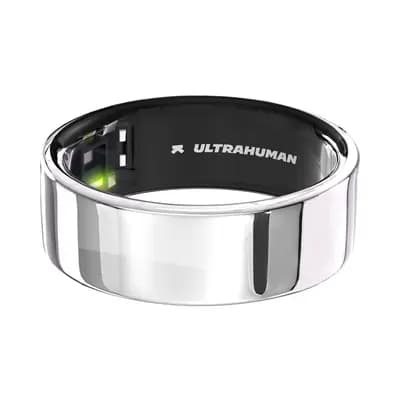
Ultrahuman entered the smart ring market with a thesis that stands apart from every other competitor on this list: that the most valuable health insights come not from one sensor stream in isolation, but from connecting wearable biometrics to metabolic data, blood biomarkers, and behavioral patterns like caffeine and nutrition timing. In 2026, that vision found its clearest expression in Jade — Ultrahuman's real-time biointelligence layer — and in the Ring AIR's integration with the company's broader ecosystem including continuous glucose monitoring and Blood Vision, a service analyzing 100-plus blood biomarkers through a home testing service. The Ring AIR hardware itself is a competent smart ring: PPG heart rate and SpO2 sensors, a temperature sensor, and a six-axis IMU for motion tracking, packaged without a subscription requirement at $349 — the same price as Oura Ring 4 but without the annual fee after year one. Battery life on the AIR runs roughly four to six days, shorter than Oura's five to eight days and considerably shorter than RingConn Gen 2 Air's ten days. The newer Ring PRO reportedly extends this to approximately 15 days, positioning it differently in the battery conversation. Where Ultrahuman pulls ahead of Samsung Galaxy Ring and the other rings on this list is in the ambition and sophistication of the Jade AI layer. While Oura Advisor contextualizes biometrics within your health history and Whoop Coach focuses on strain and recovery, Jade attempts something broader: understanding the metabolic and nutritional inputs that explain why your HRV is where it is this morning, not just what the HRV number means in isolation. The caffeine-window timing feature — recommending optimal times to consume caffeine based on your circadian rhythm and recent sleep data — is a small but representative example of the integrative reasoning Jade is built around. The honest caveat is that Ultrahuman's full value proposition requires buying into the ecosystem beyond the ring itself. Glucose integration adds ongoing CGM costs; Blood Vision adds periodic testing expenses; the vision of a fully connected metabolic intelligence picture requires all the pieces working together. For users who want just the ring, the AIR delivers solid biometric tracking without a subscription, but the AI story is less compelling as a standalone product than when embedded in the broader Ultrahuman system. For health optimization enthusiasts willing to invest in the whole ecosystem, no ring on this list offers a more intellectually ambitious approach to AI health coaching.
- 0
Garmin's reputation in the serious athlete and endurance community is nearly unrivaled, and the Venu 3 is the device that brings that sports-science credibility into a daily-wear AMOLED smartwatch. At approximately $449 with no required subscription — Garmin Connect is free, with an optional premium tier — and with up to 14 days of battery life in smartwatch mode, the Venu 3 answers the most common complaint about Apple Watch Ultra 3 and Google Pixel Watch 3 before the question is even asked: you will not be hunting for a charger every night. The sensor suite is comprehensive: continuous heart rate, Pulse Ox, ECG, skin temperature, and a stress tracking layer alongside Garmin's expansive sport-tracking library. VO2 max estimation is among the most respected in consumer wearables, validated against lab measurements more rigorously than most competitors. The Venu 3 adds features that reflect real-world health nuance: a dedicated sleep coach, nap detection and guidance, and a wheelchair mode that makes it one of the few premium wearables designed for users with mobility considerations. iOS and Android compatibility means no ecosystem lock-in, which sets it apart favorably from Apple Watch Ultra 3. Where Garmin Venu 3 trails Oura, Whoop, and Apple Watch Ultra 3 is in AI coaching conversational depth. Garmin's training readiness, recovery, and daily suggested workout features are data-rich and well-calibrated for endurance athletes, but they are not conversational in the way Oura Advisor, Whoop Coach, or Gemini-powered Pixel Watch coaching are. Garmin presents a recommendation; it does not explain itself in plain language or invite follow-up questions. For users who want to understand the reasoning behind a training suggestion, the Garmin ecosystem rewards those willing to learn its vocabulary — but it is a steeper learning curve than competitors designed for casual health trackers. Compared to Whoop 5.0, the Venu 3 offers GPS, a display, ECG, and a watch face that works in meetings — things Whoop deliberately excludes. Compared to Apple Watch Ultra 3, it offers dramatically longer battery life and Android support at a $350 lower price point. The Garmin ecosystem — Garmin Connect, training plans, race predictions, body battery — is deep but self-contained in a way that does not integrate as fluidly with Apple Health or Google Health as competitors. For endurance athletes who want the deepest training metrics with the longest battery life on a smartwatch, the Venu 3 is the definitive answer on this list.
- 0
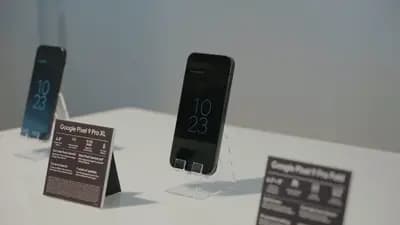
Google Pixel Watch 3 represents the most interesting AI health proposition in the smartwatch category: pairing a capable Wear OS 5 wearable with the reasoning power of Gemini in a way that goes beyond tip delivery and into genuine contextual explanation. The question Pixel Watch 3 is built to answer is not just 'how did you sleep?' but 'here is why your sleep dropped this week, and here is what the pattern suggests you do about it.' That shift from metric to narrative is what distinguishes Gemini-powered coaching from the dashboard-first approach of Garmin and most traditional fitness trackers. The hardware runs on a 40mm or 45mm display at roughly $349 or $399 for LTE, placing it at the same price point as Oura Ring 4 and Ultrahuman Ring AIR but with the added value of a screen, notifications, contactless payment, and the full Android app ecosystem. Sensors include ECG, blood oxygen monitoring, wrist skin temperature, and continuous heart rate — a competitive sensor suite enhanced by AFib detection. The Fitbit health stack underneath the Google Health layer brings years of training data algorithms and a robust sleep staging model that Wear OS 5 now surfaces more intelligently. The primary limitation is battery. At approximately 24 hours under normal use, the Pixel Watch 3 requires charging every night — which, for a device that markets sleep tracking as a feature, creates an obvious contradiction. This is the same tension that Apple Watch Ultra 3 faces, though Apple's 36-hour standard and 72-hour low-power modes give it more flexibility. Users who want to track sleep every night must develop a charging habit during a non-sleep window, or accept gaps in the overnight data. Compared to Garmin Venu 3 at 14 days or RingConn Gen 2 Air at 10 days, the battery situation is the Pixel Watch 3's most significant competitive disadvantage. The other consideration is platform lock-in. While the Pixel Watch 3 technically supports limited iOS functionality, the AI health coaching, Gemini integration, and Fitbit Premium features are meaningfully better — in some cases exclusive — on Android. The full coaching experience requires a Fitbit Premium subscription on top of the hardware cost. For Android users who are comfortable with that structure, Pixel Watch 3 offers the most sophisticated on-watch AI health narrative in the sub-$400 smartwatch category — more conversational than Garmin, more widely compatible than Apple, and considerably more insightful than any ring's screen-free experience.
- 0
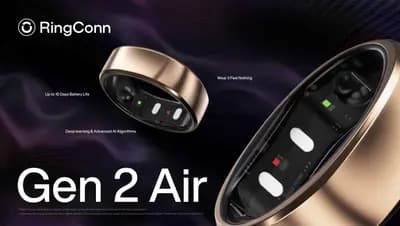
RingConn Gen 2 Air is the most surprising device on this list. At $199 — $150 less than Oura Ring 4 and Ultrahuman Ring AIR — with no subscription, a 10-day battery, and independent testing that found sleep and recovery tracking comparable to Oura Ring 4, it inverts the conventional assumption that research-grade ring health tracking requires a premium price and an ongoing membership. The Gen 2 Air has quietly become the device that budget-conscious health trackers and wearable skeptics point to when arguing that the premium ring market is overcharging. The hardware credentials are legitimately impressive. At just 2.5 grams, the Gen 2 Air is ultralight in a category where weight matters for 24/7 wear — notably lighter than the titanium rings from Oura and Ultrahuman. IP68 and 100-meter water resistance meet or exceed most competitors. The sensor suite covers heart rate, HRV, SpO2, skin temperature, respiratory rate, and six-axis motion — a complete picture for sleep staging, recovery monitoring, and activity tracking. The 10-day battery is meaningfully better than Oura Ring 4's 5–8 day estimate, which matters practically: it is the difference between charging every weekend and charging twice a month. RingConn Partner, the onboard AI layer, provides personalized guidance, sleep staging including apnea signals, stress scoring, and menstrual cycle predictions. It is not as conversationally sophisticated as Oura Advisor, Whoop Coach, or Gemini-powered coaching — the AI insight layer is narrower in scope and less likely to surface cross-domain patterns connecting sleep, temperature, and training load the way Oura does. But for users who primarily want accurate sleep staging, HRV tracking, and a clear morning summary, RingConn Partner delivers the essentials reliably. The areas where it concedes to premium competitors are real but context-dependent. The stainless steel construction scratches more readily than the titanium used by Oura and Ultrahuman. Occasional Bluetooth sync lag affects the immediacy of app data. The premium AI flourishes — the memory-aware coaching conversations, the metabolic integrations, the longitudinal health narrative — are simply not here. But for a user who wants the passive health monitoring and sleep intelligence of a premium ring without a subscription and at a fraction of the price, the gap in AI coaching sophistication may be a reasonable trade-off.
- 0
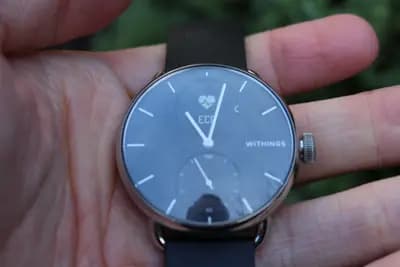
Withings has always occupied a distinctive position in the health wearable market: clinical-grade sensors, understated design, and a philosophy that prioritizes medically meaningful data over gamified coaching streaks. The ScanWatch 3 is the fullest expression of that philosophy — a hybrid analog watch with a small PMOLED subdial that looks like a classic timepiece but houses an FDA-cleared ECG, optical heart rate sensor, blood oxygen monitor, wrist skin temperature, and respiratory health metrics behind its traditional face. And it runs for approximately 30 days on a single charge. That 30-day battery life is genuinely exceptional and earns the ScanWatch 3 a place on this list that its relatively modest AI coaching would otherwise struggle to justify. In a category where Apple Watch Ultra 3 needs charging every 36 hours and Google Pixel Watch 3 every 24 hours, the ScanWatch 3's month-long battery means you set it, forget it, and let it accumulate continuous health data without interruption. For users who want long-term trend monitoring — respiratory rate changes over months, subtle temperature deviations that might signal infection or cycle phase — the data completeness from 30-day uninterrupted wear has real value that shorter-battery competitors cannot match. The FDA-cleared ECG is on the same level as Apple Watch Ultra 3 and Google Pixel Watch 3, which is no small thing — clinical-grade AFib detection in a watch that costs approximately $299, less than half the price of the Apple Watch Ultra 3. The respiratory health tracking, which flags patterns associated with sleep apnea risk, adds a clinically relevant dimension that pure PPG rings like Oura and RingConn approach but do not match with Withings' clinical-grade framing. The ScanWatch 3's genuine weaknesses are display size and AI sophistication. The PMOLED subdial is tiny — useful for glanceable step count and HR, but not a coaching interface. All meaningful health insight delivery happens in the Withings Health Mate app, which presents data clearly but in a more clinical, trend-oriented style than the conversational AI coaching of Oura Advisor, Whoop Coach, or Gemini-powered Pixel Watch. Withings+ is an optional subscription that adds additional health reports and coaching, but even with it, the AI layer remains more clinical than conversational next to AI-coaching-first competitors like Oura and Whoop. The ScanWatch 3 is the right choice for users who want clinical credibility, classic aesthetics, and never having to charge their watch — not for users who want their wearable to be a daily conversational health coach.
- 0#10
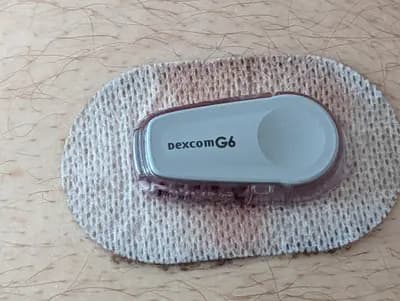
Dexcom Stelo is the most categorically different product on this list. It is not a ring, not a watch, not a fitness band — it is a continuous glucose monitor, a small sensor applied to the back of your upper arm that measures glucose levels continuously for up to 15 days without fingersticks, without a prescription, and since its FDA OTC clearance in 2024, without any prior diabetes diagnosis required. Understanding why it belongs on a list of AI health wearables requires understanding what glucose data adds to the health picture that no optical sensor can provide. Every ring and smartwatch on this list measures proxies for metabolic health — heart rate variability, sleep quality, recovery scores, skin temperature. These are meaningful signals. But none of them can tell you that your energy crash at 3pm is driven by a blood sugar spike and drop from lunch, or that your poor sleep last night correlated with elevated glucose at 11pm from a late meal. Dexcom Stelo measures the thing directly, and its AI pattern detection and plain-language glucose guidance translate continuous glucose data into notifications and recommendations that make the numbers interpretable without a clinical background. The accuracy is clinically validated at approximately 8.2% MARD — mean absolute relative difference — which is the standard measure for CGM accuracy. For context, that is within the range approved for insulin dosing in clinical CGMs, though Stelo is intended for metabolic awareness rather than insulin management. The app connects food logging, physical activity, and glucose trends to show you in real time how your body responds to specific meals, types of exercise, sleep quality, and stress. This is metabolic intelligence that no wrist device currently offers. The economics are different from every other product here. Stelo is a consumable: at roughly $99 per two-pack covering 30 days, or approximately $89 per month on subscription, it costs meaningfully more over time than a one-time ring purchase. The sensor itself is not a device you own and keep wearing; it is replaced every 15 days. For the metabolic insight it provides, many users find the cost justified — particularly those managing weight, energy, or athletic performance — but it is not a direct substitute for any ring or watch on this list. It is a complement, and used alongside something like Oura Ring 4 or Ultrahuman Ring AIR, the combined metabolic plus biometric picture becomes considerably richer than either alone.
Ring, watch, or patch — the form factor decides more than the AI does
The most important choice on this list isn't which brand's algorithm is smartest — it's which form factor you'll actually wear continuously, because every one of these devices depends on consistent, long-duration data to produce anything useful. A ring (Oura, Samsung Galaxy Ring, Ultrahuman, RingConn) disappears onto your finger and is easy to sleep in, which is exactly when a lot of the recovery and sleep-staging data gets collected — but it can't track heart rate mid-exercise as reliably as a wrist-worn device.
A watch (Apple Watch Ultra, Garmin Venu, Pixel Watch) is better mid-workout and can push real-time alerts, but many people take it off at night, which quietly guts the sleep data the AI layer is supposed to be reasoning over. Dexcom Stelo is its own category entirely — a continuous glucose monitor patch that answers one specific metabolic question and doesn't compete with the others on general fitness tracking at all.
Subscription fees are the real price comparison
List price is the smallest part of what these devices cost over time. Oura and Whoop both require an ongoing subscription for full feature access on top of hardware cost, while Garmin's core coaching features and Samsung's AI insights on the Galaxy Ring are included with no recurring fee.
That distinction matters more than the sticker-price difference between any two devices here — a cheaper ring with a subscription can end up costing more over a couple of years than a pricier one without, and it's the number worth checking before comparing anything else.
Image credits
- Oura Ring 4: Tpnkl / Wikimedia Commons (CC BY-SA 4.0)
- Apple Watch Ultra 3: KKPCW(Kyu3) / Wikimedia Commons (CC BY-SA 4.0)
- Samsung Galaxy Ring: Samsung Galaxy Ecosystem / Wikipedia
- Ultrahuman Ring AIR: Bing Images / i5.walmartimages.com
- Google Pixel Watch 3: ShoAndTech / Wikimedia Commons (CC BY 3.0)
- RingConn Gen 2 Air: Bing Images / basic-tutorials.de
- Withings ScanWatch 3: Bing Images / static1.makeuseofimages.com
- Dexcom Stelo: Dexcom CGM / Wikipedia
Related Videos
Rank it your way
Remix this list into your own ranking, or head to the play hub for every game mode and community breakdown — blind mode, challenges, tier lists, and more.
You Might Also Like

Top 10 Best Budget Smartphones 2026
Top 10 Best Budget Smartphones 2026

Top 10 AI Tools Changing Everything in 2026
most impactful AI tools of 2026

Top 10 Most Powerful AI Companies 2026
Top 10 Most Powerful AI Companies 2026

Top 10 Most Disruptive Tech Startups of All Time
#1 Airbnb · #2 Uber · #3 Spotify

Top 10 European Tech Unicorns That Changed Their Industries
#1 Spotify · #2 Klarna · #3 Adyen

Top 10 Breakthrough Technologies Changing the World in 2026
#1 Sodium-Ion Batteries · #2 Personalized Gene Editing (CRISPR 2.0) · #3 Hyperscale AI Data Centers