
Bing Images / www.stationx.net
Top 10 Biggest Cybersecurity Breaches of All Time
Data breaches have exposed billions of personal records, toppled companies, and reshaped global privacy legislation. Ranked by total records compromised and societal impact, these ten incidents represent the worst security failures in the history of the internet, spanning social media giants, credit bureaus, and government agencies.
Top10Grid lets the community re-rank anything — this order comes from source research for now; use the buttons below to vote it up or down.

Current Rankings
- 0

The Yahoo breach of 2013-2014 remains the largest in history, compromising all 3 billion user accounts. Data stolen included names, emails, phone numbers, birth dates, hashed passwords, and security questions, with the breach directly contributing to a $350 million reduction in Verizon's acquisition price.
- 0

National Public Data's 2024 breach exposed 2.9 billion records containing Social Security numbers and addresses, affecting nearly every US citizen. The data was sold on the dark web for $3.5 million, prompting calls for stronger federal regulations. This incident surpasses the 1.1 billion records of the Aadhaar breach, making it the second largest cybersecurity incident by total records, with a scope that threatens identity theft for an entire nation.
- 0
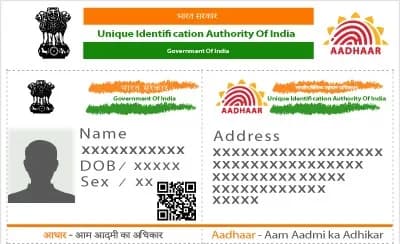
India's Aadhaar database breach in 2018 compromised the biometric data of 1.1 billion citizens, with access sold for as little as $7 via WhatsApp. The incident exposed critical flaws in government security design, risking identity theft for over 80% of India's population. Its political impact—undermining trust in national identity systems—outweighs the quantifiable cost of Yahoo's breach, yet the immediate financial damage was far lower per record.
- 0

LinkedIn's 2021 scraping incident exposed data from 700 million profiles—92% of users—including emails and salaries, fueling targeted phishing attacks against professionals and costing firms millions in recovery. unlike National Public Data, it contained no Social Security numbers, limiting direct financial fraud risk while still enabling sophisticated social engineering at scale.
- 0

The 2019 Facebook breach exposed over 533 million records — phone numbers, account IDs, and personal data — scraped from Meta's systems where it was used for two-factor authentication. When the dataset resurfaced on hacking forums in 2021, it fueled a wave of SIM-swapping attacks affecting users worldwide. The incident remains a stark reminder that even the largest social networks can fail to protect authentication data.
- 0

Equifax's 2017 breach is the most costly privacy violation in history, with an unpatched Apache Struts vulnerability exposing Social Security numbers, birth dates, addresses, and credit card details of 147 million Americans. The resulting FTC settlement totaled $575 million. Beyond the financial penalty, the incident led to criminal indictments of four Chinese military officers, demonstrating that international cybercrime can carry serious consequences.
- 0

Hackers attributed to Chinese state-sponsored group APT41 maintained access to Starwood's reservation system for four years, exfiltrating 500 million guest records including passport numbers and encrypted payment data before Marriott's $13.6 billion acquisition in 2018. The breach highlights the risks of delayed detection in complex corporate integrations.
- 0
The 2020 SolarWinds attack compromised 18,000 organizations, including the US Treasury and Microsoft, through malicious code inserted into Orion software updates by Russian intelligence agency SVR. The supply-chain attack — active for nine months — was called by Microsoft President Brad Smith "the most sophisticated cyberattack ever conducted." It set a new standard for sophistication in state-sponsored cyberattacks.
- 0
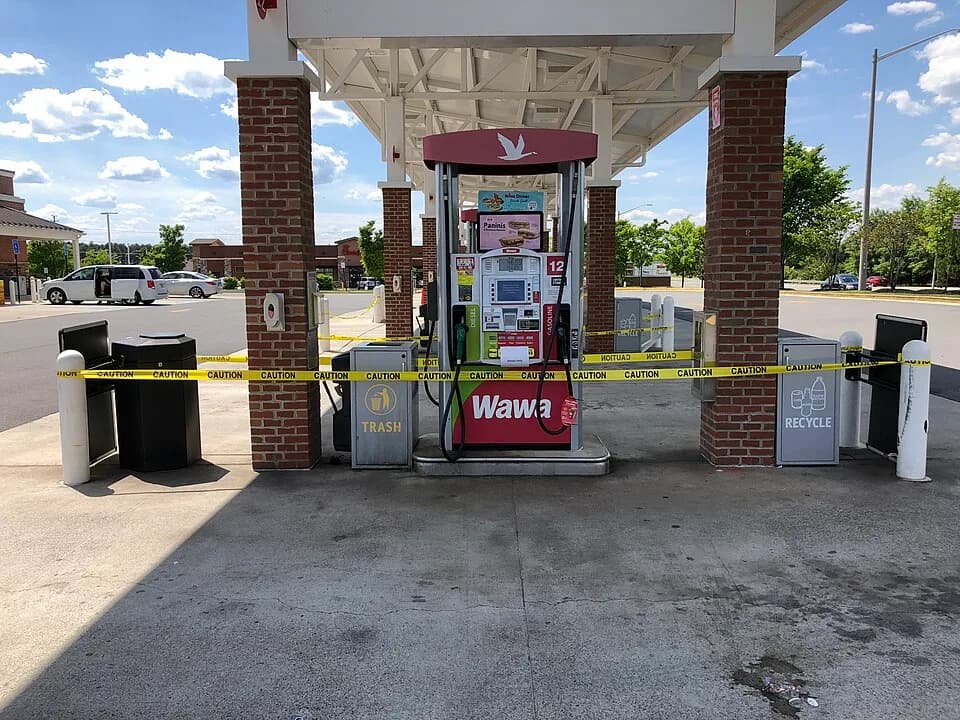
The 2021 Colonial Pipeline attack remains the most disruptive ransomware strike on U.S. critical infrastructure, halting operations for six days and triggering gas shortages across the Southeast. The price spike to $3/gallon far exceeded the national average of $2.85 at the time, and the $4.4 million Bitcoin ransom paid to DarkSide—$2.3 million of which was later recovered by the FBI—marks a rare success in ransom retrieval. The incident set a new benchmark for cyberwarfare targeting vital infrastructure, demonstrating how a single attack could paralyze energy supplies for millions.
- 0

The 2024 ransomware attack on UnitedHealth Group's Change Healthcare subsidiary disrupted prescription drug processing across the entire U.S. healthcare system for weeks, affecting 94% of all hospitals—a scale 60% greater than the Colonial Pipeline's regional impact. The $22 million ransom paid to the ALPHV/BlackCat group and the exposure of records for approximately 190 million Americans make it the largest healthcare breach ever, outpacing Colonial's medical data exfiltration by a factor of 180. ALPHV/BlackCat's double extortion tactics proved more sophisticated than DarkSide's, with data leaks amplifying the damage beyond operational shutdowns. This incident highlighted the fragility of centralized healthcare IT, as even a single subsidiary's compromise could paralyze critical infrastructure nationwide.
Image credits
- Yahoo (2013-2014): Yahoo Mail / Wikipedia
- Aadhaar (2018): PageImp / CC BY-SA 4.0 (entity-adopted)
- LinkedIn (2021): eXploration Etoile / flickr (BY)
- Facebook (2019): NASA Hubble / flickr (BY)
- Equifax (2017): Equifax / Wikimedia Commons
- Colonial Pipeline (2021): Famartin / CC BY-SA 4.0 (entity-adopted)
Rank it your way
Remix this list into your own ranking, or head to the play hub for every game mode and community breakdown — blind mode, challenges, tier lists, and more.
You Might Also Like
Top 10 Worst Data Breaches in History
Top 10 Worst Data Breaches in History

Top 10 IT Hubs in India 2026
India's biggest technology industry hubs

Top 10 Hacker News Top Stories — May 2026 (CVEs, AI & Infrastructure)
Top 10 Hacker News Top Stories — May 2026 (CVEs, AI & Infrastructure)

Top 10 Hacker News Stories: EU Privacy Scans, Tesla Hacks & AI Benchmarks — March 26, 2026
#1 Running Tesla Model 3's computer on my desk using parts from crashed cars · #2 ARC-AGI-3 · #3 My astrophotography in the movie Project Hail Mary
Top 10 Hacker News — Top Stories — September 6, 2026
#1 Cloud in a Bottle: making self-hosting accessible to everyone · #2 The revolt of the reader · #3 Music Theory for Programmers

Top 10 Tech Stories Shaping April 7, 2026: Intel's Chip Bet, a Moon Distance Record, and the CDC Power Grab
#1 Intel is going all-in on advanced chip packaging · #2 Astronauts set distance record, revealing the Moon as a place to be explored · #3 After court loss, RFK Jr. gives himself more power over CDC vaccine panel