
Dllu / Wikimedia Commons (CC BY-SA 4.0)
Top 10 US Food Technology Companies
The US food technology sector reached $342B valuation in 2024, with venture and corporate capital concentrated across five segments at distinctly different commercialization stages. This list covers 10 US leaders spanning: plant-based protein manufacturers (revenue-generating, managing unit-economics in maturing markets), precision fermentation platforms (achieving cost parity in 2025-26, entering retail with precision-fermented dairy proteins in 2026), cultivated meat producers (FDA-approved since 2023, commercial USDA approval accelerating in 2025), AI-native ingredient discovery (VC-backed, pre-revenue, 3-5 year horizon to product), and crop microbiome solutions (early revenue stage, serving enterprise customers). Collectively they achieve 90%+ land use efficiency and 70%+ GHG reductions vs. conventional agriculture. Your choice depends on investment thesis: established operators managing scaling challenges, mid-stage companies clearing regulatory gates, or frontier platforms 2-4 years from revenue. The list prioritizes companies with demonstrable product-market fit or significantly funded commercialization paths, excluding ingredient suppliers and software-only tools. Expect publicly-traded growth operators, late-stage pre-IPO contenders, and emerging ventures across the risk spectrum.
Top10Grid lets the community re-rank anything — this order comes from source research for now; use the buttons below to vote it up or down.

Current Rankings
- 0#1
Beyond Meat
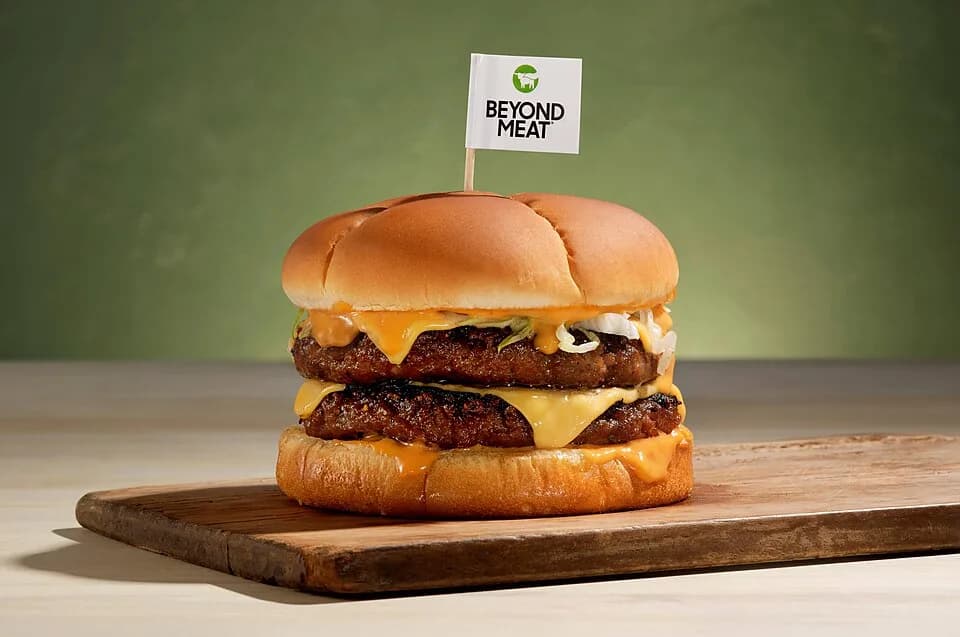
Beyond Meat leads the plant-based protein category as the first mass-market entrant, generating $800M+ cumulative revenue despite a 35%+ decline in 2023-2024 as category growth slowed. In 2025, the Beyond IV platform reduced saturated fat by 60%+ and improved texture using mung bean protein, targeting health-conscious consumers who rejected earlier generations.
- 0#2
Impossible Foods
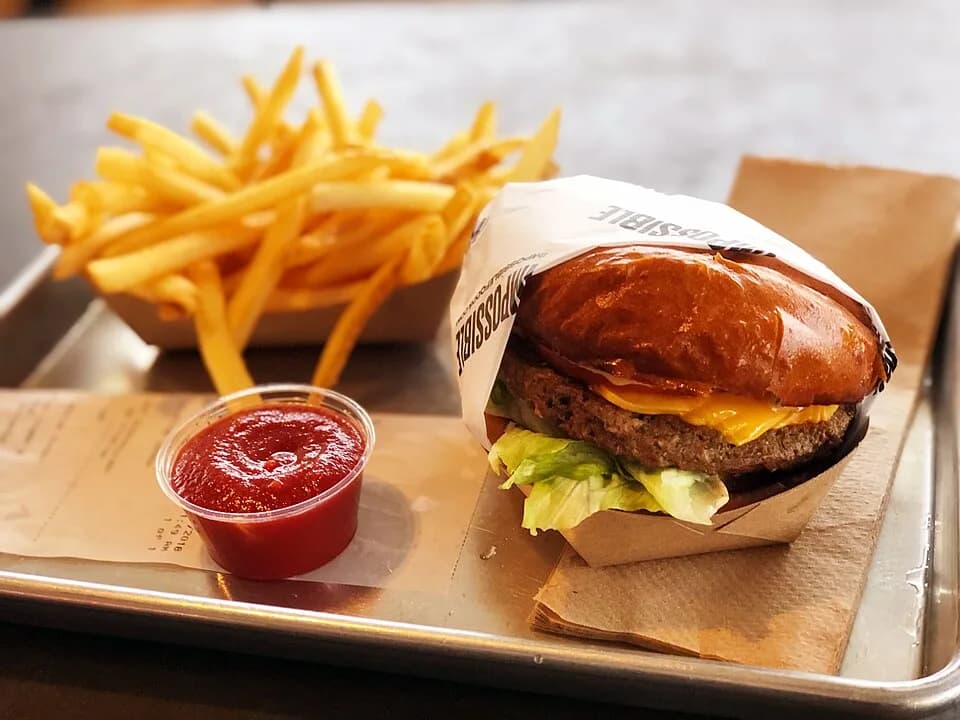
Impossible Foods commands a $7B valuation with $2B+ total funding, anchored by the heme-protein Impossible Burger available at 40,000+ restaurants including Burger King globally. In 2025, Impossible Foods launched pork and chicken products into retail and expanded into Asia with dedicated supply chain infrastructure in Singapore.
- 0#3
Oatly

Oatly generated $1.8B in 2024 revenue across 70+ countries, making it the global leader in oat-based dairy alternatives and the only plant-based milk brand with sustained mass-market cultural cachet. NASDAQ-listed since 2021, Oatly completed its US capacity expansion in 2024, reducing costs by 25% and restoring positive gross margins. Its B-Corp certification and aggressive climate marketing make it the benchmark for sustainable food branding, sold in 100,000+ coffee shops and grocery chains worldwide.
- 0#4
Perfect Day

Perfect Day reached a $1.5B valuation using precision fermentation to produce whey and casein proteins molecularly identical to cow's milk without animals. In 2025, Perfect Day licensed its fermentation IP to three Asian manufacturers, enabling the first animal-free dairy products at price parity with conventional dairy in Japan and South Korea.
- 0#5
GOOD Meat (Eat Just)

GOOD Meat leads the cultivated meat revolution as the first company to secure regulatory approval for cultivated chicken—first in Singapore (2020) and then the US (2023). Its bioreactor grows chicken from a single cell biopsy to a full product in just 14 days, using 99% less land and 96% less water than conventional poultry, slashing land use by 99%. A 2025 partnership with JBS leverages industrial-scale fermentation facilities, targeting mainstream price points by 2027.
- 0#6
NotCo

Its products—NotBurger, NotMilk, NotChicken—landed in 35,000+ retail locations including Whole Foods and Walmart. In 2025, NotCo's joint venture with Kraft Heinz applied Giuseppe AI to reformulate traditional Kraft items, a move amplifying the company’s impact in plant-based food tech.
- 0#7
Apeel Sciences

Apeel Sciences reached a $2B valuation, with a plant-derived coating that extends produce shelf life by 50%+ by slowing oxidation and water loss. The GRAS-certified coating, from fruit skin lipids, is used on avocados, citrus, and berries at 50+ retailers globally. In 2025, Apeel expanded into the $30B cold chain market with a coating extending fresh meat and seafood shelf life by 3-5 days.
- 0#8
Pivot Bio

Its PROVEN 40 product supplies up to 25% of corn's nitrogen needs, saving farmers $25-50 per acre across 20M+ acres. In 2025, it launched wheat and sorghum products, expanding the addressable market to 400M+ global acres.
- 0#9
Motif FoodWorks

Motif FoodWorks leads with $226M in funding to solve the texture, flavor, and nutrition gaps hindering plant-based food adoption. In 2025, the company launched a fat analog ingredient that mimics the mouthfeel and juiciness of animal fat in plant-based burgers.
- 0#10
Mycoworks

Mycoworks sets the standard with $125M in funding to produce Fine Mycelium—a luxury leather alternative that matches the grain, drape, and durability of top-grade animal leather. In 2025, Mycoworks opened a 23,000 sq ft commercial-scale production facility in Union, South Carolina—the first US facility for mycelium leather—targeting $1B in annual capacity by 2028.
Image credits
- Beyond Meat: Pascal Shirley / CC BY-SA 4.0 (entity-adopted)
- Impossible Foods: Impossible Burger - Gott's Roadside- 2018 - Stierch.jpg / Wikimedia Commons (entity-adopted)
- Oatly: Wikimedia Commons (Public domain)
- Perfect Day: ESO/José Francisco Salgado / Wikimedia Commons (CC BY 4.0)
- GOOD Meat (Eat Just): Openverse
- NotCo: NotCo logo.svg / Wikimedia Commons
- Apeel Sciences: Apeel Sciences / Wikipedia
- Pivot Bio: Stryker Corporation / Wikipedia
- Motif FoodWorks: Francisco de Zurbarán / Wikimedia Commons (Public domain)
- Mycoworks: Mycelium-based materials / Wikipedia
Related Videos
Rank it your way
Remix this list into your own ranking, or head to the play hub for every game mode and community breakdown — blind mode, challenges, tier lists, and more.
You Might Also Like

Top 10 US AgriTech Companies
Top 10 US AgriTech Companies

Top 10 US Synthetic Biology Companies
Top 10 US Synthetic Biology Companies

Top 10 Asian Tech Companies
Top 10 Asian Tech Companies

Top 10 Most Controversial Tech Products
#1 Facebook's News Feed Algorithm · #2 TikTok · #3 Google Glass

Top 10 US LegalTech Companies
#1 Thomson Reuters (Westlaw AI) · #2 LexisNexis (RELX) · #3 Relativity

Top 10 Best Laptops in the UK 2025
#1 Apple MacBook Air 13-inch (M3, 2024) · #2 Apple MacBook Air 15-inch (M3, 2024) · #3 Dell XPS 13 Plus (2024)