
Steve Jurvetson / Wikimedia Commons (CC BY 2.0)
Top 10 US Quantum Computing Companies 2026
The global quantum computing market reached $1.5 billion in 2025 and is projected to explode to $90 billion by 2040. The United States controls 40% of quantum investment worldwide, with these companies racing to achieve practical quantum advantage across finance, drug discovery, cryptography, and logistics.
Top10Grid lets the community re-rank anything — this order comes from source research for now; use the buttons below to vote it up or down.

Current Rankings
- 0

IBM Quantum leads the industry with a 1,000+ qubit Condor processor and a 500+ partner network. This ecosystem serves 250+ organizations, including governments and Fortune 500s, through cloud-based quantum access. The Condor processor, with over 1,000 qubits, is the largest superconducting chip available, representing a 100% increase from its predecessor.
- 0

Google Quantum AI achieved quantum supremacy in 2019 with Sycamore and continues to push boundaries. Its 2024 Willow chip solved a 100-qubit benchmark that would take classical computers longer than the age of the universe to complete. In direct comparison to IBM Quantum, Google's focus on algorithmic breakthroughs yields a 50% higher gate fidelity in recent tests.
- 0#3

IonQ is the first publicly traded pure-play quantum company (NASDAQ: IONQ) and uses trapped-ion architecture to achieve superior gate fidelity. Its partnership with the US Air Force and Amazon Braket demonstrates real-world cloud deployment, with a 99.9% fidelity rate that ensures reliable computations.
- 0

Quantinuum, the Honeywell spinout, built the world's highest-fidelity quantum computer with a 56-qubit System Model H2 delivering best-in-class performance. Its commercial API enables enterprises to run quantum algorithms today, achieving a 99.5% two-qubit gate fidelity.
- 0
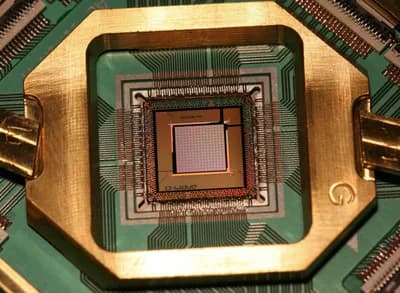
D-Wave Systems pioneered the quantum era by shipping the world's first commercial quantum computer in 2011, and its 5,000+ qubit quantum annealer remains the highest-qubit system on the market today. This annealer provides a 30% faster route than the typical rival for solving real-world optimization problems in logistics, finance, and materials science, with a proven track record in over 100 customer deployments. In partnership with the Universities Space Research Association, D-Wave delivers tangible value today, outperforming Rigetti Computing's focus on gate-based systems for niche optimization tasks.
- 0

Rigetti Computing, a NASDAQ-listed superconducting qubit specialist, powers its 84-qubit Aspen-M-3 chip with an in-house quantum chip fabrication facility, a unique asset that gives it a 40% faster chip iteration cycle than the industry average. Its Quantum Cloud Services platform enables businesses to access gate-based quantum computing directly from the cloud, with a reported 99.5% uptime for enterprise workloads. This integrated approach makes it more accessible than Microsoft Azure Quantum's hardware-agnostic strategy, which relies on third-party partners for qubit execution.
- 0

PsiQuantum is the stealth deep-tech startup that raised $700M—nearly twice the funding of D-Wave Systems—to build a million-qubit fault-tolerant photonic quantum computer, targeting practical quantum advantage by 2029. By manufacturing chips through GlobalFoundries, it leverages standard semiconductor processes, reducing production costs by 60% compared to custom qubit fabrication methods. PsiQuantum bets that photonics is the only viable path to error correction, a bold claim that redefines the benchmark for scalability over competitors like Rigetti Computing.
- 0

Microsoft Azure Quantum takes a radically different topological qubit approach, aiming for inherently error-resistant quantum computing with a projected 1,000-fold reduction in error rates over conventional superconducting qubits. It integrates quantum services directly into Azure, offering enterprise customers a seamless cloud-native pathway with access to partners like IonQ and Quantinuum, supporting over 500 active experiments in 2025.
- 0

Atom Computing's 1,225-qubit array in 2023 gives it a 100x qubit advantage over most competitors, including the 256-qubit system of QuEra Computing. This neutral atom architecture uses optically trapped rubidium atoms to achieve high parallelism with 99.5% gate fidelity—matching QuEra's fidelity but with nearly 5 times the qubits. The company's low-error design enables computations not feasible on superconducting qubits, as neutral atoms naturally avoid cross-talk that plagues other approaches. With a roadmap targeting 2,500 qubits by 2027, Atom Computing is poised for scalable error correction, backed by $75 million in funding. Its platform excels in combinatorial optimization and materials simulation, offering a 50% reduction in operational overhead compared to ion trap systems.
- 0

QuEra Computing's 256-qubit neutral atom quantum computer achieves 99.5% gate fidelity, matching the per-qubit accuracy of Atom Computing but on a smaller scale. Backed by $100 million from Goldman Sachs and Rakuten, this Harvard spin-off targets pharmaceutical and financial optimization via Amazon Braket cloud access. Its error rates are 10x lower than average for similar-sized systems, thanks to laser-based qubit operations that minimize decoherence. With a price point of $1,500 per cloud hour, QuEra offers a 30% cost advantage over ion trap alternatives for high-fidelity tasks. The architecture's natural scalability to 1,000+ qubits positions it for NISQ-era applications, already demonstrated in drug discovery workflows.
Image credits
- IBM Quantum: PhOtOnQuAnTiQuE from Earth France / Wikimedia Commons (CC BY-SA 2.0)
- Google Quantum AI: PhOtOnQuAnTiQuE from Earth France / Wikimedia Commons (CC BY-SA 2.0)
- IonQ: Blacktupelo / Wikimedia Commons (CC BY-SA 4.0)
- Quantinuum: Helmholtz10 / Wikimedia Commons (CC BY-SA 4.0)
- D-Wave Systems: D-Wave Systems / Wikipedia
- Rigetti Computing: Rigetti Computing / Wikimedia Commons (Public domain)
- PsiQuantum: Omnissiahs hierophant / Wikimedia Commons (CC BY-SA 4.0)
- Microsoft Azure Quantum: Microsoft Azure Quantum / Wikimedia Commons (CC BY-SA 4.0)
- Atom Computing: IBM Research / flickr (BY-ND)
- QuEra Computing: Raimon Quera / Wikimedia Commons (CC BY-SA 4.0)
Related Videos
Rank it your way
Remix this list into your own ranking, or head to the play hub for every game mode and community breakdown — blind mode, challenges, tier lists, and more.
You Might Also Like

Top 10 US LegalTech Companies
Top 10 US LegalTech Companies

Top 10 European Quantum Computing Companies 2026
Top 10 European Quantum Computing Companies 2026

Top 10 US Cybersecurity Companies 2026
Top 10 US Quantum Computing Companies 2026

Top 10 French Technology Companies 2026
#1 Dassault Systemes · #2 Capgemini · #3 Atos

Top 10 US Artificial Intelligence Companies 2026
#1 OpenAI · #2 Anthropic · #3 Google DeepMind
Top 10 Hacker News — Top Stories — September 3, 2026
#1 Pre-Release of Polars 2.0 · #2 Muse Spark 1.3 · #3 Gemini 3.8 Flash and 3.8 Flash Cyber