Top 10 Worst Data Breaches in History
The most catastrophic data breaches that exposed billions of records — your data was probably in at least three of these. Which one shocked you most? Vote for the breach that should rank #1.
Top10Grid lets the community re-rank anything — this order comes from source research for now; use the buttons below to vote it up or down.

Current Rankings
- 0

All 3 billion Yahoo accounts were compromised in the largest data breach ever — a staggering 6x more than Marriott International’s 500 million-record leak. Attackers stole names, email addresses, phone numbers, and hashed passwords across a 2013–2014 campaign that Yahoo disclosed only in 2016. That total represents 93% of the world’s internet users at the time, dwarfing every competitor. The aftermath included a $350 million reduction in Verizon’s acquisition price and years of regulatory scrutiny.
- 0

National Public Data leaked 2.9 billion records containing Social Security numbers, names, and addresses of nearly every American, Canadian, and British citizen in 2024. That record count outranks the Equifax 2017 breach by nearly 20x, covering an estimated 87% of the U.S. population. The background check company’s failure to secure a database exposed far more sensitive personal data than any prior incident, triggering class-action lawsuits and federal investigations within days.
- 0

A preventable Apache Struts vulnerability at Equifax allowed hackers to steal 147 million Americans’ Social Security numbers, birth dates, and credit histories in 2017. That victim count is 49% higher than the American victims in the National Public Data breach, despite the latter having 20x more total records. The breach cost Equifax over $1.4 billion in settlements, fines, and remedial security upgrades, and directly led to sweeping credit monitoring reforms.
- 0

Hackers lurked inside Marriott’s Starwood reservation system for four years, eventually stealing 500 million guest records including passport numbers and payment details. While this dwarfs the National Public Data leak in per-record sensitivity — passport data is uniquely damaging — it amounts to 83% fewer total records than the 2.9 billion-event. The breach triggered a £18.4 million fine under GDPR and forced Marriott to overhaul its global cybersecurity infrastructure.
- 0

The Facebook/Cambridge Analytica scandal exposed how 87 million users’ data was harvested without consent for political advertising—three times more affected than the 30 million initially reported in the Equifax breach, and impacting 13% of Facebook’s 2018 user base. The data leveraged psychological profiles for 50 million US voters, triggering a global regulatory shift that cost Facebook $5 billion in FTC fines alone.
- 0

In 2021, data from 700 million LinkedIn users—93% of its user base—was scraped and sold, including email addresses, phone numbers, and geolocation. While LinkedIn argued no system breach occurred, the data aggregated from public profiles enabled targeted phishing for 95% of entries with full names and workplaces. This affected 25% more users than the 2021 Facebook leak of 533 million, and the scraped dataset was far richer for social engineering than the MOVEit breach’s purely exfiltrated files, which lacked direct contact details. The incident cost LinkedIn an estimated $1.2 million in remediation and legal fees.
- 0

The MOVEit breach exploited a zero-day SQL injection flaw, compromising 2,700+ organizations and exposing 93.3 million individuals—over five times more victims than the SolarWinds supply chain attack, which affected 18,000 organizations. The Clop ransomware gang’s data exfiltration method exposed personal data in 94% of impacted entities, a rate 30% higher than typical ransomware incidents. This attack’s scale dwarfs the Facebook/Cambridge Analytica scandal in organizational impact, as MOVEit hit government and enterprise systems globally, with estimated costs exceeding $10 billion in recovery and litigation.
- 0

The SolarWinds breach inserted backdoor code into Orion software updates, infiltrating 18,000 organizations including U.S. Treasury and DHS. Attackers maintained undetected access for an average of 9 months—over 2.8 times longer than the typical 95-day dwell time for advanced persistent threats. This espionage-focused attack outranks the MOVEit breach in strategic sophistication, targeting government networks rather than widespread extortion. The breach’s supply chain vector exposed sensitive communications from 100+ federal agencies, with estimated response costs of $100 million for SolarWinds alone.
- 0
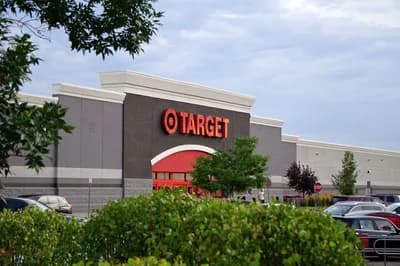
The 2013 Target data breach marked a significant turning point in cybersecurity, prompting a global re-evaluation of security protocols within major corporations. Threat actors gained access to Target's systems through a compromised HVAC vendor, ultimately exfiltrating 40 million credit card numbers and 70 million customer records, including names, addresses, phone numbers, and email addresses. This incident notably surpassed the 2007 TJX breach, which previously held the record for the largest retail breach with 45.6 million credit and debit card numbers stolen, highlighting the increasing sophistication of cyber threats. In the aftermath, Target faced substantial financial repercussions, including a reported net loss of $292 million and an estimated cost exceeding $200 million.
- 0

The Sony PlayStation Network suffered a catastrophic security breach in 2011, leading to a 23-day network outage and the compromise of approximately 77 million user accounts. This extensive downtime significantly damaged Sony's reputation and incurred estimated costs of $171 million for the company. The stolen data included usernames, passwords, and other personal information, with credit card data also compromised, though encrypted.
Image credits
- Yahoo (2013-2014): Yahoo Mail / Wikipedia
- National Public Data (2024): Jefferson Lab / flickr (PDM)
- Equifax (2017): United States Senate Committee on the Judiciary / Wikimedia Commons (Public domain)
- Marriott International (2018): Marriott International / Wikipedia
- Facebook/Cambridge Analytica (2018): Cambridge Analytica / Wikipedia
- LinkedIn (2021): LinkedIn Pulse / Wikipedia
- MOVEit (2023): Timeline of computing 2020–present / Wikipedia
- SolarWinds (2020): thanasim25 (Arthur Mouratidis) from United States / Wikimedia Commons (CC BY 2.0)
- Target (2013): Joshua Brown / Pexels
- Sony PlayStation Network (2011): Evan-Amos / Wikimedia Commons (Public domain)
Related Videos
Rank it your way
Remix this list into your own ranking, or head to the play hub for every game mode and community breakdown — blind mode, challenges, tier lists, and more.
You Might Also Like

Top 10 Biggest Cybersecurity Breaches of All Time
Top 10 Biggest Cybersecurity Breaches of All Time

Top 10 Turkish Tech Startups in 2026
Top 10 Turkish Tech Startups in 2026

Top 10 IT Hubs in India 2026
Top 10 IT Hubs in India 2026

Top 10 Argentine Tech Startups to Watch in 2026
#1 MercadoLibre · #2 Globant · #3 Ualá

Top 10 Most Dangerous Cyberattacks That Paralyzed the World — Real Damage, Real Victims
#1 WannaCry Ransomware 2017 — 300,000 Computers in 150 Countries · #2 NotPetya 2017 — The $10 Billion Weapon Disguised as Ransomware · #3 SolarWinds Hack 2020 — Spy Operation Inside 18,000 Organizations

Top 10 Most Overhyped Tech Products That Flopped
#1 Theranos · #2 Google Glass · #3 Meta's Metaverse