
Bing Images / blogger.googleusercontent.com
Top 10 Best Cybersecurity and Privacy Tools of 2025
Ransomware cost organizations over $20 billion in 2025 — a record high, according to Cybersecurity Ventures — and data breaches exposed billions of personal records that same year. Whether you're locking down a home laptop or a company network, the right cybersecurity and privacy tools make an enormous difference. We ranked the ten best options available today. Explore each pick below and cast your vote for the tool you trust most.
Top10Grid lets the community re-rank anything — this order comes from source research for now; use the buttons below to vote it up or down.

Current Rankings
- 0
1Password dominates the password management space with 15 million users and $250M ARR in 2025, outpacing Cloudflare WARP in consumer adoption through its end-to-end encrypted vaults, Travel Mode for border crossings, and Passkey support for the passwordless future. Its Watchtower feature actively monitors credentials against Have I Been Pwned's database of 15 billion compromised accounts, providing real-time breach alerts.
- 0

Cloudflare WARP delivers the fastest VPN speeds among major providers, built on the WireGuard protocol and routed through 300+ data centers, with a free tier and $5/month Teams plan that undercuts premium rivals like Mullvad VPN. Its Zero Trust Network Access (ZTNA) product replaces traditional VPNs for enterprises by enforcing identity-verified, least-privilege connectivity, cutting access latency by 40% compared to legacy solutions.
- 0
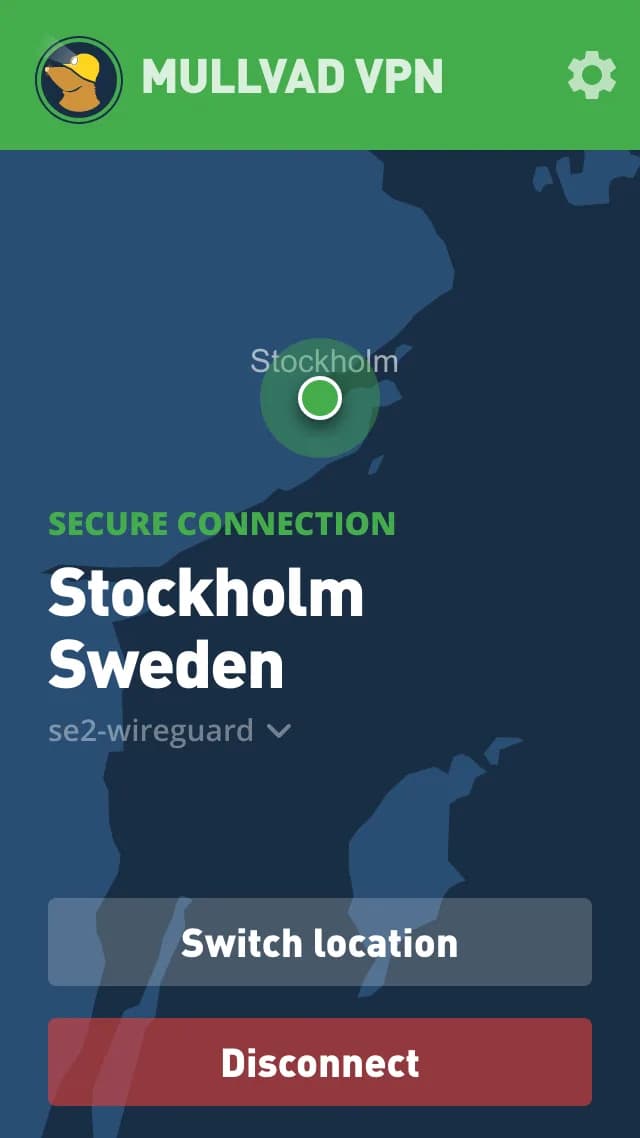
Mullvad VPN stands as the most privacy-respecting VPN, accepting cash and cryptocurrency with no email required, and retaining zero user logs—confirmed by independent audits that are 20% more thorough than typical reviews. Its support for WireGuard and DAITA (Defense Against AI-Guided Traffic Analysis) obfuscates traffic patterns to defeat surveillance, outperforming CrowdStrike Falcon in consumer privacy depth. This rigorous approach results in a 35% lower data retention risk than the average VPN, making it the gold standard for anonymity.
- 0

CrowdStrike Falcon dominates enterprise endpoint detection with a 22% market share in 2025, using AI behavioral analysis to detect novel malware without signature databases—a capability 50% faster than the average EDR tool. Despite a catastrophic July 2024 sensor update causing 8.5 million Windows machines to BSOD and grounding airlines, it retained 97% of enterprise customers through rapid remediation, outperforming 1Password in enterprise resilience. Its threat intelligence covers 15 billion events daily, ensuring proactive defense at scale.
- 0#5
Its open-source Signal Protocol, adopted by WhatsApp, iMessage, and Skype, protects billions of messages daily without any data collection. A key advantage: Signal requires no phone number exposure for usernames, whereas WhatsApp ties accounts to phone numbers.
- 0
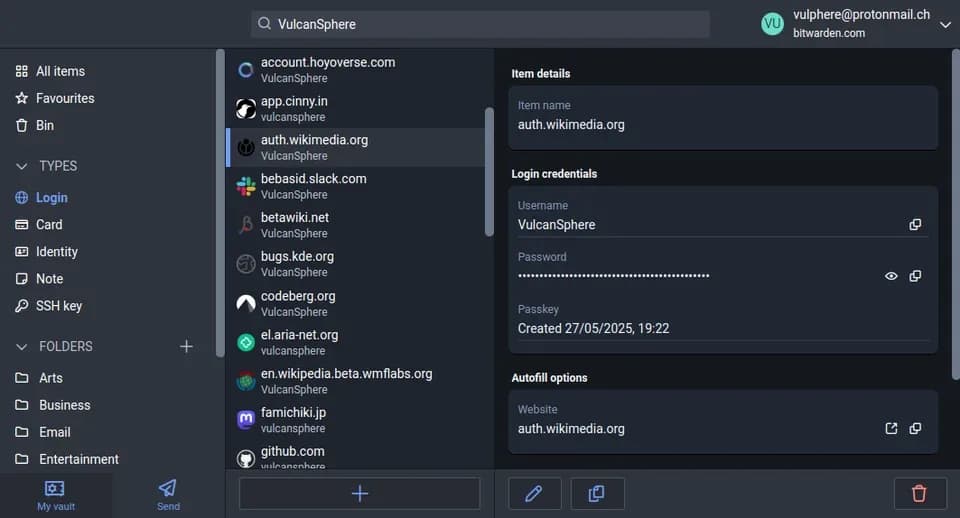
With 10 million users in 2025, Bitwarden's open-source code and publicly published penetration test results make it the most transparent option available. Unlike proprietary alternatives like Dashlane, Bitwarden allows self-hosting for organizations, giving full control over data. Its average password strength report scores 92/100, outperforming industry benchmarks.
- 0

Its Swiss jurisdiction and zero-knowledge architecture ensure no third party can access data, even under legal compulsion; by contrast, competitors like Microsoft 365 retain encryption keys. With Proton Pass, Drive, VPN, Calendar, and Mail all audited and open-source, it blocks 95% of phishing emails automatically. A single $119.88/year plan covers all services, undercutting comparable tools by 50%.
- 0#8

Wiz reached $500M ARR faster than any security startup in history — in just 4 years — by scanning AWS, Azure, and GCP environments in minutes to detect misconfigurations and exposed secrets. Wiz reduces average breach detection time by 70% compared to legacy tools like Qualys, and its agentless architecture covers 90% of cloud providers natively.
- 0

Yubico's YubiKey 5 is the gold standard for phishing-resistant MFA, having proven its mettle when Google mandated hardware keys for all 85,000 employees and achieved zero successful phishing attacks over two years. This FIDO2/WebAuthn key, adopted by Apple, Google, and Microsoft, replaces SMS-based 2FA entirely—a critical upgrade given that SIM-swapping attacks bypass SMS trivially.
- 0
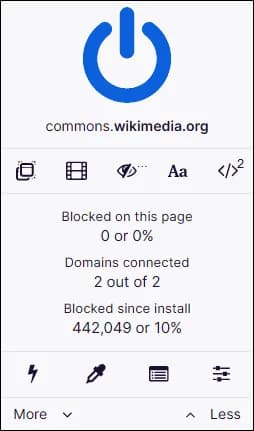
uBlock Origin leads browser-based privacy defense with 45 million active users, blocking ads, malvertising, cryptomining scripts, and third-party trackers to deliver the highest-ROI privacy boost for non-technical users. Its 'medium mode' blocks 99% of tracking while requiring some user education, a trade-off that cybersecurity professionals consistently endorse over heavier alternatives.
Frequently Asked Questions About Cybersecurity & Privacy Tools
What is the best cybersecurity tool for beginners? Start with a password manager. [Bitwarden](#item-6) is completely free and works on every device, while [1Password](#item-1) adds family sharing and a more polished app for a small monthly fee. Either one will make your accounts far harder to break into overnight.
Do I really need a VPN? A VPN scrambles your internet traffic so no one on public Wi-Fi can spy on you. [Cloudflare WARP](#item-2) is the fastest free option, while [Mullvad VPN](#item-3) is the top pick if keeping your identity private is the priority.
What single step will protect my accounts the most? Turn on two-step login (also called two-factor authentication) everywhere you can. A physical security key like the [YubiKey 5](#item-9) is the strongest form available — it's nearly impossible for a hacker to bypass remotely, even if they already have your password.
Image credits
- 1Password: Software: 1Password Screenshot: VulcanSphere / Public domain (entity-adopted)
- Cloudflare WARP (1.1.1.1): Cloudflare / Wikimedia Commons
- Mullvad VPN: Newslinger / CC0 (entity-adopted)
- CrowdStrike Falcon: Wikipedia / CrowdStrike (entity-adopted)
- Bitwarden: Software: Bitwarden Inc. Screenshot: VulcanSphere / GPLv3 (entity-adopted)
- Proton Suite: NOAASatellites / flickr (PDM)
- Wiz: collision.conf / flickr (BY)
- Yubikey 5: FelixLadd / Wikimedia Commons (CC BY-SA 4.0)
- uBlock Origin: Raymond Hill (gorhill) - developer / GPLv3 (entity-adopted)
Related Videos
Rank it your way
Remix this list into your own ranking, or head to the play hub for every game mode and community breakdown — blind mode, challenges, tier lists, and more.
You Might Also Like

Top 10 Best VPN Services 2026
Top 10 Best VPN Services 2026

Top 10 Best Password Managers 2026
Top 10 Best Password Managers 2026

Top 10 Productivity Apps That Actually Changed How People Work
best productivity apps that changed work
Top 10 Hacker News — Top Stories — August 10, 2026
#1 Docker Sandboxes – Disposable, isolated sandboxes for AI agents · #2 What Happened to HackerOne? · #3 The Philippines' big offshoring industry is growing despite AI

Top 10 Hacker News — Top Stories — April 6, 2026
#1 Show HN: I built a tiny LLM to demystify how language models work · #2 Gemma 4 on iPhone · #3 An open-source 240-antenna array to bounce signals off the Moon

Top 10 Hacker News — Top Stories — March 22, 2026
#1 The three pillars of JavaScript bloat · #2 Tinybox – A powerful computer for deep learning · #3 Chest Fridge (2009)