
Science and technology in Israel / Wikipedia
Top 10 European Pharmaceutical Tech Companies
Europe houses four of the world's ten largest pharmaceutical companies and an explosion of AI-driven drug discovery startups that are fundamentally reshaping how medicines are found and approved. The UK, Switzerland and Germany are the epicentres, with combined pharma R&D spend exceeding $40B annually. AI platform companies like Exscientia and Evotec are compressing drug discovery timelines from 12 years to under 4, while mRNA pioneers BioNTech proved that novel modalities can deliver global-scale impact in months. These ten companies sit at the crossroads of biology, data science and translational medicine.
Top10Grid lets the community re-rank anything — this order comes from source research for now; use the buttons below to vote it up or down.

Current Rankings
- 0#1
AstraZeneca

AstraZeneca was formed in 1999 by the merger of Sweden's Astra AB with the UK's Zeneca Group and is headquartered in Cambridge, England. Oncology is now its largest business - Tagrisso in EGFR-mutated lung cancer, Lynparza and Imfinzi, and Enhertu partnered with Daiichi Sankyo - and the roughly $39 billion purchase of Alexion in 2021 added the rare-disease franchise alongside it.
- 0#2
Novartis

Novartis, with CHF 45.7B revenue, has concentrated on precision medicine through radioligand therapy (RLT) and gene therapies since spinning off Sandoz in 2023. Its Kymriah CAR-T therapy remains a standard option for relapsed paediatric leukaemia. The Basel-based AI hub employs over 500 data scientists mining real-world evidence to support regulatory submissions, and the Pluvicto radioligand franchise is expanding into earlier treatment lines.
- 0#3
Roche

Roche is unusual among large pharmaceutical companies in owning a diagnostics business of comparable scale to its drug business, including Foundation Medicine's genomic tumour profiling. That pairing is the strategy rather than a coincidence: the diagnostic identifies which patients a targeted oncology drug should be given to, which is how the company built its HER2 and other targeted franchises.
- 0#4
BioNTech

BioNTech, founded in Mainz by Uğur Şahin and Özlem Türeci, spent a decade on mRNA cancer immunotherapy before partnering with Pfizer to turn the same platform into the Comirnaty COVID-19 vaccine in 2020. Oncology remains its stated main purpose, and its pipeline centres on individualised neoantigen vaccines and mRNA-encoded antibodies.
- 0#5
UCB
UCB is a Belgian biopharma focused on neurology and immunology. Its growth now comes largely from Bimzelx (bimekizumab), the first antibody to block both IL-17A and IL-17F, alongside an epilepsy franchise that includes Fintepla for Dravet syndrome and Lennox-Gastaut. It also runs an anti-tau Alzheimer's programme, bepranemab, partnered with Roche.
- 0#6
Evotec
Evotec runs the world's largest open-innovation pharma network, with its Hamburg-based platform generating nearly €800M revenue and analyzing over 500B data points. Its AI engine cuts average hit-to-lead timelines by 65%; partners include Bayer, Novo Nordisk, and Bristol Myers Squibb.
- 0#7
Exscientia

Exscientia, an Oxford-based drug discovery company, put the first AI-designed drug molecule into human trials in 2020, using its Centaur Chemist platform to compress the design-make-test cycle of early-stage medicinal chemistry. It was acquired by Recursion Pharmaceuticals in November 2024 and no longer operates as a standalone company.
- 0#8
Owkin
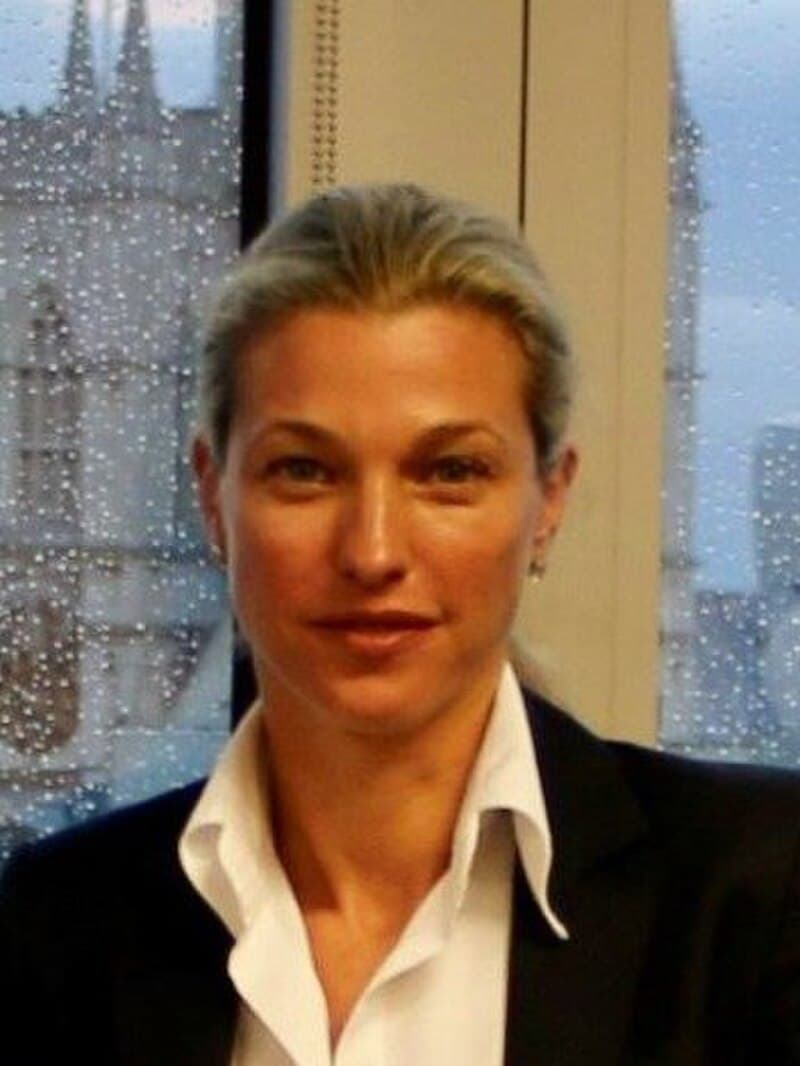
Owkin pioneered federated learning for clinical data, allowing AI models to train on hospital data without it leaving the institution; valued at $1B+, its MSI biomarker predictor is approved for colorectal cancer diagnosis in France, deployed in 25+ European oncology centres.
- 0#9
Recursion Pharmaceuticals (EU ops)
Recursion is a Salt Lake City drug-discovery company that runs automated cell-imaging experiments at industrial scale and trains models on the resulting petabyte-scale image dataset to find drug-disease relationships. It signed a Roche and Genentech collaboration in 2021 covering up to 40 programmes, and acquired the UK AI drug-discovery firm Exscientia in 2024, which is where its European operations come from.
- 0#10
Healx

Healx is a Cambridge, UK company that applies its Healnet knowledge graph to drug repurposing for rare diseases, the large majority of which have no approved treatment. Its lead programme, a combination therapy for Fragile X syndrome, entered Phase 2 trials after clearance from the FDA.
Watch the ranking video
Image credits
- AstraZeneca: Johan Wessman / News Oresund / Wikimedia Commons (CC BY 2.0)
- Roche: Ramon Karolan / Pexels
- BioNTech: BioNTech / Wikipedia
- UCB: Ucb Logo.svg / Wikimedia Commons
- Evotec: Evotec.svg / Wikimedia Commons
- Exscientia: Giulio Superti-Furga / Wikipedia
- Recursion Pharmaceuticals (EU ops): Bing Images / www.annualreports.com
- Healx: Bing Images / healx.ai
Related Videos
Rank it your way
Remix this list into your own ranking, or head to the play hub for every game mode and community breakdown — blind mode, challenges, tier lists, and more.
You Might Also Like

Top 10 US Biotech Companies by Pipeline Value
top US biotech companies by pipeline value

Top 10 European Synthetic Biology Companies to Watch in 2025
top European synthetic biology companies

Top 10 European Biotech Companies by Pipeline (2026 Outlook)
top European biotech companies by pipeline

Top 10 Argentine Tech Startups to Watch in 2026
#1 MercadoLibre · #2 Globant · #3 Ualá

Top 10 AI Coding Tools for Developers in 2026
#1 GitHub Copilot · #2 Claude (Anthropic) · #3 ChatGPT Code Interpreter
Top 10 Ars Technica — Latest — September 7, 2026
#1 The complex corporate web behind a $3.2 billion AI data center · #2 German company becomes first in Europe to launch fully commercial orbital rocket · #3 Farmed salmon may not be as nutritious as it once was, new research suggests