
Alan Wilson from Stilton, Peterborough, Cambs, UK / Wikimedia Commons (CC BY-SA 2.0)
Top 10 Cars That Became Legends Before Their Time (2026 Edition)
Some cars are appreciated in their era. Others are criminally undervalued, discontinued too soon, and then worshipped by the next generation who can't afford them. These are the machines that were ahead of their time — engineered so well, styled so perfectly, or tuned so brilliantly that they became more iconic dead than they ever were alive. Every one of them now commands prices their original buyers would find obscene.
Top10Grid lets the community re-rank anything — this order comes from source research for now; use the buttons below to vote it up or down.

Current Rankings
- 0

The MK4 Supra's 2JZ-GTE inline-six is the most legendary engine in tuning history, engineered to handle over 1,000 horsepower on stock internals. This durability transformed a grand tourer into a drag strip icon. When production ceased in 2002, clean examples sold for around $30,000; by 2024, low-mileage Supras exceed $200,000 at auction. The Fast and the Furious propelled it to fame, but the 2JZ's ability to absorb absurd torque is what ensures its immortality.
- 0

The third-generation RX-7 is one of the most beautiful sports cars ever drawn, featuring a sequential twin-turbo 13B rotary engine that revs to 8,500 RPM—exotic engineering no manufacturer dares attempt today. This high-revving motor sacrifices fuel economy (16 MPG combined) for a power delivery unlike piston-driven rivals.
- 0

All-wheel drive ATTESA E-TS and Super-HICAS steering embarrassed Porsches and Ferraris on track, clocking 7:46 at the Nurburgring in 1999. Never officially sold in the US, it became forbidden fruit, smuggled in as gray-market imports. Paul Walker's R34 in 2 Fast 2 Furious cemented its pop culture status, but the car's 0.98g skidpad grip truly defined its legend.
- 0

Its VTEC engagement sharpens response, while the near-50/50 weight distribution punishes driving errors with snappy oversteer. Lacking turbo, AWD, or electronic nannies, it offers a purist's challenge: 0-60 in 6.2 seconds on a $33,000 MSRP. Compared to the Supra's forced induction, the S2000's naturally aspirated scream delivers a rawer, more connected driver experience.
- 0
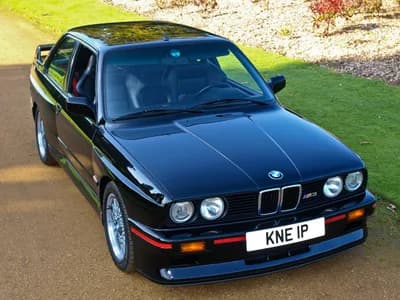
The BMW E30 M3 dominates as a homologation legend, having won 1,436 races in its first five years. Its hand-built S14 four-cylinder engine and perfectly balanced chassis delivered a racing pedigree that no rival could match during the 1980s. Clean examples now exceed $100,000—triple the original $34,000 MSRP adjusted for inflation—proving its timeless value.
- 0

The Porsche 993 defines the ultimate air-cooled experience, with its hydraulic steering and flat-six symphony that no water-cooled successor replicates. When Porsche switched to the 996 in 1998, the 993 became the benchmark for analog purity, and a Turbo now commands $250,000—50% more than the base Carrera's current $80,000-120,000 range. The flat-six's raw feedback remains unmatched in the 911 lineage.
- 0

The first-gen Honda NSX shocked the supercar world with Ayrton Senna's chassis development and Honda's legendary reliability, proving a mid-engine exotic could start every morning without leaks. It embarrassed the Italian competition so badly that Enzo Ferrari allegedly demanded the F355 in response, outperforming the typical exotic by maintaining a 3.0-liter V6 that delivered 270 horsepower with daily-drivability like a Civic.
- 0
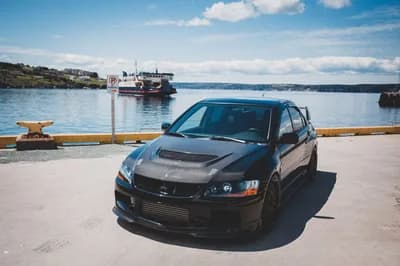
The Mitsubishi Lancer Evolution IX stands as the final true rally-bred icon, with its 4G63 turbo engine and active center differential delivering unmatched AWD capability under $35,000. Mitsubishi killed the Lancer in 2017, and clean Evo IXs now fetch $50,000-80,000, proving no rival has matched its blend of affordability and performance.
- 0

Despite being developed on a $9 million budget in 1960s dollars after Enzo Ferrari backed out of a buyout deal, the GT40's 7.0-liter V8 engine delivered unmatched endurance and speed. Only 105 GT40s were ever built, and original examples now sell for $5-11 million at auction. The Ford v Ferrari film brought the story to a wider audience, but the GT40's raw, race-bred engineering had already cemented it as a legend. This car didn't just win races—it redefined what American engineering could achieve on the world stage.
- 0

Its distinctive gullwing doors weren't a stylistic flourish but a necessity imposed by the tubular space frame chassis, which had tall side sills for rigidity. Mercedes built only 1,400 coupes and 1,858 roadsters. Today, a well-preserved Gullwing commands $1-2 million, reflecting its status as the crown jewel of any serious collection. The 300SL's top speed of 161 mph set a benchmark that would not be surpassed for nearly a decade, and its fuel injection system alone cost $300 per unit in 1954—proving that Mercedes didn't just create a car; it birthed a sports car legend.
FAQ: Cars That Became Legends Before Their Time
### What does "legend before their time" actually mean?
It means a car that was undervalued, underbought, or discontinued while it was still new — and only became an icon years later, once enthusiasts realized how advanced, well-engineered, or good-looking it really was.
### Which car on this list appreciated the most?
The Ford GT40 and Mercedes-Benz 300SL Gullwing lead in raw auction value, but the Toyota Supra MK4, Nissan Skyline R34 GT-R, and Honda S2000 have appreciated the fastest as modern tuner culture has grown.
### Why were some of these discontinued?
A mix of emissions rules, safety regulations, low showroom demand, and — in the case of the RX-7 and Evo IX — engineering choices (rotary apex seals, homologation costs) that no longer penciled out for the manufacturer.
### Which one is the best daily driver today?
The Honda S2000 and Porsche 993 are the most livable here; the Evo IX is the most practical in bad weather thanks to its AWD.
### Be the 1st to vote! Which legend aged best — and which one belongs on this list that we missed?
Frequently Asked Questions About Cars That Became Legends
## Frequently Asked Questions About Cars That Became Legends
What does it mean for a car to become a legend before its time? It usually means the car was underappreciated, slow-selling, or discontinued during its production run, then saw values and cultural cachet explode years later as enthusiasts, tuners, or collectors re-evaluated it.
Why are Japanese performance cars from the 1990s so often called 'legends before their time'? Strict emissions rules, rising insurance costs, and the 2008 financial crisis killed many of them off just as global demand for analog, turbocharged, rear- or all-wheel-drive performance was peaking — pushing clean examples into six-figure territory.
Which car on this list is the best investment today? Values move with the market, but the Toyota Supra MK4, Nissan Skyline R34 GT-R, and Honda NSX have all shown sustained multi-year appreciation. The Mercedes-Benz 300SL Gullwing and Ford GT40 are blue-chip collectibles in a different price tier entirely.
Are air-cooled Porsches really better than water-cooled ones? Enthusiasts argue air-cooled engines offer a more visceral mechanical feel, simpler cooling systems, and a distinctive sound. Whether that makes them 'better' is subjective — which is exactly why the 993 on this list is so loved.
Vote for your favorite below, and let us know which underrated car we missed in the comments.
Image credits
- Toyota Supra MK4 (A80): Accord14 / Wikimedia Commons (CC BY-SA 4.0)
- Mazda RX-7 FD: Samee55 / flickr (BY-SA)
- Nissan Skyline R34 GT-R: usf1fan2 / flickr (BY)
- Honda S2000: Wikipedia/Wikimedia Commons
- BMW E30 M3: Darren / Wikimedia Commons (CC BY 2.0)
- Porsche 993: Wikipedia/Wikimedia Commons
- Honda/Acura NSX (First Generation): Calreyn88 / Wikimedia Commons (CC BY-SA 4.0)
- Mitsubishi Lancer Evolution IX: Erik Mclean / Pexels
- Ford GT40: Wikipedia/Wikimedia Commons
- Mercedes-Benz 300SL Gullwing: Triple-green / flickr (BY)
Related Videos
Rank it your way
Remix this list into your own ranking, or head to the play hub for every game mode and community breakdown — blind mode, challenges, tier lists, and more.
You Might Also Like

Top 10 Electric Vehicles That Made EVs Cool
Top 10 Electric Vehicles That Made EVs Cool

Top 10 Chinese Electric Vehicle Brands 2026
Top 10 Chinese Electric Vehicle Brands 2026

Top 10 Car Mods That Actually Improve Performance (Not Just Looks)
Top 10 Car Mods That Actually Improve Performance (Not Just Looks)

Top 10 Most Influential Tech Companies of All Time
#1 Apple · #2 Microsoft · #3 Google (Alphabet)

Top 10 European Cybersecurity Incidents That Changed Policy
#1 NotPetya (2017) · #2 Estonian DDoS Attacks (2007) · #3 WannaCry NHS Attack (2017)

Top 10 European Privacy Technology Companies
#1 Proton AG · #2 Nextcloud · #3 Tresorit