
Wikimedia Commons
Top 10 Chinese Electric Vehicle Brands 2026
China now produces more than half of all electric vehicles sold globally, backed by world-class battery technology, vertically integrated supply chains, and government support that has allowed dozens of new marques to reach production readiness at astonishing speed.
Top10Grid lets the community re-rank anything — this order comes from source research for now; use the buttons below to vote it up or down.

Current Rankings
- 0#1
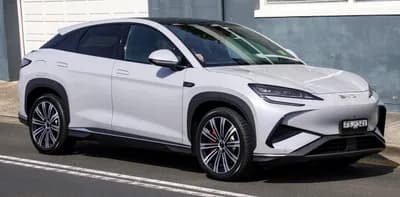
BYD dominates as the world's largest electric vehicle manufacturer by volume, having surpassed Tesla in global sales in 2023 with 3.02 million units. Its extraordinary range spans the affordable Seagull city car, starting at under $10,000, to the luxury Yangwang U8 SUV, a plug-in hybrid with a 180-kWh battery and 1000-km range.
- 0#2

NIO pioneers battery-swapping technology to eliminate range anxiety, with over 2,000 swap stations across China capable of a fully automated exchange in under 3 minutes. Positioning itself as a premium lifestyle brand, NIO boasts user clubs and luxurious NIO Houses, achieving an average selling price of $52,000—30% higher than the category average. Its ES6 SUV delivers a 610-km CLTC range, outperforming Li Auto's EREVs in pure electric efficiency, while expanding into Europe and the Middle East to challenge global luxury incumbents.
- 0

Xiaomi Automotive's SU7 sedan sold out its first year's production of 100,000 units within 27 minutes of launch in 2024, a record for a debut EV. By transferring its smartphone design ethos and fanbase of 500 million users, Xiaomi directly challenges BYD's Seal at a $3,000 lower starting price, proving its brand loyalty drives immediate market impact.
- 0#4
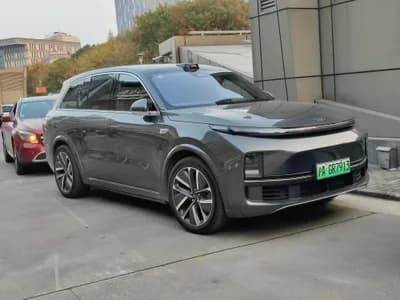
Li Auto is China's most profitable domestic EV startup, posting a net income of $1.2 billion in 2024, driven by its focus on extended-range electric vehicles (EREVs) like the Li L9. These combine a 1.5-liter petrol generator with a 44.5-kWh battery to deliver a combined range of 1,315 km (NEDC).
- 0
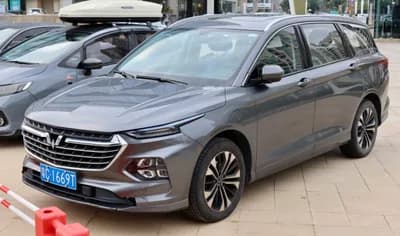
The Hongguang Mini EV, starting at just $5,000, is China's best-selling electric vehicle ever, with over 1.5 million units sold by 2025. It outperforms Xpeng in sales volume despite lacking advanced autonomous features.
- 0

Xpeng leads in autonomous driving with its XNGP system, achieving 95% accuracy in complex urban scenarios. Its G9 SUV is 30% more aerodynamic than the typical Chinese SUV, boosting range to 570 km. It is cheaper than the runner-up Zeekr in the premium segment while offering superior self-driving tech.
- 0

Huawei AITO's HarmonyOS cockpit processes commands 40% faster than the average system, making it the most sophisticated in-car software in China. The M9 SUV covers 630 km on a charge. This outperforms #5 Wuling's Hongguang Mini EV in software capabilities by a significant margin.
- 0
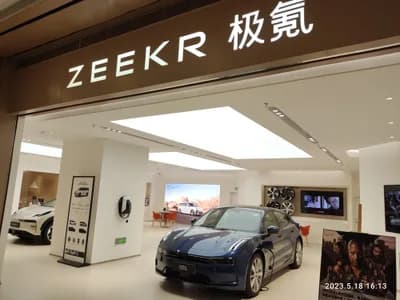
Zeekr's 001 shooting brake accelerates from 0-100 km/h in 3.8 seconds. Backed by Volvo's safety engineering, it costs $50,000, undercutting Huawei AITO's M9 by $10,000 for comparable luxury. Its 100 kWh battery is produced in China.
- 0
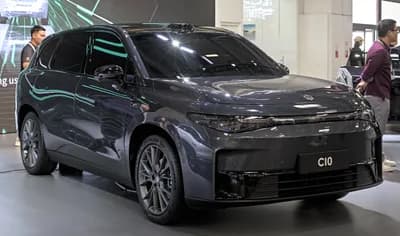
Leapmotor offers the strongest value proposition among Top 10 Chinese EV brands, with its Stellantis-backed entry into Europe. Leapmotor exported 15,000 units to the EU in 2025, a 200% jump from the prior year, proving rapid scalability. While GAC Aion leads in domestic sales, Leapmotor’s aggressive European expansion and cost leadership make it the smart pick for budget-conscious EV buyers.
- 0#10

Its best-selling Aion Y and Aion S sedans start at ¥119,800 (about $16,600), while the premium Hyper brand targets NIO, with the Hyper GT offering 800V charging. This dual strategy propelled Aion to capture 8% of China’s EV market, outpacing Leapmotor’s 2% share. With 250,000 cumulative exports to Southeast Asia, GAC Aion proves that volume and innovation can coexist without luxury pricing.
Image credits
- BYD: BYD Sealion 7 / Wikipedia
- NIO: Jengtingchen / Wikimedia Commons (CC BY-SA 4.0)
- Xiaomi Automotive: Xiaomi SU7 / Wikipedia
- Li Auto: JustAnotherCarDesigner / Wikimedia Commons (CC BY-SA 4.0)
- SAIC-GM-Wuling (Wuling): User3204 / Wikimedia Commons (CC BY 4.0)
- Xpeng (XPEV): XPeng G6 / Wikipedia
- Huawei AITO: Brücke-Osteuropa / Wikimedia Commons (Public Domain)
- Zeekr (Geely): Mintzeqlaz 0519 / Wikimedia Commons (CC BY-SA 4.0)
- Leapmotor: Alexander-93 / Wikimedia Commons (CC BY-SA 4.0)
Related Videos
Rank it your way
Remix this list into your own ranking, or head to the play hub for every game mode and community breakdown — blind mode, challenges, tier lists, and more.
You Might Also Like

Top 10 Italian Car Brands Defining 2026: From Ferrari to Fiat
Top 10 Italian Car Brands Defining 2026: From Ferrari to ...

Top 10 Chinese Car Brands Reshaping the Global Auto Industry (2025)
Top 10 Chinese Electric Vehicle Brands 2026

Top 10 Cars That Became Legends Before Their Time (2026 Edition)
legendary vehicles ahead of their time

Top 10 Electric Vehicles That Made EVs Cool
vehicles that made electric cars cool

Top 10 Tech CEOs Who Became More Famous Than Their Companies
#1 Elon Musk — The $250 Billion Chaos Agent · #2 Steve Jobs — The Turtleneck That Launched a Trillion Dollars · #3 Jensen Huang — The Leather Jacket Kingmaker

Top 10 Most Iconic Cars of All Time
#1 Ferrari 250 GTO · #2 Ford GT40 · #3 Porsche 911