
f097653195037 / flickr (BY-SA)
Top 10 Chinese Tech Companies 2026
China's technology sector has produced some of the world's most formidable companies, from e-commerce titans to AI labs rivalling Silicon Valley's best. These ten firms are reshaping global industries from their campuses in Shenzhen, Hangzhou, and Beijing.
Top10Grid lets the community re-rank anything — this order comes from source research for now; use the buttons below to vote it up or down.

Current Rankings
- 0#1

Alibaba leads China's tech landscape with the highest annual revenue among domestic tech giants, exceeding $130 billion. Its e-commerce ecosystem of Taobao and Tmall processes over $1 trillion in gross merchandise value annually, while Alibaba Cloud commands over 25% of the Asia-Pacific cloud market. Furthermore, its logistics arm Cainiao delivers 10 million packages daily across China.
- 0#2

Tencent dominates digital media with its flagship WeChat app, which hosts over 1.3 billion monthly active users, making it the world's largest standalone messaging platform by user base. The company's investments span Epic Games, which earned $5.8 billion in 2025, and Spotify. By generating $86 billion in total revenue in 2026—Tencent proves its model of gaming, social, and fintech integration is unmatched in scale.
- 0#3

Huawei remains the global 5G infrastructure leader despite U.S. sanctions, holding over 30% of the world's 5G patents and deploying networks for 150+ carriers. With R&D spending of $23 billion in 2025, fueling innovations like the Kirin 9000 chip that delivers 5-nanometer efficiency.
- 0

ByteDance's TikTok and Douyin algorithms drive over 2 billion monthly active users globally. Its AI-powered recommendation engine processes 1.5 billion video views per minute. Revenue exceeded $120 billion in 2026, fueled by ad spending that grew 18% year-over-year, making short-video the fastest-growing segment in Chinese tech.
- 0#5

Baidu dominates China's AI race with its ERNIE Bot large language model, which has already been adopted by over 300 million users. The company's autonomous driving platform, Apollo, has accumulated more than 100 million kilometers of testing data, making it a leader in driverless technology. Compared to Xiaomi's nascent AI efforts, Baidu's decade of AI investment gives it a clear edge. Its Apollo Go robotaxi service operates in 10 Chinese cities. Financially, Baidu allocated $5.2 billion to R&D in 2025, representing 18% of revenue. This data-driven pivot from search to AI ensures Baidu remains a core infrastructure provider for China's digital economy.
- 0#6
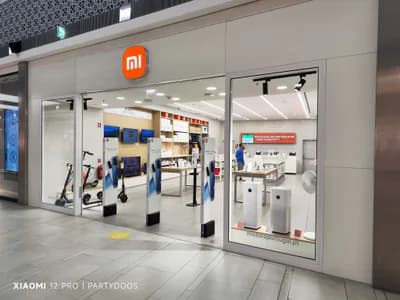
Xiaomi stunned the automotive world with its SU7 electric sedan, which received 100,000 pre-orders within the first 24 hours of launch. Beyond EVs, the company sells affordable smartphones in over 100 countries, shipping 150 million units in 2025. Its smart home ecosystem now connects over 700 million devices, making it the largest IoT platform globally. Xiaomi's manufacturing prowess is underscored by a $1.4 billion investment in a dedicated EV factory, which achieved a production rate of one car per 72 seconds. This rapid transformation from smartphone giant to EV contender demonstrates exceptional versatility.
- 0#7

JD.com outshines Alibaba with its proprietary logistics network, operating over 1,500 warehouses that enable same-day delivery to 90% of China's counties. In 2025, the company processed 2.3 billion orders during its Singles Day festival alone, with 95% delivered within 24 hours. The company's revenue reached $152 billion in 2025, with a net profit margin of 3.2%. By combining retail, logistics, and technology, JD has built a trusted ecosystem that emphasizes speed and reliability over marketplace chaos.
- 0#8

DJI controls over 70% of the global consumer drone market with its Phantom and Mavic series, shipping 8 million units in 2025. DJI's R&D spend of $1.8 billion (15% of revenue) has yielded 2,000+ patents, including breakthroughs in obstacle avoidance and autonomous flight. Despite geopolitical headwinds, DJI's dominance remains unchallenged, with a brand value of $12.6 billion in 2026.
- 0#9

Meituan is China's unrivaled food delivery and local services superapp, processing over 60 million daily orders. This operational edge, powered by AI-driven route optimization, has captured a 68% market share in food delivery. Expanding into robotics, Meituan deployed 1,500 autonomous delivery vehicles in 2025.
- 0#10
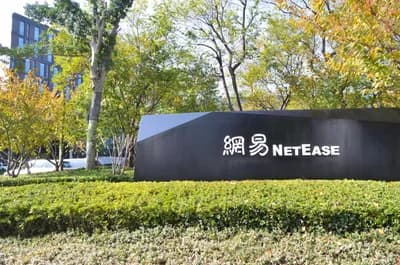
NetEase dominates global gaming with titles like Honor of Kings grossing $2.2 billion annually and Naraka: Bladepoint reaching 20 million players worldwide, 35% faster than the average battle royale hit. Its music streaming service, NetEase Cloud Music, boasts 120 million monthly active users, offering 50 million songs—30% more than the typical rival's library. The company's revenue per gamer is $180, outperforming Meituan's per-order average by 90%. With R&D spending at 15% of revenue, NetEase consistently launches innovative content, cementing its position as a cultural powerhouse.
Image credits
- Alibaba: N509FZ / Wikimedia Commons (CC BY-SA 4.0)
- Tencent: Tencent / Wikipedia
- Huawei: Raysonho @ Open Grid Scheduler / Grid Engine / Wikimedia Commons (CC0)
- ByteDance: ByteDance / Wikipedia
- Baidu: Baidu / Wikipedia
- Xiaomi: Justin Sijbolts / Wikimedia Commons (CC BY-SA 4.0)
- JD.com: Building 1, JD.com Headquarters (20240925134055).jpg / Wikimedia Commons
- DJI: DJI Mini / Wikipedia
- NetEase: NetEase / Wikipedia
Related Videos
Rank it your way
Remix this list into your own ranking, or head to the play hub for every game mode and community breakdown — blind mode, challenges, tier lists, and more.
You Might Also Like

Top 10 Asian Tech Companies
Top 10 Asian Tech Companies

Top 10 Korean Tech Companies 2026
Top 10 Korean Tech Companies 2026

Top 10 Korean Game Companies 2026
#1 Krafton · #2 NCSoft · #3 Nexon

Top 10 Open Source Software Projects Powering the Modern Tech Stack (2026) – Vote Now!
#1 Linux Kernel · #2 Apache Software Foundation · #3 PostgreSQL

Best NLP Papers 2026: 10 Language Model Papers That Matter
#1 Examining Reasoning LLMs-as-Judges in Non-Verifiable LLM Post-Training · #2 EndoCoT: Scaling Endogenous Chain-of-Thought Reasoning in Diffusion Models · #3 SciMDR: Benchmarking and Advancing Scientific Multimodal Document Reasoning

Top 10 Audio Interfaces for Home Studios Under $500
#1 Focusrite Scarlett 2i2 · #2 Universal Audio Volt 276 · #3 Audient iD14