Top 10 Most Iconic Basketball Shoes
Basketball shoes are more than gear — they're collector's items, cultural touchstones, and the most recognized silhouettes in sports history. From the 1969 Adidas Superstar to the 1985 Air Jordan 1, iconic basketball sneakers shaped streetwear, shattered sales records, and remain coveted decades after their debut. Sneaker historians and fans still debate which silhouette truly changed the game. Be the 1st to vote and make your pick count!
Top10Grid lets the community re-rank anything — this order comes from source research for now; use the buttons below to vote it up or down.

Current Rankings
- 0#1
Air Jordan 1 (Nike, 1985)
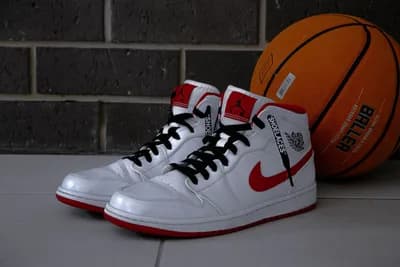
The Air Jordan 1, designed by Peter Moore and released in 1985, was the shoe that created the modern sneaker industry. Nike signed Michael Jordan for $500,000 per year when Adidas and Converse declined him, and the Jordan 1 — banned by the NBA for its red-and-black colorway violating uniform policy, generating $1 million in free publicity from the fines — sold $100 million in its first year. The "Bred" and "Chicago" colorways are the most resold sneakers in history, with original pairs selling for $50,000-100,000 at auction. Nike's Air Jordan division now generates $5 billion annually.
- 0#2
Nike Air Force 1 (1982)
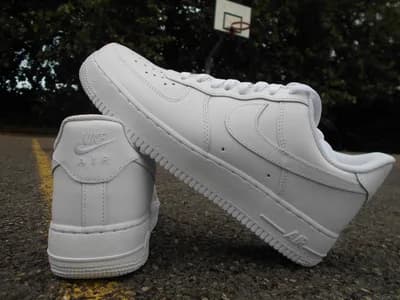
The Nike Air Force 1, designed by Bruce Kilgore and released in 1982, was the first basketball shoe to use Nike Air cushioning technology and is the best-selling sneaker in Nike history — generating over $800 million in revenue annually as of 2024, more than 40 years after its release. It started as a performance basketball shoe worn by Moses Malone, then became a New York City streetwear staple in the late 1980s, then a global fashion item. The Air Force 1 has been released in over 1,700 colorway variations. No shoe has sustained commercial relevance longer.
- 0#3
Converse Chuck Taylor All Star

The Converse Chuck Taylor All Star, first produced in 1917 and associated with Chuck Taylor (who joined the Converse sales team in 1921), was the official shoe of US Olympic basketball from 1936 to 1968 and was worn by virtually every NBA player before the Nike era. More than 800 million pairs have been sold, making it the best-selling athletic shoe in history. Every NBA legend before 1970 — Russell, Chamberlain, West, Robertson — played in Chucks. The shoe's canvas-and-rubber construction has barely changed in 100 years, making it the most durable design in sports footwear history.
- 0#4
Air Jordan 11 (Nike, 1995)
The Air Jordan 11, designed by Tinker Hatfield and worn by Michael Jordan during the 1995-96 72-win Bulls season and 1996 championship run, is consistently voted the most beautiful basketball shoe ever made. Its patent leather overlay, translucent outsole, and carbon fiber shank were unprecedented in 1995 design terms, and Jordan wearing it in the "Concord" colorway while winning the championship cemented its iconic status. The "Space Jam" and "Concord" versions generate immediate sellouts whenever Nike retroactively releases them — 2011 Concord retros caused riots at mall stores nationwide.
- 0#5
Adidas Superstar (1969)

The Adidas Superstar, released in 1969 with its distinctive rubber "shell toe," was the dominant NBA basketball shoe through the 1970s and was worn by Kareem Abdul-Jabbar, Julius Erving, and the inaugural 1979 ABA-NBA champions. Run-DMC's 1986 song "My Adidas" transformed the Superstar from an athletic shoe to a hip-hop cultural artifact, leading Adidas to sign the group to a reported $1.5 million endorsement deal — widely cited as one of the first major sneaker endorsement deals for non-athletes. The shell toe remains one of the most recognized silhouettes in fashion history.
- 0#6
Nike Air Penny (1995)

The Nike Air Penny, designed for Anfernee "Penny" Hardaway and released in 1995, is considered one of the finest basketball shoe designs in Nike history — a shoe whose popularity, driven by Hardaway's game and the shoe's aesthetic appeal, made it one of Nike's top basketball silhouettes of 1995-96. The "Lil' Penny" puppet advertising campaign, featuring the voice of comedian Chris Rock, became one of the most acclaimed sneaker marketing campaigns of the decade. Hardaway's injuries cut his career short, but Nike has re-released the Air Penny multiple times to consistent demand.
- 0#7
Nike Zoom Kobe 4 (2009)

The Nike Zoom Kobe 4, worn by Kobe Bryant during his first championship without Shaquille O'Neal in 2008-09, was revolutionary for its low-top design — controversial at the time for a basketball shoe, as high-tops were considered mandatory for ankle support. Kobe's public challenge to Nike engineers ("make me a shoe where I can feel the court") produced a minimalist masterpiece that changed basketball footwear design. Every major brand now offers low-top performance basketball shoes. The Kobe 4 "Protro" re-releases consistently sell out, and after Kobe's death in 2020, original pairs became priceless collectibles.
- 0#8
Under Armour Curry 1 (2015)

The Under Armour Curry 1, released in February 2015 during Stephen Curry's MVP season, generated $160 million in revenue in its debut year — the highest first-year performance for a signature basketball shoe since the Air Jordan line. Under Armour's market share in basketball footwear went from 3% to 17% in two years following the Curry 1's release, directly threatening Nike's dominance. The shoe's lightweight design and low-cut profile matched Curry's movement-heavy, three-point-shooting style and validated the concept that performance shoes could reflect a player's actual game philosophy.
- 0#9
Reebok Question (1996)
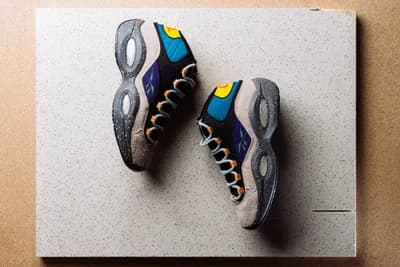
The Reebok Question, Allen Iverson's first signature shoe released in 1996, was designed to match Iverson's crossover-heavy, fearless style and became the defining sneaker of the "Answer" era. Its sales peaked at $175 million annually and it introduced a generation of fans to Iverson's cultural identity — the cornrows, the sleeve, the tattoos, the Question mark logo. Reebok's decision to sign Iverson over Michael Jordan (who wanted to re-sign with Nike) was the most audacious sneaker business decision of the decade. The Question retro released in 2021 sold out globally in under two minutes.
- 0#10
Nike LeBron 10 (2012)

The Nike LeBron 10, worn by LeBron James during the 2012-13 championship season with the Miami Heat, combined the most advanced cushioning technology available (Max Air heel unit) with a diamond-pattern upper that made it visually distinct from any shoe Nike had previously produced. At $200, it was the most expensive signature basketball shoe in history at release and immediately sold out globally. The LeBron line generates over $300 million annually and LeBron's lifetime Nike deal — signed in 2015 for over $1 billion — makes the line's commercial performance a permanent part of both brand histories.
Frequently Asked Questions About Iconic Basketball Shoes
What makes a basketball shoe 'iconic'? An iconic basketball shoe combines on-court performance with lasting cultural impact — it was typically worn by a legendary player during a defining moment, crossed over into everyday streetwear, and stayed in demand long after its original release date.
Which basketball shoe is considered the most iconic of all time? The Nike Air Jordan 1 (1985) is widely regarded as the most iconic basketball shoe ever made. Originally worn by Michael Jordan in his rookie NBA season — and famously banned by the league for its colorway — it launched an entire sneaker industry and remains one of the highest-reselling shoes in history.
Are any of these iconic basketball shoes still being made today? Yes. Several shoes on this list — including the Air Jordan 1, Nike Air Force 1, Adidas Superstar, and Converse Chuck Taylor All Star — remain in active production, with new colorways and limited-edition releases dropping every year.
Frequently Asked Questions About Iconic Basketball Shoes
What makes a basketball shoe 'iconic'? A basketball shoe earns iconic status by combining on-court performance with lasting cultural impact — silhouettes still worn off the court decades after release, partnerships with marquee athletes, and designs that reshaped streetwear and fashion far beyond sports.
Which basketball shoe is considered the most iconic of all time? The Air Jordan 1 (Nike, 1985) is widely cited as the most iconic basketball shoe ever. Banned by the NBA for its colorway, endorsed by a rookie Michael Jordan, and still a top-selling sneaker 40 years later, it set the template for athlete signature footwear worldwide.
Are any of these shoes still in production? Yes — the Converse Chuck Taylor All Star (1917), Nike Air Force 1 (1982), and Adidas Superstar (1969) are all in continuous or near-continuous production and remain global best-sellers across sport and fashion retail.
How do I vote for my favorite? Use the vote button next to each shoe on this page. Your vote is anonymous, free, and takes under two seconds.
Iconic Basketball Shoes: Frequently Asked Questions
### What was the first iconic basketball shoe on this list? The Converse Chuck Taylor All Star, first produced in 1917, is the oldest silhouette featured and long associated with basketball culture.
### Which shoe is considered the most iconic of all time? The Air Jordan 1, released by Nike in 1985 and designed by Peter Moore, is widely cited as the shoe that started the modern signature-sneaker market.
### What is the newest shoe on the list? The Under Armour Curry 1, released in February 2015 during Stephen Curry's MVP season, is the most recent release featured.
### Why is the Adidas Superstar iconic? Released in 1969 with its distinctive rubber "shell toe," the Adidas Superstar crossed over from the court into hip-hop and streetwear.
### Which shoe on the list was worn during a championship run? The Nike LeBron 10, worn by LeBron James during the 2012-13 season, and the Nike Zoom Kobe 4, worn by Kobe Bryant during his first championship without Shaquille O'Neal, both appear on the court during title-winning seasons.
Image credits
- Air Jordan 1 (Nike, 1985): JD Danny / Pexels
- Nike Air Force 1 (1982): Nike Air Force / Wikipedia
- Converse Chuck Taylor All Star: Wikipedia
- Air Jordan 11 (Nike, 1995): Wikimedia Commons
- Adidas Superstar (1969): Adidas Superstar / Wikipedia
- Nike Air Penny (1995): Wikipedia
- Nike Zoom Kobe 4 (2009): Wikimedia Commons
- Under Armour Curry 1 (2015): Wikimedia Commons
- Reebok Question (1996): Melvin Buezo / Pexels
- Nike LeBron 10 (2012): Wikimedia Commons
Related Videos
Rank it your way
Remix this list into your own ranking, or head to the play hub for every game mode and community breakdown — blind mode, challenges, tier lists, and more.
You Might Also Like

Top 10 Indonesian Batik & Fashion in 2026
Top 10 Indonesian Batik & Fashion in 2026

Top 10 Best Sneakers of All Time
Top 10 Best Sneakers of All Time

Top 10 Sneakers That Changed Culture Forever
Top 10 Sneakers That Changed Culture Forever
Top 10 Korean Skincare Brands (K-Beauty)
#1 LANEIGE · #2 Sulwhasoo · #3 COSRX

Top 10 Best Affordable Fashion Brands 2026
#1 Uniqlo · #2 COS · #3 Arket

Top 10 Indian Fashion Designers
#1 Manish Malhotra · #2 Sabyasachi Mukherjee · #3 Ritu Kumar