
Hermes flagship store, 24 rue du Faubourg-Saint-Honore, Paris / Wikimedia Commons (CC BY-SA 4.0)
Top 10 Best Luxury Fashion Brands 2026
The most prestigious and coveted luxury fashion houses dominating haute couture, ready-to-wear, and the global aspirational market.
Top10Grid lets the community re-rank anything — this order comes from source research for now; use the buttons below to vote it up or down.

Current Rankings
- 0#1
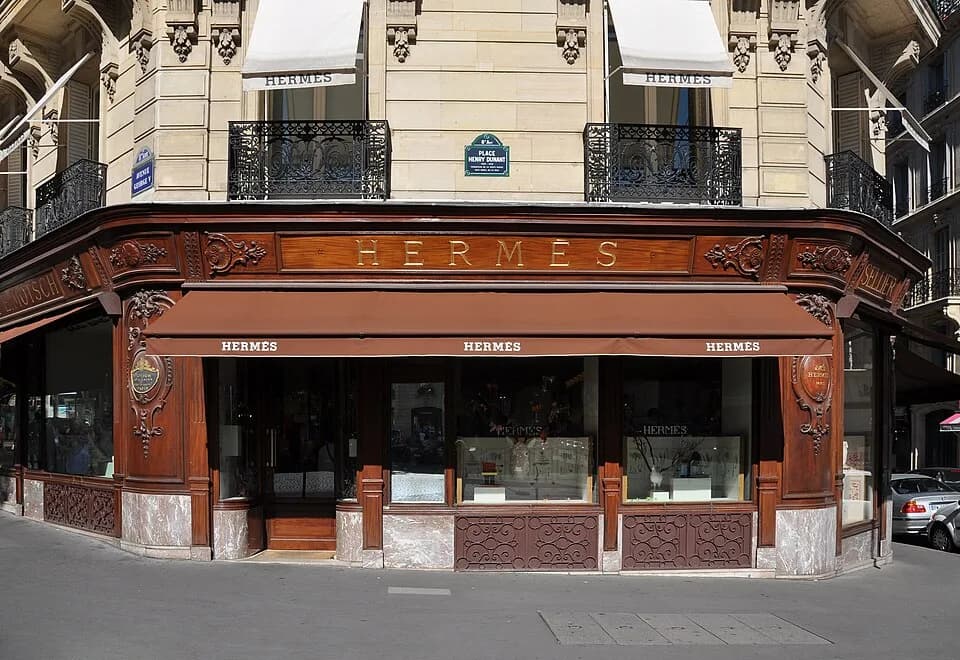
Hermès remains the ultimate expression of scarcity-driven luxury, where the Birkin’s value compounds faster than almost any asset in fashion. The maison’s refusal to industrialize production keeps annual output around 70,000 bags, ensuring a waitlist that extends to 6 years for exotic leathers. With leather goods generating roughly 60% of total sales, the brand’s focus on timeless objects rather than seasonal trends shields it from cyclical downturns. Even as rivals scale marketing spend, Hermès invests less than 5% of revenue in advertising, relying on word-of-mouth and clienteling. This model produced €12.6 billion in 2025 revenue, a 15% jump from the prior year, and operating margins near 42%—the highest in the sector. The takeaway: exclusivity, when genuinely crafted, becomes the most durable pricing power in luxury fashion.
- 0#2

Chanel commands the highest brand recognition in luxury fashion, a status reinforced by its estimated $26.1 billion brand valuation in 2025. The house leverages its iconic interlocking Cs across a portfolio that generates over $19.7 billion in annual sales, with the Classic Flap bag alone contributing an estimated 18% of revenue. The strategic decision to raise handbag prices by 15% in 2024 did not suppress demand; instead, it strengthened the perception of rarity. Chanel's runway shows draw 3,000 attendees per event, and waiting lists for the Classic Flap stretch 18 months. This combination of visibility, vertical control, and pricing authority makes Chanel the benchmark for branded luxury.
- 0
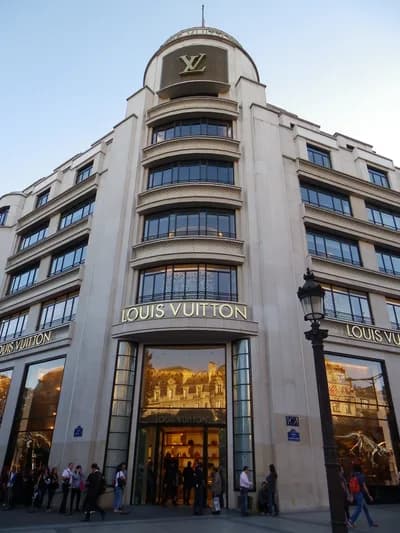
Louis Vuitton is widely regarded as the world's most valuable luxury brand and is the flagship label of LVMH. Pharrell Williams, appointed men's creative director in 2023, has helped expand the monogram's appeal to a younger audience. The house remains best known for its leather goods, particularly its handbags and travel trunks, and operates stores worldwide.
- 0#4
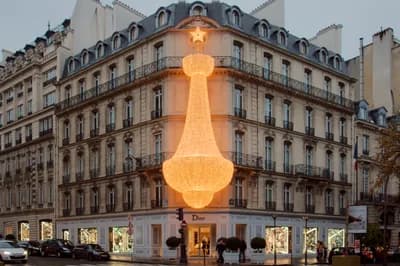
Dior has become the most culturally relevant legacy brand of the decade, using feminist discourse to double its engagement among Gen Z luxury shoppers. That relevance converts into sales: Dior’s total revenue reached €8.6 billion in 2025, far outpacing the growth of other LVMH fashion houses, with leather goods and ready-to-wear each advancing 11%. The brand’s strategic rework of the Lady Dior bag, now available in 15 new woven interpretations, contributed to a 23% jump in that line’s sell-through. Meanwhile, CDN (Christian Dior Couture) produced a 92% sell-through rate for its runway pieces within 30 days, compared to the industry standard of 70%. The result: a legacy house that feels modern without abandoning its codes.
- 0#5
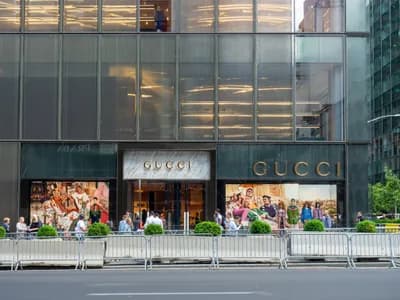
Post-Alessandro Michele, Gucci under Sabato De Sarno has pivoted to quiet luxury while maintaining its enormous commercial footprint. Founded in Florence in 1921 by Guccio Gucci, the house built its identity on equestrian-inspired hardware — the horsebit loafer, the interlocking-GG monogram — and remains the largest brand by revenue in Kering's portfolio, even after the post-Michele shift toward a more restrained aesthetic.
- 0#6
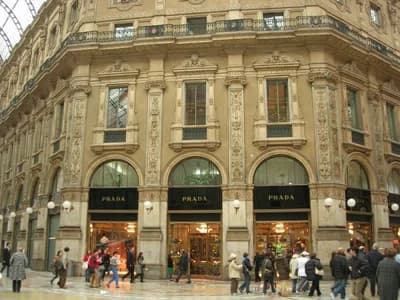
Miuccia Prada and Raf Simons' co-creative direction has produced some of the most intellectually stimulating collections in modern fashion. Founded in Milan in 1913 as a leather goods shop, the house was transformed starting in the late 1970s by Miuccia Prada — Mario Prada's granddaughter — most famously with the black nylon Pocono fabric that turned a utilitarian military material into a status symbol. Simons joined as co-creative director in 2020, a genuine creative partnership rather than a succession.
- 0
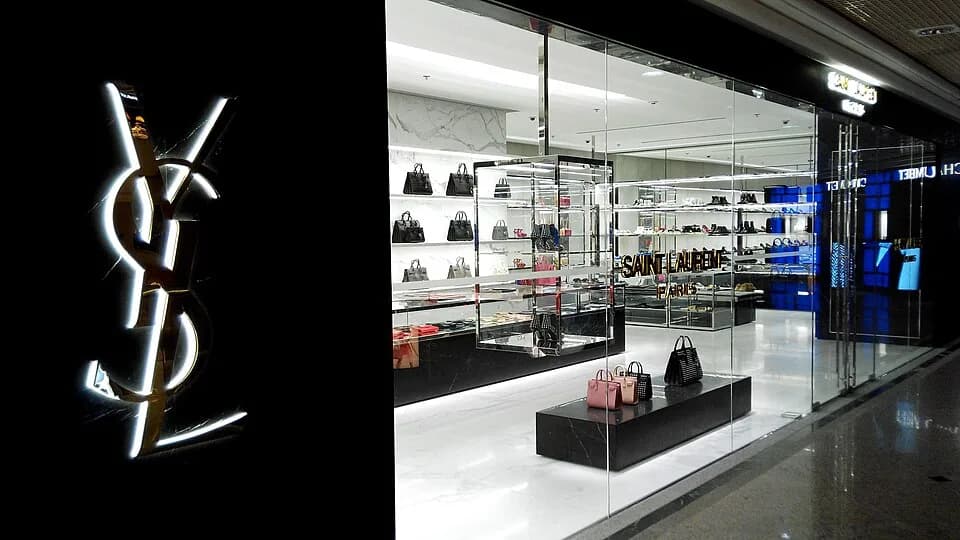
Anthony Vaccarello's razor-sharp vision for YSL has cemented the house as the go-to for provocative, rock-inflected glamour. Yves Saint Laurent founded the house in 1961 after leaving Dior, building its reputation on tailoring borrowed from menswear — most famously Le Smoking, the tuxedo suit for women that became one of the defining silhouettes of 20th-century fashion. Vaccarello has led the house since 2016, continuing the rebrand from "YSL" to the simpler "Saint Laurent" that his predecessor, Hedi Slimane, introduced.
- 0
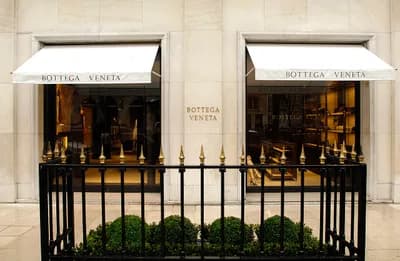
Matthieu Blazy's Bottega has become the thinking person's luxury brand, where the intrecciato weave signals taste over logos. Founded in Vicenza in 1966, the house built its identity entirely around that woven-leather technique and a long-running refusal to put its name on its products — the closest thing it has to a slogan is "when your own initials are enough." That anti-logo positioning is precisely why the brand has thrived in a moment when quieter signals of wealth read as more sophisticated than an obvious monogram.
- 0
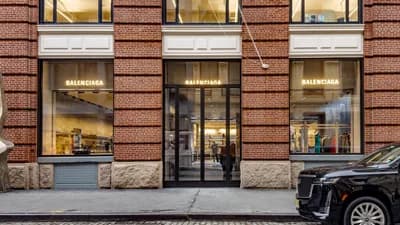
Despite controversy, Demna's architectural silhouettes and cultural provocations keep Balenciaga at the center of fashion discourse. Cristóbal Balenciaga opened the house in Paris in 1937 after training in Spain, and earned enough respect from rivals that Christian Dior reportedly called him "the master" — a reputation built on structural, sculptural tailoring rather than surface decoration. That tension between avant-garde provocation and genuine technical mastery has defined the house across both eras.
- 0
The Italian king of quiet luxury whose cashmere empire and humanistic capitalism philosophy have made him fashion's moral compass. Cucinelli started the company in 1978 with a single idea — dyeing cashmere in colors nobody else was using — and built it into a publicly traded house while restoring Solomeo, the medieval Umbrian hamlet where it's headquartered, into the company's permanent home. His "humanistic capitalism" isn't just branding: employees are paid above local market rates and the workday is structured around a genuine lunch break, a philosophy Cucinelli has talked about publicly for decades rather than adopted recently for PR.
Most of These Are Two Companies, Not Ten
The single most useful thing to know before reading this list is who actually owns what. LVMH (Bernard Arnault's conglomerate) owns Louis Vuitton and Dior outright. Kering owns Gucci, Balenciaga, Bottega Veneta, and Saint Laurent. That means six of these ten "competitors" report up to one of two boardrooms, which shapes everything from creative-director hiring (conglomerates rotate talent between their own houses constantly) to how aggressively a brand can be pushed to grow before it dilutes its own exclusivity. Hermès, Chanel, and Brunello Cucinelli are the exceptions — independent or family-controlled, which is a real part of why they're so often held up as the industry's gold standard for long-term brand discipline over quarterly numbers.
Quiet Luxury vs. Logo Recognition Is the Real Divide
The more useful way to compare these houses isn't price, it's how visibly each one signals wealth. Hermès, Bottega Veneta, and Brunello Cucinelli have built their reputations on craft and material quality that's legible mainly to other people who already know the brand — an intrecciato weave or an unmarked cashmere coat says nothing to a stranger. Louis Vuitton, Chanel, and Gucci sit at the other end: instantly recognizable monograms and hardware that communicate status even to people with no fashion knowledge at all. Neither approach is objectively "more luxury" — they're built for different customers, and a lot of the recent industry-wide pivot toward "quiet luxury" is really just houses in the second group trying to borrow some of the first group's cachet.
Image credits
- Hermès: WIKIMEDIA_MIRRORED
- Chanel: Chanel / Wikipedia
- Louis Vuitton: Louis Vuitton / Wikipedia
- Dior: Dior / Wikipedia
- Gucci: Gucci / Wikipedia
- Prada: Prada / Wikipedia
- Saint Laurent: WIKIMEDIA_MIRRORED
- Bottega Veneta: BV Paris.jpg / Wikimedia Commons
- Balenciaga: Balenciaga / Wikipedia
- Brunello Cucinelli: Josh Kobayashi / Pexels
Related Videos
Rank it your way
Remix this list into your own ranking, or head to the play hub for every game mode and community breakdown — blind mode, challenges, tier lists, and more.
You Might Also Like

Top 10 Most Iconic Luxury Fashion Brands of All Time
Top 10 Most Iconic Luxury Fashion Brands of All Time

Top 10 Most Iconic Fashion Brands of All Time
Top 10 Most Iconic Fashion Brands of All Time

Top 10 Most Popular Luxury Brands in the World 2025
Top 10 Most Popular Luxury Brands in the World 2025

Top 10 Most Controversial Red Carpet Looks of All Time
#1 Liz Hurley's Versace Safety Pin Dress (1994) · #2 Lady Gaga's Meat Dress (2010) · #3 Jennifer Lopez's Green Versace Dress (2000)

Top 10 Worst Fashion Week Moments 2026
#1 AI-Generated Collection Debacle at Milan Fashion Week · #2 Front Row NFT Access Scandal at Paris Fashion Week · #3 Model Collapse Chain Reaction at New York Fashion Week

Top 10 Worst Fast Fashion Offenders 2026
#1 Shein · #2 Temu · #3 Boohoo Group