
Run-DMC / Wikipedia
Top 10 Sneakers That Changed Culture Forever
The sneaker industry generates $80 billion annually, and resale alone is a $10 billion market. But only a handful of shoes transcended footwear to become cultural artifacts — symbols of identity, status, rebellion, and belonging that influenced music, fashion, sports, and civil rights. These ten sneakers didn't just sell millions of pairs; they changed what a shoe could mean.
Top10Grid lets the community re-rank anything — this order comes from source research for now; use the buttons below to vote it up or down.

Current Rankings
- 0

The NBA banned the original Air Jordan 1 for violating uniform color rules, and Nike paid the $5,000 fine every game — turning the ban into the most effective marketing campaign in sneaker history. Michael Jordan's $2.5 million deal with Nike (which he initially didn't want — he preferred Adidas) created the Jordan Brand, now worth $6.6 billion in annual revenue. The shoe didn't just change basketball; it created sneaker culture itself. Before the AJ1, shoes were athletic equipment. After, they were identity. The "Banned" colorway still sells out instantly 40 years later. Every sneaker collaboration, limited drop, and resale market traces back to this shoe.
- 0

The most sold shoe in history with over 1 billion pairs. Chuck Taylors were basketball shoes from 1917 to the 1970s, then became the uniform of punk rock (Ramones), grunge (Kurt Cobain wore them on Nirvana's last tour), and every counterculture movement since. They're the only shoe equally at home on a basketball court in 1950, a punk show in 1977, and a fashion runway in 2025. The design hasn't meaningfully changed in 107 years. Nike acquired Converse in 2003 for $309 million — a steal for a brand that now generates $2.4 billion annually. The Chuck Taylor is proof that simplicity, when it's right, is permanent.
- 0

The first sneaker adopted by hip-hop culture. Run-DMC wore Adidas Superstars with no laces and tongues pushed out in the 1980s, eventually recording "My Adidas" in 1986. Adidas gave them a $1 million endorsement deal — the first non-athlete sneaker endorsement in history. The shell-toe design became synonymous with b-boy culture, breakdancing, and street fashion. Over 200 million pairs sold since 1969. The Superstar crossed from basketball to hip-hop to skateboarding to high fashion (Prada collab, 2019) without ever losing its street credibility. The three stripes are as recognizable as any logo in fashion.
- 0

Nike discontinued the Air Force 1 in 1984 after just two years. Baltimore retailers petitioned to bring it back — and it became the best-selling sneaker in Nike history, with an estimated 2 billion pairs sold. The "Uptowns" (as they're known in New York) became the default footwear of hip-hop culture in the 1990s and 2000s. Nelly's "Air Force Ones" (2002) hit #3 on the Billboard Hot 100. The all-white AF1 Low is the single most-sold colorway in sneaker history. Nike releases hundreds of AF1 collaborations annually, but the plain white-on-white remains the bestseller — $90 of perfect design that has defined streetwear for 43 years.
- 0

Kanye West's collaboration with Adidas created the first sneaker since the Air Jordan 1 to fundamentally reshape the market. The Yeezy 350 V2's "SPLY-350" stripe, Boost midsole, and Primeknit upper became the most recognizable silhouette of the 2010s. At peak, Yeezy generated $1.7 billion in annual revenue for Adidas. Resale prices for limited colorways reached $1,000+. When Adidas terminated the partnership in 2022 following West's antisemitic statements, they were left with $1.3 billion in unsold inventory. The Yeezy proved a single celebrity could build a billion-dollar shoe brand — and that brand risk goes both ways.
- 0

Released as a college basketball shoe in 1985, the Dunk was a commercial failure. Then skateboarders in the early 2000s adopted it for its flat sole and padded collar, and Nike SB Dunks became the foundation of sneaker resale culture. The "Pigeon" Dunk (2005) caused a riot in New York City — police had to escort buyers from the store. Travis Scott, Virgil Abloh (Off-White), and Supreme collaborations pushed resale prices above $10,000 for limited releases. The Dunk's 2020 revival made it the #1 selling sneaker silhouette globally, outselling even the Air Jordan 1. A failed basketball shoe that became the most hyped sneaker on Earth.
- 0
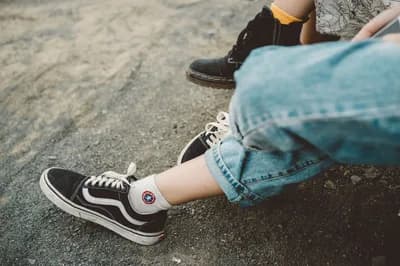
The first shoe with Vans' iconic "jazz stripe" sidestripe, designed by Paul Van Doren's son. Adopted by skateboarders, then punk rockers, then the Warped Tour generation, and eventually mainstream fashion. Sean Penn wore checkered Vans in "Fast Times at Ridgemont High" (1982) and sales exploded. Vans has maintained its $60-75 price point for decades while Nike and Adidas pushed prices above $200 — making Old Skools accessible to every high school kid who wants to signal subcultural belonging without spending a paycheck. VF Corporation acquired Vans in 2004; it now generates $3.5 billion annually. The sidestripe is the people's logo.
- 0

The first sneaker to retail for $100 (in 1982 dollars — about $320 today) and the shoe that defined "dad shoe" before that was a compliment. The 990 was made in the USA, cost twice as much as competitors, and sold to runners and professionals who valued function over fashion. Then in the 2010s, fashion swung toward ugly-on-purpose aesthetics, and the 990 suddenly became cool. Aimee Leon Dore, JJJJound, and Teddy Santis collaborations turned New Balance from "your accountant's shoe brand" to the hottest sneaker label in fashion. Steve Jobs wore 991s (the UK-made variant). The 990v6 still retails at $200 and is still made in Maine.
- 0

Tommie Smith wore Puma Suedes when he raised his fist on the 1968 Olympic podium in Mexico City — one of the most iconic protest images in history. The shoe became permanently linked to Black Power, civil rights, and athletic defiance. In the 1980s, the B-boy community in New York adopted Suedes for breakdancing (the flat suede sole was ideal for floor moves). The Clyde (a basketball version named after Walt "Clyde" Frazier) followed the same cultural trajectory. Puma Suedes have been in continuous production for 57 years, collaborated with everyone from Rihanna to MCM, and remain a $70 entry point into sneaker culture.
- 0

Tinker Hatfield was inspired by the Centre Pompidou in Paris (which exposes its structural elements on the outside) to create a shoe with a visible air bubble in the sole. Nike executives thought it was insane — who wants to see the inside of their shoe? Consumers loved it. The Air Max 1 launched the visible air technology that would define Nike for the next four decades. In the UK, the Air Max became the shoe of rave culture and football casuals. "Air Max Day" (March 26) is now a global sneaker holiday. The 2017 Air Max 97 "Silver Bullet" revival showed the design's timelessness. Total Air Max franchise revenue: $5+ billion annually.
Image credits
- Air Jordan 1 (1985): Air Jordan / Wikipedia
- Converse Chuck Taylor All Star (1917): Chuck Taylor All-Stars / Wikipedia
- Adidas Superstar (1969): Adidas Superstar / Wikipedia
- Nike Air Force 1 (1982): Nike Air Force / Wikipedia
- Adidas Yeezy Boost 350 (2015): Adidas Yeezy / Wikipedia
- Nike Dunk (1985): Nike Dunk / Wikipedia
- Vans Old Skool (1977): Nam Phong Bùi / Pexels
- New Balance 990 (1982): New Balance 99X Series / Wikipedia
- Puma Suede (1968): Puma Suede / Wikipedia
- Nike Air Max 1 (1987): Nike Air Max / Wikipedia
Related Videos
Rank it your way
Remix this list into your own ranking, or head to the play hub for every game mode and community breakdown — blind mode, challenges, tier lists, and more.
You Might Also Like

Top 10 Most Iconic Sneakers of All Time
Top 10 Most Iconic Sneakers of All Time
Top 10 Most Iconic Basketball Shoes
Top 10 Sneakers That Changed Culture Forever

Top 10 Best Athletic Wear Brands 2026
#1 Nike · #2 Lululemon · #3 On Running

Top 10 Sustainable Fashion Brands Worth Buying in 2026
#1 Patagonia · #2 Stella McCartney · #3 Eileen Fisher

Top 10 Best Men's Fashion Brands 2026 — Ranked & Reviewed
#1 Brunello Cucinelli · #2 Loro Piana · #3 Zegna

Top 10 Denim Brands to Buy in 2026: Heritage, Selvedge & Raw Picks
#1 Iron Heart · #2 The Flat Head · #3 Levi's Vintage Clothing