
European Space Agency / Wikimedia Commons (CC BY 2.0)
Top 10 European Tech Giants 2026
Europe's technology sector has undergone a quiet transformation, with companies like ASML achieving near-monopoly control of the global semiconductor lithography market and SAP cementing its position as the enterprise software backbone of the Global 2000. While US and Chinese tech firms command consumer attention, European tech giants dominate the invisible infrastructure layer — the EUV machines, ERP systems, professional data services, and industrial simulation software without which the digital economy cannot function. The EU's 2025 digital sovereignty push, including the Chips Act's €43B investment and the AI Act's regulatory framework, is reshaping competitive dynamics in favour of these established industrial-tech champions. These ten companies define the European technology landscape heading into the second half of the decade.
Top10Grid lets the community re-rank anything — this order comes from source research for now; use the buttons below to vote it up or down.

Current Rankings
- 0#1
ASML Holding
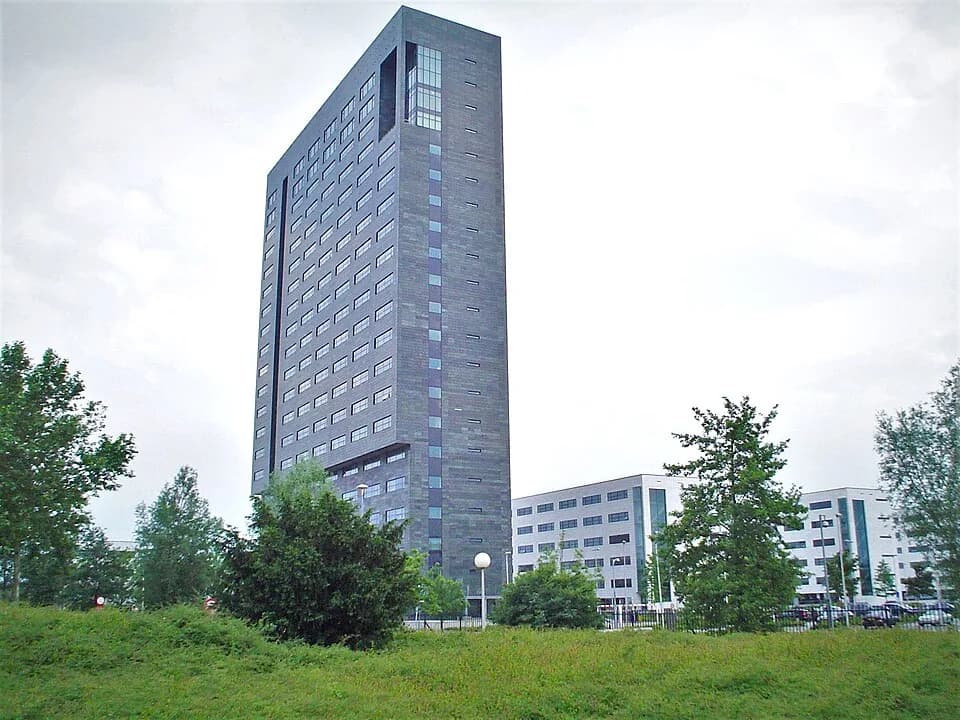
ASML Holding holds a complete monopoly on extreme ultraviolet (EUV) lithography machines — the €200M tools essential for etching the world's most advanced chips at TSMC, Samsung, and Intel — giving it unmatched strategic leverage in the global semiconductor supply chain. With a €335B market cap and €27B in annual revenue, ASML is Europe's most valuable technology company and the sole supplier worldwide of machines required to manufacture sub-7nm logic chips. US export controls restricting ASML's China sales, implemented from 2023 to 2025, have redirected capacity to Western customers while amplifying ASML's geopolitical significance.
- 0#2
SAP SE
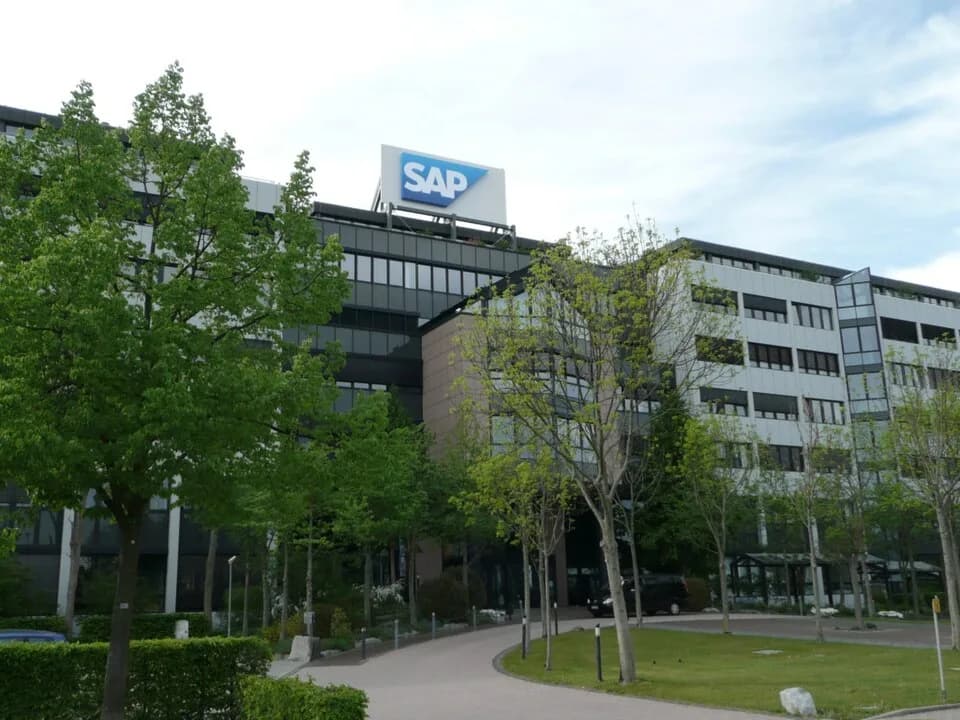
SAP SE commands a €200B market cap and generates €33B in annual revenue as the world's dominant enterprise resource planning software provider, with 400M+ users across 180 countries running business-critical operations on its S/4HANA platform. Its cloud transition, now 85% complete, has driven three consecutive years of 20%+ cloud revenue growth, with Joule AI co-pilot embedded across ERP workflows adopted by 200+ enterprise clients within six months of launch. The 2025 SAP BTP ecosystem surpassed 10,000 partner applications.
- 0#3
Prosus / Naspers

Prosus, the Amsterdam-listed consumer internet holding company spun out of South Africa's Naspers, holds a €100B+ portfolio anchored by a 24% stake in Tencent worth $120B+, alongside food delivery (iFood, Delivery Hero stake), edtech (Stack Overflow, Codecademy), and fintech positions across 90+ countries.
- 0#4
Capgemini

Capgemini generates €22B in annual revenue as Europe's largest IT services and consulting group, serving 3,000+ clients including Airbus, BNP Paribas, and the French government with cloud transformation, AI implementation, and managed services across 50 countries.
- 0#5
Amadeus IT

Amadeus IT commands a €20B market cap generating €5.5B in annual revenue as the world's largest travel technology platform, processing 2B+ transactions annually for airlines, hotels, travel agencies, and airports in 190 countries. Its Altea passenger services suite outperforms Dassault Systemes' SIMULIA in transaction volume, powering 200+ airlines including Air France, Lufthansa, and Qantas, handling reservations, check-in, and departure control for 1.2B passengers per year. The 2025 launch of Amadeus Travel Intelligence AI — providing dynamic pricing recommendations and personalised upsell for airlines — generated €300M in new contract value in its first year, proving faster deployment than the average industry AI tool.
- 0#6
Dassault Systemes

Dassault Systemes holds a €35B market cap and generates €6B in annual revenue through its 3DEXPERIENCE platform — a virtual twin universe used by Airbus to design aircraft, Renault to develop electric vehicles, and Pfizer to simulate pharmaceutical manufacturing at molecular scale. The 2025 acquisition of Diota's AR-assisted maintenance platform extended 3DEXPERIENCE into the $20B aerospace MRO market, increasing its addressable revenue by 20%.
- 0#7
Wolters Kluwer
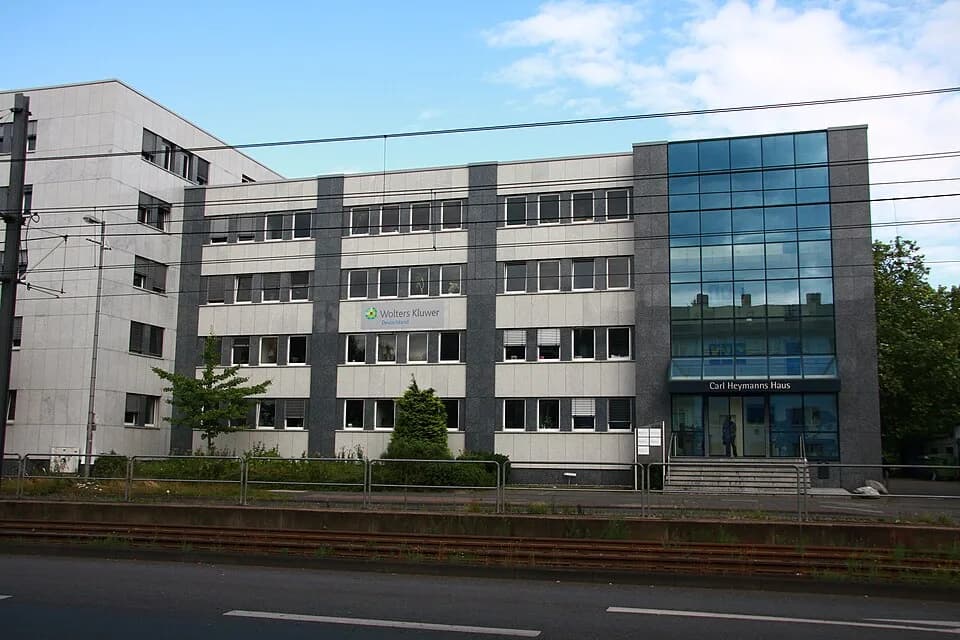
Wolters Kluwer holds a €24B market cap and generates €5.6B in annual revenue providing expert information, software, and services to legal, tax, accounting, and healthcare professionals in 180 countries. Its CCH Tagetik and TeamMate platforms dominate the $5B corporate performance management market, used by 75% of Fortune 500 finance teams for financial close, consolidation, and regulatory reporting.
- 0#8
Philips

Philips pivoted to a €18B market cap health technology company after spinning off its lighting division (now Signify) and consumer electronics (now separate), focusing entirely on diagnostic imaging, patient monitoring, and connected care platforms. The 2025 resolution of its CPAP device recall and $1.1B settlement with the US DOJ cleared the regulatory overhang, allowing Philips to refocus on its $3B+ diagnostic imaging pipeline, enabling a 15% revenue growth projection for 2027.
- 0#9
Infineon Technologies

Its SiC power transistors are used in 60% of European EV drivetrains, with €4B in SiC revenue forecast for 2025 as EV production scales to 15M units annually. Infineon's dominance in industrial IoT security microcontrollers, backed by 12,000+ patents, cements its role as the backbone of Europe's electrification push.
- 0#10
Logitech

The 2025 Logi AI Prompt Builder made Logitech the first peripherals company to embed generative AI directly into input hardware, enabling on-device LLM interactions without cloud dependency. While Infineon leads in semiconductors, Logitech's hybrid work pivot generated $1.2B in cumulative collaboration revenue from 2020–2025, proving that peripheral innovation drives tangible enterprise value.
Image credits
- ASML Holding: A ansems / Public domain (entity-adopted)
- SAP SE: MichaelBr90 / CC BY-SA 3.0 (entity-adopted)
- Prosus / Naspers: Naspers / Wikipedia
- Capgemini: Thomon / CC BY-SA 4.0 (entity-adopted)
- Amadeus IT: Luis García ( Zaqarbal ) / CC BY-SA 3.0 es (entity-adopted)
- Dassault Systemes: RutoSu / CC BY-SA 4.0 (entity-adopted)
- Wolters Kluwer: Wo st 01 (There are 682 Pictures in my Category ) See also Toolserver / CC BY-SA 3.0 de (entity-adopted)
- Philips: Wikimedia Commons
- Infineon Technologies: Mucber / CC BY-SA 4.0 (entity-adopted)
- Logitech: Antonio Cunei / CC0 (entity-adopted)
Related Videos
Rank it your way
Remix this list into your own ranking, or head to the play hub for every game mode and community breakdown — blind mode, challenges, tier lists, and more.
You Might Also Like

Top 10 French Technology Companies 2026
Top 10 French Technology Companies 2026

Top 10 Dutch Technology Companies 2026
Top 10 Dutch Technology Companies 2026

Top 10 European Semiconductor Companies 2026
Top 10 European Semiconductor Companies 2026
Top 10 Worst Data Breaches in History
#1 Yahoo (2013-2014) · #2 National Public Data (2024) · #3 Equifax (2017)

Top 10 Cloud Storage Services in 2026
#1 Dropbox · #2 Google Drive · #3 Microsoft OneDrive

Top 10 E-Commerce Platforms in Indonesia
#1 Shopee · #2 Tokopedia (TikTok Shop) · #3 Lazada Indonesia