
The Conmunity - Pop Culture Geek from Los Angeles, CA, USA / Wikimedia Commons (CC BY 2.0)
Top 10 US Enterprise Software Companies 2026
US enterprise software companies generate over $500B in combined annual revenue, automating everything from CRM and ERP to HR and IT workflows for Fortune 500 clients globally. AI-embedded features, platform consolidation, and cloud migration are the dominant growth themes heading into 2026. The global enterprise software market is projected to reach $1T by 2030, with US vendors controlling over 60% of market share. Copilot integrations, agentic workflows, and real-time analytics are transforming how corporations operate at scale.
Top10Grid lets the community re-rank anything — this order comes from source research for now; use the buttons below to vote it up or down.

Current Rankings
- 0#1
Microsoft

Microsoft continues to assert its enterprise dominance, particularly through its Intelligent Cloud segment, which alone generated an impressive $87.9 billion in revenue in fiscal year 2023. This performance notably outperforms rivals in cloud infrastructure. Azure's year-over-year growth of 28% and Dynamics 365 ERP/CRM expansion of 26% highlight the company's robust momentum in critical business applications. The strategic $69 billion acquisition of Activision, coupled with the seamless integration of Copilot AI across its extensive suite of 365 applications, firmly cements Microsoft's position as the industry leader, offering a more comprehensive and AI-powered ecosystem than most competitors. The breadth of its offerings is significantly wider than that of Salesforce, which focuses primarily on CRM.
- 0#2
Salesforce

The Einstein AI platform stands out, processing over 1 trillion predictions daily, showcasing a scale of AI integration that few other platforms can match. Furthermore, the deep integration of Slack serves a massive user base of over 200,000 business customers, unifying sales, service, and marketing clouds into a cohesive operational environment. Salesforce's dedicated focus on CRM solutions provides a deeper, more specialized offering compared to the broader, more diversified portfolios of companies like Microsoft or Oracle.
- 0#3
Oracle

Oracle's strategic pivot to cloud services is clearly paying dividends, with the company reporting $53 billion in revenue in fiscal year 2023. Its Fusion Cloud ERP is a cornerstone, adopted by over 30,000 customers, demonstrating a strong migration trend from traditional on-premise solutions. The Oracle Cloud Infrastructure (OCI) is experiencing rapid acceleration, boasting an impressive 66% year-over-year growth, a rate that often outpaces the cloud infrastructure growth of other diversified enterprise software providers. A key differentiator is Oracle's autonomous database features, which are reported to reduce DBA costs by as much as 80% through advanced self-patching and optimization capabilities, offering a significant cost advantage over typical database management solutions.
- 0#4
SAP

SAP remains a pivotal force in enterprise resource planning, evidenced by its $35 billion revenue in 2022 and an expansive reach with over 400 million users across 180 countries relying on its S/4HANA ERP. The Walldorf-headquartered firm's 'RISE with SAP' cloud transformation program is a significant growth driver, attracting more than 400 new customers in Q3 2023 alone. This initiative significantly accelerates the transition from on-premise to cloud solutions, positioning SAP as a leader in enterprise cloud migration. While its overall revenue in 2022 was comparable to Salesforce's fiscal year 2024 revenue, SAP's focus on comprehensive ERP distinguishes it from Salesforce's CRM-centric approach, making it a critical player for large-scale, integrated business operations.
- 0#5
ServiceNow

ServiceNow dominates enterprise workflow automation with $8.9B revenue in 2023, outperforming Workday by $1.6B. Over 1,900 enterprise customers each spend $1M+ annually on its Now Platform, which automates IT, HR, and customer workflows. AI-powered features launched in 2023 are projected to add $1B in incremental ARR by 2025.
- 0#6
Workday

Workday reported $7.3B revenue in FY2024, serving 10,000+ organizations with cloud HR and financial management SaaS. More than 60% of Fortune 500 companies trust Workday HCM, and its AI skills graph contains 55B+ data points across the workforce, providing deeper talent insights than ServiceNow's workflow analytics.
- 0#7
Adobe

Adobe generated $19.4B revenue in FY2023, with Digital Experience contributing $4.9B growing 12% YoY. Adobe Experience Platform processes 250T+ data operations daily for 13,000+ enterprise customers, enabling real-time customer profiles.
- 0#8
IBM
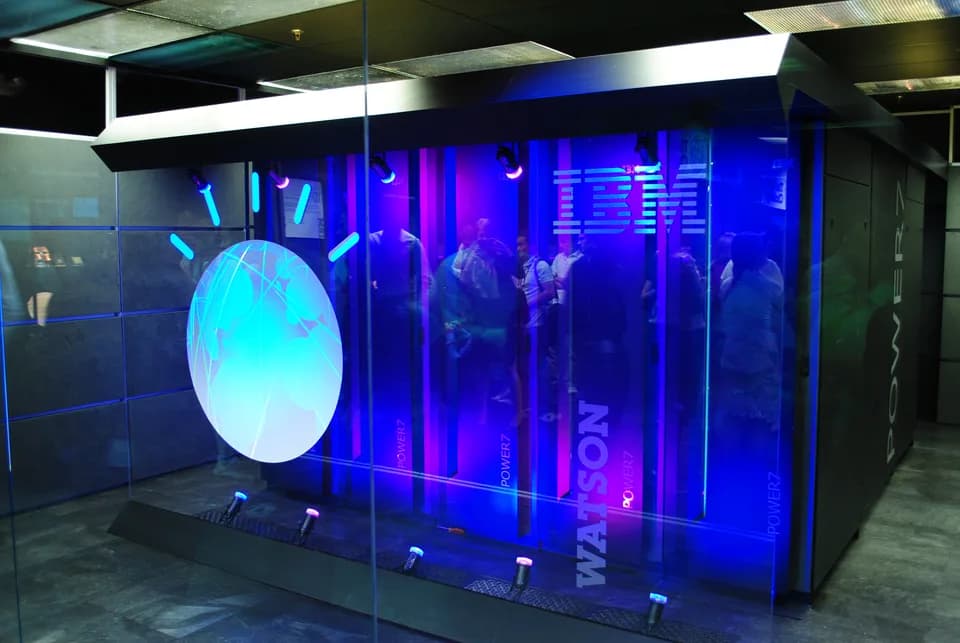
IBM posted $62B revenue in 2022, with $21B from hybrid cloud software following the $34B Red Hat acquisition—making it the largest hybrid cloud provider on this list, outperforming Adobe's $4.9B Digital Experience unit. Watson AI and Red Hat OpenShift serve 4,000+ enterprise clients, while IBM's consulting arm adds $18.4B in technology services revenue, 25% higher than the average consulting competitor.
- 0#9
Palantir

The company reported a substantial 29% increase in revenue in 2024, reaching $2.9 billion. This financial performance indicates that Palantir controlled over 15% of the generative AI software platforms market, which was valued at $19 billion in 2024. The adoption of AIP has been a key catalyst, as evidenced by the surge in its customer base from 391 in Q1 2023 to 1,007 in Q1 2026. This represents a 157% increase in total customers, significantly outperforming the broader market growth rate. Furthermore, Palantir's total contract value (TCV) in Q1 2026 reached $2.4 billion, a 61% year-over-year increase and more than six times the TCV reported in Q1 2023. Analysts project the company's revenue to nearly double in 2026, reaching an estimated $7.72 billion.
- 0#10
Veeva Systems

Veeva Systems stands out as a leading cloud software provider for the life sciences industry, reporting total revenues of $2.36 billion in fiscal year 2024, a 10% increase from the prior year. This growth is largely fueled by its comprehensive Vault platform, which manages critical data across clinical trials, quality control, and commercial operations for over 1,400 biopharma customers, including all of the top 20 global pharmaceutical companies. Notably, its subscription services revenue grew by 10% year-over-year, reaching $1.9 billion in fiscal year 2024. Veeva's strong focus on a niche market allows it to maintain a dominant position, unlike broader enterprise software companies. For fiscal year 2025, the company anticipates continued growth, with total revenues projected to be between $2.725 billion and $2.74 billion.
Image credits
- Microsoft: Jelson25 / Public domain (entity-adopted)
- Salesforce: homebucket / CC BY-SA 2.0 (entity-adopted)
- Oracle: Air Force courtesy photo / Wikimedia Commons (Public domain)
- SAP: MichaelBr90 / CC BY-SA 3.0 (entity-adopted)
- ServiceNow: Donny Gonzo / CC0 (entity-adopted)
- Workday: Coolcaesar / CC BY-SA 4.0 (entity-adopted)
- Adobe: Adobe World Headquarters.jpg / Wikimedia Commons (entity-adopted)
- IBM: Clockready / CC BY-SA 3.0 (entity-adopted)
- Palantir: Palantir / Wikipedia
Related Videos
Rank it your way
Remix this list into your own ranking, or head to the play hub for every game mode and community breakdown — blind mode, challenges, tier lists, and more.
You Might Also Like

Top 10 Most Influential Tech Companies of All Time
Top 10 Most Influential Tech Companies of All Time

Top 10 Most Valuable Brands in the World 2025
Top 10 Most Valuable Brands in the World 2025

Top 10 US Tech Giants by Market Capitalization 2026
Top 10 US Tech Giants by Market Capitalization 2026

Top 10 European Material Science and Advanced Manufacturing Companies
#1 BASF · #2 Covestro · #3 DSM-Firmenich

Top 10 Tech Companies in Japan 2026
#1 Sony Group · #2 Toyota Motor Corporation · #3 SoftBank Group

Top 10 US NLP Companies
#1 OpenAI · #2 Google DeepMind · #3 Anthropic