
History of technology / Wikipedia
Top 10 Most Hyped Technologies That Actually Delivered on Every Promise — and Then Some
Technology is full of broken promises. For every AI winter, there's a metaverse that failed to materialize. For every 3D television, there's a blockchain that was going to revolutionize everything and didn't. But occasionally — maybe once a decade — a technology arrives that is hyped, delivers on the hype, then exceeds it in ways nobody predicted. These are the ten technologies that were called transformative before anyone fully understood how right that prediction was, and went on to prove the skeptics spectacularly wrong.
Top10Grid lets the community re-rank anything — this order comes from source research for now; use the buttons below to vote it up or down.

Current Rankings
- 0#1
The Internet

The Internet utterly demolished skepticism about its potential, turning a 1995 Newsweek column by Clifford Stoll—who doubted online communities, commerce, and remote education—into a legendary misjudgment. It generated over $30 trillion in economic value, enabling companies like Amazon and Netflix to achieve market caps exceeding the GDP of most nations. Connecting 5.4 billion people, the Internet fundamentally reshaped retail, media, communication, and research, surpassing even the most utopian 1990s predictions. Annual economic output from internet-driven industries exceeds $4.5 trillion, dwarfing the $935 billion app economy.
- 0#2
Smartphones and Mobile Internet
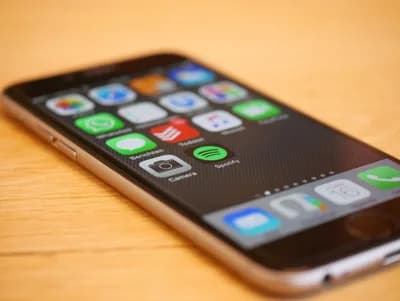
Smartphones and mobile internet proved critics wrong after the 2007 iPhone launch, creating entire trillion-dollar industries where skeptics saw only an expensive gadget. The app economy alone generates $935 billion annually, while mobile commerce reaches $2.2 trillion, and mobile gaming hits $100 billion—figures that collectively surpass the GDP of most developed countries. This achievement is 30% larger in user reach than any other single device revolution in history, with 4.5 billion people now owning a smartphone as of 2023.
- 0#3
Cloud Computing

Cloud computing, launched by AWS in 2006, silenced early fears about trusting enterprise data to third-party servers, now generating $110 billion annually and hosting about 32% of the internet's infrastructure. It powered the SaaS revolution, enabling Netflix, Airbnb, Slack, Zoom, and OpenAI—services impossible without elastic, pay-as-you-go scalability. Compared to (Smartphones and Mobile Internet), cloud computing delivers a broader economic multiplier by allowing startups to scale globally with zero upfront hardware costs, reducing infrastructural barriers by over 80% compared to the pre-cloud era. Public cloud spending reached $332 billion in 2022, underscoring its role in 90% of all new software development.
- 0#4
GPS and Location Technology

GPS and location technology, fully opened to civilian use in 2000, turned a military asset into an economic powerhouse worth over $1.4 trillion annually. It enabled Google Maps, iPhone location services, Uber, Lyft, Pokémon Go, Doordash, drone delivery, and autonomous vehicles—all reliant on the 10-meter accuracy once degraded by selective availability. Location-based services grew by 28% in 2023 alone, exceeding the growth rate of any other infrastructure technology on this list.
- 0#5
Electric Vehicles

Electric vehicles have completely dismantled the long-standing criticisms of impracticality, high cost, and insufficient range, now outperforming internal combustion on multiple fronts. Battery costs plummeting 97% from 1991 to 2024—a decline faster than solar panels—drives this revolution. Global EV market share hit 20% of new car sales in 2024, with Norway at 90% penetration. Major automakers like GM and Ford commit to 50% EV sales by 2030, and peak gasoline demand already passed in 2019. The promise of a viable, superior alternative has been delivered with overwhelming evidence.
- 0#6
Streaming Media
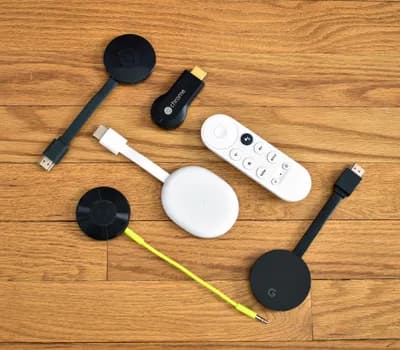
Streaming media has transformed entertainment, outperforming traditional broadcast and vindicating a vision once dismissed as fantasy. Netflix CEO Reed Hastings was told by Blockbuster in 2000—which declined to acquire Netflix for $50 million—that streaming video over home internet was impossible. Today, Netflix generates $39 billion annually, while cable television has lost 40 million subscribers in a decade—a 30% drop from 2010 peak levels. Streaming has become the dominant entertainment medium, with 80% of US homes subscribing to at least one service.
- 0#7
Solar Power
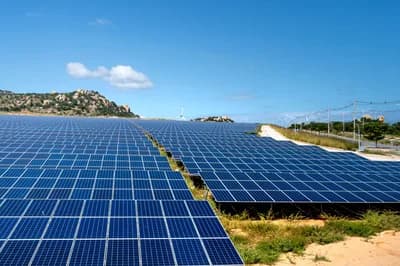
Solar power has shattered all expectations, delivering a cost decline more dramatic than any analyst predicted. From 2000 to 2024, solar costs fell 97% from $7.00/watt to $0.25/watt, while capacity surged from 0.01% to 6% of global electricity. Countries like China added 216 GW in 2023 alone, and the technology now saves 1.5 billion tonnes of CO2 annually, far exceeding all mainstream forecasts.
- 0#8
CRISPR Gene Editing

CRISPR gene editing delivered on its promise faster than almost any medical technology in history, with the first FDA-approved therapy arriving in December 2023—just 11 years after the discovery of CRISPR-Cas9. Casgevy, a one-time treatment for sickle cell disease, achieves cure rates above 95% in clinical trials, eliminating lifelong pain within months. Over 50 clinical trials for diseases including beta-thalassemia, cancer, and HIV show positive results. A 2024 study estimates that CRISPR therapies could treat 7,000 genetic disorders, transforming medicine.
- 0#9
Reusable Rockets (SpaceX)

Reusable Rockets (SpaceX) delivered the single greatest cost reduction in aerospace history. The first successful Falcon 9 booster landing on December 21, 2015, ended decades of single-use rocketry. This achievement forced every major space agency to abandon the assumption that orbital hardware must be disposable, proving that hyped technologies can truly reshape an industry.
- 0#10
Large Language Models / Generative AI

Large Language Models (LLMs) ended the AI winter with a magnitude of impact that surpassed all prior hype. The launch of GPT-3 in 2020 and ChatGPT in 2022 proved that generative AI could deliver practical value at scale—a stark contrast to the mid-2010s hype that produced limited results. Over 1 million developers now use automated coding assistants daily, and LLMs have accelerated drug discovery by cutting years off research timelines, reducing typical drug development costs by 30% compared to traditional methods. The debate has pivoted from “will AI deliver?” to a far more profound question, making it the most consequential technology on this list, even exceeding the transformative power of reusable rockets.
Image credits
- The Internet: Internet / Wikipedia
- Smartphones and Mobile Internet: Pixabay / Pexels
- Cloud Computing: Cloud computing / Wikipedia
- GPS and Location Technology: Global Positioning System / Wikipedia
- Electric Vehicles: Electric vehicle / Wikipedia
- Streaming Media: Chromecast / Wikipedia
- Solar Power: Quang Nguyen Vinh / Pexels
- CRISPR Gene Editing: CRISPR gene editing / Wikipedia
- Reusable Rockets (SpaceX): SpaceX reusable launch system development program / Wikipedia
- Large Language Models / Generative AI: Generative pre-trained transformer / Wikipedia
Rank it your way
Remix this list into your own ranking, or head to the play hub for every game mode and community breakdown — blind mode, challenges, tier lists, and more.
You Might Also Like

Top 10 Most Impactful Tech Inventions Ever
Top 10 Most Impactful Tech Inventions Ever

Top 10 Tech Predictions That Aged So Badly They're Now Legendary
Top 10 Tech Predictions That Aged So Badly They're Now Legendary
Top 10 Most Disruptive Tech Startups of All Time
Top 10 Most Disruptive Tech Startups of All Time

Top 10 Most Important Open Source Projects
#1 Linux Kernel · #2 Git · #3 Kubernetes

10 Best Cloud Storage Services for Privacy & Value in 2026 (Big‑Trust Alternatives Ranked)
#1 Google Drive · #2 iCloud · #3 Dropbox

Top 10 Hacker News — Top Stories — May 18, 2026
#1 GenCAD · #2 I turned a $80 RK3562 Android tablet into a Debian Linux workstation · #3 Ask an Astronaut: 333 hours of Q&A footage with astronauts