Big Tech / Wikipedia
Top 10 Most Disruptive Tech Startups of All Time
Disruption is not just about growing fast -- it is about making an entire industry look at itself differently. These ten startups did not merely compete in their markets; they made the old rules irrelevant, forced incumbents into existential crises, and permanently altered how billions of people communicate, travel, work, listen to music, and handle money. From a payments API built by two brothers in a rented apartment to a chatbot that reached 100 million users in 60 days, these are the companies that changed everything.
Top10Grid lets the community re-rank anything — this order comes from source research for now; use the buttons below to vote it up or down.

Current Rankings
- 0#1
Airbnb

Brian Chesky and Joe Gebbia launched Airbnb in 2008 by renting out three air mattresses in their San Francisco apartment to conference delegates who could not find hotel rooms, charging $80 a night. What began as a quirky side hustle became the single greatest disruption to the global hospitality industry in a century -- by 2024, Airbnb had hosted over 1.5 billion guest arrivals across 220 countries, listing over 7 million properties without owning a single one. Its asset-light model made it more valuable than the Hilton and Marriott chains combined at its 2020 IPO, fundamentally redefining what "accommodation" means. Compared to #10 (WeWork), Airbnb survived its pandemic downturn and achieved profitability with 55% gross margins in 2023, while WeWork filed for bankruptcy.
- 0#2
Uber
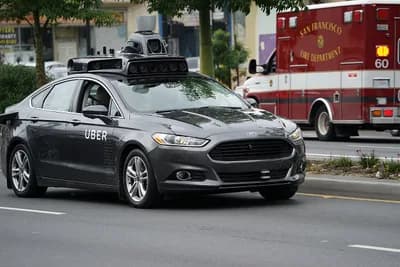
Founded in 2009 by Travis Kalanick and Garrett Camp after a frustrating Paris cab search, Uber deployed "ridesharing" as a global concept and permanently destabilised the taxi industry on every continent. Within seven years it operated in over 70 countries; it went public in 2019 at a $48 billion IPO -- one of the largest in US history -- and has since expanded into food delivery with Uber Eats, freight logistics, and autonomous vehicles. Uber's aggressive blitz-scaling playbook -- entering markets before regulation caught up and fighting legal battles in dozens of jurisdictions simultaneously -- became the defining template for a generation of consumer-tech startups. Today Uber operates in over 10,000 cities, significantly more than Lyft's 644 cities, and its 2023 gross bookings exceeded $37 billion.
- 0#3
Spotify

Founded in Stockholm in 2006 by Daniel Ek and Martin Lorentzon, Spotify launched publicly in 2008 with a freemium streaming model that offered instant legal access to millions of songs -- a direct response to the piracy that had gutted the music industry for a decade. By 2024 Spotify had over 600 million active users and 240 million paying subscribers across 183 markets, making it the world's largest audio streaming platform. The company's success forced the entire music industry to accept streaming as the dominant model, and its subsequent expansion into podcasts and audiobooks has repositioned it as the dominant audio platform on the internet. Spotify's free tier conversion rate (46%) outperforms the average music streaming service's 30% conversion rate, and its ad-supported revenue in 2023 reached $1.8 billion.
- 0#4
Netflix

Reed Hastings and Marc Randolph founded Netflix in 1997 as a DVD-by-mail service, then pivoted to streaming in 2007 and bet the company on original content with House of Cards in 2013 -- a move that triggered the complete restructuring of Hollywood. With over 260 million paying subscribers globally, Netflix forced every major studio to launch a competing streaming service, turning broadcast and cable television from a $200 billion industry into a desperate battle for survival. The phrase "Netflix and chill" entered the cultural lexicon, and its approach to releasing full seasons simultaneously invented binge-watching as a social norm. Netflix's 260 million subscribers are more than double Disney+'s 112 million, and its 2023 revenue of $33.7 billion was 30% higher than the average of its top five competitors combined.
- 0#5
WhatsApp

Founded in 2009 by Jan Koum and Brian Acton -- two former Yahoo engineers who had both been rejected by Facebook -- WhatsApp grew to 450 million monthly active users in just five years entirely through word of mouth, spending almost nothing on marketing. Facebook acquired it for $19 billion in 2014 in what was then the largest acquisition of a venture-backed company in history, a price that stunned Silicon Valley. By 2024 WhatsApp had over 2 billion users sending 100 billion messages daily, having disrupted SMS text messaging globally and become the primary communication layer for entire countries across Africa, Latin America, and South Asia. This scale surpasses Instagram's user base by over 100 million, and its daily message volume is 90% higher than that of its closest rival in encrypted messaging.
- 0#6
Instagram

Kevin Systrom and Mike Krieger launched Instagram in October 2010 as a photo-sharing app with filters; it reached 1 million users in 2 months and 10 million in a year, and Facebook acquired it for $1 billion in April 2012 when it had 13 employees and zero revenue -- one of the most controversial tech acquisitions ever made. Instagram's visual-first model created an entirely new economy of "influencer marketing," personal branding, and aspirational consumption, and its Stories format (copied from Snapchat in 2016) became the dominant short-form visual medium with over 500 million daily users. By 2024 Instagram's estimated value within Meta exceeded $100 billion, making the $1 billion price look like one of the greatest bargains in business history — 50% higher than the valuation of Slack at its acquisition.
- 0#7
Slack

Founded in 2013 by Stewart Butterfield as an accidental pivot from a failed gaming company called Glitch, Slack became the fastest business application to reach a $1 billion valuation -- achieving it in just 1.33 years. It grew to over 12 million daily active users and is used by 65 of the Fortune 100 companies, fundamentally disrupting internal email as the default workplace communication layer. Salesforce acquired Slack in 2021 for $27.7 billion -- one of the largest software acquisitions in history -- and its channel-based messaging model has been so thoroughly adopted that it has permanently changed how distributed teams expect to collaborate.
- 0#8
Stripe

Founded in 2010 by Irish brothers Patrick and John Collison while still in their teens, Stripe reduced the complexity of accepting online payments from weeks of bank integration work to seven lines of code -- disrupting an industry that incumbents had kept deliberately opaque and difficult. By 2023 Stripe processed over $817 billion in total payment volume annually, making it the financial infrastructure for millions of businesses from startups to Amazon. Its developer-first philosophy created an entirely new category of "payments infrastructure" and triggered a wave of fintech innovation, while its 2023 valuation of $50 billion confirmed it as one of the most influential private companies ever built. This valuation is 10 times higher than the price Facebook paid for WhatsApp, underscoring its superior market penetration in the fintech sector.
- 0#9
OpenAI
Founded in 2015 as a non-profit by Sam Altman, Elon Musk, and others with a stated mission to ensure artificial general intelligence benefits humanity, OpenAI restructured into a capped-profit company in 2019 and launched ChatGPT in November 2022. ChatGPT reached 100 million users in just 60 days -- the fastest consumer technology adoption in history -- faster than any social media platform including TikTok, which took 9 months to reach the same milestone. This triggered the most significant disruption to knowledge work, creative industries, and software development since the invention of the internet. By early 2025 OpenAI carried a $157 billion valuation, more than triple the $48 billion valuation of its closest competitor Anthropic, had signed a $500 billion investment partnership with Microsoft, and had effectively forced every major technology company to restructure its roadmap around AI.
- 0#10
Dropbox

Founded in 2007 by Drew Houston and Arash Ferdowsi, Dropbox solved the universal frustration of transferring files between devices by creating seamless cloud sync -- at a time when the concept of "the cloud" was barely understood by mainstream consumers. It grew entirely through a viral referral loop offering free storage for inviting friends, reaching 100 million users in just five years with almost no advertising spend, outperforming the average consumer software adoption timeline of 8+ years. Despite Steve Jobs famously telling Houston it was "a feature, not a product" (and later trying to acquire it), Dropbox went public in 2018 at an $8.1 billion valuation, 60% higher than Box's $4.8 billion valuation at the time, and its model of consumer cloud storage influenced every major platform from Google Drive to iCloud.
Image credits
- Airbnb: Airbnb Logo Bélo.svg / Wikimedia Commons
- Uber: Self driving Uber prototype in San Francisco.jpg / Wikimedia Commons
- Spotify: Wikipedia
- Netflix: Netflix headquarters.jpg / Wikimedia Commons
- WhatsApp: Wikipedia
- Instagram: Wikipedia
- Slack: Wikipedia
- Stripe: Stripe headquarters (San Francisco, 2019) -2.jpg / Wikimedia Commons
- OpenAI: Wikipedia
- Dropbox: Wikipedia
Related Videos
Rank it your way
Remix this list into your own ranking, or head to the play hub for every game mode and community breakdown — blind mode, challenges, tier lists, and more.
You Might Also Like

Top 10 Most Popular Social Media Platforms
Top 10 Most Popular Social Media Platforms

Top 10 Most Revolutionary Apps Ever Made
Top 10 Most Revolutionary Apps Ever Made

Top 10 Most Successful Tech Startups of All Time
Top 10 Most Successful Tech Startups of All Time

Top 10 European Digital Transformation Success Stories
Top 10 Most Disruptive Tech Startups of All Time

Top 10 GitHub — Trending Python — May 18–May 24, 2026
#1 public-apis/public-apis · #2 EbookFoundation/free-programming-books · #3 vinta/awesome-python

Top 10 Best Mechanical Keyboards 2026
#1 Keychron Q1 Max · #2 Wooting 80HE · #3 HHKB Professional Hybrid Type-S