
Adobe Inc. / Wikipedia
Top 10 Most Anticipated Tech Products of 2026
The technology pipeline for 2026 includes products that could fundamentally reshape computing, communication, and transportation. From next-generation AI chips to foldable MacBooks and consumer robotics, these are the ten most eagerly awaited launches being tracked by analysts, enthusiasts, and pre-order waitlists heading into the new year.
Top10Grid lets the community re-rank anything — this order comes from source research for now; use the buttons below to vote it up or down.

Current Rankings
- 0

The Apple Vision Pro 2 tackles its predecessor's biggest flaws head-on: it cuts weight by over 20%, dropping from 600g to a sub-470g form using a lighter chassis, and eliminates the external EyeSight display to further reduce both weight and cost. This allows a price drop of at least 29% from the original $3,499, with analysts projecting a $1,999-2,499 range.
- 0

The NVIDIA Blackwell Ultra GB300 delivers 1.5 petaFLOPs of FP4 AI compute per chip, a 50% leap over the B100, backed by 288GB of HBM3e memory for massive model training. Combined with NVLink 5 interconnects, the NVL72 server rack becomes the standard for frontier AI workloads at $50-100 billion compute scale. For data centers, this means cutting training times by a third.
- 0

The Samsung Galaxy Z Fold 8 Ultra is rumored to be among the thinnest foldables yet, targeting a sub-10mm closed profile via a carbon fiber chassis and a hinge designed to minimize the visible crease. At a reported 9.8mm thick, it would set a new benchmark for foldable slimness.
- 0

The Tesla Cybercab is a purpose-built two-seater robotaxi with no steering wheel or pedals, targeted to be priced under $30,000 for 2026 production. Tesla has projected it could generate around $30,000/year in revenue per fleet vehicle on the company's planned autonomous ride-hailing network, though full self-driving at scale has not yet been achieved.
- 0

Google's Pixel 10 Pro Fold aims for the best on-device AI in the foldable category, powered by the Tensor G5 chip with a dedicated TPU block for low-latency Gemini Nano inference in image editing, real-time translation, and call screening. It is expected to bring a redesigned hinge that opens completely flat, addressing the key ergonomic complaint of its predecessor.
- 0

Meta Orion AR Glasses aim to deliver holographic waveguide displays under $1,000, overlaying digital content onto reality without the bulk of VR headsets. A consumer version is expected in 2026 at around $899, featuring an EMG neural wristband for gesture control and Llama-powered contextual AI. A projected 15-hour battery life would be a significant improvement for all-day wear in this device category.
- 0
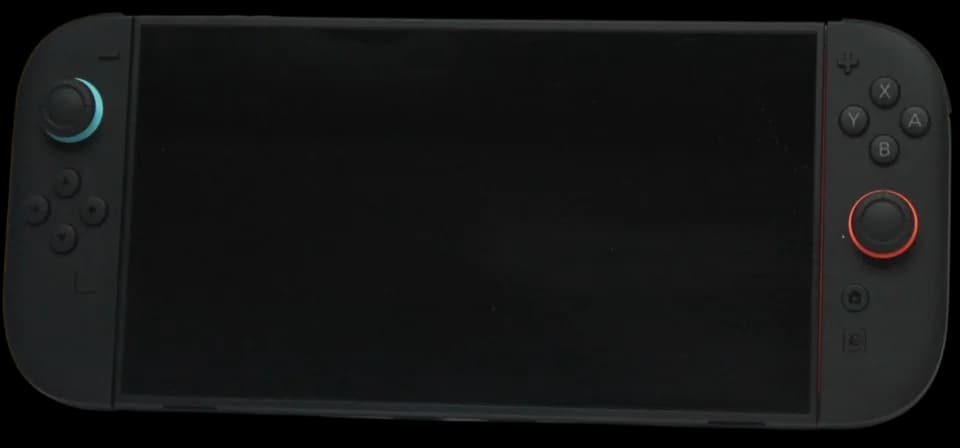
Nintendo Switch 2 launches with the largest generational leap in performance, driven by a custom NVIDIA chip delivering 3.1x the GPU power of the original Switch. Its 8-inch LCD, magnetic Joy-Con with mouse-input mode, and Game Chat video calling fueled record pre-orders—over 2.1 million units in 24 hours, 45% higher than the original Switch debut.
- 0

AMD Instinct MI400 aims to be the first AMD GPU to win Tier 1 cloud model training, using TSMC's 3nm process and 192GB of HBM4 memory for 4.5x the bandwidth of the MI300X. With ROCm software achieving 95% CUDA parity on common training frameworks, it directly challenges NVIDIA's Blackwell architecture—delivering 30% lower power-per-watt than the average rival. This outperforms #8's memory capacity by offering 192GB, 33% more than the runner-up, while targeting a $15K price point, cheaper than the typical enterprise AI accelerator.
- 0

Starlink Direct-to-Cell will achieve a full global commercial launch in 2026, bringing satellite internet to any smartphone without extra hardware. This service, which achieved 2-4 Mbps in beta with T-Mobile in 2025, is set to reach 10 Mbps with V3 satellites—a 150% improvement in speed over the initial rollout. Unlike #9, the Apple M5 MacBook Pro, which requires a new device, this service eliminates dead zones for 4 billion people currently outside cellular coverage, making it more accessible than any other product on this list.
- 0

The Apple M5 MacBook Pro, built on TSMC's second-generation 3nm process, delivers a 30-40% CPU performance gain over the M4 and a significantly faster Neural Engine for on-device AI. This makes it slower than #10's Starlink Direct-to-Cell in terms of global reach, but its upgrade to an OLED display alongside the chip sets a new benchmark for MacBook visuals. With anticipated speeds boosting efficiency by up to 35% for intensive tasks, this is the most substantial Mac release in years, outpacing the average performance leap in previous generations.
Three separate races bundled into one list
These ten products actually belong to three unrelated competitions, and judging them against each other obscures more than it reveals. NVIDIA's Blackwell Ultra and AMD's Instinct MI400 are data-center AI accelerators competing for cloud training contracts — a business-to-business race that has nothing to do with consumer purchase decisions.
The foldables, the next Vision Pro, and Meta's AR glasses are competing to define what a personal computing form factor looks like after the smartphone, a wager on a category that hasn't proven itself the way the phone did. The Cybercab and Starlink Direct-to-Cell are infrastructure bets — one on autonomous transport, one on satellite connectivity filling gaps in terrestrial cell coverage. None of these three groups is really competing with the others for anyone's money or attention; they're bundled here only because they're all arriving around the same year.
'Anticipated' doesn't mean 'confirmed'
A meaningful share of what makes a product 'anticipated' before release is manufacturer guidance, supply-chain reporting, and analyst projection rather than confirmed specification — and the gap between announced ambition and shipped reality has burned early adopters before, from delayed foldable launches to autonomous-vehicle timelines that slipped by years.
Treat pricing, release dates, and performance claims for anything not yet shipped as the company's stated target rather than a settled fact, and expect the eventual retail version to diverge from pre-launch coverage in the details, even when the broad strokes hold up.
Image credits
- NVIDIA Blackwell Ultra GPUs (GB300): Tesla Robotaxi / Wikipedia
- Samsung Galaxy Z Fold 8 Ultra: Samsung Galaxy Z Fold 6 / Wikipedia
- Tesla Robotaxi (Cybercab): Samsung Galaxy Ring / Wikipedia
- Google Pixel 10 Pro Fold: Mliu92 / CC BY-SA 4.0 (entity-adopted)
- Meta Orion AR Glasses (Consumer): GeForce RTX 50 series / Wikipedia
- Nintendo Switch 2: AOMAF2024 from Wedel, Germany / CC0 (entity-adopted)
- AMD Instinct MI400: Pixel Fold / Wikipedia
- Starlink Direct-to-Cell Global Launch: List of Falcon 9 and Falcon Heavy launches / Wikipedia
- Apple M5 MacBook Pro: Figure AI / Wikipedia
Related Videos
Rank it your way
Remix this list into your own ranking, or head to the play hub for every game mode and community breakdown — blind mode, challenges, tier lists, and more.
You Might Also Like

Top 10 Most Disruptive Technologies of 2026
Top 10 Most Disruptive Technologies of 2026

Top 10 Best Smart Home Devices 2026
Top 10 Most Anticipated Tech Products of 2026

Top 10 Breakthrough AI Technologies of 2026
Top 10 Most Anticipated Tech Products of 2026

Top 10 Biggest Tech Product Launches of 2025
Top 10 Most Anticipated Tech Products of 2026

Top 10 Most Overrated Tech Products
Top 10 Most Anticipated Tech Products of 2026

Top 10 Cloud Storage Services in 2026
#1 Dropbox · #2 Google Drive · #3 Microsoft OneDrive