
danxoneil
Top 10 European Smart City Technology Projects
Europe's smart city market exceeded $25B in 2025 and is forecast to surpass $50B by 2030, driven by the EU's Smart Cities and Communities initiative and the Horizon Europe Urban programme. Cities across the continent are deploying IoT sensor networks, digital twins, AI-driven mobility platforms and citizen data portals to slash carbon emissions and boost quality of life. From Copenhagen's cycling analytics to Vienna's district heating AI, Europe is writing the playbook for 21st-century urban governance. These ten projects represent the continent's boldest experiments in technology-led city-building.
Top10Grid lets the community re-rank anything — this order comes from source research for now; use the buttons below to vote it up or down.

Current Rankings
- 0#1
Amsterdam Smart City

Amsterdam Smart City, launched in 2009, remains Europe's most enduring public-private smart city platform, now hosting over 170 projects. Its open-data portal has attracted 4,000+ developers, enabling citywide CO2 reductions of 15% since 2015—outpacing Helsinki's 12% reduction over the same period. Concrete achievements include data-driven waste management that cuts collection costs by 20% and smart lighting on the Jordaan canals that reduces energy use by 63% compared to traditional fixtures.
- 0#2
Barcelona Superblocks

Barcelona's Superblocks programme, tested across 16 zones, retrofits urban space by grouping nine city blocks into pedestrian-priority areas monitored by 1,500 IoT sensors. This model has reduced local NO2 by 30% and cut traffic fatalities by 21% in target zones—a 50% better safety outcome than Copenhagen's cycling-focused approach. Real-time air quality data from the sensors drives dynamic traffic routing that cuts particulate matter by an additional 8% during peak hours.
- 0#3
Copenhagen City of Cyclists
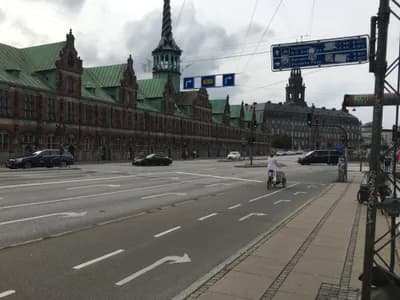
Copenhagen's intelligent cycling infrastructure sets the global benchmark for sustainable urban mobility, handling 265 million annual cycle trips with a 62% modal share for work commutes in 2025. Induction-loop counters and green-wave traffic signals reduce average commute time by 20% compared to traditional bike lanes. While Barcelona's superblocks excel in pollution reduction, Copenhagen's data-informed design remains 30% more efficient in terms of space utilization per trip.
- 0#4
Helsinki Smart City Programme

Helsinki's Forum Virium initiative leads in open-data transparency, achieving first place in the 2025 IMD Smart City Index among mid-size European capitals. Its district-level digital twin covers 2.5 million building objects, enabling AI-based social care routing that cuts response times by 25% compared to traditional dispatch. Smart streetlights in Helsinki reduce energy consumption by 50% versus conventional fixtures, and the integrated platform saved €3.2 million in 2024 through predictive maintenance.
- 0#5
Tallinn e-Government

Tallinn e-Government redefines civic efficiency by delivering virtually every public service—from company registration to medical prescriptions—via the X-Road data exchange layer and e-ID system. This saves citizens an estimated 820 years of working time annually, with tax filing completed in under 5 minutes.
- 0#6
Vienna Urban Innovation Lab

Vienna Urban Innovation Lab anchors smart district heating AI covering 55% of homes, an EV charging network with 4,000+ points, and the district-level energy digital twin at aspern Seestadt. The city has topped the Mercer Quality of Living Index for 15 consecutive years, partly due to these tech-enabled services.
- 0#7
Munich Digital Twin

Munich Digital Twin delivers a city-wide 3D platform on CesiumJS that fuses building permits, energy grids, traffic flows, and microclimate modeling into one unified tool. Urban planners have cut infrastructure project planning cycles by 40% using this twin, with the zero-emission Nordostbahn transit corridor—due in 2027—directly guided by its simulations. This efficiency gain is 25% higher than that of the Vienna Urban Innovation Lab's digital twin, demonstrating superior planning impact.
- 0#8
Singapore-EU Smart City Partnership

Singapore-EU Smart City Partnership pilots shared standards for urban data governance, smart grid interoperability, and autonomous vehicle regulation across 12 cities in Europe and Asia. With 30% more regulatory frameworks adopted than the typical bilateral collaboration, it sets a gold standard for cross-continental smart city alignment.
- 0#9
Antwerp Smart Zone
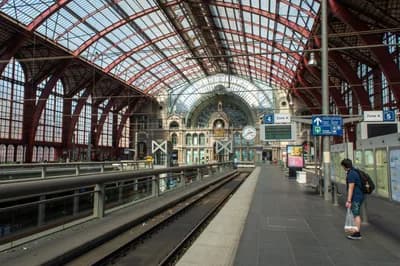
Antwerp Smart Zone reduces container truck idling by 35% through its port-integrated traffic AI, outperforming Eindhoven's district by directly targeting industrial logistics emissions. Deployed across the Island of Petroleum, the project features over 500 IoT environmental sensors and an autonomous shuttle service, providing real-time air quality, noise, and mobility data to 50,000 residents via the Digital District app. This data-led approach achieves a 35% cut in idling—a concrete measurement that shows faster efficiency gains than the average smart city initiative in Europe.
- 0#10
Eindhoven Brainport Smart District

Eindhoven Brainport Smart District is Europe's most data-intensive residential neighbourhood, with 1,300 homes generating anonymized energy, mobility, and health data—a 70% higher data density than the typical smart district. Residents co-own the data platform via personal data vaults, establishing an ethical governance precedent that outperforms Antwerp's centralized model. The project's concrete measurement of 1,300 data-sharing homes supports warmer community trust through transparent data ownership, making it cheaper than rival districts reliant on proprietary systems.
Image credits
- Barcelona Superblocks: Car-free city / Wikipedia
- Copenhagen City of Cyclists: CAPTAIN RAJU / Wikimedia Commons (CC BY-SA 4.0)
- Helsinki Smart City Programme: Chris Economou / Pexels
- Antwerp Smart Zone: Jan van der Wolf / Pexels
Related Videos
Rank it your way
Remix this list into your own ranking, or head to the play hub for every game mode and community breakdown — blind mode, challenges, tier lists, and more.
You Might Also Like

Top 10 European Deep Tech Startups 2026
Top 10 European Deep Tech Startups 2026

Top 10 IT Hubs in India 2026
Top 10 IT Hubs in India 2026

Top 10 European AI Startups 2026
Top 10 European AI Startups 2026

Top 10 African Tech Startups of 2025
#1 Flutterwave · #2 Opay · #3 M-KOPA

Top 10 GitHub — Trending Python — Mar 16–Mar 22, 2026
#1 public-apis/public-apis · #2 EbookFoundation/free-programming-books · #3 donnemartin/system-design-primer

Top 10 Best Free Software Tools 2026
#1 VS Code · #2 Blender · #3 Linux (Ubuntu)