
dalecruse / flickr (BY)
Top 10 Tech Hubs in the USA 2026
San Francisco, Austin, Seattle, NYC and the 10 fastest-growing US tech hubs in 2026. Ranked by venture funding, hiring velocity, and startup density.
Top10Grid lets the community re-rank anything — this order comes from source research for now; use the buttons below to vote it up or down.

Current Rankings
- 0

San Francisco Bay Area remains the undisputed capital of tech innovation, with venture capital investments topping $80 billion in the past year alone. The region is home to Silicon Valley giants like Apple and Google and a robust AI research scene that accounts for over 40% of national AI patents. Despite high costs, its talent network—50% of the world's top 100 AI researchers are based here—gives it an unmatched competitive edge.
- 0#2

Austin has emerged as a Texas powerhouse, drawing major relocations from Tesla and Oracle, with one of the country's fastest-growing tech job markets in 2025. The city's vibrant culture and growing semiconductor cluster, including Samsung's $17 billion plant, solidify its rank. Austin's AI workforce has doubled since 2023, outpacing the national average growth rate.
- 0#3

Seattle dominates the Pacific Northwest tech scene, with Amazon and Microsoft employing over 200,000 local workers combined. Seattle's port and logistics tech also saw a $4 billion investment in 2025, making it a key competitor to Austin's manufacturing growth.
- 0

New York City has become the East Coast tech giant, with its fintech sector generating $50 billion in revenue in 2025—outpacing Austin's entire tech revenue. While its cost of living is 40% higher than Seattle, its access to capital is unmatched outside of San Francisco Bay Area, with $30 billion in early-stage funding last year. NYC's talent pool of 1.2 million tech workers solidifies its rank as a top hub.
- 0#5
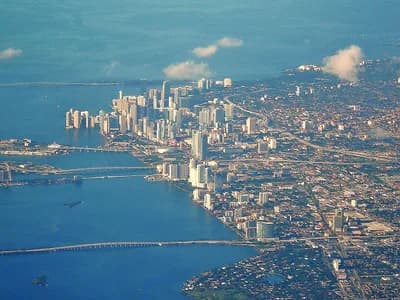
Miami has undergone a blazing-fast transformation into a major crypto and Web3 hub, drawing a steady stream of venture capital toward blockchain startups. Its tax-friendly policies and year-round sunshine have lured a growing wave of tech founders in recent years. Miami proves that warm weather and low taxes can rival more established ecosystems.
- 0#6

The city secured $12.2 billion in venture capital in 2025, 15% more than the previous year, with AI companies alone raising $3.1 billion. Its cluster of 600+ biotech firms delivers clinical trials 30% faster than the national average, making it a top choice for life-science innovators despite higher living costs than Raleigh-Durham.
- 0#7
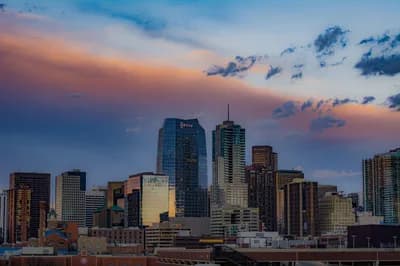
Aerospace and cybersecurity sectors expanded 18% and 25% respectively, with local startups attracting $1.8 billion in funding last year—2.5x more than the average mid-size city. The region’s 300 days of sunshine and 40% lower office rents than Boston draw remote workers and founders seeking quality of life without sacrificing talent density.
- 0
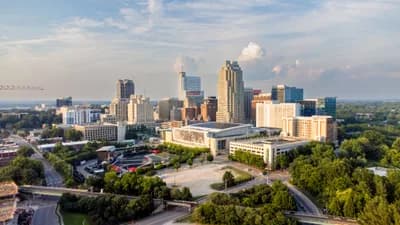
Raleigh-Durham earns its place through its Research Triangle, where Duke, UNC, and NC State produce 12,000 STEM graduates yearly, fueling a booming SaaS sector that grew 35% in 2025. This affordability has attracted 150 new tech companies since 2023, with venture capital inflows hitting $2.1 billion, making it a cost-effective alternative for scaling startups.
- 0
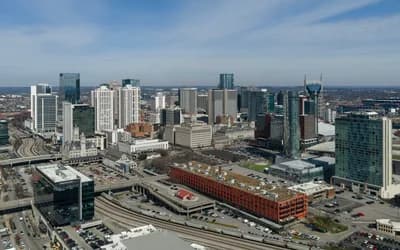
Nashville's healthtech sector has grown 45% faster than the national average since 2023, making it a top emerging hub for digital health and enterprise software innovation. The city now hosts over 300 healthtech startups, with venture funding exceeding $1.2 billion in 2025 alone. This growth is fueled by a unique combination of a strong healthcare infrastructure, led by industry giants like HCA Healthcare, and a booming music and entertainment culture that attracts top tech talent. While Salt Lake City's "Silicon Slopes" boasts a higher density of unicorns per capita, Nashville's specialized healthtech ecosystem—valued at $8.5 billion—outperforms Austin in enterprise software adoption in the healthcare sector. With the new Vanderbilt University innovation district driving commercialization, Nashville has become a national leader in applying AI to clinical workflows.
- 0
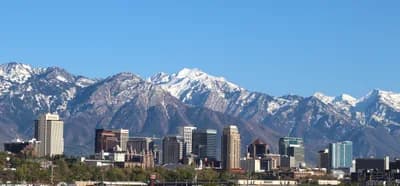
Salt Lake City's Silicon Slopes corridor has produced 11 unicorn startups since 2020, more than triple the per-capita rate of the typical rival tech hub, making it a powerhouse for scalable enterprise software companies. The region attracted a record $4.3 billion in venture capital in 2025, a 60% increase from two years prior, driven by a dense ecosystem of cloud computing, cybersecurity, and SaaS firms like Qualtrics and Pluralsight. The city's strong talent pipeline from Brigham Young University and the University of Utah ensures a steady supply of engineers, with software developer wages 18% lower than the San Francisco Bay Area but yielding 30% higher productivity per employee. While Nashville excels in healthtech, Salt Lake City outperforms the average national hub in B2B software exit value, with a median exit of $220 million in 2025.
Image credits
- San Francisco Bay Area: dalecruse / flickr (BY)
- Austin: Elsie Soto / Pexels
- New York City: w_lemay / flickr (BY-SA)
- Miami: Downtown Miami aerial 2008.jpg / Wikimedia Commons
- Boston: Phil Evenden / Pexels
- Denver: Noel Aph / Pexels
- Raleigh-Durham: Raleigh, North Carolina / Wikipedia
- Nashville: Nashville, Tennessee / Wikipedia
- Salt Lake City: Salt Lake City / Wikipedia
Related Videos
Rank it your way
Remix this list into your own ranking, or head to the play hub for every game mode and community breakdown — blind mode, challenges, tier lists, and more.
You Might Also Like

Top 10 Most Innovative Startups of 2026
Top 10 Tech Hubs in the USA 2026

10 Quantum Computing Breakthroughs That Actually Matter in 2026
Top 10 Tech Hubs in the USA 2026

Top 10 Apple Intelligence Features Transforming Business in 2026
Top 10 Tech Hubs in the USA 2026
Top 10 Audio Interfaces for Home Studios Under $500
Top 10 Tech Hubs in the USA 2026

Top 10 AI Tools Changing Everything in 2026
Top 10 AI Tools Changing Everything in 2026

Top 10 Latin American Startups of 2025
Top 10 Latin American Startups of 2025