
Bing Images / fixthephoto.com
Top 10 Best Graphics Cards for 1440P and 4K Gaming in 2026
This ranking of ten 2026 graphics cards for 1440p and 4K gaming is topped by NVIDIA's GeForce RTX 5090, whose 32GB of GDDR7 and 512-bit bus post the highest index scores on the list at every resolution tested. Below it sits a mix of NVIDIA's Blackwell RTX 50-series — the 5080, 5070 Ti, 5070, 5060 Ti and 5060 — alongside AMD's RDNA 4 cards, the RX 9070 XT and RX 9070, both built on the Navi 48 die. Intel's Arc B580 anchors the budget end and serves as the baseline (index 100) against which every other card here is measured, with July 2026 street prices running from around $303 for the B580 up to roughly $1,249 for the RTX 5080.
Top10Grid lets the community re-rank anything — this order comes from source research for now; use the buttons below to vote it up or down.

Compare by Dimension
Relative rasterization performance at 2560x1440 ultra settings, indexed to Intel Arc B580 = 100. Built from source-cited review deltas (Tom’s Hardware face-offs and hierarchy, GamersNexus, TechSpot).
| Rank | Item | Score | Notes |
|---|---|---|---|
| #1 | GeForce RTX 5090 | 270.0 | GeForce RTX 5090: 270 (B580=100) — #1 of 10 in 1440p Performance |
| #2 | GeForce RTX 5080 | 211.0 | GeForce RTX 5080: 211 (B580=100) — #2 of 10 in 1440p Performance |
| #3 | GeForce RTX 5070 Ti | 192.0 | GeForce RTX 5070 Ti: 192 (B580=100) — #3 of 10 in 1440p Performance |
| #4 | Radeon RX 9070 XT | 188.0 | Radeon RX 9070 XT: 188 (B580=100) — #4 of 10 in 1440p Performance |
| #5 | Radeon RX 9070 | 185.0 | Radeon RX 9070: 185 (B580=100) — #5 of 10 in 1440p Performance |
| #6 | GeForce RTX 5070 | 171.0 | GeForce RTX 5070: 171 (B580=100) — #6 of 10 in 1440p Performance |
| #7 | GeForce RTX 5060 Ti 16GB | 131.0 | GeForce RTX 5060 Ti 16GB: 131 (B580=100) — #7 of 10 in 1440p Performance |
| #8 | Radeon RX 9060 XT 16GB | 123.0 | Radeon RX 9060 XT 16GB: 123 (B580=100) — #8 of 10 in 1440p Performance |
| #9 | GeForce RTX 5060 | 117.0 | GeForce RTX 5060: 117 (B580=100) — #9 of 10 in 1440p Performance |
| #10 | Intel Arc B580 | 100.0 | Intel Arc B580: 100 (B580=100) — #10 of 10 in 1440p Performance |
Current Rankings
- 0
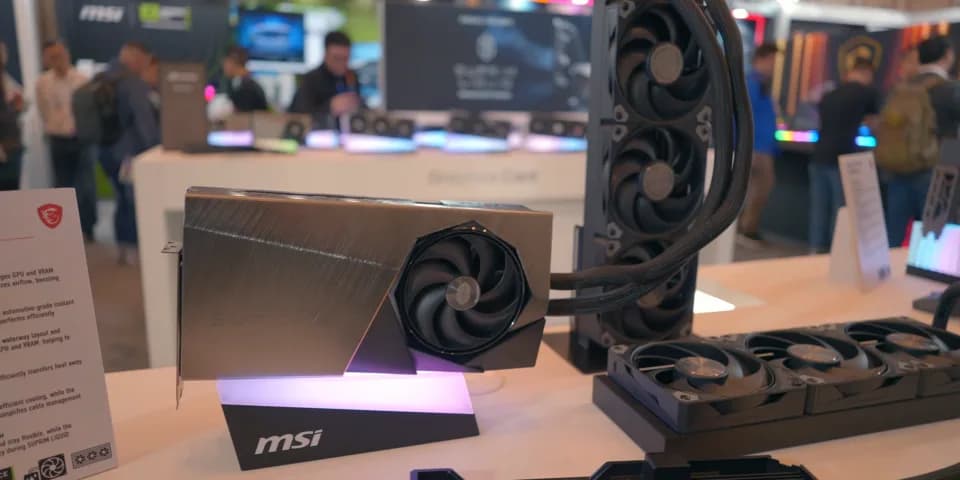
The GeForce RTX 5090 is the performance ceiling of this generation. NVIDIA's Blackwell GB202 die packs 21,760 CUDA cores running at a 2410MHz boost clock, paired with 32GB of GDDR7 across a 512-bit bus for 1792 GB/s of bandwidth, the largest VRAM pool and widest memory bus of any card on this list. That bandwidth advantage is exactly why the 5090 posts the highest scores here: an index of 270 at 1440p and 319 at 4K (Intel Arc B580 = 100 baseline), the widest 1440p-to-4K spread of any card in the field. In GamersNexus' 8-title suite the 5090 averaged 207 fps in Resident Evil 4 and 86 fps in Black Myth Wukong at 4K, with a ray-traced Cyberpunk 2077 score of 95; at 1440p it posted 189 fps in Dragon's Dogma 2 and 317 fps in Final Fantasy XIV. This is the card for buyers who want the largest possible VRAM headroom for 4K gaming, heavy ray tracing, or creator workloads that lean on its 32GB buffer and best-in-class AV1 NVENC encoder, backed by DLSS 4 Multi Frame Generation and Reflex 2. The catch is entirely financial: launch MSRP was $1999, but a 7-retailer tracker pegs the current 90-day street-price floor at $2999 as of July 2, 2026, roughly a 50% markup driven by the GDDR7 supply premium. At 575W board power it needs a 16-pin 12V-2x6 connector (or a 4x 8-pin adapter), a Gen 5 x16 slot, and the most robust PSU and case airflow on this list. If your resolution, wallet, and case can support it, nothing here touches its raw ceiling; if not, the value math explains why it ranks behind two far cheaper cards despite the top score.
- 0
The Radeon RX 9070 is AMD's RDNA 4 mid-range play, built on the Navi 48 die with 3,584 stream processors across 56 compute units and a 2520MHz boost clock. It carries 16GB of GDDR6 on a 256-bit bus for 640 GB/s of bandwidth, launched at $549 MSRP and now trading at roughly $599 street per Newegg and bestvaluegpu.com listings from July 2026. Its index scores (185 at 1440p and 182 at 4K against the Arc B580=100 baseline) sit close to its pricier XT sibling; the two cards share the same 640 GB/s memory subsystem and driver stack, and the index puts the 9070 within about 2% of the XT, a gap inside the margin of cross-outlet variance, while costing $100 less. What makes the 9070 the biggest surprise in this ranking is efficiency: at 220W board power it posts an index-per-watt score of 82.7, the highest of any card tested, meaning it delivers more 4K performance per watt than the $2999 RTX 5090 or any other GPU here. Combined with a 308.8 value-for-money score at its $599 street price, it undercuts pricier cards on both power draw and raw value. It runs AMD's FSR 4 upscaler, the company's first genuinely competitive machine-learning upscaling generation, and suits 1440p-first builds, small-form-factor systems where the 220W envelope matters, and buyers who want near-XT performance without the premium. Its honest weak points: FSR 4's frame-generation ecosystem is less mature than DLSS 4 MFG, its features score trails NVIDIA's Blackwell lineup (6/10), and against the similarly priced RTX 5070 it competes on value rather than outright horsepower, since it slots between the 5070 and 5070 Ti in raster index.
- 0
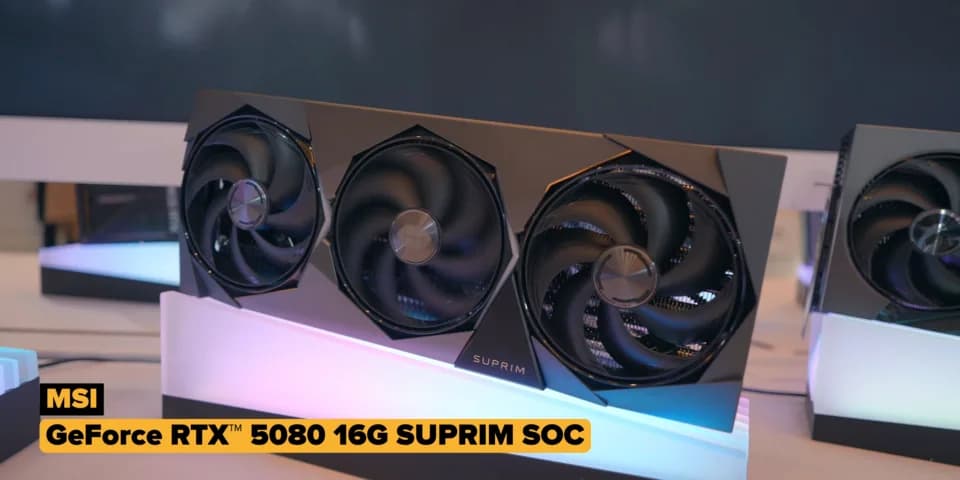
The GeForce RTX 5080 is NVIDIA's second Blackwell die on this list, the GB203, with 10,752 CUDA cores at a 2620MHz boost clock, 16GB of GDDR7 on a 256-bit bus, and 960 GB/s of bandwidth. Launched at $999, it now sells for roughly $1249 at current Amazon pricing (July 2026). Tom's Hardware's comparative testing found the 5080 running 8-16% faster than the RTX 5070 Ti, with the largest gap opening up at 4K, consistent with its bandwidth advantage showing up most at higher resolutions. At 360W board power with a 3x 8-pin adapter (or 12V-2x6) connector, it's a substantial but not extreme power draw, and its 16GB VRAM buffer is adequate for 4K ultra settings today. It carries DLSS 4 Multi Frame Generation, NVIDIA's top-tier NVENC encoder, and mature Blackwell drivers, earning a 9/10 features score. This is the card for buyers who want genuine 4K performance without the RTX 5090's 575W thermal and financial demands, or 1440p players who want serious ray-tracing headroom.
- 0
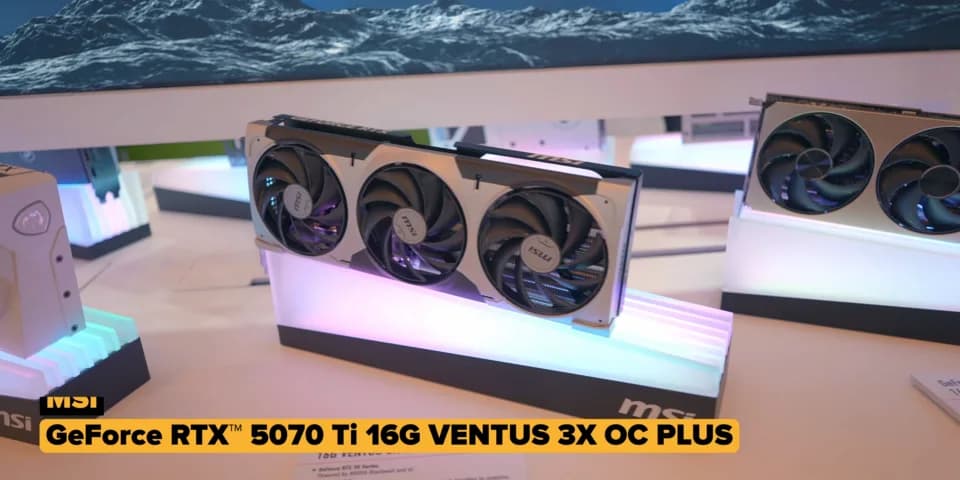
The GeForce RTX 5070 Ti shares the GB203 Blackwell die with the 5080 but with 8,960 CUDA cores at a 2450MHz boost clock and the same 16GB of GDDR7, on a 896 GB/s, 256-bit path. Launched at $749, it now trades at an aggregate midpoint of roughly $1099 across bestvaluegpu, gpudeals, and TheFPSReview listings (July 2026). GamersNexus' ray-tracing testing found it running 27% ahead of the RTX 5070 in ray-traced Death Stranding 2 at 1440p, underlining the RT-hardware jump within NVIDIA's own stack. At 300W with a 2x 8-pin adapter connector, it draws meaningfully less power than the 5080 while giving up only a modest amount of index score. It carries DLSS 4 MFG, the same 16GB headroom as the 5080, and a flagship-grade encoder, earning a 9/10 features score tied for second-best in the field. NVIDIA positions this as its best value entry in the higher tier, and the data mostly backs that framing relative to its own 5080 and 5090 siblings, though at $1099 street, its value-for-money score (174.7) still trails cards costing half as much. This is the pick for buyers who want 5080-adjacent ray-tracing and VRAM headroom without quite the same expense, provided the roughly 47% markup over its $749 MSRP doesn't sour the deal. It's best suited to 1440p players who want serious ray-tracing headroom for years to come, or 4K gamers willing to lean on DLSS 4 upscaling rather than brute-force native rendering.
- 0

The Radeon RX 9070 XT is AMD's flagship RDNA 4 card, sharing the Navi 48 die with the 9070 but fully enabled at 4,096 stream processors across 64 compute units, with an aggressive 2970MHz boost clock, the fastest of any 256-bit card here. It runs the same 16GB GDDR6 on a 256-bit bus for 640 GB/s bandwidth, launched at $599 and now selling for roughly $699 (Amazon $689, Newegg $700-710, July 2026). Its index scores of 188 at 1440p and 186 at 4K edge out the 9070 by a narrow margin, backed by GamersNexus and TechSpot data: in the 1440p suite it posted 118 fps in Call of Duty: Black Ops 6 and 125 fps in Cyberpunk 2077, while at 4K it ran 103 fps in Resident Evil 4, 70 in Dragon's Dogma 2, 62 in Death Stranding 2, and 39 in Stalker 2. GamersNexus described it as nearly tying the RTX 5070 Ti in raster, though its ray-tracing throughput trails more sharply in heavy RT titles, reflected in the RDNA 4 architecture's 0.90 RT modifier applied against its raster index. At 304W with a 2x 8-pin connector, it draws slightly more than the 9070 for a modest performance gain. The honest caveat: its features score (7/10) still trails NVIDIA's DLSS 4 MFG ecosystem, and drivers and ray-tracing performance trail Blackwell overall per GamersNexus and Tom's testing.
- 0
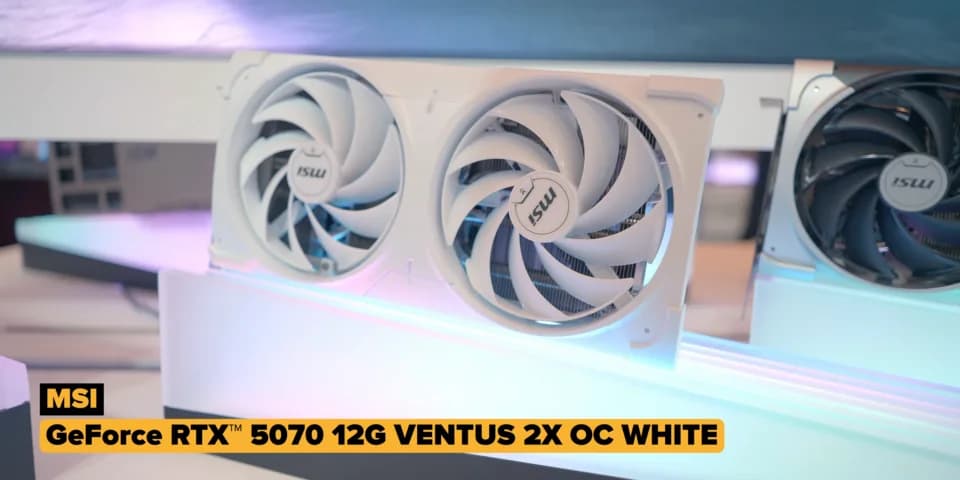
The GeForce RTX 5070 uses NVIDIA's smaller GB205 Blackwell die, with 6,144 CUDA cores at a 2510MHz boost clock. It's the first card on this list to drop to a 192-bit memory bus, pairing 12GB of GDDR7 with 672 GB/s of bandwidth. Launched at $549, it currently sells for a midpoint of roughly $649 per gpudeals.net's $599-688 tracked range (July 2026). At 250W with a single 2x 8-pin adapter connector, it's an efficient, easy-to-cool card that scores 66 on the power-efficiency index, solidly mid-pack. The significant caveat, and the reason this card doesn't rank higher despite solid index numbers: its 12GB VRAM buffer is the tightest of any 16GB-class competitor at this price point, capping headroom for texture-heavy 1440p ultra settings and any serious 4K ambitions as games grow more VRAM-hungry. Buyers who want a straightforward, efficient 1440p card and don't plan to push texture settings to their limits will find the 5070 an easy recommendation; buyers eyeing 4K or long-term future-proofing should look at the 16GB-equipped RX 9070 or RTX 5070 Ti instead, both of which sidestep this VRAM ceiling entirely. It's a natural fit for 1440p esports and single-player gaming alike, provided you're not chasing maximum texture settings for the long haul.
- 0

The GeForce RTX 5060 is NVIDIA's entry Blackwell card, the GB206 die with 3,840 CUDA cores at a 2500MHz boost clock, an 8GB GDDR7 buffer, and a 128-bit bus delivering 448 GB/s bandwidth. It launched at $299 and currently sells for roughly $339 at Amazon (July 2026). Its index scores are 117 at 1440p and 104 at 4K against the Arc B580=100 baseline, and Tom's Hardware's GPU hierarchy places it 17% faster than the B580 at 1440p, exactly the gap reflected in its index score. At just 145W board power with a single 8-pin adapter connector, it's the lowest-draw card in this entire list, translating into the second-best efficiency score in the field (71.7). Its real standout, though, is value: at $339 street its 345.1 value-for-money score is the single highest of any card tested, meaning it delivers more 1440p index per dollar than anything else here, including the far pricier flagships. It carries DLSS 4 Multi Frame Generation for an entry-level upscaling boost. The caveat that keeps this from being an unqualified budget-1440p recommendation is VRAM: its 8GB buffer badly caps headroom for 1440p ultra settings and modern texture packs, and it's the tightest buffer of any card in this roundup alongside its own limited 128-bit bus. This is the card for strict-budget builds, esports-focused 1440p rigs, or small-form-factor systems where the 145W envelope and low cooling demands matter more than VRAM headroom; buyers planning to run texture-heavy AAA titles at 1440p ultra for years to come should strongly consider the 16GB-equipped RTX 5060 Ti or RX 9060 XT instead.
- 0

The GeForce RTX 5060 Ti 16GB shares the GB206 die with the standard 5060 but with a fuller 4,608 CUDA cores at a 2572MHz boost clock, and critically, double the VRAM: 16GB of GDDR7 rather than 8GB, still on a 128-bit bus at 448 GB/s. Launched at $429, it currently sells for roughly $589 at Amazon (July 2026), a nearly 37% premium over MSRP. Its index scores of 131 at 1440p and 122 at 4K put it ahead of the standard 5060 in both tiers, and TechSpot's own suite (not directly comparable to other outlets' numbers) recorded an average of 79 fps at 1440p, alongside a documented 20% uplift over the previous-generation RTX 4060 Ti at 1440p and 38% at 4K. It carries DLSS 4 Multi Frame Generation, the same flagship-grade encoder and mature drivers as its siblings, and its generous-for-tier 16GB buffer earns it an 8/10 features score, the best of any sub-$600 card here. The honest story with this card is its street price: at $589 it's meaningfully above its $429 MSRP, which is exactly why it finishes in a near-dead-heat with the cheaper, 8GB RTX 5060 in the overall composite despite being the objectively faster, better-equipped card. If retailers bring its street price back down toward the $429 MSRP, its extra VRAM and stronger index scores would make it the clear pick over the 5060 for anyone doing 1440p gaming with texture-heavy titles or planning to keep the card for several years.
- 0
The Radeon RX 9060 XT 16GB is AMD's smallest RDNA 4 die on this list, Navi 44, with 2,048 stream processors across 32 compute units but the highest boost clock of any AMD card here at 3130MHz. It pairs a rare-for-tier 16GB of GDDR6 with a 128-bit bus and 320 GB/s bandwidth, the narrowest bandwidth of any card in this roundup. Launched at $349, it now sells for roughly $448 at Amazon (July 2026), a jump the market data attributes to a broader DRAM cost rise rather than any availability shortage; the card remains widely stocked. Its index scores of 123 at 1440p and 114 at 4K are built from Tom's Hardware testing showing the 8GB variant running 23% faster than the Arc B580 at 1440p, a figure carried over to the 16GB card since both share the same GPU and clocks. It runs AMD's FSR 4 upscaler, though it lacks an MFG-equivalent frame-generation ecosystem, landing a 6/10 features score. This is a reasonable pick for 1440p-and-below builds where the 16GB buffer matters more than chart-topping frame rates, though its 320 GB/s bandwidth ceiling shows up in its comparatively modest 4K index score. It's a solid choice for small-form-factor or budget-conscious 1440p builds that want headroom for future, more VRAM-hungry titles without paying flagship prices.
- 0
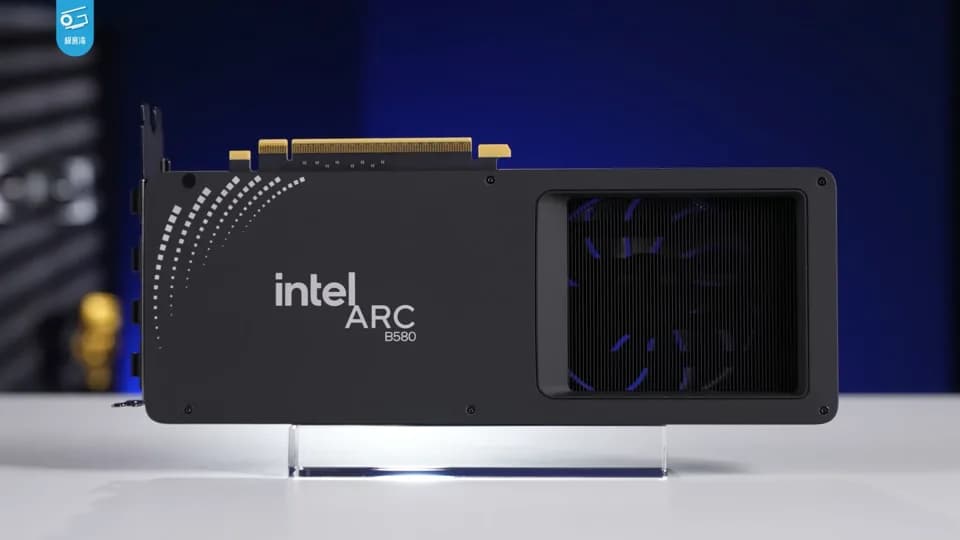
The Intel Arc B580 is the baseline card against which every index score in this ranking is measured (Arc B580 = 100). Built on Intel's Xe2 Battlemage architecture (BMG-G21) with 20 Xe2-cores at a 2670MHz boost clock, it pairs 12GB of GDDR6 with a 192-bit bus for 456 GB/s bandwidth, a wider bus than several cards costing far more. Launched at $249, it now sells for roughly $303 at Amazon (July 2026); Intel is the vendor holding closest to MSRP overall in dollar terms, and that $303 keeps the B580 the cheapest card in this entire list. In GamersNexus' 13-title suite, the anchor for this entire index, it averaged 86 fps at 1440p and 47 fps at 4K. At 190W with a single 8-pin connector, it's a straightforward, easy-to-power card, though its 52.6 power-efficiency score is the lowest in the field. It runs Intel's XeSS 2 upscaler, described in the data as improving, and pairs it with genuinely excellent AV1 encoding for the price, a real strength for streamers and creators on a budget. Its 330 value-for-money score, the second-highest of any card tested, reflects just how much raw 1440p index it delivers per dollar at its low street price. The clear caveat, and the reason it anchors the bottom of this list despite strong value math, is driver maturity: it's explicitly the weakest of the three vendors on this front, and its ray-tracing throughput (Xe2's 0.75 RT modifier, the steepest discount applied to any architecture here) trails the field by the widest margin. This is the card for strict-budget 1080p/1440p builds, HTPC or small-form-factor systems, or content creators who prioritize AV1 encode quality per dollar over top-tier raster or ray-tracing performance.
Frequently Asked Questions
Which GPU offers the best value for 1440p gaming in 2026? The Radeon RX 9070 and GeForce RTX 5070 hit the sweet spot for 1440p — strong performance at high settings, priced between roughly $400–$600. You get great visuals without overpaying for horsepower you won't notice at 1440p.
Do I need a 4K-class card if I only play at 1440p? No. Cards like the RTX 5070 Ti and RX 9070 XT are built for high-refresh 1440p and comfortable 4K play. The RTX 5090 only pays off if you own a 4K display and want the absolute highest frame rates in the most demanding games.
How were these graphics cards ranked? Each card earned a composite score based on gaming frame rates at 1440p and 4K (including games with ray-tracing on), power efficiency, and real street prices as of July 2026. Cards that deliver more performance per dollar at your target resolution rank higher.
Image credits
- GeForce RTX 5090: MoreThanTech / CC BY 3.0 (entity-adopted)
- GeForce RTX 5080: MoreThanTech / CC BY 3.0 (entity-adopted)
- GeForce RTX 5070 Ti: MoreThanTech / CC BY 3.0 (entity-adopted)
- Radeon RX 9070 XT: Chaddy / Wikimedia Commons (CC BY-SA 4.0)
- GeForce RTX 5070: MoreThanTech / CC BY 3.0 (entity-adopted)
- GeForce RTX 5060: FreeMediaKid! / Wikimedia Commons (CC BY-SA 4.0)
- GeForce RTX 5060 Ti 16GB: ZMASLO / Wikimedia Commons (CC BY 3.0)
- Intel Arc B580: 极客湾Geekerwan / CC BY 3.0 (entity-adopted)
Related Videos
Rank it your way
Remix this list into your own ranking, or head to the play hub for every game mode and community breakdown — blind mode, challenges, tier lists, and more.
You Might Also Like

Top 10 Most Powerful AI Companies 2026
Top 10 Most Powerful AI Companies 2026

Top 10 AI Tools Changing Everything in 2026
Top 10 AI Tools Changing Everything in 2026

Top 10 Physical AI and Robotics Breakthroughs Transforming Industries in 2026
Top 10 Physical AI and Robotics Breakthroughs Transformin...

Top 10 Best Programming Languages to Learn in 2026
#1 Python · #2 TypeScript · #3 Rust
Top 10 GitHub — Trending Python — Aug 31–Sep 6, 2026
#1 public-apis/public-apis · #2 EbookFoundation/free-programming-books · #3 vinta/awesome-python

Top 10 Most Powerful AI Tools That Are Changing the Way We Work in 2026
#1 ChatGPT (OpenAI) · #2 Claude (Anthropic) · #3 GitHub Copilot