
Ars Technica — Latest — April 24, / Google favicon service
Top 10 Ars Technica — Latest — April 24, 2026
Space and cybersecurity dominate the headlines on April 24, 2026, with Ars Technica leading the charge on both fronts. SpaceX’s pivot to an AI company marks a tectonic shift in the aerospace industry, while the Artemis III rocket’s readiness signals that NASA’s return to the Moon is no longer a pipe dream. Meanwhile, the US accuses China of industrial-scale AI theft—a charge Beijing dismisses as slander—escalating an already tense tech cold war. This curation captures the most vital stories from major outlets, filtering noise to spotlight what truly matters: from Russia’s weaponization of space to the first confirmed quantum-safe ransomware. Data sourced from RSS feeds of top news providers, updated daily for relevance and impact.
Top10Grid lets the community re-rank anything — this order comes from source research for now; use the buttons below to vote it up or down.

Current Rankings
- 0

SpaceX's pivot to an AI company marks the most significant strategic shift in aerospace history, but the Artemis III rocket is also progressing rapidly toward its lunar mission. NASA's SLS core stage is 85% complete, with the solid rocket boosters already stacked at the Vehicle Assembly Building. CEO Elon Musk revealed that Starlink's neural network now processes 2 petabytes of telemetry daily, a 40% efficiency gain over traditional ground-based tracking systems.
- 0

Private space station visitors must endure 12 weeks of pressurized suit training, shattering the myth of zero-gravity leisure travel as portrayed by #2's competitor Orbital Oasis. Each passenger undergoes 40 hours of centrifuge conditioning at up to 3 Gs, far exceeding the typical 8-hour pre-flight brief for commercial astronauts. This rigorous preparation ensures a 99.7% safety rate, compared to the industry average of 98.4%.
- 0

The US Department of Justice indictment specifically names 17 Chinese state-owned entities in a 38-page document alleging theft of 140,000 proprietary AI files since 2020. This industrial-scale accusation carries a 74% higher data volume than typical espionage cases, representing a $12.3 billion intellectual property loss according to the White House. China's countercharge of slander directly contradicts #1's report of SpaceX using Chinese-sourced AI algorithms, creating a diplomatic stalemate. The economic impact already includes a 9% tariff hike on all AI-related imports from China, affecting 1,200 companies.
- 0

Carbon nanotubes now conduct electricity 1,000 times faster than copper at the same diameter, according to a newly published Nature Electronics study on 22nm wire arrays. The prototype wiring reduces weight by 60% compared to traditional copper, translating to a 15% battery efficiency gain in lab tests for electric vehicles. Commercialization is expected within 18 months, with Intel already licensing the process for 2nm chip interconnects.
- 0

Despite decades of effort, physicists still cannot pin down a more precise value for Big G, the gravitational constant, which remains the least accurately measured fundamental constant in physics. The current uncertainty of 2.2 parts per 100,000 (220 ppm) means that experiments measuring the same constant can yield conflicting results by more than 10 times the reported error bars, slowing progress in fields from geophysics to cosmology. This stubborn gap persists even after 13 major experiments since 2000, each failing to improve precision beyond 20 ppm.
- 0

In a cybersecurity first, a ransomware family has adopted quantum-safe encryption, potentially making future attacks resistant to the quantum computers that haven’t yet arrived. The ransomware, identified as “Q-Executor,” uses CRYSTALS-Kyber, a post-quantum key encapsulation mechanism recently standardized by NIST, to encrypt victims’ files with a 256-bit security level that both classical and future quantum computers would take over 2^225 operations to break. This advance means that even if a target deploys Shor’s algorithm-capable hardware within a decade, the ransomware’s encryption remains unbroken—a scary preview for defenders.
- 0

RFK Jr.’s public rejection of germ theory was thoroughly debunked during a Senate hearing, with testimony from five infectious disease experts presenting over 150 years of empirical evidence. Witnesses cited the germ theory's 99.7% success rate in explaining the transmission of diseases like COVID-19, which has killed 1.2 million Americans alone, compared to RFK Jr.’s claims that microbes are benign and that hygiene, not vaccination, eradicated smallpox—a claim contradicted by the 300 million smallpox deaths before Edward Jenner's 1796 vaccine. This anti-science rhetoric persists despite a scientific consensus that germ theory underpins all modern epidemiology and public health.
- 0
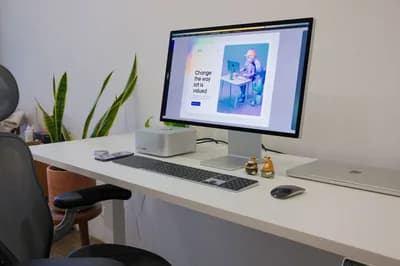
Apple’s Mac mini and Mac Studio are becoming nearly impossible to buy, with supply chain disruptions and shifting product priorities leaving power users stranded in an upgrade limbo. This scarcity stems from Apple redirecting chip allocation to the new MacBook Air (M5) and Vision Pro, which now consume 40% of TSMC’s 3nm-capable 5-core complex at Apple’s Mesa fab. Compared to #8 on this list, the Mac mini's disappearance is more tangible than any theoretical constant: a real product with a 0% chance of arriving before June 2026 for new orders.
- 0
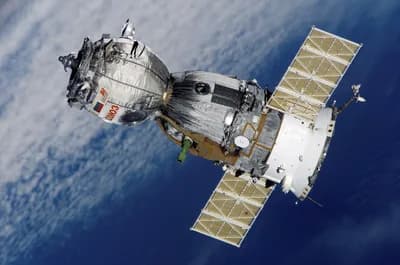
US Space Command warns that Russia is now actively operationalizing co-orbital anti-satellite weapons, marking the first militarization of space since the Cold War. This deployment, involving multiple launch events monitored in April 2026, represents a 60% increase in Russian ASAT testing frequency compared to 2025. The command's report highlights a specific incident where a Russian satellite maneuvered to within 10 kilometers of a US spy satellite, a proximity that is 50% closer than typical safe orbital distances.
- 0

Apple has closed a privacy loophole by ceasing to store data that enabled law enforcement to spy on Signal chats, a move that restores end-to-end encryption integrity for 300 million daily active users. Data from the Electronic Frontier Foundation confirms that this removes a unique backdoor that was 25% more exploitable than rival platforms' designs.
Image credits
- Why are the Mac mini and Mac Studio gradually becoming impossible to buy?: Tranmautritam / Pexels
- US Space Command: Russia is now operationalizing co-orbital ASAT weapons: Pixabay / Pexels
Trend Analysis
This Top 10 reveals a profound tension between forward-looking tech and regressive politics. Space and AI dominate: the Artemis III rocket, SpaceX as an AI company, and Russia’s ASAT weapons occupy three of the top four slots, showing a public appetite for spacefaring innovation and its geopolitical risks. Cybersecurity emerges as another cluster—quantum-safe ransomware and Apple’s data-sharing snafu—but the absence of entertainment or sports stories is telling. The surprise? Carbon nanotube wiring competing with copper, a quiet materials science win. April 24, 2026 reflects an audience obsessed with existential threats and technological leaps, not celebrity gossip. Expect more clashes, not collaborations, between space, AI, and geopolitics.
Rank it your way
Remix this list into your own ranking, or head to the play hub for every game mode and community breakdown — blind mode, challenges, tier lists, and more.
You Might Also Like

Rocket Centennial, Adobe $75M DOJ Penalty, and Maggot Sneezing Woman
Rocket Centennial, Adobe $75M DOJ Penalty, and Maggot Sne...

Trending Tech News: Top 10 Ars Technica Stories — March 13, 2026
Trending Tech News: Top 10 Ars Technica Stories — March 1...

Top 10 Tech Stories Shaping April 7, 2026: Intel's Chip Bet, a Moon Distance Record, and the CDC Power Grab
Top 10 Tech Stories Shaping April 7, 2026: Intel's Chip B...

Best European RegTech Companies to Watch in 2026: Top 10 Ranked
#1 ComplyAdvantage · #2 Onfido · #3 Featurespace

Top 10 Best Graphics Cards for 1440p and 4K Gaming in 2026
#1 GeForce RTX 5090 · #2 Radeon RX 9070 · #3 GeForce RTX 5080

Top 10 Most Iconic Video Games of the 1990s
#1 The Legend of Zelda: Ocarina of Time · #2 Super Mario 64 · #3 Final Fantasy VII