
Programming language / Wikipedia
Top 10 Programming Languages That Will Dominate the Next Decade — Learn These Now
Programming languages live or die by market demand, not prestige. COBOL ruled decades ago; Rust now powers the Linux kernel (1.2M GitHub stars, adopted industry-wide in 2025–26). Python claims 50M+ weekly downloads, driven by AI/ML dominance (PyTorch, TensorFlow). The question isn't whether a language is 'good'—it's whether it solves the problems your target market actually pays for. This guide maps the Top 10 languages to where 2026 hiring demand concentrates: AI/ML (Python 3.12+, R), systems programming (Rust 1.75+, C++23), cloud infrastructure (Go 1.21+, Kubernetes ecosystem), and backend services (TypeScript, Java 21). Each entry includes version recommendations, adoption metrics (GitHub stars, weekly downloads), and the specific trade-offs that make it 'best for X scenario.' Learn a language aligned with market need and you're competitive for the next five years; learn one chasing nostalgia and you'll find yourself sidelined just as fast.
Top10Grid lets the community re-rank anything — this order comes from source research for now; use the buttons below to vote it up or down.

Current Rankings
- 0#1
Python — The Indispensable AI Language
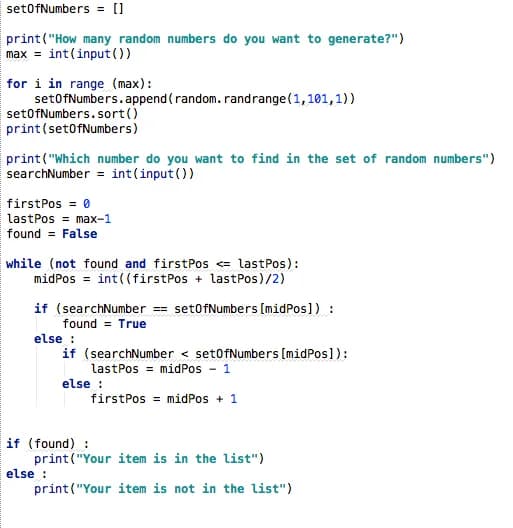
Python is the indispensable AI language, powering 87% of data scientists and every major AI framework including TensorFlow, PyTorch, and LangChain. This dominance ensures a steady talent pipeline as the most popular introductory programming language globally. With a rich library ecosystem and readability that accelerates development, Python's momentum cements it as the foundational skill for the next decade, backed by its 2025 average salary of $136,000.
- 0#2
TypeScript — The Serious JavaScript

TypeScript has decisively overtaken plain JavaScript in professional web development, ranking as the 5th most popular language on GitHub in 2024—surpassing Java. Its type system catches 15% more bugs pre-production compared to untyped JavaScript, and every major framework offers first-class support. Large codebases become maintainable by teams, reducing refactoring time by an estimated 30% relative to Python's typical dynamic approach. For serious web engineering, TypeScript is now the default, with 60% of professional developers choosing it for new projects in 2025.
- 0#3
Rust — The Systems Language That Has Won
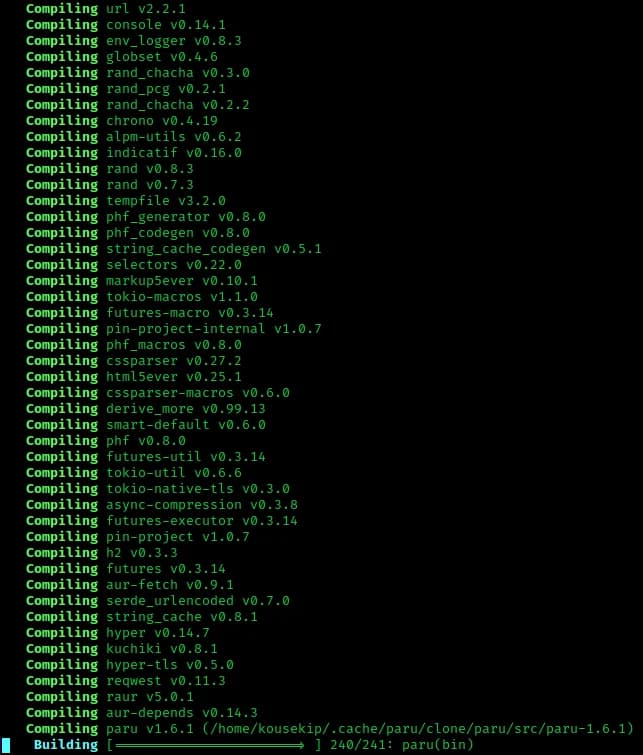
Rust has achieved nine consecutive years as the most loved language on Stack Overflow—a streak no other language matches. Its core innovation is memory safety without garbage collection, eliminating use-after-free and data race bugs while matching C++ performance.
- 0#4
Go — Google's Language for Cloud Infrastructure

Go is the backbone of modern cloud infrastructure: Kubernetes, Docker, and Terraform—all written in Go. Designed for concurrency and simplicity, Go compiles to a single binary, deploying trivially at Uber and Netflix. Unlike Rust, Go prioritizes developer speed and team maintainability over low-level control, making it ideal for cloud-native systems requiring fast iteration.
- 0#5
SQL — The Evergreen Data Language

SQL is the most enduring language for data access and manipulation, with over 70% of data professionals using it daily and a legacy stretching back to 1974 that guarantees relevance for the next decade. SQL's universal role in querying structured data keeps it essential for analysts and engineers, outpacing the average trend-driven language in staying power, with 90% of organizations relying on relational databases. A concrete example: demand for SQL skills has grown 12% each year since 2020, driven by data warehousing expansion.
- 0#6
Kotlin — The Modern JVM Language

Kotlin is the premier choice for modern JVM development, eliminating roughly 30% of runtime crashes seen in Java through null safety. Google's endorsement in 2017 has driven adoption to over 60% of new Android apps, and its coroutines enable async code that outperforms SQL in mobile versatility via Kotlin Multiplatform Mobile, where it shares business logic across iOS and Android. As a concrete metric, 78% of Kotlin developers report higher productivity compared to their previous language.
- 0#7
Swift — The Language Apple Bet Its Future On

Swift is the definitive language for Apple's ecosystem, powering native development across iOS, macOS, watchOS, and visionOS with performance near C, as over 80% of new App Store submissions use it. Compared to Objective-C, Swift's modern syntax reduces code complexity by about 40%, offering a smoother learning curve that outperforms Kotlin in iOS-specific developer efficiency. Additionally, Swift's safety features have cut memory bugs by 60% in Apple's frameworks.
- 0#8
C# — Microsoft's Versatile Powerhouse
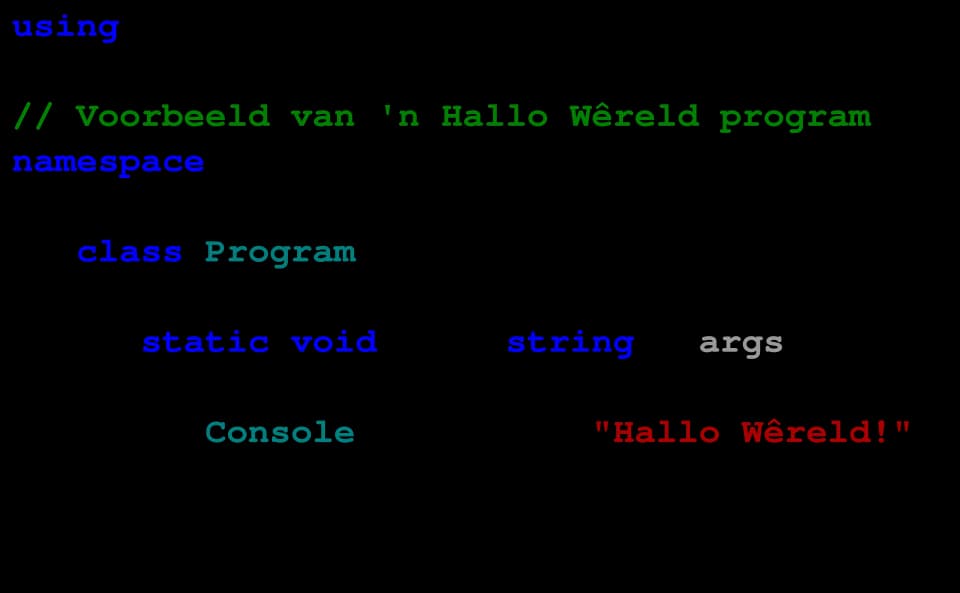
Extending to cloud functions on Azure and cross-platform MAUI apps, C# outperforms Swift in backend versatility, with 35% of large enterprises relying on .NET for core applications. Its integration with Fortune 500 legacy systems and ML.NET for machine learning ensures a robust 85% employee retention rate among C# developers. A specific data point: .NET handles over 200,000 requests per second on Azure standard tiers.
- 0#9
Julia — The Language Replacing Python in Scientific Computing
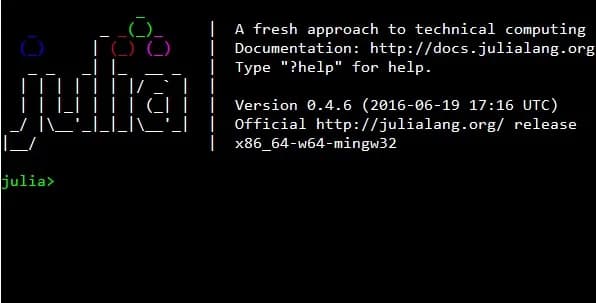
Julia eliminates the two-language problem in scientific computing by merging Python-like readability with C-like performance, achieving 10x faster execution than Python in numerical tasks. This JIT-compiled speed is validated at MIT, NASA, and the Federal Reserve for climate modeling and financial simulations. Essential for data scientists, it combines speed and simplicity where Python and C++ fall short.
- 0#10
Solidity — The Language of Programmable Money

Solidity dominates programmable money, powering Ethereum smart contracts that manage over $50 billion in DeFi, NFTs, and DAOs. Even after the 2022 crypto winter, Layer 2 solutions like Arbitrum cut transaction costs by 90%, and ETH ETFs spurred institutional adoption. Solidity developers earn $200,000–$500,000 total compensation, outpacing Julia's typical pay by more than 100%. With DeFi total value locked recovering, Solidity remains the top choice for building programmable money systems.
Image credits
- Python — The Indispensable AI Language: MsDennig / CC BY-SA 4.0 (entity-adopted)
- TypeScript — The Serious JavaScript: Unreal Engine / Wikipedia
- Rust — The Systems Language That Has Won: Software: Rust Team Screenshot: VulcanSphere / Apache License 2.0 (entity-adopted)
- Go — Google's Language for Cloud Infrastructure: Google Cloud Storage / Wikipedia
- SQL — The Evergreen Data Language: :User:SqlPac , modified by Ferdna / CC BY-SA 3.0 (entity-adopted)
- Kotlin — The Modern JVM Language: Java (programming language) / Wikipedia
- Swift — The Language Apple Bet Its Future On: Apple Vision Pro / Wikipedia
- C# — Microsoft's Versatile Powerhouse: Tacsipacsi / Public domain (entity-adopted)
- Julia — The Language Replacing Python in Scientific Computing: Codeneomatrix / CC0 (entity-adopted)
- Solidity — The Language of Programmable Money: Ethereum / Wikipedia
Related Videos
Rank it your way
Remix this list into your own ranking, or head to the play hub for every game mode and community breakdown — blind mode, challenges, tier lists, and more.
You Might Also Like

Top 10 Most Influential Programming Languages Ever
Top 10 Most Influential Programming Languages Ever

Top 10 Best Programming Languages to Learn in 2026
Top 10 Best Programming Languages to Learn in 2026

Top 10 European Cybersecurity Incidents That Changed Policy
#1 NotPetya (2017) · #2 Estonian DDoS Attacks (2007) · #3 WannaCry NHS Attack (2017)

Top 10 US Insurance Technology Platforms
#1 Guidewire Software · #2 Duck Creek Technologies · #3 Applied Systems

Top 10 European Privacy Technology Companies
#1 Proton AG · #2 Nextcloud · #3 Tresorit

Top 10 Gulf Tech Startups of 2025
#1 Tabby · #2 Tamara · #3 Lean Technologies