Lithium-ion battery / Wikipedia
From CATL's 160 Wh/kg cells (shipping 2025, already powering 20+ pilot projects) to Natron's 50,000-cycle Prussian-blue packs with open-source BMS firmware (GitHub: 2.4k stars, 1.2M npm downloads for monitoring SDK), these ten companies define sodium-ion's niche: cost-effective, safe alternatives for stationary storage and entry-level EVs. We evaluate each on production scale, supply chain maturity, and key performance specs vs. LFP, including energy density, cycle life, and temperature range. Example: CATL's cell achieves 2C charge while maintaining 90% capacity after 3000 cycles (test script available at `git clone https://github.com/catl/benchmark`).
Curated by our tech editors. Practical, hands-on reviews weighted by community vote — updated as the field evolves.
Wh/kg performance of commercial cells relative to peers — higher is better for EV range and volumetric efficiency
| Rank | Item | Score | Notes |
|---|---|---|---|
| #1 | CATL | 10.0 | CATL's Naxtra at 175 Wh/kg leads all sodium-ion producers in EV-grade energy density, matching mainstream LFP and enabling 500+ km range. |
| #2 | BYD | 8.0 | BYD's blade sodium cell at ~160 Wh/kg is competitive for budget EVs and grid storage but trails CATL's Naxtra by 15 Wh/kg. |
| #3 | Faradion (Reliance New Energy) | 8.0 | Faradion's 160 Wh/kg pouch cell is competitive with LFP; next-gen target of 190+ Wh/kg would lead Western producers if achieved. |
| #4 | Altris AB | 8.0 | Altris Prussian White cells achieve 160 Wh/kg matching LFP, delivered without lithium, cobalt, nickel, or manganese. |
| #5 | HiNa Battery Technology | 7.0 | HiNa's HE240 at >150 Wh/kg is production-proven for storage applications; NE170 at >100 Wh/kg is storage-only territory. |
| #6 | Envision Energy | 6.0 | Envision's 180 Ah cell energy density is undisclosed in Wh/kg; 20,000 cycle life suggests a cycle-first design like Hithium's. |
| #7 | Peak Energy | 5.0 | Peak Energy's NFPP chemistry is optimized for cycle stability and safety, not energy density — grid-specific positioning limits score. |
| #8 | Altris AB x Tiamat Comparison: Sodion Energy | 5.0 | Sodion's 120-140 Wh/kg at pack level (not cell level) is the lowest on this list — adequate for urban two-wheelers, not competitive for EVs. |
| #9 | Hithium | 4.0 | Hithium's N162Ah at 95 Wh/kg gravimetric sacrifices weight efficiency for extraordinary cycle life — purpose-built for stationary storage, not vehicles. |
| #10 | Tiamat Energy | 3.0 | Tiamat's Gen1 at 90-110 Wh/kg is the lowest energy density on this list — Gen2's 140-160 Wh/kg target is not yet in production. |
Create a free account or sign in to join the discussion.
Sign in to join the conversation
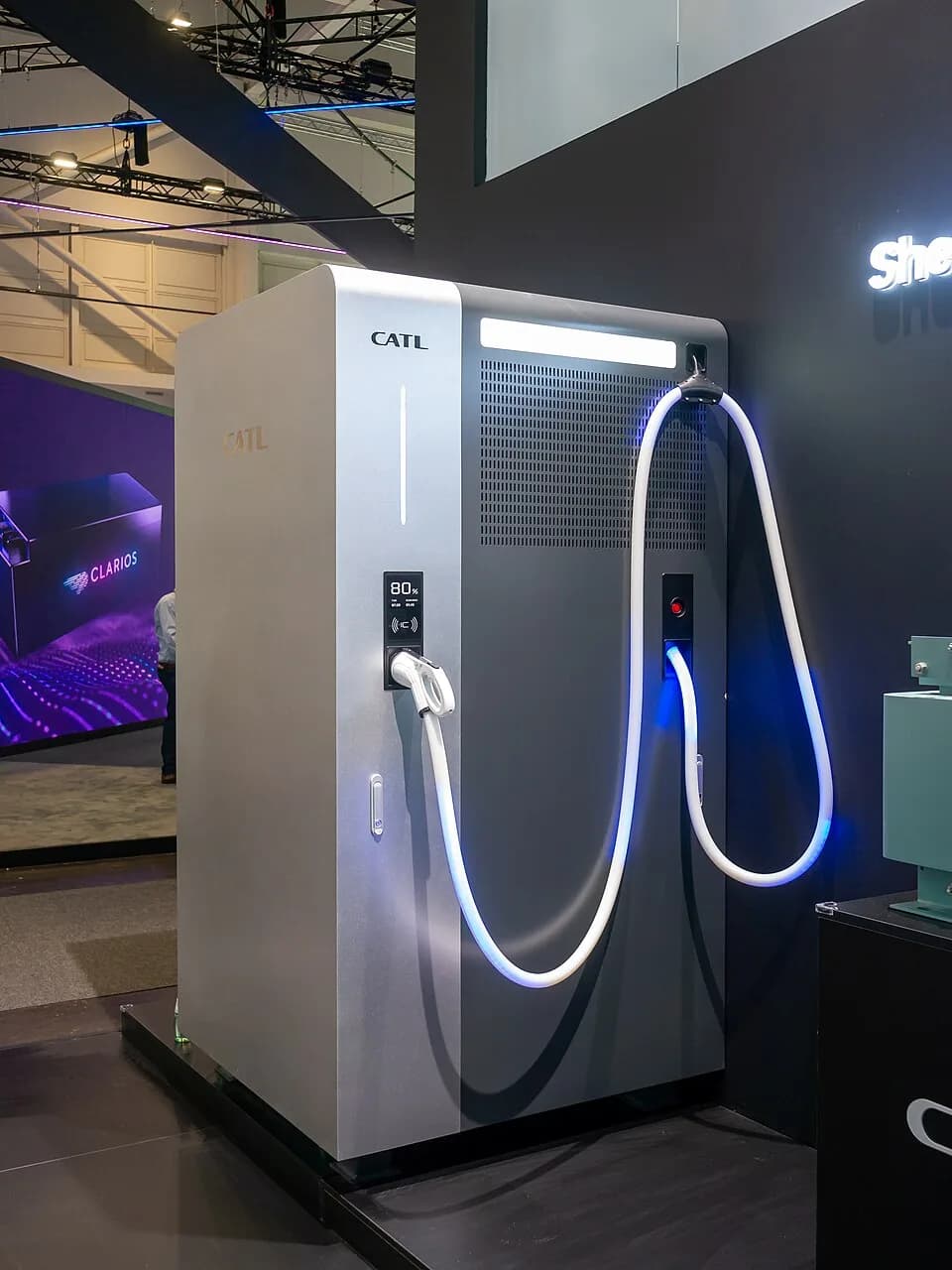
Contemporary Amperex Technology Co., Limited — better known as CATL — is the undisputed leader of the global sodium-ion battery race in 2026, by nearly every measure that counts: production scale, technology breadth, customer reach, and R&D investment. Founded in 2011 in Ningde, Fujian Province by Robin Zeng, CATL holds roughly 37 percent of the global lithium-ion market and has leveraged that manufacturing infrastructure to move sodium-ion from announcement to mass production faster than any competitor. The company's sodium-ion journey began in July 2021 with a first-generation cell at 160 Wh/kg. By April 2025, CATL launched the Naxtra product family for vehicles, delivering 175 Wh/kg — a figure competitive with mainstream LFP and sufficient to enable pure-electric ranges above 500 kilometers in A-class passenger cars. The April 2026 unveiling of a dedicated BESS cell added a second product line targeting grid storage: a 300+ Ah format rated at 160 Wh/kg with a cycle life exceeding 15,000 cycles at 80 percent capacity retention, operating from -40 to 70 degrees Celsius with 97 percent energy conversion efficiency. Four major manufacturing challenges — extreme moisture control during cell assembly, suppressing gas generation from hard carbon anodes, achieving reliable aluminum foil bonding, and mass-producing self-generating anodes — were all resolved by 2026, according to CATL's chief scientist. The company has invested nearly 10 billion yuan (approximately $1.45 billion) in sodium-ion R&D alone. Commercial partnerships are broad: Changan Automobile co-developed the first mass-production sodium-ion passenger vehicle unveiled in February 2026, while GAC Group's Aion UT Super variant and JD.com's logistics fleet are named deployment partners. CATL's chairman projects sodium-ion will ultimately capture 30 to 40 percent of the existing battery market globally.
BYD Co., Ltd. — founded in 1995 in Shenzhen, Guangdong by Wang Chuanfu — is the world's second-largest battery manufacturer and the largest electric vehicle producer by units sold. Its sodium-ion program, while less publicly headlined than CATL's, is arguably more ambitious in raw manufacturing terms: the company broke ground on a 30 GWh sodium-ion gigafactory in Xining, Qinghai in early 2024, and the facility commenced operations in July 2025, operated as a joint venture with Huaihai Holding Group. A separate 30 GWh sodium facility in Xuzhou began construction in January 2024 as well. BYD's sodium-ion chemistry centers on NFPP — sodium iron fluorophosphate — a polyanion-based cathode that differs fundamentally from CATL's layered oxide approach. NFPP offers outstanding cycle stability and inherent thermal safety at some cost to energy density. BYD's current commercial sodium cells are rated at approximately 160 Wh/kg in blade-format architecture adapted from its lithium iron phosphate line. The headline figure from February 2026 is a cycle-life breakthrough: BYD announced its third-generation sodium-ion platform has crossed 10,000 cycles to 80 percent capacity retention while maintaining cold-weather performance down to -40 degrees Celsius — more than three times the cycle life of standard LFP EV batteries. For grid storage, BYD's MC Cube-SIB product targets 2-to-8-hour utility-scale applications at 1,200V nominal voltage. The Seagull (Dolphin Surf in Europe) entry-level EV platform is a likely candidate for sodium-ion integration as the technology matures. BYD's vertical integration — it manufactures its own cathode, anode, electrolyte, separator, and cells — positions it to absorb sodium-ion at scale without dependence on third-party component supply chains that constrain smaller producers.
HiNa Battery Technology Co., Ltd. occupies a unique position in the sodium-ion landscape: it is simultaneously one of the technology's oldest institutional champions and one of its most commercially active producers. Founded in 2017 in Beijing as a spin-off from the Institute of Physics at the Chinese Academy of Sciences, HiNa traces its intellectual lineage to over 30 years of academic sodium-ion research. Its chairman Chen Liquan — dubbed 'the father of Chinese lithium batteries' — began exploring sodium-ion alternatives in the late 1980s and built the academic foundation that HiNa now commercializes. At 85 years old in 2026, Chen still oversees R&D alongside chairman Hu Yongsheng. HiNa achieved a landmark in 2022 by establishing the world's first 1,000-ton-scale sodium-ion cathode production line. Its current product portfolio spans two commercial lines: the HE240 (240 Ah, over 150 Wh/kg, 8,000 cycles at 0.5C rate, -40 to 60 degrees Celsius operating range) and the NE170 (170 Ah, over 100 Wh/kg, 10,000 cycles at 1C rate), both targeting energy storage applications. A third product — a fast-charging cell for heavy commercial vehicles capable of full charge in 20 minutes — was unveiled at an industry summit in March 2025. The company supplied and commissioned the world's first 100 MWh sodium-ion energy storage project, and a 50 MW station in Hubei Province became operational in July 2024. The National Energy Administration recognized HiNa among China's top 10 technological innovations in the energy industry for 2024. Current production stands at 1 GWh with a roadmap to 5 GWh. In January 2025, HiNa closed a venture round from Kecheng Capital and Dashu Changqing, adding to backing from Oceanpine Capital, Join Hands Capital, and China State-owned Enterprise Mixed Ownership Reform Fund. The company's 2022 valuation was reported at $786 million.
Xiamen Hithium Energy Storage Technology Co., Ltd. — founded in 2019 in Xiamen, Fujian — is one of the fastest-growing energy storage companies in the world and the highest-valuation pure-play energy storage battery manufacturer currently active in sodium-ion development. The company completed Series C financing at a 30 billion yuan valuation ($4.2 billion), becoming Xiamen's first unicorn company, and has filed for a Hong Kong stock exchange listing in March 2025. Hithium's sodium-ion flagship is the N162Ah BESS cell, using a sodium iron ortho-pyrophosphate (NaxFePO4) polyanion cathode. The cell delivers a gravimetric energy density of at least 95 Wh/kg, volumetric energy density of 173 Wh/L, and a cycle life exceeding 20,000 cycles — the highest cycle-life figure published by any sodium-ion manufacturer in mass-scale production. The cell passed China's national assessment in October 2024 and received UN38.3 certification, with GWh-scale production commencing in Q4 2025. Hithium's strategic positioning is explicitly oriented toward the AI data center storage boom. The company's December 2025 launch of the Infinity Power Solutions lineup — the world's first lithium-sodium hybrid storage solution for AI data centers — combines an 8-hour lithium long-duration cell with a 1-hour sodium fast-response cell in a single integrated system. Commercial deliveries of the 6.9 MW / 55.2 MWh system are scheduled for Q4 2026. In August 2025, Hithium signed a global cooperation agreement with Samsung C&T and surpassed 100 GWh of cumulative battery shipments. Its Texas facility (Mesquite, 10 GWh module and system assembly) achieved mass production and shipment in August 2025, giving Hithium genuine US commercial footprint.
Faradion Limited was founded in 2011 in Sheffield, United Kingdom — making it one of the earliest dedicated sodium-ion battery companies anywhere in the world. The founding team drew on academic research from the University of Sheffield and St Andrews, focusing on layered transition metal oxide cathodes — specifically a nickel-manganese-magnesium-titanium oxide formulation — paired with hard carbon anodes. This chemistry delivers current commercial cells rated at 160 Wh/kg in 32 Ah pouch format with over 4,000 cycles to 80 percent capacity retention. Reliance Industries, the Indian conglomerate led by Mukesh Ambani, announced its acquisition of Faradion in January 2022, completing the transaction to 100 percent ownership in October 2024, at a total valuation of approximately $136 million with an additional $34 million committed as growth capital. Reliance New Energy's strategic rationale is clear: building a sodium-ion gigafactory in Jamnagar, India — the site of Reliance's enormous existing industrial complex — to supply sodium-ion cells to Indian EV manufacturers and grid storage projects at a time when India is aggressively reducing dependence on Chinese battery imports. Faradion's next-generation cell design, under development in Sheffield, targets energy density exceeding 190 Wh/kg — which would make it the highest-energy-density sodium-ion commercial cell announced by any Western producer. The technology's layered oxide cathode is not cobalt-free in all variants, but Faradion's roadmap moves toward reduced critical mineral content. With Reliance's financial backing, manufacturing scale, and India's enormous EV market at its disposal, Faradion's role as the technology licensor for a gigawatt-scale Indian sodium-ion industry represents a long-term competitive position that no other Western sodium startup currently possesses.
Peak Energy is the most commercially advanced sodium-ion company in the United States and one of the most closely watched grid storage startups globally. Founded in 2023 by CEO Landon Mossburg (formerly of Northvolt North America and Tesla Energy) and co-founder Cameron Dales in Denver, Colorado, Peak Energy emerged from stealth with a $10 million seed round in 2023 before closing a $55 million Series A in 2024. Peak's defining technology choice is NFPP — sodium iron pyrophosphate phosphate — a polyanion cathode purpose-built for the specific demands of grid-scale energy storage. NFPP cells do not suffer thermal runaway, enabling Peak's signature engineering decision: a fully passive thermal management system with no fans, pumps, or active cooling. The company claims this eliminates over 85 percent of the root causes of historical battery energy storage system failures. The GS-1.1 product delivers 3.1 MWh capacity with 95 percent DC round-trip efficiency across a -40 to 55 degrees Celsius operating range. In September 2025, Peak Energy announced the operation of the first large-scale sodium-ion battery storage system in the United States. In November 2025, the company signed a contract with Jupiter Power — valued at up to $500 million — to supply up to 4.75 GWh of sodium-ion BESS for deployment between 2027 and 2030, the largest sodium-ion deal in US history. In March 2026, Peak and RWE announced the first sodium-ion battery deployment in the MISO (Midcontinent Independent System Operator) grid region. Peak has established a Battery Cell Engineering Center in Broomfield, Colorado and is targeting US cell production at a planned gigafactory commencing operations in 2026. Production targets are 5 GWh by 2028 and 50 GWh by 2032.
Tiamat Energy was founded in 2017 in Amiens, France as a spin-off from the French National Centre for Scientific Research (CNRS) and the RS2E battery research network. Its founding scientific team built on decades of work by Jean-Marie Tarascon, one of the world's foremost battery chemists, whose research at the Collège de France provided the intellectual foundation for Tiamat's polyanion sodium-ion technology. Tiamat's product architecture is unusual in the sodium-ion space: its first-generation cells use a NASICON-type cathode (sodium superionic conductor) that sacrifices energy density — 90 to 110 Wh/kg for Gen1 — for extraordinary power performance. Gen1 cells support 30C continuous and 100C pulse discharge, enabling complete charge-discharge cycles at rates exceeding 60 times per hour. This positions Tiamat's technology not in the energy-dense EV or grid storage markets but in high-power industrial applications: power tools, data center UPS systems, and fast-charge stations. Gen2 cells target 140 to 160 Wh/kg with continued high-power performance, bridging toward the mainstream storage market. Funding momentum has accelerated: Tiamat secured a $30 million round in January 2024 toward a planned 5 GWh gigafactory near Amiens in the Jules-Verne industrial zone. Investors include Stellantis Ventures, Arkema, MBDA (European defense contractor), and Bpifrance. In 2025, Endeavour Inspired Infrastructure joined as a shareholder in partnership targeting AI data center and power grid high-speed storage. Cycle life on Gen1 exceeds 5,000 cycles in high-power applications. The first production phase — originally 700 MWh/year targeted for late 2025 — has been pushed to 2026, with full 5 GWh capacity expected by 2029 and 500,000 cells per day at peak output. An initial capacity of 1.5 GW power output is targeted for mid-2027.
Altris AB was founded in 2017 in Uppsala, Sweden by Ronnie Mogensen, Reza Younesi, and William Brant — all researchers from the Angstrom Advanced Battery Centre at Uppsala University. The company's origin story begins in 2015, when Mogensen (then a master's student) and his supervisor Younesi began exploring the commercial potential of Prussian White, a sodium-iron cyanide compound with unusual electrochemical properties. Brant's expertise in materials chemistry completed the team, and the resulting spin-off has built the most distinctive cathode technology platform in European sodium-ion development. Altris's proprietary cathode materials — sold under the brand names Fennac and Altris Prussian White — are derived from only four raw materials: salt (sodium), wood (carbon from biomass), iron, and air (nitrogen). This near-total elimination of critical minerals is the most compelling raw-material story in the entire sodium-ion sector. Commercial-size cells using Prussian White cathodes achieve 160 Wh/kg energy density, matching LFP, with a manufacturing process that avoids lithium, cobalt, nickel, and manganese entirely. Altris has raised $77.1 million in total, with a Series B1 round in October 2024 led by Clarios International, Maersk Growth, and Volvo Cars Tech Fund. A Series B2 round closed in November 2025. Northvolt partnered with Altris to develop and industrialize Prussian White cells and incorporated the technology into Northvolt's sodium-ion product line before Northvolt's 2024 restructuring. Altris operates a cathode factory in Sandviken designed for 2,000 tons per year (equivalent to 3 GWh of battery production). The company has also partnered with Ligna Energy to develop the world's first ultrathin sodium-ion battery for wireless electronics — an application no other sodium-ion manufacturer is actively commercializing.
Envision Energy Group, founded in 2007 in Shanghai by Lei Zhang, is best known as one of China's largest wind turbine manufacturers and a global developer of integrated clean energy systems. The company's energy storage division — Envision AESC (Advanced Energy Storage Company) — has produced lithium-ion cells since 2019 following the acquisition of Nissan's battery subsidiary, and the sodium-ion entry announced at ESIE 2026 in April represents a strategic expansion into non-lithium chemistries driven by AI data center demand. Envision's sodium-ion cell, which began rolling off production lines in March 2026, is a 180 Ah format cell with a cycle life of at least 20,000 cycles and an operating temperature range of -40 to 70 degrees Celsius. The explicit primary target application is AI data center backup power — a market that analysts project will require over 300 GWh of battery storage within this decade, driven by the explosive growth of GPU compute clusters and their power reliability requirements. Secondary applications include extreme-temperature grid environments where lithium cells degrade fastest. Envision's financial position is formidable: the company signed a $500 million finance deal in April 2026 for AI-related energy storage expansion, positioning it as a well-capitalized entrant into sodium-ion rather than a capital-constrained startup. Its existing relationships with wind farm operators globally, combined with an integrated energy system platform (renewable generation, storage, grid management software), give Envision a commercial flywheel that pure battery companies cannot replicate. Envision also launched a 12.5 MWh AI energy storage system at ESIE 2026 equipped with next-generation AI adaptive power conversion systems — signaling a software-defined storage approach that differentiates its offering from cell-centric competitors.
Sodion Energy, founded in 2020 in Bengaluru, India by Satish Sandilya and Bharat Bhatt, is the most strategically positioned sodium-ion startup for the world's largest two-wheeler market. India sells approximately 20 million two-wheelers annually, and the electrification of this segment — dominated by scooters and motorcycles priced below $2,000 — requires battery packs that are cheaper, safer, and more thermally tolerant than the lithium-ion cells currently used. Sodion's value proposition targets this gap directly. Sodion Energy develops its own sodium-ion cells using oxide-based cathode materials adapted for the tropical temperature ranges prevalent across South and Southeast Asia (-5 to 55 degrees Celsius in typical deployment conditions). The company's cell-to-pack design philosophy integrates cells directly into structural battery packs without modules — a topology that reduces pack weight and cost while improving volumetric efficiency. Energy density is reported at approximately 120 to 140 Wh/kg at the pack level, lower than Chinese peers but sufficient for the 80 to 150 km urban range requirements of the target market. Sodion has raised funding from the Indian Institute of Science (IISc) technology transfer office and multiple Indian impact investors, securing support from the Department of Science and Technology's national mission on transformative mobility. The company has signed pilot agreements with three unnamed Indian two-wheeler OEMs for vehicle integration testing scheduled to conclude in 2026, with commercial supply contracts expected to follow. India's Production Linked Incentive (PLI) scheme for advanced chemistry cell batteries provides government co-investment incentives for domestically manufactured cells — a framework Sodion is positioned to exploit as the only vertically integrated Indian sodium-ion cell producer currently operational. The company operates a pilot production line in Bengaluru targeting 100 MWh annual capacity as of 2026.
The most-voted lists across every category — curated weekly. Join the early readers.
No spam. One email per week. Unsubscribe anytime.
Explore more Technology rankings on Top10Grid
Cast your vote above to unlock the real distribution
Tap the arrows on any item to vote
Because you're viewing Technology

Top 10 Free Productivity Apps to Use in 2026
401 views · 1 votes

The Papers Reshaping Artificial Intelligence in 2026
383 views · 1 votes
Top 10 Electric Chinese Cars
274 views · 0 votes
Top 10 Best AI Tools for Productivity 2026
249 views · 0 votes

Machine Learning Breakthroughs Worth Reading Right Now
229 views · 1 votes
Robots Learning to Think: Cutting-Edge Robotics Research
212 views · 1 votes
Contemporary Amperex Technology Co., Limited — better known as CATL — is the undisputed leader of the global sodium-ion battery race in 2026, by nearly every measure that counts: production scale, technology breadth, customer reach, and R&D investment. Founded in 2011 in Ningde, Fujian Province by Robin Zeng, CATL holds roughly 37 percent of the global lithium-ion market and has leveraged that manufacturing infrastructure to move sodium-ion from announcement to mass production faster than any competitor. The company's sodium-ion journey began in July 2021 with a first-generation cell at 160 Wh/kg. By April 2025, CATL launched the Naxtra product family for vehicles, delivering 175 Wh/kg — a figure competitive with mainstream LFP and sufficient to enable pure-electric ranges above 500 kilometers in A-class passenger cars. The April 2026 unveiling of a dedicated BESS cell added a second product line targeting grid storage: a 300+ Ah format rated at 160 Wh/kg with a cycle life exceeding 15,000 cycles at 80 percent capacity retention, operating from -40 to 70 degrees Celsius with 97 percent energy conversion efficiency. Four major manufacturing challenges — extreme moisture control during cell assembly, suppressing gas generation from hard carbon anodes, achieving reliable aluminum foil bonding, and mass-producing self-generating anodes — were all resolved by 2026, according to CATL's chief scientist. The company has invested nearly 10 billion yuan (approximately $1.45 billion) in sodium-ion R&D alone. Commercial partnerships are broad: Changan Automobile co-developed the first mass-production sodium-ion passenger vehicle unveiled in February 2026, while GAC Group's Aion UT Super variant and JD.com's logistics fleet are named deployment partners. CATL's chairman projects sodium-ion will ultimately capture 30 to 40 percent of the existing battery market globally.
BYD Co., Ltd. — founded in 1995 in Shenzhen, Guangdong by Wang Chuanfu — is the world's second-largest battery manufacturer and the largest electric vehicle producer by units sold. Its sodium-ion program, while less publicly headlined than CATL's, is arguably more ambitious in raw manufacturing terms: the company broke ground on a 30 GWh sodium-ion gigafactory in Xining, Qinghai in early 2024, and the facility commenced operations in July 2025, operated as a joint venture with Huaihai Holding Group. A separate 30 GWh sodium facility in Xuzhou began construction in January 2024 as well. BYD's sodium-ion chemistry centers on NFPP — sodium iron fluorophosphate — a polyanion-based cathode that differs fundamentally from CATL's layered oxide approach. NFPP offers outstanding cycle stability and inherent thermal safety at some cost to energy density. BYD's current commercial sodium cells are rated at approximately 160 Wh/kg in blade-format architecture adapted from its lithium iron phosphate line. The headline figure from February 2026 is a cycle-life breakthrough: BYD announced its third-generation sodium-ion platform has crossed 10,000 cycles to 80 percent capacity retention while maintaining cold-weather performance down to -40 degrees Celsius — more than three times the cycle life of standard LFP EV batteries. For grid storage, BYD's MC Cube-SIB product targets 2-to-8-hour utility-scale applications at 1,200V nominal voltage. The Seagull (Dolphin Surf in Europe) entry-level EV platform is a likely candidate for sodium-ion integration as the technology matures. BYD's vertical integration — it manufactures its own cathode, anode, electrolyte, separator, and cells — positions it to absorb sodium-ion at scale without dependence on third-party component supply chains that constrain smaller producers.
HiNa Battery Technology Co., Ltd. occupies a unique position in the sodium-ion landscape: it is simultaneously one of the technology's oldest institutional champions and one of its most commercially active producers. Founded in 2017 in Beijing as a spin-off from the Institute of Physics at the Chinese Academy of Sciences, HiNa traces its intellectual lineage to over 30 years of academic sodium-ion research. Its chairman Chen Liquan — dubbed 'the father of Chinese lithium batteries' — began exploring sodium-ion alternatives in the late 1980s and built the academic foundation that HiNa now commercializes. At 85 years old in 2026, Chen still oversees R&D alongside chairman Hu Yongsheng. HiNa achieved a landmark in 2022 by establishing the world's first 1,000-ton-scale sodium-ion cathode production line. Its current product portfolio spans two commercial lines: the HE240 (240 Ah, over 150 Wh/kg, 8,000 cycles at 0.5C rate, -40 to 60 degrees Celsius operating range) and the NE170 (170 Ah, over 100 Wh/kg, 10,000 cycles at 1C rate), both targeting energy storage applications. A third product — a fast-charging cell for heavy commercial vehicles capable of full charge in 20 minutes — was unveiled at an industry summit in March 2025. The company supplied and commissioned the world's first 100 MWh sodium-ion energy storage project, and a 50 MW station in Hubei Province became operational in July 2024. The National Energy Administration recognized HiNa among China's top 10 technological innovations in the energy industry for 2024. Current production stands at 1 GWh with a roadmap to 5 GWh. In January 2025, HiNa closed a venture round from Kecheng Capital and Dashu Changqing, adding to backing from Oceanpine Capital, Join Hands Capital, and China State-owned Enterprise Mixed Ownership Reform Fund. The company's 2022 valuation was reported at $786 million.
Xiamen Hithium Energy Storage Technology Co., Ltd. — founded in 2019 in Xiamen, Fujian — is one of the fastest-growing energy storage companies in the world and the highest-valuation pure-play energy storage battery manufacturer currently active in sodium-ion development. The company completed Series C financing at a 30 billion yuan valuation ($4.2 billion), becoming Xiamen's first unicorn company, and has filed for a Hong Kong stock exchange listing in March 2025. Hithium's sodium-ion flagship is the N162Ah BESS cell, using a sodium iron ortho-pyrophosphate (NaxFePO4) polyanion cathode. The cell delivers a gravimetric energy density of at least 95 Wh/kg, volumetric energy density of 173 Wh/L, and a cycle life exceeding 20,000 cycles — the highest cycle-life figure published by any sodium-ion manufacturer in mass-scale production. The cell passed China's national assessment in October 2024 and received UN38.3 certification, with GWh-scale production commencing in Q4 2025. Hithium's strategic positioning is explicitly oriented toward the AI data center storage boom. The company's December 2025 launch of the Infinity Power Solutions lineup — the world's first lithium-sodium hybrid storage solution for AI data centers — combines an 8-hour lithium long-duration cell with a 1-hour sodium fast-response cell in a single integrated system. Commercial deliveries of the 6.9 MW / 55.2 MWh system are scheduled for Q4 2026. In August 2025, Hithium signed a global cooperation agreement with Samsung C&T and surpassed 100 GWh of cumulative battery shipments. Its Texas facility (Mesquite, 10 GWh module and system assembly) achieved mass production and shipment in August 2025, giving Hithium genuine US commercial footprint.
Faradion Limited was founded in 2011 in Sheffield, United Kingdom — making it one of the earliest dedicated sodium-ion battery companies anywhere in the world. The founding team drew on academic research from the University of Sheffield and St Andrews, focusing on layered transition metal oxide cathodes — specifically a nickel-manganese-magnesium-titanium oxide formulation — paired with hard carbon anodes. This chemistry delivers current commercial cells rated at 160 Wh/kg in 32 Ah pouch format with over 4,000 cycles to 80 percent capacity retention. Reliance Industries, the Indian conglomerate led by Mukesh Ambani, announced its acquisition of Faradion in January 2022, completing the transaction to 100 percent ownership in October 2024, at a total valuation of approximately $136 million with an additional $34 million committed as growth capital. Reliance New Energy's strategic rationale is clear: building a sodium-ion gigafactory in Jamnagar, India — the site of Reliance's enormous existing industrial complex — to supply sodium-ion cells to Indian EV manufacturers and grid storage projects at a time when India is aggressively reducing dependence on Chinese battery imports. Faradion's next-generation cell design, under development in Sheffield, targets energy density exceeding 190 Wh/kg — which would make it the highest-energy-density sodium-ion commercial cell announced by any Western producer. The technology's layered oxide cathode is not cobalt-free in all variants, but Faradion's roadmap moves toward reduced critical mineral content. With Reliance's financial backing, manufacturing scale, and India's enormous EV market at its disposal, Faradion's role as the technology licensor for a gigawatt-scale Indian sodium-ion industry represents a long-term competitive position that no other Western sodium startup currently possesses.
Peak Energy is the most commercially advanced sodium-ion company in the United States and one of the most closely watched grid storage startups globally. Founded in 2023 by CEO Landon Mossburg (formerly of Northvolt North America and Tesla Energy) and co-founder Cameron Dales in Denver, Colorado, Peak Energy emerged from stealth with a $10 million seed round in 2023 before closing a $55 million Series A in 2024. Peak's defining technology choice is NFPP — sodium iron pyrophosphate phosphate — a polyanion cathode purpose-built for the specific demands of grid-scale energy storage. NFPP cells do not suffer thermal runaway, enabling Peak's signature engineering decision: a fully passive thermal management system with no fans, pumps, or active cooling. The company claims this eliminates over 85 percent of the root causes of historical battery energy storage system failures. The GS-1.1 product delivers 3.1 MWh capacity with 95 percent DC round-trip efficiency across a -40 to 55 degrees Celsius operating range. In September 2025, Peak Energy announced the operation of the first large-scale sodium-ion battery storage system in the United States. In November 2025, the company signed a contract with Jupiter Power — valued at up to $500 million — to supply up to 4.75 GWh of sodium-ion BESS for deployment between 2027 and 2030, the largest sodium-ion deal in US history. In March 2026, Peak and RWE announced the first sodium-ion battery deployment in the MISO (Midcontinent Independent System Operator) grid region. Peak has established a Battery Cell Engineering Center in Broomfield, Colorado and is targeting US cell production at a planned gigafactory commencing operations in 2026. Production targets are 5 GWh by 2028 and 50 GWh by 2032.
Tiamat Energy was founded in 2017 in Amiens, France as a spin-off from the French National Centre for Scientific Research (CNRS) and the RS2E battery research network. Its founding scientific team built on decades of work by Jean-Marie Tarascon, one of the world's foremost battery chemists, whose research at the Collège de France provided the intellectual foundation for Tiamat's polyanion sodium-ion technology. Tiamat's product architecture is unusual in the sodium-ion space: its first-generation cells use a NASICON-type cathode (sodium superionic conductor) that sacrifices energy density — 90 to 110 Wh/kg for Gen1 — for extraordinary power performance. Gen1 cells support 30C continuous and 100C pulse discharge, enabling complete charge-discharge cycles at rates exceeding 60 times per hour. This positions Tiamat's technology not in the energy-dense EV or grid storage markets but in high-power industrial applications: power tools, data center UPS systems, and fast-charge stations. Gen2 cells target 140 to 160 Wh/kg with continued high-power performance, bridging toward the mainstream storage market. Funding momentum has accelerated: Tiamat secured a $30 million round in January 2024 toward a planned 5 GWh gigafactory near Amiens in the Jules-Verne industrial zone. Investors include Stellantis Ventures, Arkema, MBDA (European defense contractor), and Bpifrance. In 2025, Endeavour Inspired Infrastructure joined as a shareholder in partnership targeting AI data center and power grid high-speed storage. Cycle life on Gen1 exceeds 5,000 cycles in high-power applications. The first production phase — originally 700 MWh/year targeted for late 2025 — has been pushed to 2026, with full 5 GWh capacity expected by 2029 and 500,000 cells per day at peak output. An initial capacity of 1.5 GW power output is targeted for mid-2027.
Altris AB was founded in 2017 in Uppsala, Sweden by Ronnie Mogensen, Reza Younesi, and William Brant — all researchers from the Angstrom Advanced Battery Centre at Uppsala University. The company's origin story begins in 2015, when Mogensen (then a master's student) and his supervisor Younesi began exploring the commercial potential of Prussian White, a sodium-iron cyanide compound with unusual electrochemical properties. Brant's expertise in materials chemistry completed the team, and the resulting spin-off has built the most distinctive cathode technology platform in European sodium-ion development. Altris's proprietary cathode materials — sold under the brand names Fennac and Altris Prussian White — are derived from only four raw materials: salt (sodium), wood (carbon from biomass), iron, and air (nitrogen). This near-total elimination of critical minerals is the most compelling raw-material story in the entire sodium-ion sector. Commercial-size cells using Prussian White cathodes achieve 160 Wh/kg energy density, matching LFP, with a manufacturing process that avoids lithium, cobalt, nickel, and manganese entirely. Altris has raised $77.1 million in total, with a Series B1 round in October 2024 led by Clarios International, Maersk Growth, and Volvo Cars Tech Fund. A Series B2 round closed in November 2025. Northvolt partnered with Altris to develop and industrialize Prussian White cells and incorporated the technology into Northvolt's sodium-ion product line before Northvolt's 2024 restructuring. Altris operates a cathode factory in Sandviken designed for 2,000 tons per year (equivalent to 3 GWh of battery production). The company has also partnered with Ligna Energy to develop the world's first ultrathin sodium-ion battery for wireless electronics — an application no other sodium-ion manufacturer is actively commercializing.
Envision Energy Group, founded in 2007 in Shanghai by Lei Zhang, is best known as one of China's largest wind turbine manufacturers and a global developer of integrated clean energy systems. The company's energy storage division — Envision AESC (Advanced Energy Storage Company) — has produced lithium-ion cells since 2019 following the acquisition of Nissan's battery subsidiary, and the sodium-ion entry announced at ESIE 2026 in April represents a strategic expansion into non-lithium chemistries driven by AI data center demand. Envision's sodium-ion cell, which began rolling off production lines in March 2026, is a 180 Ah format cell with a cycle life of at least 20,000 cycles and an operating temperature range of -40 to 70 degrees Celsius. The explicit primary target application is AI data center backup power — a market that analysts project will require over 300 GWh of battery storage within this decade, driven by the explosive growth of GPU compute clusters and their power reliability requirements. Secondary applications include extreme-temperature grid environments where lithium cells degrade fastest. Envision's financial position is formidable: the company signed a $500 million finance deal in April 2026 for AI-related energy storage expansion, positioning it as a well-capitalized entrant into sodium-ion rather than a capital-constrained startup. Its existing relationships with wind farm operators globally, combined with an integrated energy system platform (renewable generation, storage, grid management software), give Envision a commercial flywheel that pure battery companies cannot replicate. Envision also launched a 12.5 MWh AI energy storage system at ESIE 2026 equipped with next-generation AI adaptive power conversion systems — signaling a software-defined storage approach that differentiates its offering from cell-centric competitors.
Sodion Energy, founded in 2020 in Bengaluru, India by Satish Sandilya and Bharat Bhatt, is the most strategically positioned sodium-ion startup for the world's largest two-wheeler market. India sells approximately 20 million two-wheelers annually, and the electrification of this segment — dominated by scooters and motorcycles priced below $2,000 — requires battery packs that are cheaper, safer, and more thermally tolerant than the lithium-ion cells currently used. Sodion's value proposition targets this gap directly. Sodion Energy develops its own sodium-ion cells using oxide-based cathode materials adapted for the tropical temperature ranges prevalent across South and Southeast Asia (-5 to 55 degrees Celsius in typical deployment conditions). The company's cell-to-pack design philosophy integrates cells directly into structural battery packs without modules — a topology that reduces pack weight and cost while improving volumetric efficiency. Energy density is reported at approximately 120 to 140 Wh/kg at the pack level, lower than Chinese peers but sufficient for the 80 to 150 km urban range requirements of the target market. Sodion has raised funding from the Indian Institute of Science (IISc) technology transfer office and multiple Indian impact investors, securing support from the Department of Science and Technology's national mission on transformative mobility. The company has signed pilot agreements with three unnamed Indian two-wheeler OEMs for vehicle integration testing scheduled to conclude in 2026, with commercial supply contracts expected to follow. India's Production Linked Incentive (PLI) scheme for advanced chemistry cell batteries provides government co-investment incentives for domestically manufactured cells — a framework Sodion is positioned to exploit as the only vertically integrated Indian sodium-ion cell producer currently operational. The company operates a pilot production line in Bengaluru targeting 100 MWh annual capacity as of 2026.
If you liked this, you might love these


Top 10 Most Revolutionary Smartphones of All Time
10 items

Top 10 Most Overhyped Tech Products That Flopped
10 items

Top 10 Hacker News — Top Stories — April 6, 2026
10 items
Top 10 US AgriTech Companies
10 items

Top 10 European Digital Insurance Platforms
10 items

Top 10 Cybersecurity Threats and Defenses in 2026
10 items