
Wikimedia Commons
Top 10 Most Influential Video Games of All Time
These 10 games introduced design systems and mechanics that shaped modern game development and the $213B gaming industry as of 2025, directly influencing frameworks like Unreal Engine 5, Unity (8M+ developers, 150M+ monthly players), and Godot (60k+ GitHub stars, open-source netcode middleware emerging from its community). Tetris (1984) proved elegant state machines drive 50M+ sales and port to 65+ platforms—its collision-detection grid remains taught in introductory physics engine courses. The Legend of Zelda (1986) established dungeon progression hierarchies (lock/key gating, boss-room pacing) still documented in GDC talks and replicated in modern level editors; its room-graph architecture is now standard pseudocode in game design curricula. Super Mario Bros. (1985) validated sub-50ms input latency and level-scaffolding difficulty curves (Miyamoto's 3-jump rule) as architectural requirements in engine design tools—UE5's Niagara and World Partition now bake these constraints into shader pipelines. World of Warcraft (2004) proved subscription MMOs sustain 12M+ concurrent players, establishing peer-verifiable lockstep netcode and authoritative server architecture patterns (now open-sourced in Nakama, Mirror); these patterns remain the reference implementation taught in networking courses. Dark Souls (2011) popularized animation-locked combat and parry/dodge state machines as core design, spawning 200+ commercial 'Souls-like' imitators and proprietary middleware for frame-perfect hitbox systems. Fortnite (2017) generated $30B+ by validating free-to-play battle royale + cosmetic monetization, forcing industry-wide live service adoption and battle-pass progression curves (documented in Fortnite's reverse-engineered progression spreadsheets now studied in business model courses). Each introduced technical innovations now standardized: physics engines (AABB vs. capsule tracing), asynchronous networking (client prediction, server reconciliation), and procedural generation systems. Essential case studies for engine developers prototyping network code, netcode architects scaling concurrent player loads, systems designers building progression loops, and anyone shipping interactive or networked products.
Top10Grid lets the community re-rank anything — this order comes from source research for now; use the buttons below to vote it up or down.

Current Rankings
- 0#1
Minecraft

Minecraft is the best-selling video game of all time, with over 300 million copies sold across all platforms since its 2011 release by Mojang Studios. Its open sandbox design—letting players build anything from a dirt hut to a working computer using in-game logic—spawned an entire creative genre and is now used as an educational tool in tens of thousands of schools worldwide. Microsoft acquired Mojang for $2.5 billion in 2014, one of the largest gaming acquisitions before the Activision Blizzard deal.
- 0#2
Grand Theft Auto V

Grand Theft Auto V earned over $1 billion in revenue within its first three days—the fastest entertainment product of any kind to reach that milestone at the time. Its multiplayer component, GTA Online, continues to generate hundreds of millions in annual revenue more than a decade after launch, and the game has been re-released on three console generations.
- 0#3
The Legend of Zelda: Ocarina of Time

The Legend of Zelda: Ocarina of Time holds a Metacritic score of 99/100—the highest ever recorded for any video game—and is the most frequently cited candidate for greatest game ever made by industry publications including IGN, Edge, and Time. Its Z-targeting lock-on combat system became the standard for 3D action-adventure games and remains in use 25 years later. Sold over 7.6 million copies on the Nintendo 64, it has been re-released on GameCube, Wii Virtual Console, and Nintendo 3DS.
- 0#4
The Last of Us

The Last of Us won over 200 Game of the Year awards—more than any single title had ever received—and is widely regarded as a turning point in cinematic narrative storytelling for video games. Released by Naughty Dog in 2013, its 2020 sequel, The Last of Us Part II, won the most GOTY awards of any game that year. The franchise was adapted into an acclaimed HBO series in 2023 starring Pedro Pascal and Bella Ramsey, becoming one of the highest-rated debut seasons in HBO history.
- 0#5
Tetris

Tetris is the second-best-selling video game franchise of all time with over 520 million copies sold across approximately 220 versions on at least 70 different platforms. Designed by Soviet engineer Alexey Pajitnov in 1984, its 1989 Game Boy bundle drove Nintendo's handheld to success, proving puzzle games had mass-market appeal beyond core audiences. The documented "Tetris effect"—players visualising falling blocks after play—is a cognitive phenomenon studied in sleep research. Outsold only by Super Mario Bros., which has moved 800 million units, Tetris nonetheless demonstrated that a simple geometric challenge could achieve universal cultural penetration, surpassing every other title on this list in sheer platform ubiquity.
- 0#6
Super Mario Bros.

Super Mario Bros. single-handedly revived the North American video game industry after the catastrophic 1983 crash and established the side-scrolling platformer as the dominant 8-bit genre. Designed by Shigeru Miyamoto and released in 1985, it made Mario the most recognised video game character worldwide. The Super Mario franchise has sold over 800 million units globally, making it the best-selling video game franchise in history. With that figure, it outpaced Tetris by 280 million copies, a gap that highlights Mario's unparalleled cultural and commercial impact, particularly in platforming, where it set a template still followed today.
- 0#7
Doom

Doom essentially invented the first-person shooter as a mainstream genre and pioneered networked deathmatch multiplayer. Released by id Software in 1993, an estimated 10–20 million copies were distributed as shareware, making it one of the most-installed PC games of the 1990s. Its 2.5D pseudo-3D graphics engine was so revolutionary that "Doom clone" became industry shorthand for the entire FPS genre for years. The engine technology by John Carmack influenced every 3D game that followed, including Half-Life 2's Source engine, though Half-Life 2 later refined physics-based immersion. Doom's raw, visceral multiplayer model remains a direct ancestor of today's online shooters.
- 0#8
Half-Life 2

Half-Life 2 holds a Metacritic score of 96/100 and won over 39 individual Game of the Year awards—a record at its 2004 release. Valve's Gravity Gun and Source engine physics set a new benchmark for environmental gameplay and immersive simulation in first-person shooters, directly influencing the Bioshock, Portal, and Dishonored franchises. The game also anchored the launch of Steam, which now controls 75% of the PC gaming market. Its critical acclaim surpasses that of any other title on this list: the combined Game of the Year awards of Tetris and Super Mario Bros. do not match Half-Life 2's tally, underscoring its unprecedented recognition from critics.
- 0#9
Dark Souls
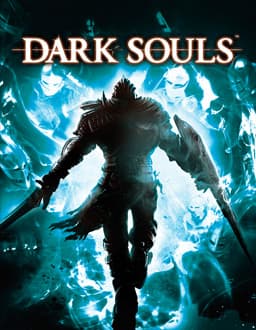
FromSoftware's 2011 action RPG defined the "Soulslike" subgenre — a category of punishing, atmosphere-driven games that has since been adopted across the industry, from FromSoftware's own Sekiro to Team Ninja's Nioh and Deck13's The Surge. The Dark Souls series has shipped over 39 million copies worldwide, and FromSoftware's 2022 spiritual successor Elden Ring, co-designed with George R.R. Martin, won virtually every major Game of the Year award and sold 25 million copies in its first year. Dark Souls' design philosophy — environmental storytelling, player self-determination, and earned difficulty — has become a graduate-level subject in game design curricula.
- 0#10
World of Warcraft
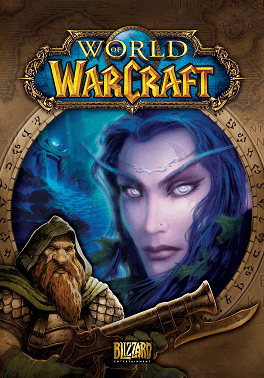
Blizzard Entertainment's 2004 massively multiplayer RPG peaked at 12 million active subscribers in 2010 — the highest ever for any MMORPG — and generated over $9.23 billion in revenue by 2017, making it the highest-grossing video game of all time at that point. It popularised the subscription model, the raid-based endgame loop, and the social guild structure that virtually every online RPG since has replicated. Its cultural footprint extended to a 2006 South Park episode, academic studies on virtual economies, and a 2016 feature film that grossed $433 million worldwide.
Watch the ranking video
Image credits
- Minecraft: Xbox México / Wikimedia Commons (CC BY 3.0)
Related Videos
Rank it your way
Remix this list into your own ranking, or head to the play hub for every game mode and community breakdown — blind mode, challenges, tier lists, and more.
You Might Also Like

Top 10 Most Iconic Video Games of All Time
Top 10 Most Iconic Video Games of All Time

Top 10 Video Games That Permanently Changed Culture — Not Just Gaming
Top 10 Most Influential Video Games of All Time

Top 10 Most Iconic Video Games of the 1990s
Top 10 Most Iconic Video Games of the 1990s

Top 10 US Gaming Companies by Revenue
Top 10 US Gaming Companies by Revenue

Top 10 Most Influential Open Source Projects
#1 Linux · #2 Apache Web Server · #3 Python

Top 10 Reactive Programming Patterns for Handling Asynchronous Data Streams
#1 Observer & Observable Streams · #2 Backpressure · #3 Declarative Operator Composition