
Wikipedia
Top 10 Video Games That Permanently Changed Culture — Not Just Gaming
Video games generate more revenue than film and music combined — yet the industry's cultural impact is still underestimated. A handful of titles did not just entertain: they introduced new economic models, triggered legal battles over digital platform control, created mass behavior changes measured by epidemiologists, and proved that interactive media rewires the brain in ways passive media cannot. These 10 games changed how people work, think, socialize, and understand the world.
Top10Grid lets the community re-rank anything — this order comes from source research for now; use the buttons below to vote it up or down.

Current Rankings
- 0#1
Minecraft

Minecraft is the best-selling video game of all time, with over 300 million copies sold — and it became the first game to be adopted as a serious educational tool by governments worldwide. Sweden integrated it into school curricula; the UN used it to design public spaces alongside local communities. Its open-ended creative mode has been used to build virtual reconstructions of destroyed Syrian cities, model climate scenarios, and teach programming to an entire generation of developers who learned to code within its world.
- 0#2
Fortnite

Fortnite redefined what a video game platform could be by becoming a social hub where Travis Scott's virtual concert drew 12.3 million simultaneous attendees — more than any physical concert in history — and where Ariana Grande performed alongside weekly Marvel superhero crossovers. Epic's legal battle with Apple over App Store commissions triggered the most consequential antitrust case in digital platform history, impacting software distribution globally. Unlike World of Warcraft, which focused on subscription-based MMO gaming, Fortnite's free-to-play model and in-game events established a new paradigm for live entertainment platforms.
- 0#3
World of Warcraft

World of Warcraft reached 12 million subscribers at its 2008 peak, each paying $15/month — pioneering the subscription revenue model that proved digital entertainment could sustain recurring income at massive scale. Its in-game economy generated academic research on real-world behaviors like inflation and arbitrage, while a CDC study used its plague mechanics to model pandemic spread.
- 0#4
Pokémon GO

Pokémon GO generated $1 billion in revenue within its first 6 months — faster than any previous mobile app — and briefly caused more daily steps walked across the United States than any health initiative had ever achieved. In July 2016, it peaked at 65 million daily active users exploring the physical world for digital creatures. It validated augmented reality as a mass-market technology and set the precedent for location-based mobile gaming.
- 0#5
Grand Theft Auto V

Grand Theft Auto V remains the most profitable entertainment product of all time, earning over $8 billion since its 2013 launch — a figure that surpasses the combined box office of every Avengers film. Its first-day revenue of $800 million set a pace never before seen in any medium, and its online mode pioneered the live-service model that now defines industry economics. Rockstar’s decision to delay a sequel for over 13 years while extracting continuous revenue from GTA Online represents the longest sustained single-game monetization strategy in entertainment history. The game’s cultural impact extends beyond sales: it normalized open-world crime sandboxes, sparked debates on violence in interactive media, and became a reference point for digital economies, with GTA Online’s Shark Cards alone contributing over $1 billion in annual revenue.
- 0#6
Doom (1993)

Doom defined the first-person shooter genre, creating the blueprint that every military shooter — including Call of Duty and Halo — has since followed. Its shareware distribution model, which gave away the first episode free while selling the full game, pioneered freemium pricing decades before mobile games and SaaS adopted it. The game triggered the first major video game moral panic, leading directly to the creation of the ESRB rating system in 1994. Compared to Pong, Doom’s technological leap was steeper: it introduced networked multiplayer deathmatches, a feature that became the standard for competitive gaming. Its engine powered hundreds of user-created mods, and its code was released under an open-source license, influencing game development culture permanently. The single data point of 10 million shareware copies distributed demonstrates its reach beyond traditional retail.
- 0#7
Pong (1972)

Pong did not just launch Atari — it launched the entire video game industry as a commercially viable enterprise. The game proved that people would pay to interact with an electronic screen purely for entertainment, a novel proposition in 1972 that laid the foundation for a $200 billion industry. Atari’s $40,000 investment generated $3 million in revenue in its first year, a 75x return that set a benchmark for early startup profitability. Compared to Grand Theft Auto V, Pong’s cultural shift was more foundational: it transformed arcades from pinball halls to digital entertainment centers, and its success prompted competitors like Magnavox to release home consoles. Pong’s simple two-paddle gameplay also established the competitive multiplayer dynamic that underpins modern esports, with tournaments drawing thousands of players by the mid-1970s.
- 0#8
The Sims
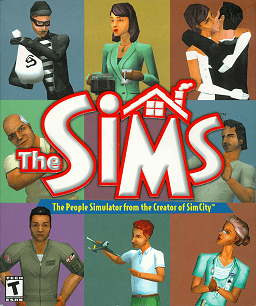
The Sims became the best-selling PC game series in history and introduced video games to the largest previously untapped demographic: women. With a player base 60% female, it shattered the industry’s assumption that games were for teenage boys, proving that character-driven simulation had a massive underserved market. It also pioneered the downloadable content model — selling virtual furniture and clothing for real money — which became gaming’s primary revenue source. Compared to Doom, The Sims’ cultural impact was more inclusive: it normalized gaming in homes and classrooms, inspired millions of user-generated stories, and spawned an economy where players spent over $1 billion on expansions by 2020. The game’s emphasis on life simulation rather than combat permanently broadened what a video game could be, influencing titles from Animal Crossing to Stardew Valley.
- 0#9
League of Legends

League of Legends turned esports into a mainstream spectator industry by pioneering a free-to-view model that surpassed traditional sports broadcasts: its 2019 World Championship Finals drew 100 million live viewers, while its free-to-play, cosmetic-only monetization generated $1.75 billion annually from skins, setting a financial benchmark that made it cheaper for players than subscription-based rivals and forcing the industry to adopt revenue from virtual goods over upfront sales.
- 0#10
Tetris

Tetris, created by Soviet engineer Alexey Pajitnov in 1984, has been played by over 1 billion people, and remains among the 5 best-selling titles of all time despite its 40-year age. Neuroscience research using fMRI confirmed the 'Tetris effect'—players involuntarily seeing falling blocks in real environments—providing the first concrete data that video games physically alter brain structure.
Image credits
- Minecraft: Minecraft / Wikipedia
- Fortnite: Fortnite Save the World / Wikipedia
- World of Warcraft: World of Warcraft / Wikipedia
- Pokémon GO: Pokémon Go / Wikipedia
- Grand Theft Auto V: Grand Theft Auto V / Wikipedia
- Doom (1993): Doom (1993 video game) / Wikipedia
- Pong (1972): Wikipedia
- The Sims: Wikipedia
- League of Legends: League of Legends / Wikipedia
- Tetris: Tetris / Wikipedia
Related Videos
Rank it your way
Remix this list into your own ranking, or head to the play hub for every game mode and community breakdown — blind mode, challenges, tier lists, and more.
You Might Also Like

Top 10 Best Multiplayer Games of All Time
Top 10 Best Multiplayer Games of All Time

Top 10 Most Iconic Video Games of All Time
Top 10 Most Iconic Video Games of All Time

Top 10 Most Influential Video Games of All Time
Top 10 Most Influential Video Games of All Time

Top 10 Google Trends — Daily (GB) — April 26, 2026
#1 real zaragoza · #2 anglesey · #3 brooke hogan

Top 10 Apple Music — Top Songs (GB) — April 29, 2026
#1 Man I Need — Olivia Dean · #2 Rein Me In — Sam Fender & Olivia Dean · #3 iloveitiloveitiloveit — Bella Kay

Top 10 Apple Music Songs UK — Drake Dominates the Chart (May 2026)
#1 Make Them Cry — Drake · #2 Dust — Drake · #3 Whisper My Name — Drake