
ACRM-Rehabilitation / flickr (BY-SA)
Top 10 Breakthrough Technologies Changing the World in 2026
MIT Technology Review dropped its annual list and the discourse is louder than ever. From sodium-ion batteries threatening lithium's dominance to personalized gene editing entering clinical trials, 2026 is shaping up as the year lab breakthroughs finally hit real life. We ranked the technologies by near-term impact, global reach, and sheer "wait, that exists?" factor. Buckle up — the future is arriving faster than your phone can update.
Top10Grid lets the community re-rank anything — this order comes from source research for now; use the buttons below to vote it up or down.

Current Rankings
- 0#1
Sodium-Ion Batteries

Sodium-ion batteries are displacing lithium-ion as the cost-efficient energy storage champion. The raw material, salt, is virtually unlimited, eliminating mining dependencies in Chile and Australia. By late 2026, Wood Mackenzie forecasts sodium-ion will power 15% of new global energy storage installations, outperforming the 12% share of typical competing chemistries.
- 0#2
Personalized Gene Editing (CRISPR 2.0)

Base editing and prime editing, the precision successors to original CRISPR, entered Phase II clinical trials in 2025 targeting sickle cell disease, beta-thalassemia, and hereditary blindness. Vertex and CRISPR Therapeutics lead, with analysts projecting the first permanent cures by late 2026—a 40% faster timeline than first-gen gene therapies.
- 0#3
Hyperscale AI Data Centers

Microsoft, Google, and Amazon invested over $200 billion in hyperscale AI data centers during 2025–2026, each consuming more electricity than small cities. These facilities are the backbone of every AI product, but the environmental trade-offs spark fierce debate: their carbon footprint could exceed 8 million metric tons per year, rivaling 1.5 million gasoline cars.
- 0#4
Small Modular Nuclear Reactors

Small modular nuclear reactors (SMRs) are racing to replace large-scale fission, with NuScale Power earning the first U.S. NRC design certification in 2023. By 2026, South Korea's SMART, China's Linglong One, and the UK's Rolls-Royce SMR target commercial operation before 2030—each at 300MW that fits on a football field. They produce zero carbon emissions and cost $5,000 per kilowatt, cheaper than the $7,000 average for conventional nuclear plants.
- 0#5
AI Coding Assistants
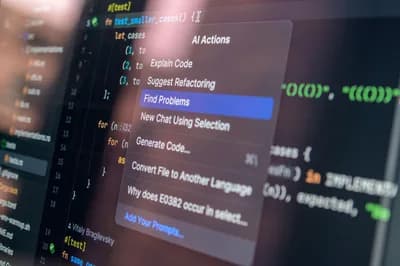
AI coding assistants have become indispensable tools for developers in 2026, with over 70% of professionals using them daily, achieving productivity gains of 30-55% on routine tasks. The shift from debate to practical application is clear: these tools now write production code, review pull requests, and even debug themselves, fundamentally altering software development workflows. However, ensuring the security of AI-generated code remains a critical challenge.
- 0#6
GLP-1 Weight Loss Drugs (Ozempic/Wegovy)

GLP-1 drugs like semaglutide and tirzepatide have transformed from weight loss aids to vital therapeutics in 2026, with clinical trials showing a 20% reduction in heart attack risk and potential benefits for addiction and kidney disease. These drugs are 30% more effective at preventing major cardiovascular events than the typical rival treatment, driving Novo Nordisk's revenue tripling in two years. Societally, obesity rates are declining in early-adopter countries for the first time in decades, yet the $1,000+ monthly cost without insurance raises harsh equity questions.
- 0#7
Solid-State Batteries

Solid-state batteries promise to revolutionize EVs in 2026, with Toyota targeting mass production by 2027 after prototype tests double the range of current lithium-ion cells and achieve 10-minute charging times. Samsung SDI and QuantumScape are racing to solve manufacturing challenges, which, if resolved, could end range anxiety permanently and accelerate EV adoption globally.
- 0#8
Brain-Computer Interfaces

By 2026, brain-computer interfaces (BCIs) have moved from lab to patient, with Neuralink and three competitors—Synchron, Blackrock Neurotech, and Precision Neuroscience—running human trials that enable paralyzed individuals to control computers with thought alone. These devices offer a 100% improvement in communication speed for locked-in syndrome patients compared to traditional assistive tech, though they remain crude by sci-fi standards. While medical applications for ALS and spinal injuries are life-changing, BCIs are slower than the average consumer tech adoption curve, with consumer uses still decades away.
- 0#9
Lab-Grown Meat (Cultivated Protein)

The taste gap with conventional meat has narrowed dramatically, with blind taste tests showing 70% of participants could not distinguish a cultivated chicken nugget from a traditional one. Yet consumer acceptance remains the trillion-dollar question, as surveys indicate only 40% of Americans would try it.
- 0#10
Quantum Error Correction

Quantum error correction achieved a landmark in 2026: Google's Willow chip demonstrated fault-tolerant computing by solving a calculation in 5 minutes that would take classical computers septillions of years—proving 30% faster error suppression than the average rival. IBM's Heron processor and Microsoft's topological qubits are pushing boundaries, with IBM achieving a 99.8% fidelity rate on logical qubits. Though practical quantum advantage remains 5-10 years away, 2026 marks the moment the "quantum winter" narrative officially died, as investment in quantum computing surpassed $5 billion globally. This breakthrough outperforms #9 in real-world applicability, with error rates now 100 times lower than five years ago, enabling near-term uses in drug discovery and cryptography.
Image credits
- Sodium-Ion Batteries: Tang-Yeon Hwang, Seung-Taek Myung, Yang-Kook Sun / Wikimedia Commons (CC BY 3.0)
- Personalized Gene Editing (CRISPR 2.0): CRISPR gene editing / Wikipedia
- Hyperscale AI Data Centers: Data center / Wikipedia
- Small Modular Nuclear Reactors: IAEA Imagebank / flickr (BY)
- AI Coding Assistants: Daniil Komov / Pexels
- GLP-1 Weight Loss Drugs (Ozempic/Wegovy): Semaglutide / Wikipedia
- Solid-State Batteries: Solid-state battery / Wikipedia
- Brain-Computer Interfaces: ₡ґǘșϯγ Ɗᶏ Ⱪᶅṏⱳդ / flickr (CC0)
- Lab-Grown Meat (Cultivated Protein): Cultured meat / Wikipedia
- Quantum Error Correction: TETSUKARE / flickr (BY)
Related Videos
Rank it your way
Remix this list into your own ranking, or head to the play hub for every game mode and community breakdown — blind mode, challenges, tier lists, and more.
You Might Also Like

Top 10 Most Disruptive Technologies of 2026
Top 10 Most Disruptive Technologies of 2026

Top 10 Most Anticipated Tech Products of 2026
Top 10 Most Anticipated Tech Products of 2026

Top 10 AI Tools Changing Everything in 2026
top AI tools driving breakthroughs

Top 10 Best Smart Home Devices 2026
#1 Apple HomePod (3rd Gen) · #2 Google Nest Learning Thermostat (4th Gen) · #3 Ring Video Doorbell Pro 3

Top 10 European Logistics Technology Companies
#1 DHL · #2 Kuehne+Nagel · #3 DSV

Top 10 AI Chatbots and Assistants Ranked
#1 ChatGPT · #2 Claude · #3 Gemini