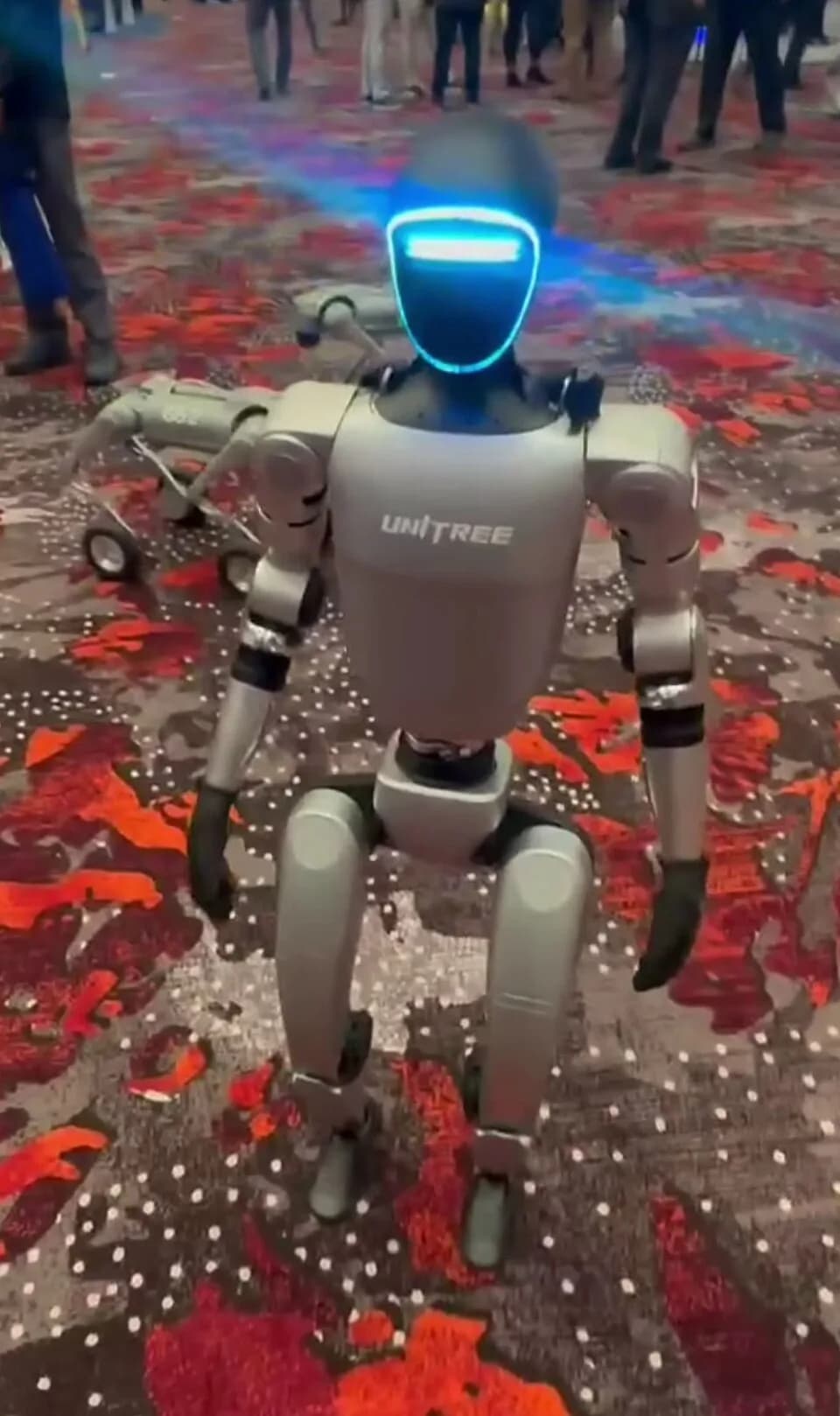
Unitree G1
The Unitree G1 sets a new standard for affordability in humanoid robotics, with a base price of $16,000—approximately one-tenth the cost of an Atlas and one-eighth that of Figure 02. This aggressive pricing strategy has propelled the G1 to account for 40% of global humanoid unit shipments in 2025, with Unitree shipping over 5,500 units in 2025 and scaling to 20,000 in 2026. No other manufacturer operates at this high volume. The G1 stands 127 cm tall and weighs 35 kg, offering a walking speed of 2.0 m/s and a 2-hour battery life. While making deliberate trade-offs in payload (2 kg per arm) and hand dexterity in its base model, the G1 delivers an accessible platform for university labs, startups, and mid-size manufacturers. EDU editions, priced from $43,900–$53,900, include enhanced sensors and research-grade interfaces. The introduction of the $4,900 Unitree R1 further signals a trajectory toward smartphone-level commoditization in the humanoid market.
Photos (1)
Comments on "Unitree G1"
Have a take on this ranking?
Save your rankings and see how you compare. Comments are how the argument actually happens here. Posting one needs a free account — it takes about a minute.
No comments yet.
The first comment sets the terms of the argument.