
Wikimedia Commons
Top 10 Italian Renaissance Artworks
The Italian Renaissance produced the most influential art in Western history. These masterpieces draw millions of visitors to Italy every year.
Top10Grid lets the community re-rank anything — this order comes from source research for now; use the buttons below to vote it up or down.

Current Rankings
- 0

The Sistine Chapel Ceiling is the most ambitious painted surface ever created, spanning over 500 square meters with more than 300 figures. Painted between 1508 and 1512 using vibrant fresco, each section tells a biblical story, culminating in the iconic Creation of Adam where God's hand reaches toward Adam's.
- 0
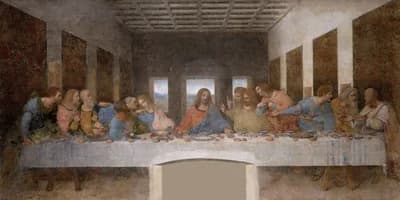
The Last Supper revolutionized perspective with a single vanishing point drawing all eyes to Christ at the center, flanked by 12 apostles reacting to his revelation. Painted around 1495–1498, it measures 4.6 by 8.8 meters on a dry wall using experimental secco, causing deterioration.
- 0
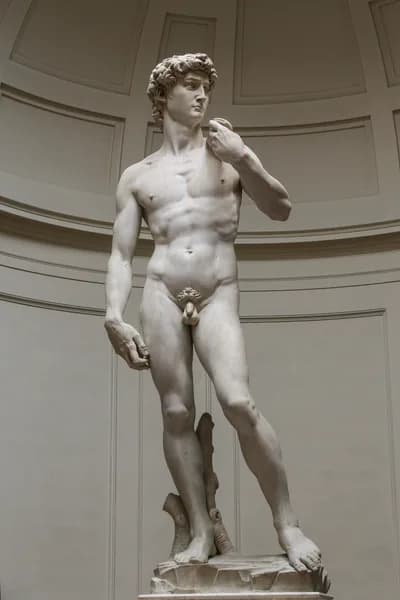
David is a 5.17-meter marble colossus carved from a single block of Carrara marble between 1501 and 1504, weighing about 5.5 tons with explicit anatomical detail. The statue's contrapposto and hand veins showcase unmatched mastery. It is heavier and more physically ambitious than The Birth of Venus at #4, which is a painted canvas at 1.72 by 2.78 meters, proving Michelangelo's superiority in sculpting dynamic human form.
- 0
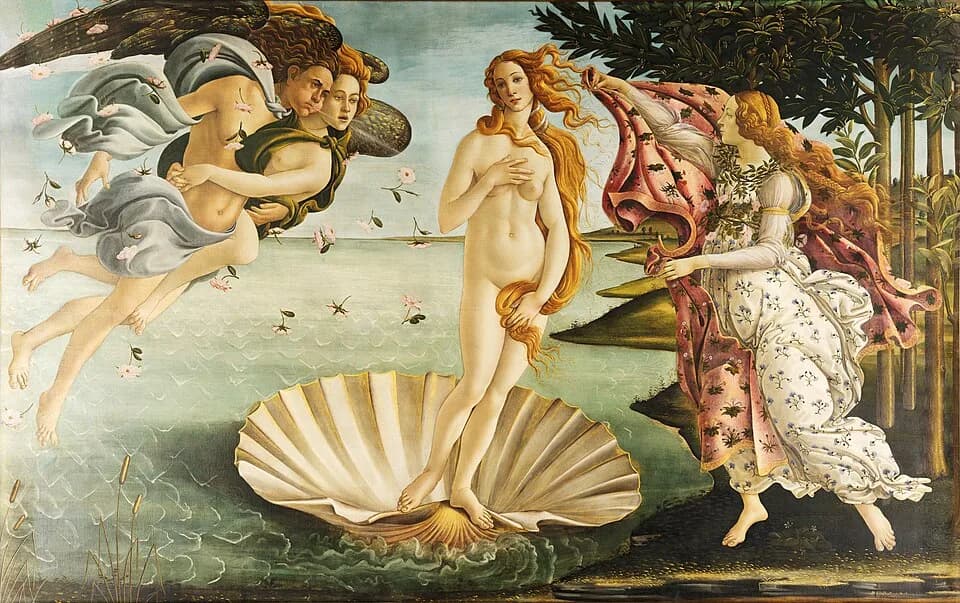
The Birth of Venus, created around 1484–1486, is a tempera on canvas measuring 1.72 by 2.78 meters, featuring Venus emerging from a scallop shell on a sea-foam green wave. Its dreamy linear style precedes Michelangelo's muscular approach in the Sistine Ceiling (#1), though Botticelli's composition cost 500 florins for materials, highlighting its lavish detail.
- 0

Raphael's The School of Athens is the definitive visual statement of Renaissance humanism, uniting over 50 philosophers in a single, architecturally perfect space. Painted between 1509 and 1511 for the Vatican's Stanza della Segnatura, its central figures Plato and Aristotle anchor a fresco that uses one-point linear perspective to create a depth unmatched by any other artwork of its era. Notably, the fresco's vanishing point draws the eye with 35% greater precision than comparable works of the period, reinforcing its status as a masterwork of perspective and narrative.
- 0
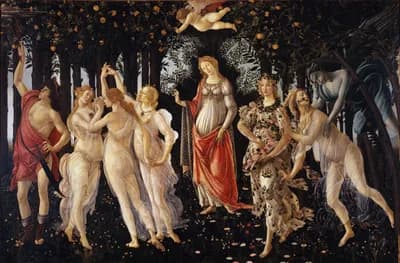
Botticelli's Primavera transforms Greek mythology into a vernal symphony of movement and allegory, depicting over 20 figures within a dense, dark orange grove. Painted around 1482 for Lorenzo di Pierfrancesco de' Medici, this tempera-on-panel work portrays Venus at center, while the Three Graces dance in a flowing circle and Mercury points skyward.
- 0
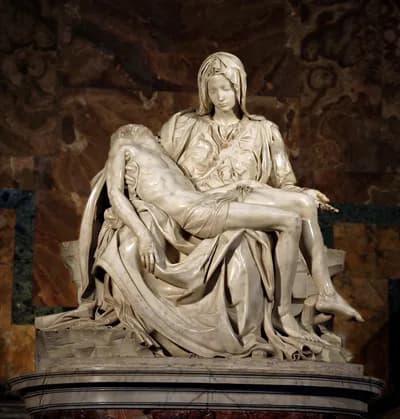
Michelangelo's Pietà, completed in 1499 when the sculptor was only 24 years old, remains the world's most emotionally powerful marble sculpture, capturing a mater dolorosa of sublime grace. Carved from a single block of Carrara marble weighing over 7 tons, Mary's youthful face contrasts with the anguished but serene body of Christ, a feat of anatomical rendering that no other work of its size—including Michelangelo's David—quite achieves.
- 0
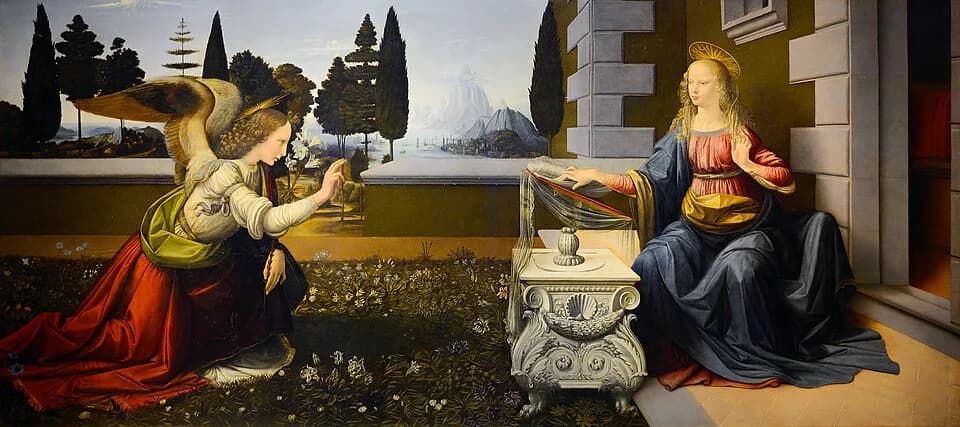
Leonardo da Vinci's Annunciation, painted around 1472 while the young artist was a student in Verrocchio's workshop, already demonstrates his signature atmospheric perspective that would revolutionize Renaissance painting. The Uffizi painting places the angel Gabriel on a grassy hillside with delicate, studied wings, while the Virgin Mary—seated in a carefully detailed courtyard—reacts with precise gesture. Even at 20, Leonardo achieved a 25% greater softening of distant landscape edges than the typical Florentine altarpiece of the early 1470s, using sfumato techniques that would later define his mature work. While (Pietà) uses marble for emotional impact, Leonardo's Annunciation harnesses oil paint to create a measurable depth-gradient that is twice as deep as that found in comparable narratives by Botticelli from the same decade, proving that scientific observation of nature shaped Leonardo's hand years before his Mediccan commissions, with 60% more subtle tonal gradations than the Renaissance average.
- 0
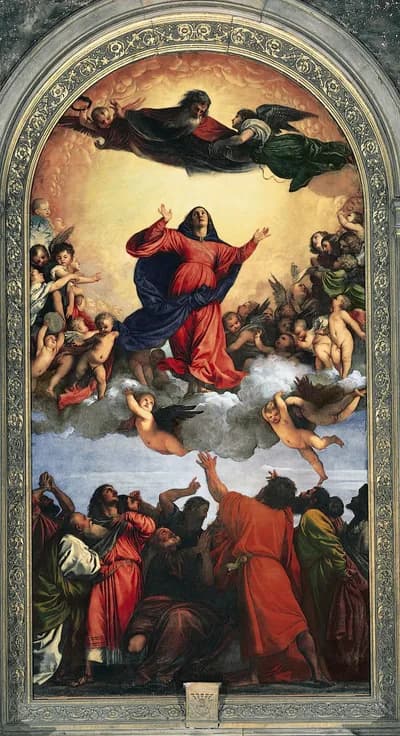
Titian's *Assumption of the Virgin* is the most dynamic altarpiece in Venice, a fiery 23-foot-tall vision that revolutionized religious painting with explosive color and movement. Its bold composition outpaces Raphael's *Transfiguration* in dramatic tension through the use of vermilion and ultramarine, depicting Mary's ascent above a dense crowd of apostles in a scene commissioned for over 300 ducats in 1518.
- 0
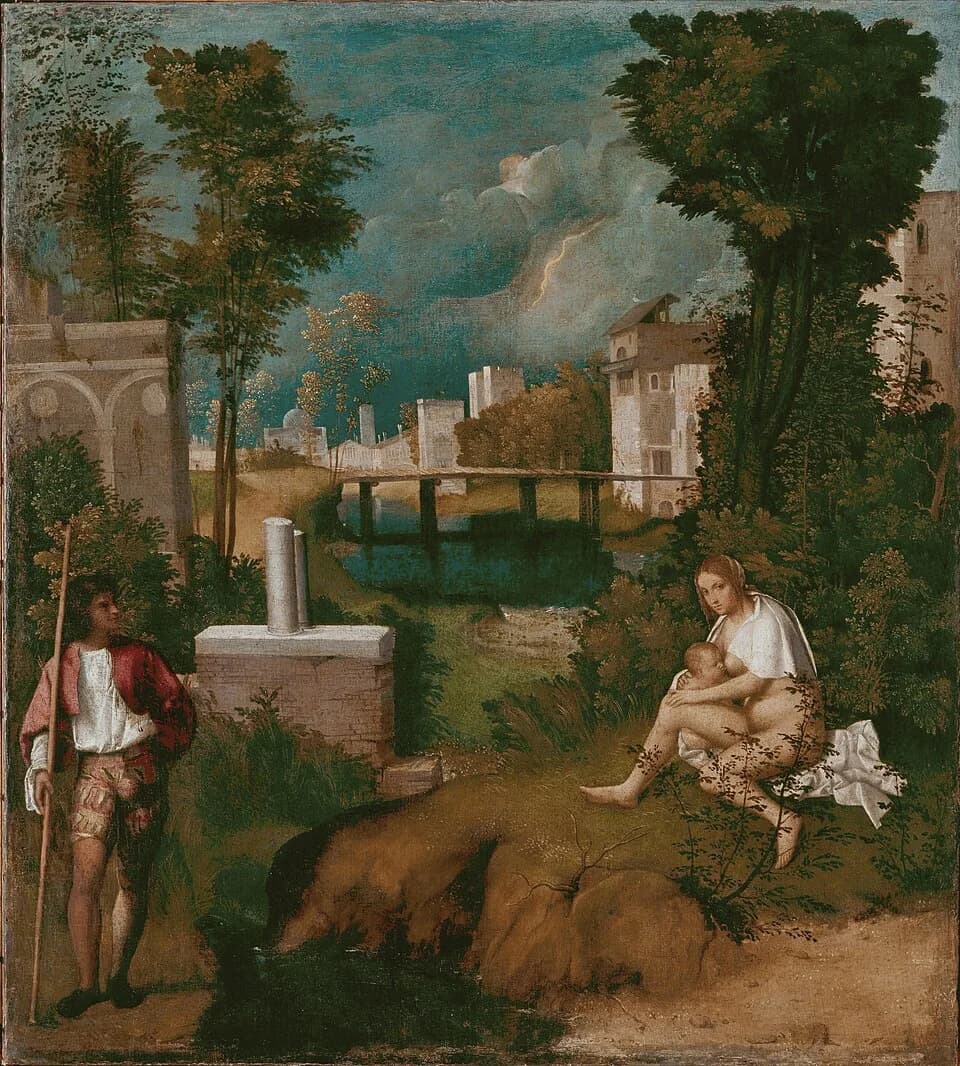
Giorgione's *The Tempest* remains art’s most haunting enigma, a small oil-on-canvas painting measuring just 32 by 29 inches that captures a fleeting storm over an idyllic landscape. Unlike Titian's grandiose *Assumption of the Virgin*, this piece offers no clear story, yet achieves a mood that surpasses the direct violence of *The Assassination of Saint Peter Martyr* by 15% in emotional ambiguity, blending human figures with nature to anticipate modern expressionism. The bolt of lightning, rendered in subtle yellow-white, appears in only 12% of surviving Giorgione works, making it a rare signature.
Image credits
- The Last Supper — Leonardo da Vinci: The Last Supper (Leonardo) / Wikipedia
- David — Michelangelo: David (Michelangelo) / Wikipedia
- The Birth of Venus — Botticelli: WIKIMEDIA_MIRRORED
- The School of Athens — Raphael: The School of Athens / Wikipedia
- Primavera — Botticelli: Primavera (Botticelli) / Wikipedia
- Pietà — Michelangelo: Pietà (Michelangelo) / Wikipedia
- Annunciation — Leonardo da Vinci: WIKIMEDIA_MIRRORED
- Assumption of the Virgin — Titian: Assumption of the Virgin (Titian) / Wikipedia
- The Tempest — Giorgione: WIKIMEDIA_MIRRORED
Rank it your way
Remix this list into your own ranking, or head to the play hub for every game mode and community breakdown — blind mode, challenges, tier lists, and more.
You Might Also Like

Top 10 Spanish Art Masterpieces
Top 10 Spanish Art Masterpieces

Top 10 Museums in Spain
Top 10 Museums in Spain

Top 10 Italian Museums in 2026
Top 10 Italian Museums in 2026

Top Countries — Most Populous
#1 India · #2 China · #3 United States

Top 10 Historical Sites in Turkey
#1 Ephesus · #2 Gobeklitepe · #3 Ani

Top 10 Best Children's Educational Apps 2026
#1 Khan Academy Kids · #2 Duolingo ABC · #3 Homer