#6
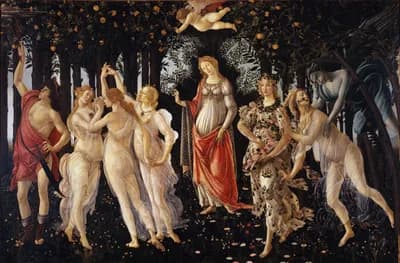
Primavera — Botticelli
Botticelli's Primavera transforms Greek mythology into a vernal symphony of movement and allegory, depicting over 20 figures within a dense, dark orange grove. Painted around 1482 for Lorenzo di Pierfrancesco de' Medici, this tempera-on-panel work portrays Venus at center, while the Three Graces dance in a flowing circle and Mercury points skyward.
–
Photos (1)
Comments on "Primavera — Botticelli"
Have a take on this ranking?
Save your rankings and see how you compare. Comments are how the argument actually happens here. Posting one needs a free account — it takes about a minute.
No comments yet.
The first comment sets the terms of the argument.