
First primary school in Nigeria, Badagry / Wikimedia Commons (CC BY-SA 4.0)
Top 10 Countries With the Best Education Systems in the World — What They Do Differently
Education is the most critical national infrastructure investment -- producing the human capital that drives economic growth, innovation, and social mobility. These 10 countries consistently outperform global PISA rankings administered to 600,000 students across 80+ nations, produce disproportionate numbers of Nobel Prize winners and patent filings per capita, and have built education cultures that policymakers, teachers, and parents worldwide study and attempt to replicate. The common thread: teacher status, early investment, and systems that treat every child as capable of excellence.
Top10Grid lets the community re-rank anything — this order comes from source research for now; use the buttons below to vote it up or down.

Current Rankings
- 0#1
Finland — Happiness-First Education Philosophy
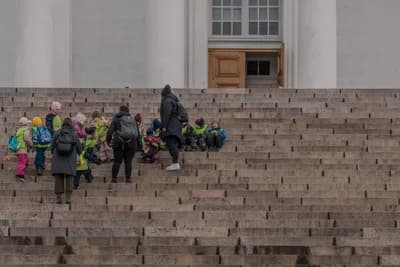
Finland proves that academic excellence doesn't require pressure — it requires trust. Despite no standardized tests before age 18, no homework in primary school, and no published school rankings, Finland has placed in the PISA top 5 for over two decades across reading, mathematics, and science. The foundation is teacher quality: every Finnish teacher holds a master's degree, and entry to teacher training programs is more selective than law or medicine. Students begin school at age 7 — two years later than the OECD average — yet match top international benchmarks by age 15. Where South Korea drives results through 10-hour school days and intensive private tutoring, Finland achieves comparable PISA scores with fewer school hours and the highest reported student happiness in Europe. The Finnish model is the most compelling evidence that academic rigor and student wellbeing reinforce rather than undermine each other.
- 0#2
Singapore — Academic Excellence Through System Design

Singapore holds the world's highest PISA scores in both mathematics and science — a feat made more remarkable by the country's population of just 5.7 million and complete absence of natural resources. The system's core mechanism is mastery learning: students cannot advance until they demonstrate competency, preventing the accumulation of knowledge gaps that compound across grade levels. Bilingual education — English plus a mother tongue — is mandatory from primary school, building cognitive flexibility alongside academic skills. A strong polytechnic pathway ensures vocational graduates enter skilled careers without the stigma that non-university routes carry in many countries. Singapore's 15-year-olds score an average of 40 points above the OECD mean in mathematics — the equivalent of more than a full year of additional learning — making it the undisputed global benchmark for rigorous, equity-focused STEM education.
- 0#3
Japan — Respect, Rigor, and Deep Learning

Japan integrates character formation into its academic curriculum — and the outcomes confirm that the whole-child approach strengthens rather than dilutes academic performance. Students clean their own classrooms daily, serve lunch to peers, and practice 'gaman' (perseverance through hardship) as a school-wide value, developing the intrinsic discipline that sustains demanding study. Japan consistently ranks top-5 globally in both mathematics and science literacy, and its national high school graduation rate exceeds 98%. Where South Korea extends the school day to 10 hours through private tutoring academies, Japan reaches comparable PISA rankings through embedded motivation and school-hour efficiency rather than volume. Japanese students report significantly lower academic stress than their Korean counterparts while achieving nearly identical international standings — evidence that depth of engagement outperforms duration of study.
- 0#4
South Korea — Highest Tertiary Education Rate
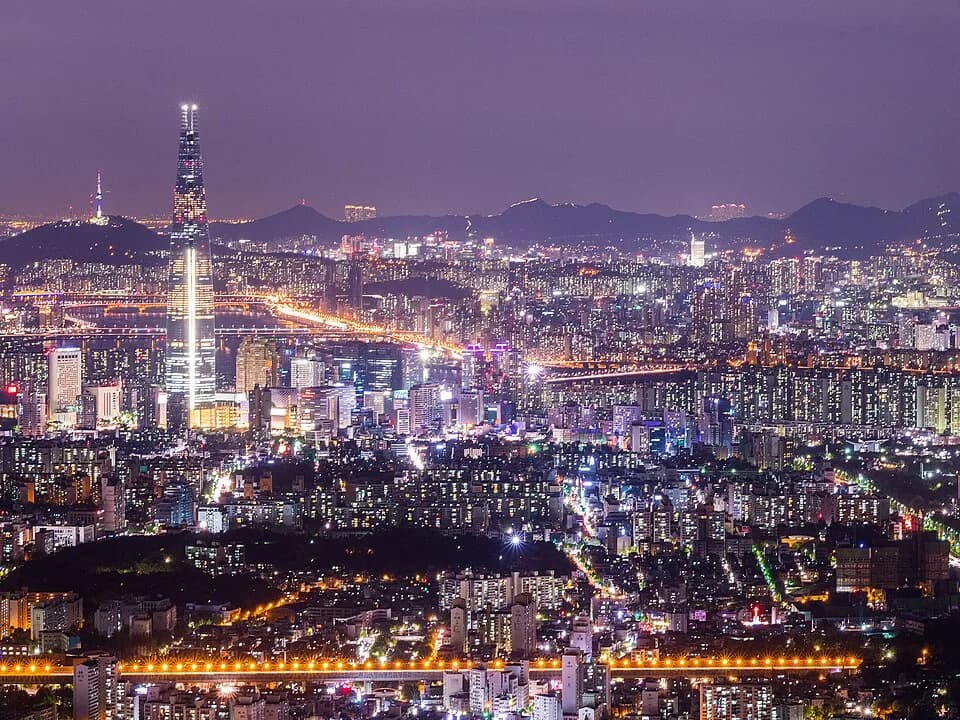
South Korea has achieved something remarkable: 70% of adults hold a tertiary qualification — the highest rate in the world — driven by a culture that treats education as the primary engine of social mobility. Korean students average 10 hours of daily learning across school and private tutoring academies (hagwon), and the CSAT university entrance exam commands national attention, with airlines rerouting flights to minimize noise during the listening section. The system delivers results: Korea's PISA scores rank consistently in the global top 10, and its universities generate world-class engineering and technology research. However, South Korea records one of the lowest youth happiness scores in the OECD, prompting government intervention to limit hagwon hours. Its central challenge is to match the academic ambition of Finland while substantially reducing the human cost of reaching it.
- 0#5
Estonia — Most Digitally Advanced Education System
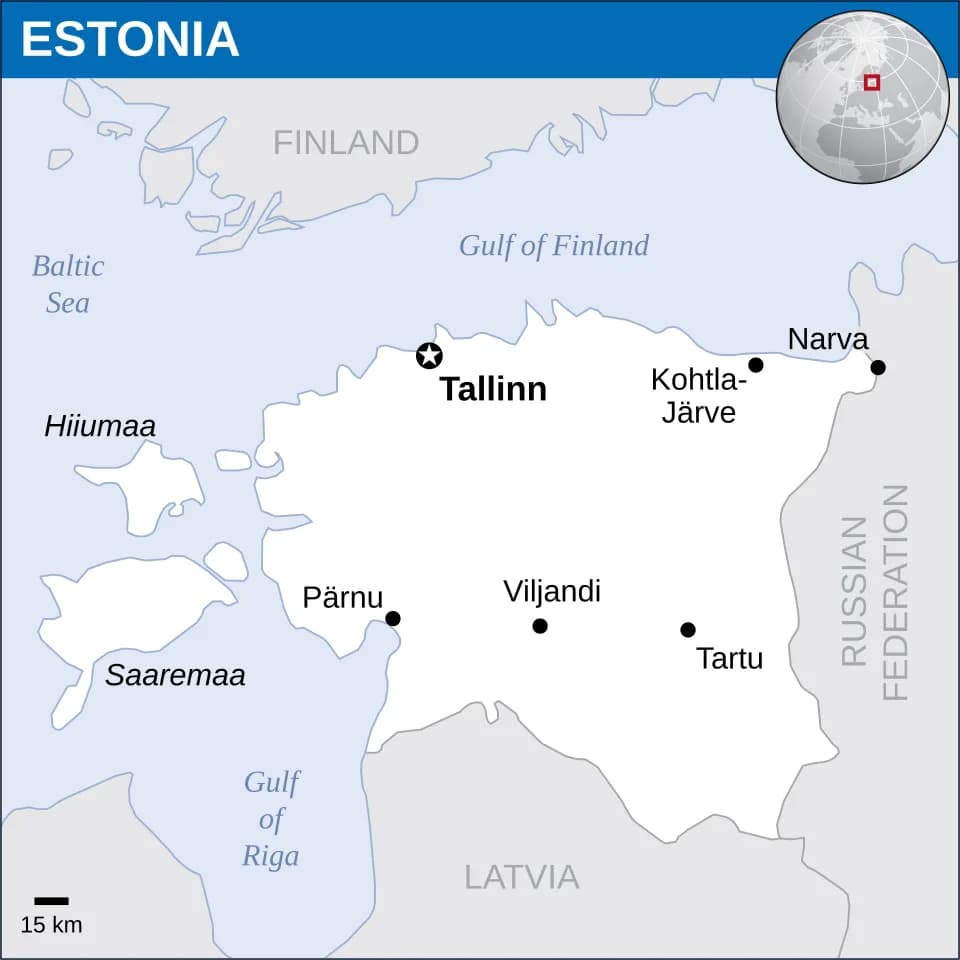
Estonia built the world's most digitally integrated national education system from the ground up — and did so faster than any wealthier nation attempted. Its 1990s 'Tiger Leap' program digitized the entire national curriculum; today, all students learn coding from age 7, homework is submitted through apps, and teachers monitor individual progress in real time via digital dashboards. The economic return is measurable: Estonia has produced more unicorn startups per capita than any other country, including Skype, TransferWise/Wise, Bolt, and Pipedrive. In PISA rankings, Estonia leads all of Europe in science and reading — outperforming Germany and the Netherlands despite a GDP per capita roughly 30% lower than either. All public education, including university, remains tuition-free. Estonia proves that digital-first transformation is a matter of political will, not wealth.
- 0#6
Switzerland — Vocational Excellence

Switzerland has made vocational education genuinely excellent — not merely accessible — and the result is that 65% of Swiss students choose the vocational route over university without sacrificing income or status. Apprenticeships run three to four years, combining structured workplace experience with theoretical study, and VET graduates earn lifetime incomes equivalent to university graduates across most Swiss industries. The country's per-capita patent filing rate is the world's highest, a direct output of its technically excellent non-university workforce. Youth unemployment sits at approximately 3% — well below the OECD average of 11% — because the dual system is co-designed with employers to match graduate skills to real labor market needs. Switzerland's model demonstrates that the low social status of vocational education in many countries is a cultural artifact, not an economic inevitability, and that nations maintaining it pay a measurable productivity price.
- 0#7
Canada — Immigrant-Inclusive High Performance

Canada has accomplished something no other high-income country has replicated: immigrant students perform at the same academic level as native-born students, as consistently documented across PISA assessment cycles. This integration record — unique among G7 nations — reflects sustained investment in language support, multicultural teacher training, and equitable per-pupil funding that does not vary with neighborhood income. Canada's overall PISA scores rank in the global top 10, suggesting that inclusive design strengthens rather than limits peak performance. Five Canadian universities — the University of Toronto, McGill, UBC, McMaster, and the University of Alberta — hold top-100 global rankings. Annual per-pupil spending reaches approximately USD $13,000, among the world's highest for public systems. Canada's data makes the clearest available case that diversity, when properly resourced, is an academic asset rather than an academic constraint.
- 0#8
Netherlands — Independent Learning Pioneer

The Netherlands builds Europe's most self-directed learners — and both academic data and wellbeing surveys confirm the approach works. Dutch 15-year-olds consistently rank among Europe's top performers in reading literacy, and UNICEF research identifies Dutch children as the happiest in school of any European nation. The system's defining structure is early differentiation: students are sorted into academic tracks at age 12, allowing curricula to be precisely calibrated to individual readiness rather than spread across a wide ability range. Dutch universities, largely taught in English, attract over 115,000 international students annually — a clear signal of genuine global standing. The country invests approximately €10,000 per pupil per year in primary and secondary schooling, achieving consistently top-quartile European outcomes. Autonomy and self-direction are trained from an early age, producing graduates whose capacity for independent inquiry is among the most valued by European employers.
- 0#9
Australia — Research Excellence + Practical Skills
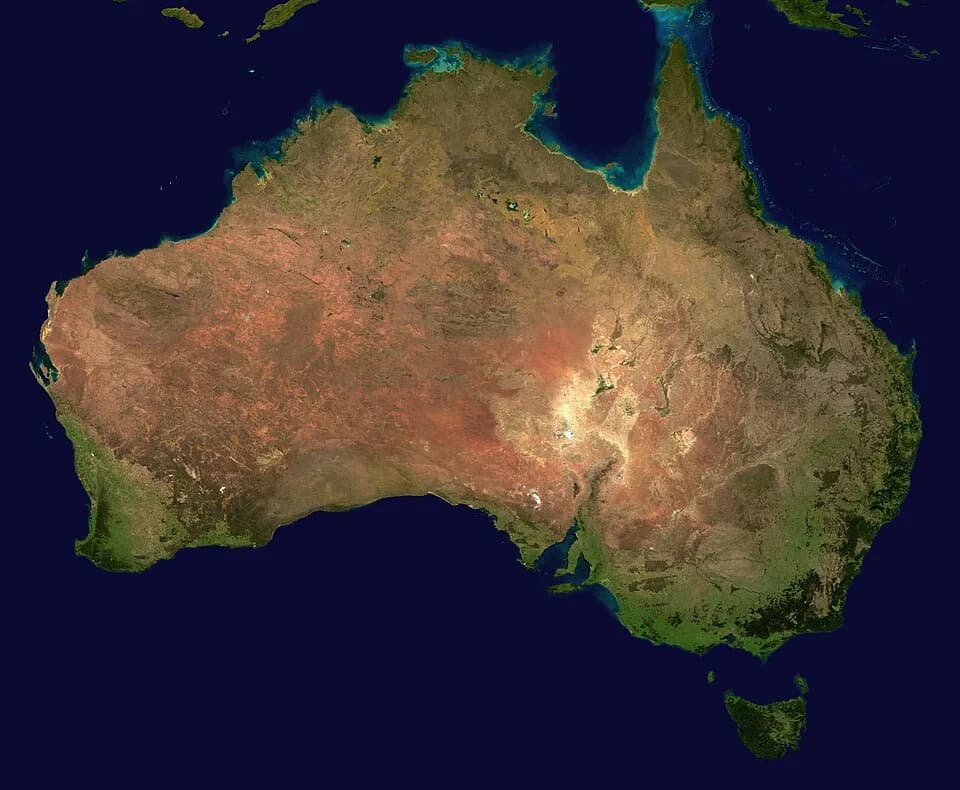
Australia operates one of the world's most internationally trusted higher education systems — and the economic figures confirm the reputation. Five Australian universities hold top-100 global rankings, and the sector generates AU$40 billion in annual export earnings, the highest education export revenue per capita of any country globally. The national curriculum explicitly embeds 21st-century competencies — critical thinking, digital literacy, intercultural understanding — as core requirements rather than elective additions. Australia's vocational education and training sector operates at comparable scale to its universities, serving over 4 million students annually and supplying the skilled workforce that sustains its construction, healthcare, and resources industries. More than 750,000 international students enrolled annually pre-pandemic, bringing research collaboration and cultural diversity that measurably strengthens institutional output. Australia's defining competitive advantage is breadth: globally ranked research capability and rigorous vocational training operating within a single national system.
- 0#10
Germany — Free University Education and Dual System

Germany makes the most ambitious higher education commitment of any major economy: tuition-free university for domestic and international students alike — including non-EU nationals — funded by the conviction that an educated workforce is collective infrastructure, not a private benefit. On the vocational side, Germany's dual system trains 1.3 million apprentices annually across 325 recognized occupations, combining paid workplace experience with classroom instruction to produce the skilled industrial workforce behind the world's third-largest goods export economy. Apprentices earn wages throughout training and graduate debt-free — a direct contrast to the typical UK graduate who exits with approximately £45,000 in student loans. German manufacturing and engineering precision are globally synonymous with quality, tracing directly to the rigor of this vocational pipeline. Germany's system is the strongest available argument that world-class education and universal financial accessibility are not competing priorities.
What "best education system" actually measures — and what it leaves out
Most international rankings, including the PISA assessment referenced throughout this list, test reading, math, and science ability in 15-year-olds every three years across dozens of countries. That is a real and useful measure, but it is a narrow one: it does not directly capture creativity, student mental health, long-run earnings, or how well a system serves the students who don't go on to university. Two systems can post nearly identical PISA scores by very different routes — this list includes a clear example in Finland's low-pressure, low-homework model scoring alongside South Korea's 10-hour academic day — and the score alone can't tell you which trade-offs a given country made to get there. A ranking built on test scores answers "which system produces strong test-takers," not "which system is best for a given child."
The vocational-versus-university divide most rankings ignore
A recurring blind spot in "best education system" comparisons is that they implicitly measure the university-bound track and say little about what happens to students who don't take it. Switzerland and Germany are unusual for building genuinely prestigious, well-paid vocational and apprenticeship pathways alongside their university systems, so a student choosing that route isn't treated as having settled for a lesser option. In many other systems — including several ranked highly on pure academic output — vocational training carries real social and economic stigma even when a strong labor market exists for it. Judging a national system only by university rankings or PISA scores misses this entire second track, which for a large share of any country's students is the more relevant one.
How to actually use a ranking like this
The systems on this list are strong for different reasons, so the right one to look to depends on what you're optimizing for. A parent evaluating student wellbeing alongside academic performance should look closely at the low-pressure, high-trust design of Finland or the self-directed model of the Netherlands. A policymaker interested in closing achievement gaps for immigrant or lower-income students has more to learn from Canada's funding equity than from any single test score. And a country trying to build a skilled non-university workforce has a clearer model in Switzerland's or Germany's dual systems than in any PISA leaderboard. Treat the ranking as a set of different working models rather than a single ladder with one right answer at the top.
Image credits
- Finland — Happiness-First Education Philosophy: Susanne Jutzeler, suju-foto / Pexels
- Singapore — Academic Excellence Through System Design: Ramir Borja . / CC BY-SA 3.0 (entity-adopted)
- Japan — Respect, Rigor, and Deep Learning: Marek Piwnicki / Pexels
- South Korea — Highest Tertiary Education Rate: Joon Kyu Park / CC BY-SA 3.0 (entity-adopted)
- Estonia — Most Digitally Advanced Education System: UN Office for the Coordination of Humanitarian Affairs (OCHA) / CC BY 3.0 (entity-adopted)
- Switzerland — Vocational Excellence: ETH Zurich main building / Wikimedia Commons (CC BY-SA 3.0)
- Canada — Immigrant-Inclusive High Performance: World Sikh Organization of Canada / Pexels
- Netherlands — Independent Learning Pioneer: Kinderdijk windmills, Netherlands / Wikimedia Commons (CC BY-SA 3.0)
- Australia — Research Excellence + Practical Skills: Reto Stöckl / NASA Goddard Space Flight Center / Public domain (entity-adopted)
- Germany — Free University Education and Dual System: Mustafa Gökhan Ertin / Pexels
Related Videos
Rank it your way
Remix this list into your own ranking, or head to the play hub for every game mode and community breakdown — blind mode, challenges, tier lists, and more.
You Might Also Like

Top 10 Most Overhyped College Majors 2026
Top 10 Most Overhyped College Majors 2026

Top 10 Most Debated: College Degree vs Self-Taught 2026
Top 10 Most Debated: College Degree vs Self-Taught 2026

Top 10 Best Community Colleges in America (2026 Rankings): Transfer, Cost & Career Outcomes
Top 10 Best Community Colleges in America (2026 Rankings)...

Top 10 Best Education YouTube Channels 2026
#1 3Blue1Brown · #2 Kurzgesagt — In a Nutshell · #3 Veritasium

Top 10 YouTube Channels to Watch for Self-Improvement & Productivity in 2026
#1 Ali Abdaal · #2 Thomas Frank · #3 Matt D'Avella

Top Classic Books — Science Fiction
#1 The Strange Case of Dr. Jekyll and Mr. Hyde · #2 Frankenstein · #3 Thuvia, Maid of Mars