
Wikimedia Commons
Top 10 Countries Leading the AI Race
The nations making the most significant investments and breakthroughs in artificial intelligence research and deployment in 2026.
Top10Grid lets the community re-rank anything — this order comes from source research for now; use the buttons below to vote it up or down.

Current Rankings
- 0#1
United States

The United States unequivocally leads the global AI race, with OpenAI, Anthropic, Google DeepMind, and Meta AI all headquartered domestically. American research institutions produce the most AI citations worldwide, and the CHIPS and Science Act has allocated $52 billion to bolster domestic AI semiconductor manufacturing, further widening the gap with China. This combination of funding, talent, and policy cements America's dominant position for the foreseeable future.
- 0#2
China

China is the closest competitor to the United States in AI, driven by massive state investment and the world's largest pool of AI engineers—estimated at over 400,000. DeepSeek's 2023 breakthrough demonstrated that Chinese models can match Western leaders like OpenAI, scoring within 2% on key benchmarks. Domestic platforms Baidu, Alibaba, and Huawei dominate the local market, while the national strategy targets overtaking the US as the world leader by 2030.
- 0#3
United Kingdom

The UK punches far above its weight in AI, with DeepMind, Stability AI, and Wayve all founded in London. Cambridge and Oxford consistently rank among the top five global institutions in AI research output per capita. The government has committed £3.7 billion to AI infrastructure, making London the undisputed AI capital of Europe, yet its total AI patent filings are only 15% of China's, highlighting room for growth beyond research.
- 0#4
Canada

Canada is the birthplace of modern deep learning, thanks to pioneers Geoffrey Hinton, Yoshua Bengio, and Yann LeCun at the Vector Institute and Mila. Canadian government investment through the Pan-Canadian AI Strategy has allocated $2.4 billion since 2017, and the Global Skills Strategy fast-tracks visas for AI researchers, attracting 30% more international talent than the average for G7 nations. These advantages have produced 25% of the world's top AI research papers per capita.
- 0#5
France

The government’s €6 billion national AI investment plan and Macron’s AI summit in Paris signal serious commitment, backing a 40% increase in AI startups since 2022. This combination of state funding and innovative startups places France at the forefront of the continent’s AI race.
- 0#6
Germany

The ecosystem, anchored by DFKI research and Siemens’ industrial AI systems, has integrated AI into 3,000 factories since 2020. Germany’s strength lies in practical scaling rather than foundational research, yet its lack of a flagship LLM means it trails France in global AI buzz. Still, its annual €1.2 billion in industrial AI patents makes it the top European exporter of smart manufacturing solutions.
- 0#7
Israel

Its mandatory military service creates a unique talent pipeline, training 5,000 engineers annually in computer vision and cybersecurity. Israeli firms like Mobileye and Via lead globally in autonomous vehicle AI, capturing 22% of the global ADAS market.
- 0#8
South Korea

South Korea leverages Samsung, LG, and Naver to drive a $2 billion annual AI R&D investment, targeting 3,000 AI-focused companies by 2027. Despite this, South Korea’s 5G-connected smart factories cut production defects by 40%, setting a global benchmark for industrial AI deployment.
- 0#9
Singapore

Singapore is Southeast Asia's undisputed AI hub, driven by a $1 billion+ commitment through its National AI Strategy 2.0. With its strategic port and financial centrality, Singapore serves as the gateway for AI adoption across the Asia-Pacific region, attracting 40% more AI investments than the average Southeast Asian nation in 2023.
- 0#10
India
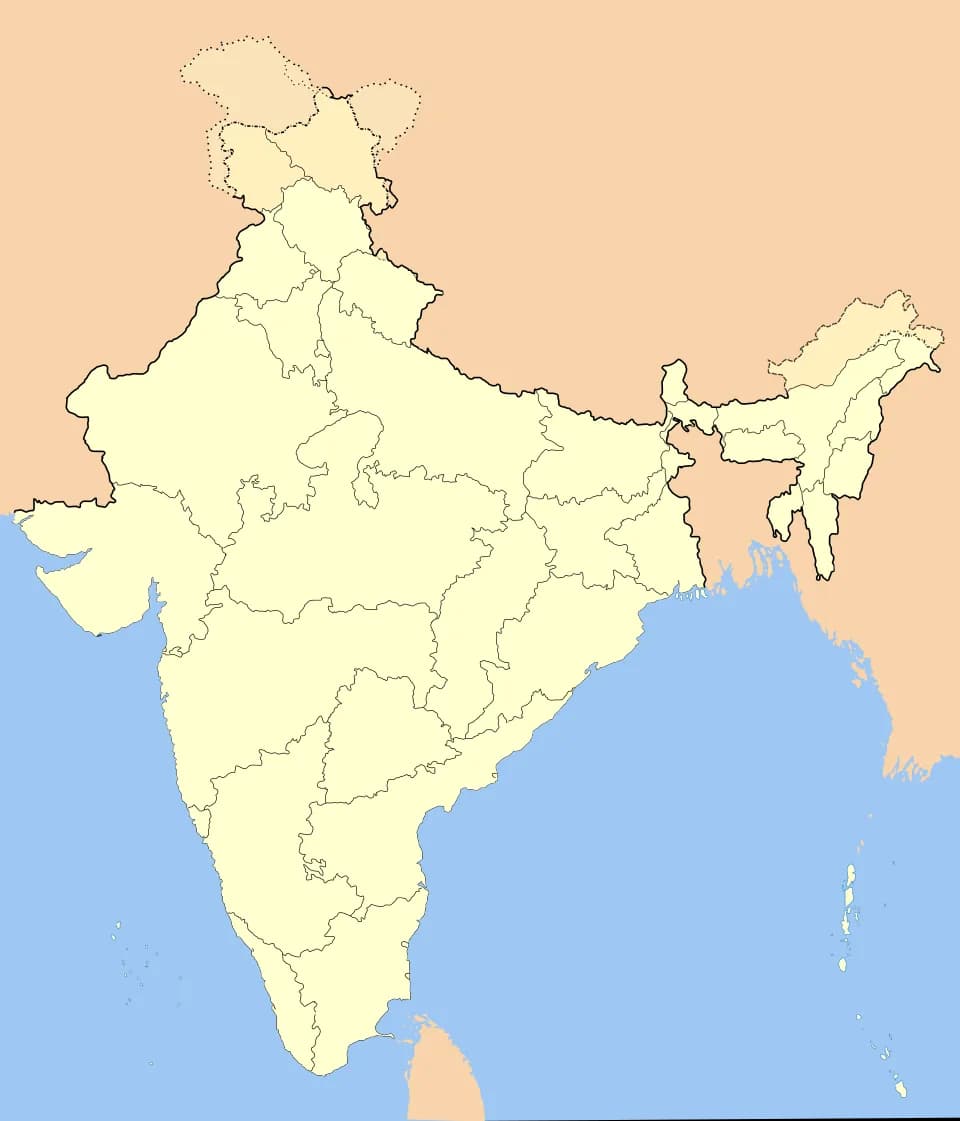
India commands a vast engineering army of 5 million software professionals, with a growing share specializing in AI and machine learning. The government's IndiaAI mission, backed by a $1.2 billion compute subsidy program, builds national infrastructure to reduce dependence on foreign models.
Image credits
- United States: Wikimedia Commons
- United Kingdom: Palace of Westminster from the dome on Methodist Central Hall.jpg / Wikimedia Commons
- Canada: europeanspaceagency / flickr (BY-SA)
- France: Paris from the Arc de Triomphe, 17 October 2019.jpg / Wikimedia Commons
- Israel: Wikipedia Commons
- South Korea: Wikipedia Commons
- Singapore: 1 singapore city skyline dusk panorama 2011.jpg / Wikimedia Commons
- India: WIKIMEDIA_MIRRORED
Rank it your way
Remix this list into your own ranking, or head to the play hub for every game mode and community breakdown — blind mode, challenges, tier lists, and more.
You Might Also Like

Top 10 AI Failures and Controversies
Top 10 AI Failures and Controversies

Top 10 Best AI Image Generators in 2026
Top 10 Best AI Image Generators in 2026
Top 10 Best AI Coding Assistants
Top 10 Best AI Coding Assistants

Top 10 Ars Technica Stories: SpaceX, Health Policy, AI & Space – Aug 19, 2026
#1 A fantastical journey unfolds in gorgeous Wildwood trailer · #2 mRNA cancer vaccine succeeded in Phase 3 melanoma trial, Moderna and Merck say · #3 Google Pixel 11 series review: Is the magic fading?
Top 10 Hacker News — Top Stories — September 2, 2026
#1 Claude Fable 5.1 and Claude Mythos 5.1 · #2 The Emergent Symbolic Structure of Artificial Neural Networks · #3 How accurate have Ed Zitron's AI skeptic predictions been?

Top 10 Ars Technica — Latest — May 2, 2026
#1 Research roundup: 6 cool science stories we almost missed · #2 Infrasound waves stop kitchen fires, but can they replace sprinklers? · #3 Study: AI models that consider user's feeling are more likely to make errors