Beat the 2026 heat with our top 10 cool-climate escapes: hike Iceland's volcanic trails under the 24-hour sun, cruise Norway's Geirangerfjord in 60°F breezes, and paddle Canada's Moraine Lake amid glacial peaks. Uncover secret sea caves in Scotland's Highlands and stargaze over New Zealand's Fiordland. Which refuge will call you?
Curated by our travel editors. Lived-experience picks weighted by community vote — updated as travelers report back.
Average summer temperature range; lower temperatures score higher for true coolcation seekers escaping heat
| Rank | Item | Score | Notes |
|---|---|---|---|
| #1 | Patagonia (Chile/Argentina) | 10.0 | 9C avg — coldest destination on list, rarely exceeds 16C |
| #2 | Faroe Islands | 9.5 | 11C avg — joint coldest on list with strong winds |
| #3 | Iceland | 9.0 | 12C avg — among the coldest accessible destinations |
| #4 | Norway (Bergen & Fjords) | 8.5 | 15C avg fjord region — excellent cool temperatures |
| #5 | Finnish Lapland | 8.0 | 16C avg — cool Lapland summer with midnight sun |
| #6 | Scottish Highlands | 7.5 | 17C avg — genuinely cool but variable Atlantic weather |
| #7 | Canadian Rockies | 7.5 | 15-24C range — excellent hiking temperatures |
| #8 | Swiss Alps | 7.0 | 18C altitude avg — cool at elevation, warmer in valleys |
| #9 | Irish Wild Atlantic Way | 7.0 | 18C avg — Atlantic breeze keeps it feeling cool |
| #10 | Austrian Alps | 6.5 | 20C valley temp — warmer than most on this list |

Iceland is the undisputed capital of coolcation travel in 2026. Bookings are up 128% year-over-year, driven by a combination of dramatic scenery, guaranteed cool temperatures, and a growing reputation as one of the safest and most accessible wilderness destinations on Earth. Average July temperatures hover around 12°C in Reykjavik, dropping further in the highlands where interior lava fields and glacial valleys remain bracingly cold throughout summer. The country's appeal is rooted in geological extremes. The Golden Circle — Thingvellir National Park, Geysir, and Gullfoss waterfall — delivers three world-class natural spectacles within a half-day loop from the capital. The South Coast route extends this to black sand beaches at Reynisfjara, the Jokulsarlon glacier lagoon where icebergs calve into a still lake, and the immense Vatnajokull ice cap. In the Westfjords, near-vertical basalt cliffs shelter nesting puffins and waterfall chains that disappear into the fjords below. With up to 21 hours of daylight in late June, Iceland effectively doubles the usable hours of a summer day. Hikers can tackle the Laugavegur trail — a 55-kilometre route through rhyolite mountains and obsidian deserts — in conditions of perpetual golden hour. Cyclists circumnavigate the Ring Road in summer light that never fully fades. The country ranks first on the Global Peace Index, making solo travel and off-the-beaten-path exploration more accessible than almost anywhere else in the world. Iceland runs on 100% geothermal and hydroelectric power, which means every hot spring soak and geothermal pool dip is fuelled by the same volcanic heat that shaped the island. Guided glacier walks on Svinafellsjokull and ice caving in Vatnajokull give visitors direct access to glacial terrain that is otherwise impossible to reach safely. According to guidetoiceland.is, over 2 million tourists visit annually, yet the highland interior remains genuinely remote and crowd-free for those willing to rent a 4x4 and venture beyond the ring road. Daily budgets range from £130 to £180 for mid-range travel, making smart planning essential.

Norway holds the top spot for year-over-year booking growth on this list — up 131%, fractionally ahead of Iceland. The Norwegian fjords represent one of the world's most concentrated corridors of natural grandeur, compressing glacially carved walls, hanging waterfalls, and steel-blue inlets into a geography that rewards every mode of exploration from ferry to kayak to mountain boot. Bergen, the historic Hanseatic port city wedged between seven mountains, serves as the western gateway. The UNESCO-listed Bryggen wharf and the Floyen funicular give immediate visual access to the city's geography, but Bergen's real value is as a launchpad. The Sognefjord — Norway's longest at 204 kilometres and deepest at over 1,300 metres — lies within a two-hour bus ride. Naerofjord, a UNESCO World Heritage Site, narrows to just 250 metres at its tightest point, with walls rising nearly vertically from the water. Average temperatures in Bergen and the fjord region sit around 15°C in July, with the midnight sun providing 19 to 20 hours of usable daylight at the northern end of the fjord system. The hiking network is exceptional: Trolltunga, a rock shelf suspended 700 metres above Lake Ringedalsvatnet, has become an internationally recognised icon but requires a full day and proper footwear. Preikestolen, the Pulpit Rock, offers a slightly shorter approach with similarly vertiginous views. More serious mountaineers target Romsdalseggen Ridge or the via ferrata routes above Aurland. Norway consistently ranks among the world's most sustainably managed tourism destinations, with fjord cruise operators transitioning to electric and hydrogen vessels. According to visitnorway.com, the fjord network is crisscrossed with more than 20,000 kilometres of marked hiking trails, serviced by a network of staffed DNT huts that make multi-day wilderness traverses accessible to intermediate-level hikers. Daily budgets in Norway are elevated — expect to pay £110 to £160 — but the quality and scale of the outdoor experience justifies the investment.

The Faroe Islands sit in the North Atlantic between Norway and Iceland, a self-governing archipelago of 18 islands that feels genuinely off the edge of the known world. Average summer temperatures of 11°C make them the second coldest destination on this list, and the near-24-hour midsummer daylight lends the landscape an otherworldly quality — moss-green hillsides running to black sea-cliffs under a sky that never quite darkens. The islands are home to more than 125,000 puffin pairs on Mykines alone, making it one of Europe's most significant seabird breeding grounds. The hike from Mykines village to the lighthouse at Holmur — a suspended rope bridge over a sea stack chasm — is one of the most dramatic short walks in the North Atlantic. Atlantic puffins nest in burrows along the cliff tops and can be observed from arm's length during breeding season in June and July. Beyond Mykines, the Faroes deliver a landscape of extraordinary drama. Lake Sorvagsvatn appears to float above the ocean from certain angles, an optical illusion created by the cliff geometry below. The village of Gasadalur, accessible only by tunnel since 2004, sits above a waterfall that drops directly into the sea. Saksun, a tidal lagoon village framed by an amphitheatre of fog-wreathed mountains, has become one of the most photographed locations in northern Europe. The Faroese government manages visitor numbers carefully, particularly on sensitive sites like Mykines and Kallur lighthouse on Kalsoy, where timed entry systems protect both wildlife and trail infrastructure. This light-touch management keeps the islands from the overtourism that affects more accessible destinations. According to visitfaroeislands.com, guided options range from bird-watching boat tours to multi-day sailing expeditions through the outer islands. Daily budgets run £90 to £140, with accommodation options ranging from traditional turf-roofed guesthouses to contemporary Torshavn hotels. Direct flights from Edinburgh and Copenhagen make access straightforward.

Finnish Lapland is one of the best-kept secrets in European coolcation travel — a destination that most international visitors associate exclusively with winter reindeer and Northern Lights but which delivers an entirely different and equally compelling summer experience at rates 50 to 70% cheaper than the peak winter ski season. Average summer temperatures in Lapland reach 16°C in July, with 20 to 22 hours of daylight providing an almost surreal quality of light that stretches across fell plateaus and river valleys. Above the Arctic Circle, the Midnight Sun phenomenon means continuous daylight for weeks around the summer solstice — sunsets that technically occur at midnight and sunrises that follow almost immediately. Rovaniemi, the regional capital and home of the official Santa Claus Village, transforms in summer into a base for white-water rafting on the Ounasjoki river, fishing expeditions, and fell hiking. The authentic draw of Finnish Lapland summer, however, is its Sami cultural dimension. The indigenous Sami people have herded reindeer across this landscape for thousands of years, and summer is when the herds move to higher ground — visits to working reindeer farms around Saariselka and Levi offer encounters that are substantive rather than performative. Wild berry picking — cloudberries, bilberries, and lingonberries — is a genuine cultural activity as much as a culinary one, freely available under Finland's everyman's rights law. For hikers, Urho Kekkonen National Park's trail network connects fell summits, wilderness huts, and pristine river gorges across some of the most remote terrain in the European Union. The Karhunkierros Bear's Ring trail in Oulanka National Park, at 82 kilometres, is among Finland's most celebrated long-distance routes. According to visitrovaniemi.fi, summer packages including accommodation and guided experiences are widely available at prices that make Lapland one of northern Europe's most accessible wilderness destinations outside winter peak. Daily budgets range from £65 to £100.
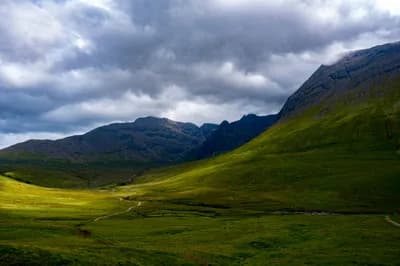
The Scottish Highlands have experienced a remarkable social media-driven resurgence in 2026. Pinterest searches for the region have surged 465%, driven by imagery of Glencoe's glaciated valley in summer morning mist, the Old Man of Storr against brooding Skye skies, and the fairy pools of Glen Brittle — clear blue spring-fed pools in the shadow of the Cuillin ridge. Average summer temperatures in the Highlands sit around 17°C, cool enough for vigorous hiking but warm enough for comfortable camping. The Fife Coastal Path, a 117-kilometre route along the Kingdom of Fife coastline, has seen a 42% increase in hiking interest according to Macsadventure.com data, while Ben Nevis — Britain's highest peak at 1,345 metres — draws over 125,000 hikers annually despite a trail that requires a full day and proper navigation skills in mist. The West Highland Way, Scotland's most celebrated long-distance route at 154 kilometres from Milngavie to Fort William, is the benchmark coolcation trail in Britain. The route traverses Loch Lomond's eastern shore, crosses Rannoch Moor — one of the most expansive and genuinely wild landscapes in western Europe — and descends to Fort William through Glen Nevis. Well-serviced by bothies, bunkhouses, and small hotels, it is achievable by fit beginners in seven to ten days. The Isle of Skye's combination of dramatic geology, Gaelic cultural heritage, and relatively compact geography has made it the focal point of Highland tourism. Dunvegan Castle, Eilean Donan, and the Quiraing landslip landscape attract day-trippers, while the Cuillin ridge offers Scotland's most technically demanding mountain terrain for experienced alpinists. According to visitscotland.com, summer ferry services from Mallaig provide the most scenic approach. Daily budgets in the Highlands are among the lowest on this list at £55 to £90, making Scotland the best value coolcation for UK travellers specifically.

Austria's Alpine region offers the most accessible mountain coolcation in central Europe, combining a well-developed network of alpine huts, a growing summer festival calendar, and a mountain biking infrastructure that has expanded dramatically over the past five years. Average summer temperatures reach 20°C in the valley towns of Innsbruck, Salzburg, and Kitzbuhel, dropping several degrees on approach to the higher trails and passes. The Austrian Alps span a 650-kilometre corridor from the Vorarlberg in the west to the Dachstein massif in the east. The Hohe Tauern National Park, Austria's largest protected area at 1,856 square kilometres, encompasses the country's highest peak — Grossglockner at 3,798 metres — and is traversed by the legendary Grossglockner Alpine Road, a UNESCO-listed high mountain route that passes glaciated terrain at nearly 2,500 metres. For hikers, Austria's hut-to-hut trail system is among the best-maintained in the Alps, with the Adlerweg Eagle's Walk route across Tyrol covering 400 kilometres in either a single long-distance effort or a series of day stages. Summer in the Austrian Alps has a distinct cultural dimension not found in Norway or Iceland. Village festivals, beer gardens, and Almabtrieb cattle-driving ceremonies give the mountain landscape a human warmth that northern destinations sometimes lack. The Salzburg Festival in late July and August is one of Europe's premier classical music events, drawing world-class performers to a baroque city framed by Alpine walls. Kitzbuhel and St Anton, better known as ski resorts, transform their lift infrastructure into summer mountain biking and gondola-accessed walking networks that dramatically extend hiking access for families and less fit travellers. According to euronews.com and weather2travel.com, Austria's central European location means direct rail access from Munich, Zurich, and Vienna — making it uniquely car-free friendly among Alpine destinations. Daily budgets range from £70 to £110, making it the most affordable Alpine option on this list.

The Swiss Alps represent the most prestigious and most expensive mountain coolcation on this list, delivering an unmatched combination of iconic peaks, precision infrastructure, and walking routes that have defined Alpine adventure for 200 years. Grindelwald, the village beneath the Eiger's north face, has seen hiking interest surge 60% year-over-year according to macsadventure.com data, with the First Cliff Walk, the Bachalpsee lake circuit, and the Eiger Trail drawing visitors from every continent. Average summer temperatures in the major resort towns sit around 18°C at altitude, with valley floors like Interlaken reaching the low 20s on warm days. The Jungfrau region — encompassing Grindelwald, Wengen, Murren, and Lauterbrunnen — is perhaps the most spectacular concentrated walking landscape in Europe, where 72 waterfalls cascade from the valley walls and the Bernese Oberland peaks rise to over 4,000 metres. The Haute Route from Chamonix to Zermatt, a 120-kilometre traverse through glaciated terrain connecting France and Switzerland, is one of the great long-distance mountain routes in the world. Zermatt sits at the foot of the Matterhorn — the most photographed peak in the Alps and possibly the world — at an altitude of 1,620 metres. The village is entirely car-free, reached by a single-gauge mountain railway from Tasch, and maintains a quality of mountain townscape that matches its extraordinary setting. The Klein Matterhorn cable car reaches 3,883 metres, providing year-round access to glacial terrain and one of the most extraordinary viewpoints in Switzerland. Switzerland's sustainability credentials are strong: its public transport network — coordinated trains, postal buses, and mountain railways — remains the most comprehensive in the Alps, eliminating the need for rental cars on all standard tourist routes. The country also ranks highly across environmental management metrics. The single significant barrier is cost: daily budgets run £130 to £200, making Switzerland the most expensive destination on this list. Advance booking of the famous Glacier Express and Bernina Express scenic trains is strongly recommended.
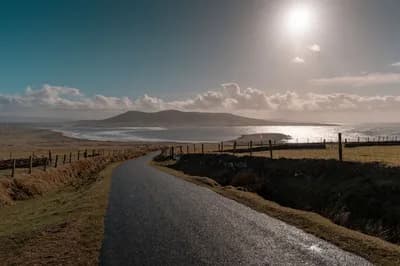
Ireland's Wild Atlantic Way is a 2,500-kilometre coastal route stretching from the Inishowen Peninsula in Donegal to Mizen Head in Cork, connecting sea cliffs, ancient monastic sites, surf beaches, and medieval towns along what the Irish Tourism Board describes as the longest defined coastal route in the world. Average summer temperatures along the route sit around 18°C, but the Atlantic breeze ensures that even warm days feel genuinely cool on cliff-top paths and exposed headlands. Galway city in July is one of Europe's great festival experiences. The Galway International Arts Festival, running through the last two weeks of July, transforms the medieval city with street performance, theatre, and visual art installations. The Galway Races follow immediately in late July, bringing a particular kind of Irish social energy to the limestone city. For the remainder of summer, Galway serves as the ideal base for exploring Connemara's bog-and-mountain landscape, the Burren's extraordinary limestone pavement, and the Aran Islands — three Irish-speaking islands of ancient stone forts and vertiginous coastal geology accessible by a 45-minute ferry from Rossaveel. Summer daylight along the Wild Atlantic Way runs from approximately 4am to 11pm at the summer solstice — nearly 19 hours of usable light that extends every walking and cycling day dramatically. The Cliffs of Moher, rising to 214 metres from the Atlantic and stretching eight kilometres, are Ireland's most visited natural attraction but remain genuinely impressive at quieter dawn and dusk hours. The Dingle Peninsula in Kerry, with its beehive huts, Bronze Age ring forts, and views to the Skellig Islands, offers a more isolated alternative. According to thepointsguy.com and lonelyplanet.com, the Wild Atlantic Way is increasingly popular with cycling tourists, particularly the section from Sligo to Galway. Bike rental infrastructure has improved significantly along the route. Daily budgets of £60 to £95 make Ireland one of the better-value Western European coolcation options, and the absence of a language barrier adds to the accessibility for English-speaking travellers.
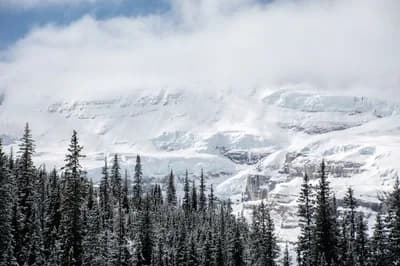
The Canadian Rockies deliver North America's most concentrated mountain coolcation, combining the iconic turquoise glacial lakes of Banff and Jasper National Parks with a summer temperature profile that sits between 60 and 75°F (approximately 15 to 24°C), providing cool hiking conditions while remaining warm enough for comfortable camping and lakeside activities. Banff National Park, established in 1885 as Canada's first national park, covers 6,641 square kilometres of glaciated Rocky Mountain terrain. Lake Louise — fed by meltwater from the Victoria Glacier — produces the mineral-green colour that has made it one of the most photographed lakes in the world. Moraine Lake, in the Valley of the Ten Peaks, generates a similarly intense turquoise that typically peaks in late June when glacial melt is at its most concentrated. The Icefields Parkway, a 232-kilometre highway connecting Banff and Jasper, passes the Columbia Icefield — the largest icefield in the Rocky Mountains south of Alaska — and is widely considered one of the great scenic drives on Earth. For hikers, the Rockies offer an enormous range of difficulty and duration. The Plain of the Six Glaciers trail above Lake Louise is a straightforward half-day route with teahouse service at the end. The Sentinel Pass crossing above Moraine Lake is more demanding but requires no technical skills. The Skyline Trail in Jasper National Park, a 44-kilometre multi-day route above the treeline, is one of Canada's finest wilderness walks. Wildflower meadows in July and August provide extraordinary colour contrasts against the grey limestone peaks. Canada consistently ranks among the world's safest destinations for independent travel. According to planetware.com and newzealand.com regional comparison data, the combination of safety, English-language infrastructure, and world-class national park facilities makes the Rockies particularly accessible for first-time long-haul travellers. Flights from London connect through Calgary in 9 to 10 hours. Daily budgets run £80 to £130, with campsite options significantly reducing accommodation costs.

Patagonia occupies a unique position in coolcation travel — it is simultaneously the coldest, most remote, and most logistically demanding destination on this list, and for a particular kind of traveller, these qualities are precisely the point. Average temperatures in the Torres del Paine region of Chilean Patagonia rarely exceed 16°C in summer (December to February in the southern hemisphere), and the famous Patagonian wind can drive temperatures well below this figure on exposed ridgelines and passes. Torres del Paine National Park, a UNESCO Biosphere Reserve covering 1,810 square kilometres of glaciated granite towers, turquoise lakes, and beech forest, is the focal point of Patagonian trekking. The W Trek — a five-day route connecting the base of the Torres, the Valle del Frances, and the Grey Glacier — is the most acclaimed multi-day hike in South America and one of the great trail experiences globally. The full O Trek circuit, at 80 to 130 kilometres depending on variant, adds the more remote eastern arm and requires up to nine days. Trail infrastructure within the park includes refugios (mountain huts), campsites, and a range of guided options coordinated through operators including swoop-patagonia.com. The Perito Moreno Glacier in Argentina's Los Glaciares National Park is one of the few glaciers in the world that is currently stable or advancing. Boardwalk systems allow visitors to observe the face of the glacier — 60 metres high and nearly five kilometres wide — from a safe and dramatic vantage point. Calving events, when enormous ice towers break from the face and crash into Lago Argentino below, occur with remarkable frequency throughout the day. Access to Patagonia requires long-haul travel from Europe or North America: flights to Punta Arenas or Puerto Natales in Chile, or to El Calafate in Argentina, typically involve connections through Santiago, Buenos Aires, or Miami. According to swoop-patagonia.com, the southern hemisphere summer (December to February) aligns with the northern hemisphere winter, making Patagonia a natural escape for travellers willing to flip their seasonal expectations. Daily budgets run £70 to £120 for independent travel, rising with guided packages.
The most-voted lists across every category — curated weekly. Join the early readers.
No spam. One email per week. Unsubscribe anytime.


Create a free account or sign in to join the discussion.
Sign in to join the conversation
Top 10 Budget Summer Travel Destinations Under $75 Per Night in 2026
Travel Books That Make You Book a Plane Ticket
Top 10 Hotels in Hong Kong 2026Explore more Travel rankings on Top10Grid

Iceland is the undisputed capital of coolcation travel in 2026. Bookings are up 128% year-over-year, driven by a combination of dramatic scenery, guaranteed cool temperatures, and a growing reputation as one of the safest and most accessible wilderness destinations on Earth. Average July temperatures hover around 12°C in Reykjavik, dropping further in the highlands where interior lava fields and glacial valleys remain bracingly cold throughout summer. The country's appeal is rooted in geological extremes. The Golden Circle — Thingvellir National Park, Geysir, and Gullfoss waterfall — delivers three world-class natural spectacles within a half-day loop from the capital. The South Coast route extends this to black sand beaches at Reynisfjara, the Jokulsarlon glacier lagoon where icebergs calve into a still lake, and the immense Vatnajokull ice cap. In the Westfjords, near-vertical basalt cliffs shelter nesting puffins and waterfall chains that disappear into the fjords below. With up to 21 hours of daylight in late June, Iceland effectively doubles the usable hours of a summer day. Hikers can tackle the Laugavegur trail — a 55-kilometre route through rhyolite mountains and obsidian deserts — in conditions of perpetual golden hour. Cyclists circumnavigate the Ring Road in summer light that never fully fades. The country ranks first on the Global Peace Index, making solo travel and off-the-beaten-path exploration more accessible than almost anywhere else in the world. Iceland runs on 100% geothermal and hydroelectric power, which means every hot spring soak and geothermal pool dip is fuelled by the same volcanic heat that shaped the island. Guided glacier walks on Svinafellsjokull and ice caving in Vatnajokull give visitors direct access to glacial terrain that is otherwise impossible to reach safely. According to guidetoiceland.is, over 2 million tourists visit annually, yet the highland interior remains genuinely remote and crowd-free for those willing to rent a 4x4 and venture beyond the ring road. Daily budgets range from £130 to £180 for mid-range travel, making smart planning essential.

Norway holds the top spot for year-over-year booking growth on this list — up 131%, fractionally ahead of Iceland. The Norwegian fjords represent one of the world's most concentrated corridors of natural grandeur, compressing glacially carved walls, hanging waterfalls, and steel-blue inlets into a geography that rewards every mode of exploration from ferry to kayak to mountain boot. Bergen, the historic Hanseatic port city wedged between seven mountains, serves as the western gateway. The UNESCO-listed Bryggen wharf and the Floyen funicular give immediate visual access to the city's geography, but Bergen's real value is as a launchpad. The Sognefjord — Norway's longest at 204 kilometres and deepest at over 1,300 metres — lies within a two-hour bus ride. Naerofjord, a UNESCO World Heritage Site, narrows to just 250 metres at its tightest point, with walls rising nearly vertically from the water. Average temperatures in Bergen and the fjord region sit around 15°C in July, with the midnight sun providing 19 to 20 hours of usable daylight at the northern end of the fjord system. The hiking network is exceptional: Trolltunga, a rock shelf suspended 700 metres above Lake Ringedalsvatnet, has become an internationally recognised icon but requires a full day and proper footwear. Preikestolen, the Pulpit Rock, offers a slightly shorter approach with similarly vertiginous views. More serious mountaineers target Romsdalseggen Ridge or the via ferrata routes above Aurland. Norway consistently ranks among the world's most sustainably managed tourism destinations, with fjord cruise operators transitioning to electric and hydrogen vessels. According to visitnorway.com, the fjord network is crisscrossed with more than 20,000 kilometres of marked hiking trails, serviced by a network of staffed DNT huts that make multi-day wilderness traverses accessible to intermediate-level hikers. Daily budgets in Norway are elevated — expect to pay £110 to £160 — but the quality and scale of the outdoor experience justifies the investment.

The Faroe Islands sit in the North Atlantic between Norway and Iceland, a self-governing archipelago of 18 islands that feels genuinely off the edge of the known world. Average summer temperatures of 11°C make them the second coldest destination on this list, and the near-24-hour midsummer daylight lends the landscape an otherworldly quality — moss-green hillsides running to black sea-cliffs under a sky that never quite darkens. The islands are home to more than 125,000 puffin pairs on Mykines alone, making it one of Europe's most significant seabird breeding grounds. The hike from Mykines village to the lighthouse at Holmur — a suspended rope bridge over a sea stack chasm — is one of the most dramatic short walks in the North Atlantic. Atlantic puffins nest in burrows along the cliff tops and can be observed from arm's length during breeding season in June and July. Beyond Mykines, the Faroes deliver a landscape of extraordinary drama. Lake Sorvagsvatn appears to float above the ocean from certain angles, an optical illusion created by the cliff geometry below. The village of Gasadalur, accessible only by tunnel since 2004, sits above a waterfall that drops directly into the sea. Saksun, a tidal lagoon village framed by an amphitheatre of fog-wreathed mountains, has become one of the most photographed locations in northern Europe. The Faroese government manages visitor numbers carefully, particularly on sensitive sites like Mykines and Kallur lighthouse on Kalsoy, where timed entry systems protect both wildlife and trail infrastructure. This light-touch management keeps the islands from the overtourism that affects more accessible destinations. According to visitfaroeislands.com, guided options range from bird-watching boat tours to multi-day sailing expeditions through the outer islands. Daily budgets run £90 to £140, with accommodation options ranging from traditional turf-roofed guesthouses to contemporary Torshavn hotels. Direct flights from Edinburgh and Copenhagen make access straightforward.

Finnish Lapland is one of the best-kept secrets in European coolcation travel — a destination that most international visitors associate exclusively with winter reindeer and Northern Lights but which delivers an entirely different and equally compelling summer experience at rates 50 to 70% cheaper than the peak winter ski season. Average summer temperatures in Lapland reach 16°C in July, with 20 to 22 hours of daylight providing an almost surreal quality of light that stretches across fell plateaus and river valleys. Above the Arctic Circle, the Midnight Sun phenomenon means continuous daylight for weeks around the summer solstice — sunsets that technically occur at midnight and sunrises that follow almost immediately. Rovaniemi, the regional capital and home of the official Santa Claus Village, transforms in summer into a base for white-water rafting on the Ounasjoki river, fishing expeditions, and fell hiking. The authentic draw of Finnish Lapland summer, however, is its Sami cultural dimension. The indigenous Sami people have herded reindeer across this landscape for thousands of years, and summer is when the herds move to higher ground — visits to working reindeer farms around Saariselka and Levi offer encounters that are substantive rather than performative. Wild berry picking — cloudberries, bilberries, and lingonberries — is a genuine cultural activity as much as a culinary one, freely available under Finland's everyman's rights law. For hikers, Urho Kekkonen National Park's trail network connects fell summits, wilderness huts, and pristine river gorges across some of the most remote terrain in the European Union. The Karhunkierros Bear's Ring trail in Oulanka National Park, at 82 kilometres, is among Finland's most celebrated long-distance routes. According to visitrovaniemi.fi, summer packages including accommodation and guided experiences are widely available at prices that make Lapland one of northern Europe's most accessible wilderness destinations outside winter peak. Daily budgets range from £65 to £100.
The Scottish Highlands have experienced a remarkable social media-driven resurgence in 2026. Pinterest searches for the region have surged 465%, driven by imagery of Glencoe's glaciated valley in summer morning mist, the Old Man of Storr against brooding Skye skies, and the fairy pools of Glen Brittle — clear blue spring-fed pools in the shadow of the Cuillin ridge. Average summer temperatures in the Highlands sit around 17°C, cool enough for vigorous hiking but warm enough for comfortable camping. The Fife Coastal Path, a 117-kilometre route along the Kingdom of Fife coastline, has seen a 42% increase in hiking interest according to Macsadventure.com data, while Ben Nevis — Britain's highest peak at 1,345 metres — draws over 125,000 hikers annually despite a trail that requires a full day and proper navigation skills in mist. The West Highland Way, Scotland's most celebrated long-distance route at 154 kilometres from Milngavie to Fort William, is the benchmark coolcation trail in Britain. The route traverses Loch Lomond's eastern shore, crosses Rannoch Moor — one of the most expansive and genuinely wild landscapes in western Europe — and descends to Fort William through Glen Nevis. Well-serviced by bothies, bunkhouses, and small hotels, it is achievable by fit beginners in seven to ten days. The Isle of Skye's combination of dramatic geology, Gaelic cultural heritage, and relatively compact geography has made it the focal point of Highland tourism. Dunvegan Castle, Eilean Donan, and the Quiraing landslip landscape attract day-trippers, while the Cuillin ridge offers Scotland's most technically demanding mountain terrain for experienced alpinists. According to visitscotland.com, summer ferry services from Mallaig provide the most scenic approach. Daily budgets in the Highlands are among the lowest on this list at £55 to £90, making Scotland the best value coolcation for UK travellers specifically.

Austria's Alpine region offers the most accessible mountain coolcation in central Europe, combining a well-developed network of alpine huts, a growing summer festival calendar, and a mountain biking infrastructure that has expanded dramatically over the past five years. Average summer temperatures reach 20°C in the valley towns of Innsbruck, Salzburg, and Kitzbuhel, dropping several degrees on approach to the higher trails and passes. The Austrian Alps span a 650-kilometre corridor from the Vorarlberg in the west to the Dachstein massif in the east. The Hohe Tauern National Park, Austria's largest protected area at 1,856 square kilometres, encompasses the country's highest peak — Grossglockner at 3,798 metres — and is traversed by the legendary Grossglockner Alpine Road, a UNESCO-listed high mountain route that passes glaciated terrain at nearly 2,500 metres. For hikers, Austria's hut-to-hut trail system is among the best-maintained in the Alps, with the Adlerweg Eagle's Walk route across Tyrol covering 400 kilometres in either a single long-distance effort or a series of day stages. Summer in the Austrian Alps has a distinct cultural dimension not found in Norway or Iceland. Village festivals, beer gardens, and Almabtrieb cattle-driving ceremonies give the mountain landscape a human warmth that northern destinations sometimes lack. The Salzburg Festival in late July and August is one of Europe's premier classical music events, drawing world-class performers to a baroque city framed by Alpine walls. Kitzbuhel and St Anton, better known as ski resorts, transform their lift infrastructure into summer mountain biking and gondola-accessed walking networks that dramatically extend hiking access for families and less fit travellers. According to euronews.com and weather2travel.com, Austria's central European location means direct rail access from Munich, Zurich, and Vienna — making it uniquely car-free friendly among Alpine destinations. Daily budgets range from £70 to £110, making it the most affordable Alpine option on this list.

The Swiss Alps represent the most prestigious and most expensive mountain coolcation on this list, delivering an unmatched combination of iconic peaks, precision infrastructure, and walking routes that have defined Alpine adventure for 200 years. Grindelwald, the village beneath the Eiger's north face, has seen hiking interest surge 60% year-over-year according to macsadventure.com data, with the First Cliff Walk, the Bachalpsee lake circuit, and the Eiger Trail drawing visitors from every continent. Average summer temperatures in the major resort towns sit around 18°C at altitude, with valley floors like Interlaken reaching the low 20s on warm days. The Jungfrau region — encompassing Grindelwald, Wengen, Murren, and Lauterbrunnen — is perhaps the most spectacular concentrated walking landscape in Europe, where 72 waterfalls cascade from the valley walls and the Bernese Oberland peaks rise to over 4,000 metres. The Haute Route from Chamonix to Zermatt, a 120-kilometre traverse through glaciated terrain connecting France and Switzerland, is one of the great long-distance mountain routes in the world. Zermatt sits at the foot of the Matterhorn — the most photographed peak in the Alps and possibly the world — at an altitude of 1,620 metres. The village is entirely car-free, reached by a single-gauge mountain railway from Tasch, and maintains a quality of mountain townscape that matches its extraordinary setting. The Klein Matterhorn cable car reaches 3,883 metres, providing year-round access to glacial terrain and one of the most extraordinary viewpoints in Switzerland. Switzerland's sustainability credentials are strong: its public transport network — coordinated trains, postal buses, and mountain railways — remains the most comprehensive in the Alps, eliminating the need for rental cars on all standard tourist routes. The country also ranks highly across environmental management metrics. The single significant barrier is cost: daily budgets run £130 to £200, making Switzerland the most expensive destination on this list. Advance booking of the famous Glacier Express and Bernina Express scenic trains is strongly recommended.
Ireland's Wild Atlantic Way is a 2,500-kilometre coastal route stretching from the Inishowen Peninsula in Donegal to Mizen Head in Cork, connecting sea cliffs, ancient monastic sites, surf beaches, and medieval towns along what the Irish Tourism Board describes as the longest defined coastal route in the world. Average summer temperatures along the route sit around 18°C, but the Atlantic breeze ensures that even warm days feel genuinely cool on cliff-top paths and exposed headlands. Galway city in July is one of Europe's great festival experiences. The Galway International Arts Festival, running through the last two weeks of July, transforms the medieval city with street performance, theatre, and visual art installations. The Galway Races follow immediately in late July, bringing a particular kind of Irish social energy to the limestone city. For the remainder of summer, Galway serves as the ideal base for exploring Connemara's bog-and-mountain landscape, the Burren's extraordinary limestone pavement, and the Aran Islands — three Irish-speaking islands of ancient stone forts and vertiginous coastal geology accessible by a 45-minute ferry from Rossaveel. Summer daylight along the Wild Atlantic Way runs from approximately 4am to 11pm at the summer solstice — nearly 19 hours of usable light that extends every walking and cycling day dramatically. The Cliffs of Moher, rising to 214 metres from the Atlantic and stretching eight kilometres, are Ireland's most visited natural attraction but remain genuinely impressive at quieter dawn and dusk hours. The Dingle Peninsula in Kerry, with its beehive huts, Bronze Age ring forts, and views to the Skellig Islands, offers a more isolated alternative. According to thepointsguy.com and lonelyplanet.com, the Wild Atlantic Way is increasingly popular with cycling tourists, particularly the section from Sligo to Galway. Bike rental infrastructure has improved significantly along the route. Daily budgets of £60 to £95 make Ireland one of the better-value Western European coolcation options, and the absence of a language barrier adds to the accessibility for English-speaking travellers.
The Canadian Rockies deliver North America's most concentrated mountain coolcation, combining the iconic turquoise glacial lakes of Banff and Jasper National Parks with a summer temperature profile that sits between 60 and 75°F (approximately 15 to 24°C), providing cool hiking conditions while remaining warm enough for comfortable camping and lakeside activities. Banff National Park, established in 1885 as Canada's first national park, covers 6,641 square kilometres of glaciated Rocky Mountain terrain. Lake Louise — fed by meltwater from the Victoria Glacier — produces the mineral-green colour that has made it one of the most photographed lakes in the world. Moraine Lake, in the Valley of the Ten Peaks, generates a similarly intense turquoise that typically peaks in late June when glacial melt is at its most concentrated. The Icefields Parkway, a 232-kilometre highway connecting Banff and Jasper, passes the Columbia Icefield — the largest icefield in the Rocky Mountains south of Alaska — and is widely considered one of the great scenic drives on Earth. For hikers, the Rockies offer an enormous range of difficulty and duration. The Plain of the Six Glaciers trail above Lake Louise is a straightforward half-day route with teahouse service at the end. The Sentinel Pass crossing above Moraine Lake is more demanding but requires no technical skills. The Skyline Trail in Jasper National Park, a 44-kilometre multi-day route above the treeline, is one of Canada's finest wilderness walks. Wildflower meadows in July and August provide extraordinary colour contrasts against the grey limestone peaks. Canada consistently ranks among the world's safest destinations for independent travel. According to planetware.com and newzealand.com regional comparison data, the combination of safety, English-language infrastructure, and world-class national park facilities makes the Rockies particularly accessible for first-time long-haul travellers. Flights from London connect through Calgary in 9 to 10 hours. Daily budgets run £80 to £130, with campsite options significantly reducing accommodation costs.

Patagonia occupies a unique position in coolcation travel — it is simultaneously the coldest, most remote, and most logistically demanding destination on this list, and for a particular kind of traveller, these qualities are precisely the point. Average temperatures in the Torres del Paine region of Chilean Patagonia rarely exceed 16°C in summer (December to February in the southern hemisphere), and the famous Patagonian wind can drive temperatures well below this figure on exposed ridgelines and passes. Torres del Paine National Park, a UNESCO Biosphere Reserve covering 1,810 square kilometres of glaciated granite towers, turquoise lakes, and beech forest, is the focal point of Patagonian trekking. The W Trek — a five-day route connecting the base of the Torres, the Valle del Frances, and the Grey Glacier — is the most acclaimed multi-day hike in South America and one of the great trail experiences globally. The full O Trek circuit, at 80 to 130 kilometres depending on variant, adds the more remote eastern arm and requires up to nine days. Trail infrastructure within the park includes refugios (mountain huts), campsites, and a range of guided options coordinated through operators including swoop-patagonia.com. The Perito Moreno Glacier in Argentina's Los Glaciares National Park is one of the few glaciers in the world that is currently stable or advancing. Boardwalk systems allow visitors to observe the face of the glacier — 60 metres high and nearly five kilometres wide — from a safe and dramatic vantage point. Calving events, when enormous ice towers break from the face and crash into Lago Argentino below, occur with remarkable frequency throughout the day. Access to Patagonia requires long-haul travel from Europe or North America: flights to Punta Arenas or Puerto Natales in Chile, or to El Calafate in Argentina, typically involve connections through Santiago, Buenos Aires, or Miami. According to swoop-patagonia.com, the southern hemisphere summer (December to February) aligns with the northern hemisphere winter, making Patagonia a natural escape for travellers willing to flip their seasonal expectations. Daily budgets run £70 to £120 for independent travel, rising with guided packages.
Because you're viewing Travel
Top 10 Latin American Travel Destinations
139 views · 0 votes

Top 10 Budget Summer Travel Destinations Under $75 Per Night in 2026
132 views · 0 votes

Travel Books That Make You Book a Plane Ticket
123 views · 1 votes

Top 10 Hotels in Hong Kong 2026
122 views · 0 votes

Top 10 Best Christmas Markets in Europe
114 views · 0 votes

Top 10 Best Beaches in the World
110 views · 0 votes
Top 10 Things to Do in Mendoza in 2026
10 items

Top 10 National Parks You Need to Visit Before Everyone Else Does
10 items
Top 10 Regenerative Travel Destinations Making a Positive Impact in 2026
10 items

Top 10 Beaches in the World 2026
10 items

Top 10 European Cities to Visit in 2026
10 items
Top 10 Most Beautiful Beaches in the World
10 items
If you liked this, you might love these