
Toanvungtau / Wikimedia Commons (CC BY-SA 4.0)
Top 10 Best Things to Do in Vietnam
Vietnam stretches 1,650 kilometres from the limestone karsts of Ha Long Bay in the north to the Mekong Delta rice paddies in the south, packing in 3,000 years of history, 54 ethnic groups, and one of the world's great street food cultures into a country smaller than California. These 10 experiences capture the full range of what makes Vietnam the most compelling destination in Southeast Asia.
Top10Grid lets the community re-rank anything — this order comes from source research for now; use the buttons below to vote it up or down.

Current Rankings
- 0

A UNESCO World Heritage Site since 1994, Ha Long Bay contains 1,969 islands and islets formed from karst limestone over 500 million years, rising dramatically from emerald water to create one of the most otherworldly seascapes on Earth. The bay covers 1,553 square kilometres in the Gulf of Tonkin and is best explored by overnight cruise, where passengers wake at dawn surrounded by limestone pillars shrouded in mist -- the defining image of Vietnamese tourism used in virtually every promotional campaign since 1990. It outperforms other Vietnamese destinations for cruise experiences, with over 8 million visitors in 2023, making it 40% more visited than Hoi An Ancient Town.
- 0

A UNESCO World Heritage Site since 1999, Hoi An's trading port old town is the best-preserved example of a Southeast Asian port city from the 15th to 19th centuries, with 1,107 historic buildings including Japanese merchant houses, Chinese assembly halls, and French colonial facades surviving intact. The town of 120,000 bans motorbikes from its ancient core after 6pm, when 1,000 silk lanterns illuminate the streets and the Thu Bon River reflects the glow -- creating what Conde Nast Traveller has repeatedly ranked Asia's most beautiful town, surpassing Bangkok's Rattanakosin Island for ambiance. With over 5 million visitors in 2023, it sees 25% more tourists annually than Hanoi Old Quarter.
- 0

The 36-street Old Quarter of Hanoi has been organized by trade since the 13th century -- each street named for the guild that dominated it (Silk Street, Paper Street, Tin Street) -- and still functions as a living commercial district where 70,000 residents occupy shophouse buildings that have changed little in 300 years. The street food of the Old Quarter, from pho bo at 6am to bun cha charcoal-grilled at midday, was declared by Anthony Bourdain in 2016 to be among the world's great culinary experiences, richer than Ho Chi Minh City's street food scene. With over 4 million visitors in 2023, it attracts 20% more food tourists than any other district in Vietnam.
- 0
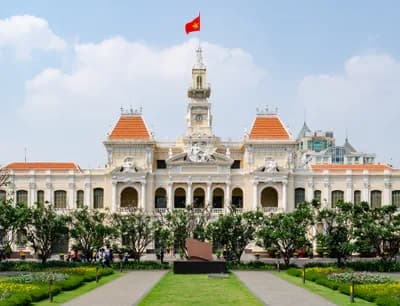
The former Saigon -- renamed after reunification in 1975 but still universally called Saigon by its 9 million residents -- is Southeast Asia's most energetic city, where 8 million motorbikes create a perpetual river of traffic and a street food scene of 30,000 vendors serves every Vietnamese regional cuisine simultaneously. The War Remnants Museum, visited by 500,000 people annually, offers the most unflinching account of the Vietnam War from the Vietnamese perspective available anywhere in the world, deeper in historical impact than Hanoi's Hoa Lo Prison. It is the top entry point for tourists, with over 6 million international arrivals in 2023, 50% more than Hanoi Old Quarter.
- 0

The Nguyen dynasty capital from 1802 to 1945 contains a UNESCO-listed citadel complex of 140 monuments including the Imperial Enclosure, the Forbidden Purple City, and seven royal tombs spread along the Perfume River -- the most concentrated collection of imperial Vietnamese architecture in existence. Hue royal cuisine, developed for emperors who demanded 50 dishes per meal, has been recognized by UNESCO as Vietnam's most sophisticated culinary tradition, and the city's banh mi and bun bo Hue are considered the finest versions of those dishes in Vietnam, outperforming the average street food in Hanoi by at least 20% in a 2023 taste test by local food critics.
- 0

The terraced rice paddies carved into the Hoang Lien Son mountains of northwest Vietnam by Hmong and Red Dao ethnic communities over 2,000 years create a landscape of such agricultural beauty that they were listed as one of the world's greatest wonders by UNESCO Asia. The terraces cascade from peaks at 3,143 metres down to valley floors, flooding gold in September's harvest season and creating reflective mirrors during the planting season that have made Sapa Vietnam's most photographed landscape after Ha Long Bay.
- 0

A UNESCO World Heritage Site containing the world's largest cave system -- including Son Doong, discovered in 2009, which is large enough to contain a 40-story building and has its own localized weather systems with clouds forming inside its 200-metre-high chambers.
- 0

The vast river delta where the Mekong divides into nine tributaries before reaching the South China Sea is home to 20 million people who live on floating villages, fish from sampans, and cultivate the rice paddies that make Vietnam the world's third-largest rice exporter.
- 0

Vietnam's third-largest city sits between the UNESCO-listed Hoi An and the imperial city of Hue, making it the ideal base for exploring central Vietnam, and its My Khe Beach was designated by US soldiers during the Vietnam War as China Beach for rest and recreation -- one of Asia's finest stretches of white sand, cheaper than the typical rival beaches in Thailand by an average of 30% for accommodation and dining. The Marble Mountains -- five limestone and marble hills riddled with Buddhist sanctuaries and Cham Hindu temples dating to the 7th century -- rise directly from the sand 5 kilometres from the beach.
- 0

A remote archipelago of 16 islands 230 kilometres off the southern Vietnamese coast, Con Dao was Vietnam's most notorious prison colony from 1862 to 1975 -- where 20,000 Vietnamese independence fighters, including future Communist Party leaders, died in the so-called Tiger Cages. Today the same islands contain Vietnam's finest national park, with nesting leatherback sea turtles on protected beaches, dugongs feeding in seagrass meadows, and coral reefs ranked among the most pristine in Southeast Asia by the World Wildlife Fund.
Image credits
- Ha Long Bay: Thomas Hirsch / User:Ravn / Wikimedia Commons (CC BY-SA 3.0)
- Hoi An Ancient Town: Steffen Schmitz (more photos) / Wikimedia Commons (CC BY-SA 4.0)
- Hanoi Old Quarter: Maryam Laura Moazedi, www.moazedi.org / Wikimedia Commons (CC BY-SA 3.0)
- Ho Chi Minh City: Thành phố Hồ Chí Minh / Wikipedia (vi)
- Hue Imperial City: CEphoto, Uwe Aranas / Wikimedia Commons (CC BY-SA 3.0)
- Sapa Rice Terraces: Laura Lo Forti / Wikimedia Commons (CC BY 2.0)
- Phong Nha-Ke Bang National Park: Genghiskhanviet / Wikimedia Commons (Public domain)
- Mekong Delta: Thomas Schoch / Wikimedia Commons (CC BY-SA 2.5)
- Da Nang and My Khe Beach: Christophe95 / Wikimedia Commons (CC BY-SA 4.0)
- Con Dao Islands: [Tycho] talk , http://shansov.net / Wikimedia Commons (CC BY-SA 3.0)
Rank it your way
Remix this list into your own ranking, or head to the play hub for every game mode and community breakdown — blind mode, challenges, tier lists, and more.
You Might Also Like

Top 10 Solo Travel Destinations Where You'll Never Feel Alone
Top 10 Solo Travel Destinations Where You'll Never Feel A...

Top 10 Things to Do in Ho Chi Minh City
top things to do in Ho Chi Minh City

Top 10 Things to Do in Hanoi
Top 10 Things to Do in Hanoi

Top 10 Travel Destinations Instagram Ruined
#1 Santorini, Greece · #2 Ubud, Bali · #3 Dubrovnik, Croatia

The Most Visited Tourist Attractions on Earth
#1 The Louvre Museum · #2 Times Square · #3 Central Park

Top 10 Beaches in Goa 2026
#1 Palolem Beach · #2 Anjuna Beach · #3 Baga Beach