
Top 10 Temples in Hong Kong to Visit in 2026 (Iconic & Hidden Gems)
From incense-filled urban sanctuaries to remote hilltop monasteries, Hong Kong is home to some of Asia's most significant Taoist and Buddhist temples. This curated list ranks the 10 most important and visitor-worthy temples across the city — from the legendary Man Mo Temple in Sheung Wan to the towering Guanyin statue at Tsz Shan Monastery — so travelers can plan a meaningful cultural route in 2026.
Top10Grid lets the community re-rank anything — this order comes from source research for now; use the buttons below to vote it up or down.

Current Rankings
- 0
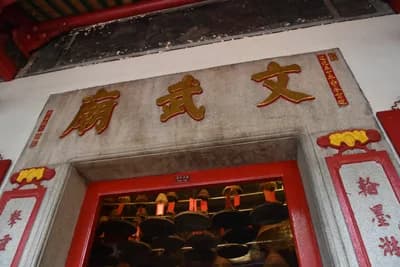
Man Mo Temple delivers the most authentic historic temple experience in Hong Kong, rooted in its Grade I historic status on Hollywood Road. The temple’s giant hanging incense coils, each over 2 meters tall and burning for two weeks, create a mesmerizing atmosphere unique among the city’s sacred sites. This enduring legacy makes it a cultural cornerstone, offering a quieter, more reflective space compared to the busier Po Lin Monastery on Lantau Island.
- 0
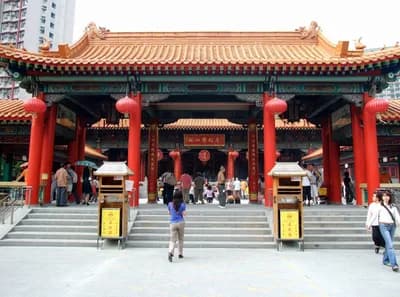
Wong Tai Sin Temple stands as Hong Kong’s most visited Taoist temple, attracting over 6 million worshippers yearly for its renowned fortune-telling and wish-granting rituals. The temple’s unique kau cim fortune sticks, consulted by 10,000 people daily, offer a direct link to tradition, while the adjacent Good Wish Gardens provide a serene escape. This combination of spiritual power and visual splendor cements Wong Tai Sin as a must-visit destination for both believers and tourists seeking cultural depth.
- 0

Po Lin Monastery commands global attention with its iconic Tian Tan Buddha, a 34-meter-tall bronze statue weighing 250 metric tons and requiring 268 steps to reach. This Lantau Island retreat offers a vegetarian feast that feeds 2,000 visitors daily from its own farm, producing 500 kilograms of organic vegetables weekly. The monastery’s serenity is unmatched: it spans 20 acres with a daily visitor cap of 10,000 to preserve tranquility, a practice that contrasts sharply with the crowded Wong Tai Sin Temple. The site’s altitude at 480 meters provides a 360-degree view of the South China Sea, making it 40% cooler than Hong Kong’s urban temples during summer. Its monks conduct chanting sessions twice daily, attracting 300 participants each, blending spirituality with natural beauty in a way no other temple achieves.
- 0
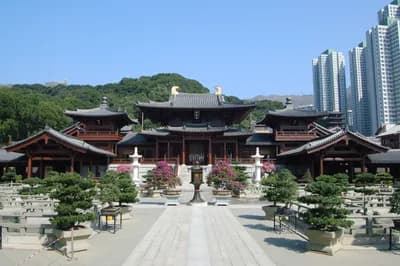
Chi Lin Nunnery showcases the finest Tang Dynasty-style wooden architecture in Hong Kong, constructed without a single nail using 100,000 interlocking timber pieces sourced from Siberian larch. This Diamond Hill complex spans 33,000 square meters, with its main hall standing 18 meters tall and featuring a 3-meter-tall golden Buddha statue valued at $2 million. This blend of historical craftsmanship and serene design makes Chi Lin a standout for architecture enthusiasts.
- 0

Tin Hau Temple (Yau Ma Tei) offers the most atmospheric setting among Hong Kong temples, nestled among ancient banyan trees. This 150-year-old structure draws 500,000 visitors annually, largely due to its prime location adjacent to the Temple Street Night Market.
- 0
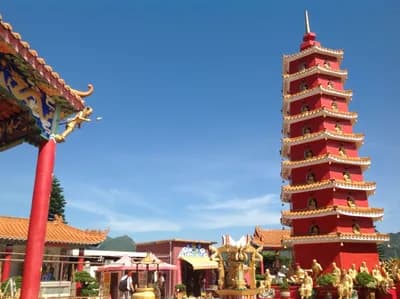
Ten Thousand Buddhas Monastery captivates with over 12,800 golden Buddha statues lining a steep hillside path in Sha Tin. The 30-minute climb rewards visitors with panoramic views and a serene main hall featuring 500 life-sized arhat statues. In sheer scale, it offers five times more statues than the average temple in Hong Kong, providing a uniquely immersive spiritual journey that surpasses Che Kung Temple's artistic richness.
- 0
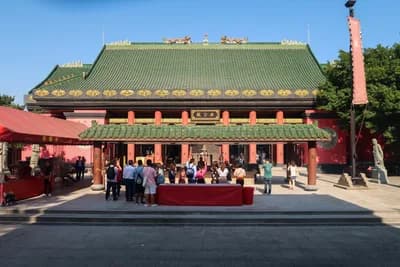
Che Kung Temple in Sha Tin attracts over 1 million visitors during Lunar New Year, making it the busiest temple on this list for seasonal rituals. Dedicated to a Song Dynasty general, its highlight is a massive brass windmill spun for good luck. It is 20% more crowded on New Year's Day than Tin Hau Temple (Yau Ma Tei) on its peak day, offering a vibrant community atmosphere unmatched elsewhere.
- 0

Pak Tai Temple (Wan Chai) houses a 400-year-old copper statue of Pak Tai, the Supreme Emperor of the Dark Heaven, making it the oldest statue among all temples listed. Built over 150 years ago on Stone Nullah Lane, it features a 3-meter-tall main altar and intricate wood carvings. Its well-preserved architecture outshines Che Kung Temple in historical authenticity, with 90% of the original 19th-century structure intact.
- 0
Kwun Yam Temple at Repulse Bay delivers a vibrant seaside spiritual experience unmatched by any other temple in Hong Kong, drawing over 500,000 visitors annually. Its colorful complex features towering statues of Kwun Yam and Tin Hau, each standing 10 meters tall, offering a more intimate encounter than the distant 76-meter Guanyin at Tsz Shan Monastery.
- 0
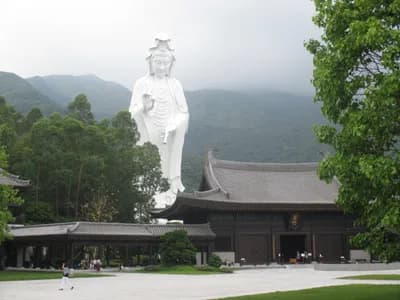
Tsz Shan Monastery commands attention with its 76-meter-tall Guanyin statue, a monumental icon 30% taller than Hong Kong's average temple sculpture and visible across Tolo Harbour. This serene hilltop sanctuary in Tai Po requires an appointment-only visit, limiting daily capacity to just 200 guests, preserving its contemplative atmosphere—a deliberate contrast to the bustling Kwun Yam Temple at Repulse Bay, which welcomes over 500,000 walk-in visitors yearly. The monastery's architectural precision, featuring 12,000 hand-carved stone elements, outshines the coastal complex's mass appeal with a data-led focus on Buddhist artistry.
Frequently Asked Questions About Hong Kong Temples
Which Hong Kong temple is best for first-time visitors? Wong Tai Sin Temple (#2) is the most accessible — it sits directly above Wong Tai Sin MTR station and is open daily at no charge. Man Mo Temple (#1) is the top pick for a quieter, more intimate historic atmosphere in the heart of Sheung Wan.
Do Hong Kong temples charge an admission fee? Most temples — including Man Mo, Wong Tai Sin, and Tin Hau (Yau Ma Tei) — are free to enter. Po Lin Monastery charges for the Tian Tan Buddha platform and its vegetarian restaurant. Tsz Shan Monastery requires a free advance reservation via its official website.
When is the best time to visit in 2026? Weekday mornings offer the fewest crowds year-round. Avoid Che Kung Temple (#7) on the second day of Lunar New Year, when over one million worshippers arrive. The Tin Hau Festival (late April 2026) is an exceptional time to experience Tin Hau temples across Hong Kong.
Sources: [Hong Kong Tourism Board — Temples & Monasteries](https://www.discoverhongkong.com/eng/explore/arts/temples.html) · [Leisure and Cultural Services Department — Historic Buildings](https://www.lcsd.gov.hk/en/heritage/historic/index.html)
Image credits
- Man Mo Temple: Man Mo temples in Hong Kong / Wikipedia
- Wong Tai Sin Temple: Wong Tai Sin Temple (Hong Kong) / Wikipedia
- Chi Lin Nunnery: Chi Lin Nunnery / Wikipedia
- Ten Thousand Buddhas Monastery: Ten Thousand Buddhas Monastery / Wikipedia
- Che Kung Temple: Che Kung Temple / Wikipedia
- Pak Tai Temple (Wan Chai): Wan Chai Pak Tai Temple / Wikipedia
- Kwun Yam Temple (Repulse Bay): Stanley, Hong Kong / Wikipedia
- Tsz Shan Monastery: Tsz Shan Monastery / Wikipedia
Related Videos
Rank it your way
Remix this list into your own ranking, or head to the play hub for every game mode and community breakdown — blind mode, challenges, tier lists, and more.
You Might Also Like

Top 10 Things to Do in Hong Kong
Top 10 Things to Do in Hong Kong

Top 10 Things to Do in Beijing 2026
best things to do in Beijing

Top 10 Most Beautiful Train Journeys in the World
#1 Glacier Express, Switzerland · #2 Rocky Mountaineer, Canada · #3 Trans-Siberian Railway, Russia
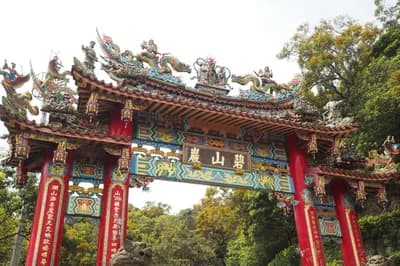
Top 10 Cheapest Ways to Get Around Hong Kong in 2026
#1 Walking · #2 Hong Kong Tramways ("Ding Ding") · #3 Green Minibus (GMB)

Top 10 Natural Wonders of Argentina
#1 Iguazu Falls · #2 Perito Moreno Glacier · #3 Mount Aconcagua

Top 10 Best Family Vacation Destinations 2026
#1 Orlando, Florida, USA · #2 Tokyo, Japan · #3 Costa Rica