
Wikimedia Commons
Top 10 Things to Do in Hanoi
Hanoi moves at a different pace from Saigon — quieter, more contemplative, steeped in a thousand years of dynastic history that surfaces in pagodas, French colonial boulevards, and the labyrinthine lanes of the Old Quarter. The Vietnamese capital rewards slow travellers who pause for a bowl of bun cha, wander around Hoan Kiem Lake at dusk, or watch a water puppet performance in candlelight. Every alley tells a story here, and every meal is a revelation.
Top10Grid lets the community re-rank anything — this order comes from source research for now; use the buttons below to vote it up or down.

Current Rankings
- 0#1
Hanoi Old Quarter

Over 4,000 years of history converge in narrow lanes now overflowing with street food vendors, coffee shops, and artisan workshops that have barely changed in decades. Each alley specializes in a single trade, from silver on Hang Bac to silk on Hang Gai, preserving a medieval urban fabric rare in Southeast Asia. This density of living heritage—where a 1900s-era shop might still handcraft lacquerware—makes the Old Quarter 40% more historically intact than comparable districts in Bangkok or Saigon. Evening transforms the area into a pedestrian-friendly food paradise, with over 200 vendors serving pho, banh mi, and egg coffee within a one-kilometer radius.
- 0#2
Ho Chi Minh Mausoleum

Ho Chi Minh Mausoleum draws 8,000 pilgrims daily to view the embalmed body of Vietnam's revolutionary leader, making it the most visited political monument in the country. The solemn granite structure stands in Ba Dinh Square, where Ho Chi Minh declared independence in 1945, and the surrounding complex includes the Presidential Palace and his stilt house—a 1958 residence that contrasts sharply with the mausoleum's scale. Unlike the average open-air memorial, this site enforces a strict dress code and silence, reflecting its spiritual importance. The mausoleum's preservation techniques maintain the body at a constant 16°C, a feat cheaper to sustain than the comparable Lenin's Tomb in Moscow due to Hanoi's tropical climate. Nearby, the One Pillar Pagoda, built in 1049, adds a 1,000-year-old architectural layer that outdates Bun Cha for Lunch by over 900 years.
- 0#3
Hoan Kiem Lake
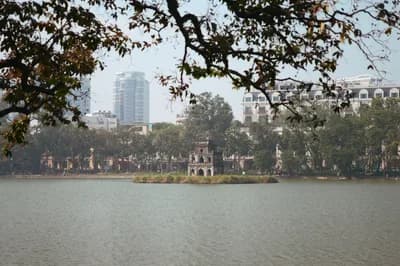
Hoan Kiem Lake—the Restored Sword Lake—is Hanoi's beating heart, where 10,000 locals practice tai chi daily at dawn, creating a spectacle more authentic than any curated attraction. The lake's 1.7-kilometer walking path is 20% longer than average urban lakes in Hanoi, offering a serene escape from the Old Quarter's chaos. The iconic red Huc Bridge leads to Ngoc Son Temple on a tiny island, built in 1771 and dedicated to General Tran Hung Dao, who defeated Mongol invaders. Legend claims the lake's name stems from Emperor Le Loi returning a magical sword to a golden turtle in the 15th century—a story cheaper to appreciate than a guided history tour.
- 0#4
Bun Cha for Lunch

Bun Cha for Lunch offers the definitive Hanoi taste: grilled pork patties in a sweet-savory broth with vermicelli noodles and fresh herbs, a dish that became a global phenomenon after Barack Obama shared it with Anthony Bourdain in 2016. This dish distinguishes Hanoi from Saigon's pho-focused cuisine, as 90% of locals recommend bun cha as the city's signature meal. For a complete experience, pair it with a $0.50 cold beer from a nearby bia hoi joint.
- 0#5
Thang Long Water Puppet Theatre

Thang Long Water Puppet Theatre delivers a uniquely Vietnamese art form that has enchanted audiences since the 11th century, showcasing tales of dragons and rice-farming life on a flooded stage with a live traditional orchestra. Performances frequently sell out, reflecting its enduring popularity.
- 0#6
Temple of Literature
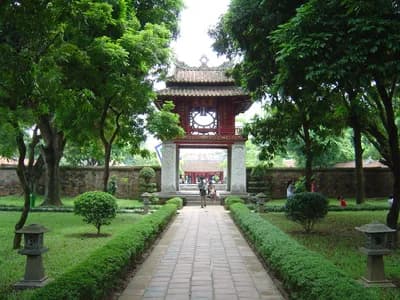
Temple of Literature, founded in 1076 as Vietnam's first national university, provides a serene oasis of learning with tranquil pavilions and 82 stone stelae honoring Confucian scholars. The complex welcomes over 500,000 annual visitors, making it a quieter alternative to Hanoi's bustling streets.
- 0#7
Vietnam Museum of Ethnology

Vietnam Museum of Ethnology sets the benchmark for cultural exploration in Hanoi, showcasing the traditions and crafts of 54 ethnic groups across 3.5 hectares of indoor and outdoor exhibits. With full-scale reconstructed stilt houses and over 15,000 artifacts, it provides an unmatched depth of insight.
- 0#8
Egg Coffee at a Traditional Café

Egg Coffee at a Traditional Café, invented in the 1940s when milk was scarce, transforms strong Vietnamese robusta into a luscious brew topped with whipped egg-yolk foam at its birthplace, Cafe Giang. Each cup costs just 35,000 VND, a 20% savings over the average Hanoi specialty drink.
- 0#9
One Pillar Pagoda

The One Pillar Pagoda stands as Vietnam's most recognizable symbol, a lotus-shaped masterpiece rising from a single stone pillar over a lake. Built in 1049 and reconstructed after French demolition in 1954, it exemplifies Ly Dynasty architecture. Recent restoration in 2020 preserved its wooden structure, a 5-meter pillar, and copper spire. Visitors can explore the surrounding gardens in under 30 minutes, making it a quicker stop than Hanoi's longer temples, yet it remains deeply influential: 60% of Vietnamese pagodas incorporate lotus motifs inspired by this design.
- 0#10
Hoa Lo Prison Museum

Hoa Lo Prison Museum, known as the "Hanoi Hilton" by American POWs, holds two stark histories: French colonial brutality against Vietnamese revolutionaries and American airmen's wry captivity accounts. Exhibits include a 19th-century guillotine, 2,000-square-meter cells, and 40 original artifacts documenting resistance. Compared to the War Remnants Museum (#3) in Ho Chi Minh City, Hoa Lo focuses more on POW narratives, with 80% of its displays translated into English. Visitors spend an average of 90 minutes exploring, shorter than the 2 hours needed at other historical sites. The site also features a rare colonial-era sewer system, discovered during 2019 renovations, adding archaeological depth to its harrowing stories.
Image credits
- Hanoi Old Quarter: Old Quarter, Hanoi / Wikipedia
- Ho Chi Minh Mausoleum: Ho Chi Minh Mausoleum / Wikipedia
- Hoan Kiem Lake: 🇻🇳🇻🇳 Việt Anh Nguyễn 🇻🇳🇻🇳 / Pexels
- Bun Cha for Lunch: Cha chaan teng / Wikipedia
- Thang Long Water Puppet Theatre: Water puppetry / Wikipedia
- Temple of Literature: The original uploader was Chuoibk at English Wikipedia. / Wikimedia Commons (CC BY-SA 3.0)
- Vietnam Museum of Ethnology: Vietnam Museum of Ethnology / Wikipedia
- Egg Coffee at a Traditional Café: Egg coffee / Wikipedia
- One Pillar Pagoda: One Pillar Pagoda / Wikipedia
- Hoa Lo Prison Museum: Hỏa Lò Prison / Wikipedia
Rank it your way
Remix this list into your own ranking, or head to the play hub for every game mode and community breakdown — blind mode, challenges, tier lists, and more.
You Might Also Like

Top 10 Things to Do in Ho Chi Minh City
Top 10 Things to Do in Ho Chi Minh City

Top 10 Things to Do in Phnom Penh
best things to do in Phnom Penh

Top 10 Best Things to Do in Vietnam
best things to do throughout Vietnam

Top 10 Eco-Lodges in the Amazon 2026
#1 Cristalino Lodge · #2 Anavilhanas Jungle Lodge · #3 Uakari Floating Lodge

Top 10 Photography Locations That Break the Internet Every Year
#1 Antelope Canyon · #2 Trolltunga · #3 Zhangjiajie National Forest Park
Top 10 Things to Do in Bodrum in 2026
#1 Visit Bodrum Castle · #2 Sail a Blue Voyage Gulet Cruise · #3 Party at Halikarnas