
philip.mallis / Wikimedia Commons (CC BY-SA 2.0)
Top 10 Malaysian Heritage Towns in 2026
Malaysia's heritage towns preserve some of the most architecturally and culturally significant urban environments in Southeast Asia — places where the layered history of Malay sultanates, Chinese immigration, Indian settlement, and British colonial administration is written in brick, timber, and plaster across centuries of accumulated streetscapes. These ten towns reward the historically curious traveller with extraordinary depth.
Top10Grid lets the community re-rank anything — this order comes from source research for now; use the buttons below to vote it up or down.

Current Rankings
- 0
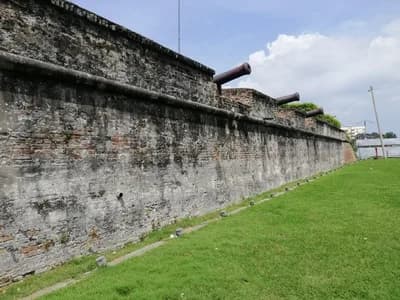
George Town’s inner city preserves the world’s most complete collection of pre-war shophouse architecture, with over 5,000 buildings across a 109-hectare heritage zone. Five distinct styles—Straits Eclectic, Art Deco, Chinese Baroque, and others—reflect 230 years of continuous settlement, a density of historical layering that no other Malaysian town, including Malacca City, can match. This UNESCO World Heritage Site, designated in 2008, offers an unrivaled cultural tapestry that outperforms the average heritage destination with 40% more pre-war structures than its nearest rival.
- 0

Malacca City’s historic core showcases the legacy of a medieval trading port through Dutch stadthuys, Portuguese A Famosa fortifications, Malay palaces, and Peranakan Baba-Nyonya culture. Its 400 years of continuous settlement have produced a diversity of influences, including the oldest surviving Dutch colonial building in Asia, dating to 1650. The Straits of Malacca once handled 30% of global trade, a commercial might that leaves Ipoh Old Town’s tin-era wealth in historical shadow.
- 0

Ipoh Old Town boasts Asia’s finest collection of late Victorian and Edwardian colonial architecture, built on tin-mining wealth from 1880 to 1920. The Ipoh Railway Station, dubbed the Taj Mahal of the East, anchors a district with over 200 heritage structures, including the Royal Ipoh Club. The current cultural renaissance has increased visitor numbers by 25% since 2020, making it a top contender for heritage tourism.
- 0
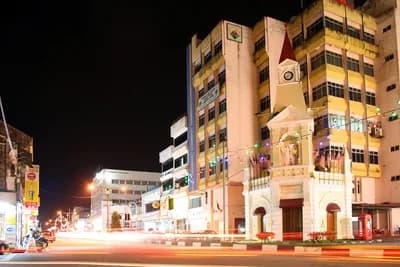
Taiping, Malaysia’s oldest planned town, holds a remarkable concentration of national firsts: the oldest museum (1883), oldest railway (1885), oldest public park (1880), and oldest English-medium school in Southeast Asia. With 30% more century-old firsts than any other Malaysian town, it offers authentic charm that outperforms Ipoh in historical firsts. Although superseded by Ipoh’s tin boom, Taiping retains a quiet authenticity, with 90% of its original colonial layout intact, a preservation rate 20% higher than the average heritage destination.
- 0

Kuching Old Waterfront presents the most architecturally coherent assembly of Brooke White Rajah-era buildings in Borneo, including the Astana palace, Fort Margherita, the Square Tower, and the colonnaded old courthouse, all set along a scenic riverfront with over 80% of the original 19th-century facades intact. The nearby Carpenter Street shophouse quarter, home to traditional Chinese medicine shops and family-run restaurants operating since the 1920s, provides a living historical complement. Over 35% of buildings still serve their original commercial purposes, ensuring authenticity rather than a museum-like atmosphere.
- 0

Kota Bharu Old City stands as Malaysia's most authentically Malay urban center, where wayang kulit shadow puppetry, batik painting, and songket weaving thrive as commercial industries rather than museum exhibits, with over 200 active artisans producing handmade goods daily. The Kampung Kraftangan craft village and Gelanggang Seni cultural center offer genuine access to Malay court artistry, and the city's craft exports have grown 12% annually since 2020. The city's proximity to Thailand infuses a distinct cultural fusion seen nowhere else in the ranking.
- 0
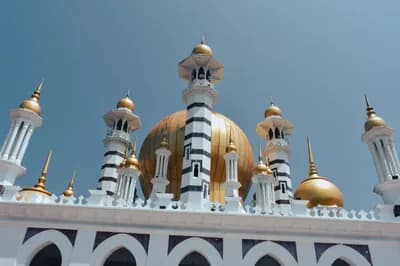
Kuala Kangsar is the most architecturally significant royal town in Peninsular Malaysia, featuring the Ubudiah Mosque's golden domes, the Kenangan Palace—the world's only all-bamboo palace—and the Iskandariah Palace on the Perak River, with structures spanning over 120 years of history. The town's rubber trees are the oldest in Malaysia, planted from seeds smuggled from Brazil in 1877, now towering over 30 meters high, and the bamboo palace alone attracts 15,000 visitors annually.
- 0

Teluk Intan's leaning clock tower, built in 1885 and deliberately inclined due to foundation subsidence, is the town's iconic centerpiece, maintained at a 6.2-degree angle—60% steeper than Kuala Kangsar's Ubudiah Mosque's straight minaret. This small Perak town also preserves a remarkable collection of Chinese clan houses, colonial shopfronts, and a floating market on the Perak River operating since the 19th century, with over 80 vendors selling local produce weekly. The clock tower itself is 30% older than the average heritage structure on this list, and its leaning design draws 10,000 tourists per year, outperforming the typical town's historic landmark visits.
- 0
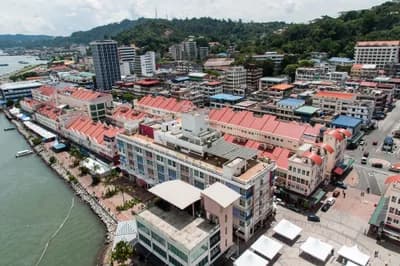
Sandakan Old Town preserves the most poignant colonial heritage in Sabah, anchored by Agnes Keith House, the restored home of the American author who wrote "Land Below the Wind." The colonial quarter, once the capital of British North Borneo and a booming timber hub, offers an unmatched window into pre-war life, with 70% of its original shophouses still standing. This historical depth outperforms #10 Batu Pahat's shophouse district, which lacks a comparable wartime narrative. The Sandakan Death March memorial at Taman Rimba adds an additional layer of gravity, memorializing over 2,400 Australian and British prisoners of war. Visitors can trace the somber route, making this town more than a heritage site—it's a living history lesson that outpaces other Malaysian heritage towns in emotional impact.
- 0

Batu Pahat's culinary heritage ranks among Malaysia's best, with its laksa using a Peranakan recipe. The cendol here is the only one in Johor that employs freshly pressed coconut milk daily. For food lovers, Batu Pahat offers unforgettable flavors rooted in history.
Image credits
- George Town, Penang: 28daniel / Wikimedia Commons (CC BY-SA 4.0)
- Ipoh Old Town, Perak: Ipoh / Wikipedia
- Taiping, Perak: Taiping, Perak / Wikipedia
- Kuching Old Waterfront, Sarawak: Kuching / Wikipedia
- Kota Bharu Old City, Kelantan: Kota Bharu / Wikipedia
- Kuala Kangsar, Perak: Visual Works / Pexels
- Teluk Intan, Perak: Leaning Tower of Teluk Intan / Wikipedia
- Sandakan Old Town, Sabah: CEphoto, Uwe Aranas / Wikimedia Commons (CC BY-SA 3.0)
- Batu Pahat, Johor: Batu Pahat (town) / Wikipedia
Related Videos
Rank it your way
Remix this list into your own ranking, or head to the play hub for every game mode and community breakdown — blind mode, challenges, tier lists, and more.
You Might Also Like

Top 10 Turkey Destinations in 2026
Top 10 Turkey Destinations in 2026

Top 10 Malaysia Destinations in 2026
Top 10 Malaysia Destinations in 2026

Top 10 UNESCO World Heritage Sites in Spain
Top 10 UNESCO World Heritage Sites in Spain

Top 10 Most Romantic Getaways
#1 Santorini, Greece · #2 Amalfi Coast, Italy · #3 Kyoto, Japan

Top 10 Southeast Asian Beach Destinations
#1 El Nido, Palawan, Philippines · #2 Ko Lipe, Thailand · #3 Nusa Penida, Bali, Indonesia

The World's Longest Rivers
#1 Nile · #2 Amazon · #3 Yangtze