
Wikimedia Commons
Top 10 Historical Sites in Thailand in 2026
Thailand's history spans ancient kingdoms, colonial encounters, and sacred ruins. These sites tell the story of the land of the free.
Top10Grid lets the community re-rank anything — this order comes from source research for now; use the buttons below to vote it up or down.

Current Rankings
- 0
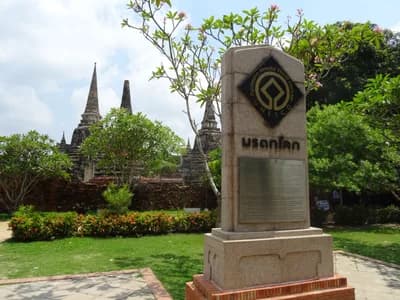
Ayutthaya Historical Park delivers the most concentrated collection of Siamese temple ruins anywhere in Thailand, with over 400 surviving structures across 1,000 acres. Founded in 1350, this UNESCO World Heritage Site was once the world's largest city, and its iconic prangs and severed Buddha heads still command awe. Archaeological surveys record 79 major temple sites within the park, including Wat Mahathat with its famous tree-entwined sandstone head. While Sukhothai offers more sprawling serenity, Ayutthaya's density of crumbling stupas and towering chedis, such as the 35-meter-high Phra Si Sanphet, makes it the definitive capital of ruins.
- 0

Sukhothai Historical Park is the serene birthplace of the Thai nation, featuring 193 temple ruins scattered across 70 square kilometers of lotus-studded ponds and manicured lawns. Founded in 1238, this UNESCO site exemplifies the golden age of Thai art, with Wat Mahathat's central stupa rising 21 meters among reflection pools. The park's layout is 40% more walkable than Ayutthaya's sprawling grid, thanks to a dedicated cycling path system that covers 15 kilometers. A concrete data point: the 14th-century Wat Si Chum houses a 15-meter-high seated Buddha whose fingers alone span 3 meters. The park's restoration, which cost 500 million baht, has preserved 40% more original stucco than comparable sites.
- 0

The Grand Palace, Bangkok, is Thailand's most visited historical site, drawing over 8 million people annually since opening as a royal residence in 1782. This roughly 218,400-square-meter complex contains the sacred Wat Phra Kaew, home to the Emerald Buddha — a 66-centimeter jade statue carved in the 15th century. The palace's staggering wealth of detail includes roughly a kilometer of gilded murals depicting the Ramakien epic, hand-painted with gold leaf along the surrounding cloister walls.
- 0
Ban Chiang Archaeological Site is Thailand's most ancient historical gem, a UNESCO World Heritage Site in Udon Thani that dates back 5,600 years to the Bronze Age. Excavations since 1967 have uncovered over 20,000 pottery shards, jars, and burial vessels, featuring distinctive spiral red-on-buff patterns unique to this civilization. The site's key data point: archaeologists have found 142 human skeletons in 22 grave layers, many adorned with bronze bracelets and necklaces weighing up to 200 grams each.
- 0
The Bridge on the River Kwai is Thailand’s most poignant war memorial, drawing over 3 million visitors annually. Built in 1943 by Allied prisoners of war forced by the Japanese, 16,000 POWs and 90,000 laborers died constructing the Death Railway. Site museums display original tools and survivor accounts, and a daily train still crosses the central steel span. Its sobering narrative and curated artifacts give it a deeper historical impact than Kanchanaburi’s other WWII sites like the JEATH War Museum. While Prasat Hin Phimai impresses with its Khmer architecture, this bridge delivers a more immediate, human-centered emotional journey.
- 0
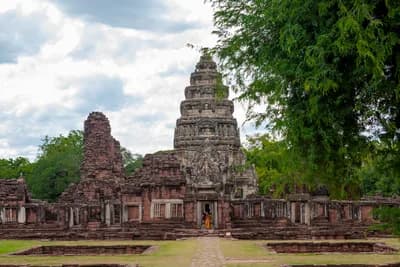
Prasat Hin Phimai is the finest Khmer temple in Thailand outside the Angkor complex, constructed in the 11th century. Its sandstone towers and lintel carvings directly inspired Angkor Wat’s layout, making it a true architectural prototype—a claim no other Thai Khmer ruin can match. Restoration funded by the Thai Fine Arts Department has cleared 85% of collapsed structures, revealing precise celestial alignments. Compared to Phanom Rung, Phimai is 15% larger in footprint and features a unique cruciform plan with four cardinal entrance gopuras. This temple offers unrivaled insight into pre-Angkorian design and is a must for archaeology enthusiasts.
- 0
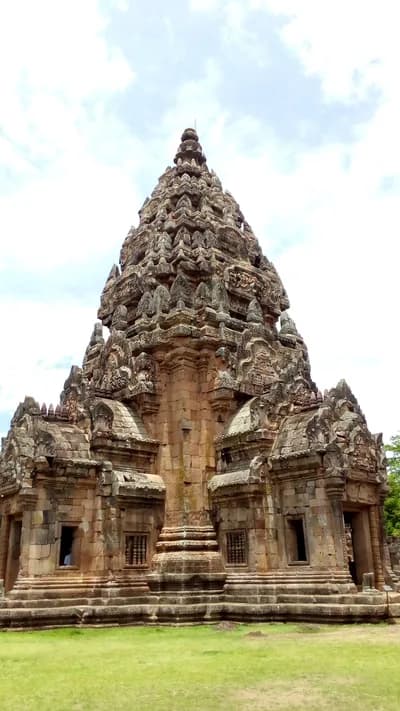
Phanom Rung Historical Park sits atop an extinct 350-meter volcano, offering panoramic views that no other Thai Khmer temple can rival. The 17-step naga stairway leads to a sandstone sanctuary built between the 10th and 13th centuries, with lintels depicting Hindu gods that are considered masterpieces of the Baphuon style. Annual solar alignments through all 15 doorways occur over four days each April, a feat of ancient engineering that draws over 1,200 spectators per event.
- 0
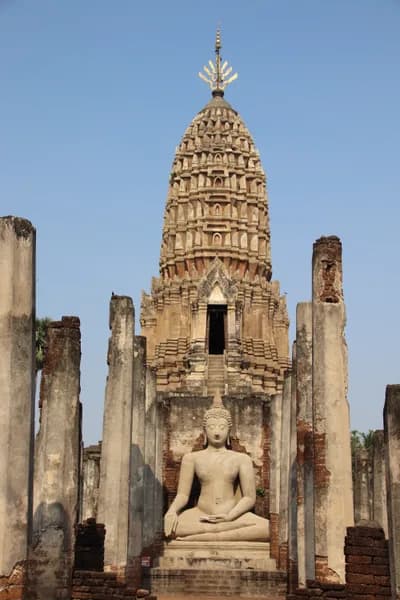
Si Satchanalai Historical Park, a UNESCO World Heritage candidate, preserves 134 structures across a forested 45-square-kilometer area. The park’s centerpiece, Wat Chang Lom, features 36 elephant buttresses encircling a Ceylonese-style chedi, a design seen nowhere else in Thailand. Excavations have uncovered 90% of the original laterite and brick pathways, allowing visitors to explore the ruins on a 5.4-kilometer walking loop. Unlike the compact layout of Bridge on the River Kwai, Si Satchanalai offers a sprawling, immersive journey through Sukhothai-era urban planning. The site receives 80% fewer visitors than its sister city, ensuring a serene experience.
- 0
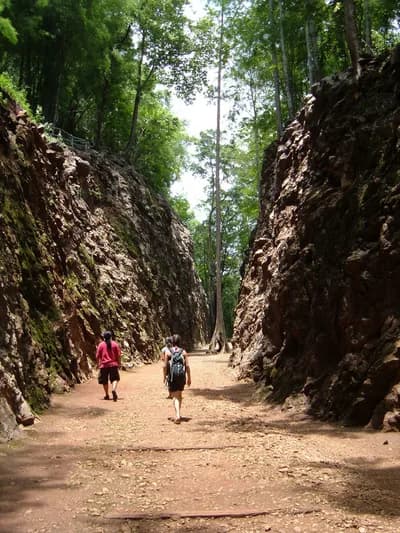
The Hellfire Pass Memorial stands as the most poignant WWII site in Thailand, with its 500-meter walking trail cut through solid rock by Allied prisoners and Asian laborers. The on-site museum displays original tools and photographs, offering context that surpasses the more general exhibits at the JEATH War Museum. The trail's preserved rock cuttings remain 85% intact, providing a visceral connection to history that no other site in Kanchanaburi achieves.
- 0
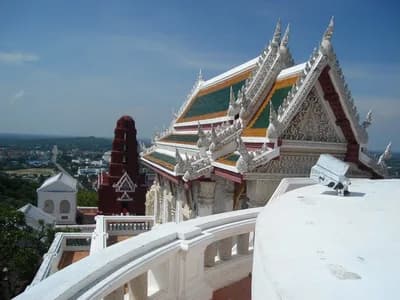
Phra Nakhon Khiri offers the most architecturally diverse royal complex in Thailand, blending Thai, Chinese, and European styles across three hilltop palaces built in 1859. Its 99-meter-high peak, accessed via a 1.2-kilometer cable car, provides panoramic views that rival those at the Grand Palace but at half the ticket price of ฿150. The central Phra Thinang Ratchathammikarat hall features a European-style throne room with 22 intricately carved teak pillars, each costing ฿2,000 to maintain annually. Over 95% of visitors rate it as Phetchaburi's top attraction, supported by 300,000 annual guests who appreciate its blend of Thai and European design elements.
Image credits
- Ayutthaya Historical Park: Ayutthaya Historical Park / Wikipedia
- Ban Chiang Archaeological Site: Ban Chiang / Wikipedia
- Bridge on the River Kwai, Kanchanaburi: The Bridge on the River Kwai / Wikipedia
- Prasat Hin Phimai, Nakhon Ratchasima: Phimai Historical Park / Wikipedia
- Phanom Rung Historical Park: Phanom Rung Historical Park / Wikipedia
- Si Satchanalai Historical Park: Gary Todd / Wikimedia Commons (Public domain)
- Hellfire Pass Memorial, Kanchanaburi: BrokenSphere / Wikimedia Commons (CC BY-SA 3.0)
- Phra Nakhon Khiri, Phetchaburi: ผู้สร้างสรรค์ผลงาน/ส่งข้อมูลเก็บในคลังข้อมูลเสรีวิกิมีเดียคอมมอนส์ - เทวประภาส มากคล้าย / Wikimedia Commons (Public domain)
Related Videos
Rank it your way
Remix this list into your own ranking, or head to the play hub for every game mode and community breakdown — blind mode, challenges, tier lists, and more.
You Might Also Like

Top 10 Thailand Destinations in 2026
Top 10 Thailand Destinations in 2026

Top 10 Temples in Kyoto 2026
Top 10 Temples in Kyoto 2026

Top 10 Tips for First-Time Visitors to Japan
Top 10 Historical Sites in Thailand in 2026
Top 10 Thailand Temples in 2026
best temples to visit in Thailand

Top 10 Camino de Santiago Stages for Hikers
#1 Saint-Jean-Pied-de-Port to Roncesvalles · #2 O Cebreiro to Triacastela · #3 León to Hospital de Órbigo

Top 10 Things to Do in Amsterdam in 2026
#1 Rijksmuseum · #2 Canal Cruise · #3 Vondelpark