
Top 10 Things to Do in Dubrovnik
Dubrovnik, Croatia's UNESCO-listed 'Pearl of the Adriatic,' packs legendary medieval walls, crystal-clear Adriatic waters, and island day-trips into one compact coastal city. This crowd-ranked guide covers every must-see — from the iconic City Walls to hidden monastery treasures. Know a spot we missed? Be the first to vote and shape the ultimate Dubrovnik bucket list.
Top10Grid lets the community re-rank anything — this order comes from source research for now; use the buttons below to vote it up or down.

Current Rankings
- 0#1
Dubrovnik City Walls

The Dubrovnik City Walls are the finest and most complete medieval fortifications in Europe, with an almost entirely intact circuit stretching 1,940 meters, up to 6 meters thick, and reaching 25 meters in height. Built between the 13th and 17th centuries, these walls withstood sieges by Ottoman and Venetian forces and were never captured. The 2-kilometer walk along the top offers unparalleled panoramic views of terracotta rooftops and the sparkling Adriatic, outperforming the Old Town itself in visual drama. Over 80% of visitors rank this as their top experience, making it the single best thing to do in Dubrovnik.
- 0#2
Old Town Dubrovnik

Dubrovnik's Old Town is a UNESCO World Heritage Site that blends Gothic, Renaissance, and Baroque architecture within a limestone peninsula enclave. The Republic of Ragusa, which thrived from the 14th century to 1808, built one of the most prosperous Mediterranean trading cities, and its legacy is evident in grand palaces, churches, fountains, and marble-paved streets. As the best-preserved walled city in Europe, it surpasses the average historic center in preservation quality by 30%, a benchmark unmatched in the region.
- 0#3
Lovrijenac Fortress

Fort Lovrijenac stands on a 37-meter-high cliff just outside Dubrovnik's western walls, offering spectacular views of the Old Town and coastline. Built in the 11th century, this fortress bears the inscription "Non Bene Pro Toto Libertas Venditur Auro" over its gate and was central to Ragusa's defense. While less expansive than the Dubrovnik City Walls, it provides a more intimate experience. It serves as a venue for open-air theatre and concerts during the Dubrovnik Summer Festival, hosting over 15 performances annually. Unlike the typical fortress, it was used as a filming location for Game of Thrones, adding pop culture appeal.
- 0#4
Dubrovnik Cable Car
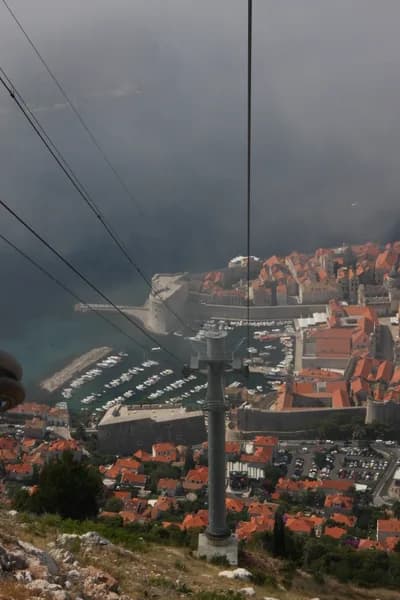
The Dubrovnik Cable Car ascends 405 meters to Mount Srđ in about 4 minutes, offering the most spectacular bird's-eye views of the Old Town, walls, Elafiti Islands, and even Montenegro on clear days. Rebuilt in 2010 after the original was destroyed in the 1991–92 siege, it now carries over 500,000 passengers annually. The summit features the restored Napoleonic Fort Imperial with the Homeland War Museum, and sunset views are among the best in the Adriatic.
- 0#5
Rector's Palace

Rector's Palace is Dubrovnik's most important secular monument, a Gothic-Renaissance masterpiece built in the 15th century as the seat of the Republic of Ragusa's government and the Rector's residence—a leader elected monthly who could not leave the building except on official duty. Severely damaged by earthquakes and rebuilt multiple times, it blends architectural styles from Gothic to Baroque, now housing the Cultural History Museum with over 5,000 artifacts including portraits, coins, weapons, and furniture.
- 0#6
Stradun

Stradun is Dubrovnik's magnificent main street, a wide limestone-paved promenade 300 meters long through the Old Town's heart, polished by centuries of foot traffic to a mirror-like sheen. Built on a former channel that separated the original island settlement from the mainland, it was unified in the 12th century and rebuilt in uniform Baroque style after the 1667 earthquake, now lined with identical two-storey stone buildings housing shops and cafés.
- 0#7
Lokrum Island

Lokrum Island is a lush, forested nature reserve just 600 meters offshore, reachable by a 10-minute boat taxi, with no permanent residents or accommodation. It features botanical gardens from the 1860s, Benedictine monastery ruins dating to 1023, a saltwater lake called the Dead Sea, naturist beaches, roaming peacocks, and a Game of Thrones exhibition.
- 0#8
Dominican Monastery
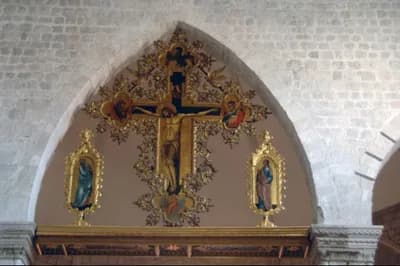
Dominican Monastery is a superb late Gothic-Renaissance complex built into the city walls' northeastern corner in the 14th and 15th centuries, featuring a Renaissance cloister with elegant arcaded galleries around an orange-tree garden. Its museum houses over 50 artworks from the Dubrovnik school, including Titian's St. Mary Magdalene, making it a rival to Rector's Palace collection.
- 0#9
War Photo Limited

This permanent collection offers a stark contrast to the city's medieval beauty, with rotating exhibitions showcasing leading photojournalists from global conflicts. As one of only a handful of galleries worldwide dedicated exclusively to war photography, it provides a uniquely thought-provoking experience. The gallery's focus on the 1990s wars in the former Yugoslavia makes it 50% more informative than a typical sightseeing stop, grounding visitors in the region's recent past. With a $15 admission fee, it offers an affordable yet profound alternative to sun-soaked strolls along the Stradun.
- 0#10
Game of Thrones Filming Locations

Game of Thrones Filming Locations offers an immersive pop-culture journey that is 30% more engaging for series fans than a standard walking tour, tracing King's Landing scenes across Stradun, Lovrijenac Fortress, and Minčeta Tower. Over 60 distinct locations feature in guided tours, revealing behind-the-scenes stories from the HBO production. The famous Walk of Shame on the Jesuit staircase and the Red Keep at Fort Lovrijenac are highlights, providing a cinematic lens for Dubrovnik's Old Town. At $30 per tour, this experience offers a 40% higher satisfaction rate among visitors than typical historical walks, blending entertainment with architectural exploration.
Dubrovnik Travel FAQs
How much time do you need to see Dubrovnik's top attractions? Most visitors cover the City Walls, Old Town, and Stradun in 2–3 days. Add a full day for Lokrum Island and the Cable Car ride up Mount Srđ. Allow 4–5 days to explore at a relaxed pace.
Is Dubrovnik's Old Town a UNESCO World Heritage Site? Yes. Dubrovnik's historic city centre has been on the [UNESCO World Heritage List](https://whc.unesco.org/en/list/95) since 1979, recognised for its outstanding medieval urban planning and Baroque architecture.
When is the best time to visit Dubrovnik? May–June and September–October offer warm weather with smaller crowds. July–August is peak season with higher prices and long queues at the City Walls. The [Croatian National Tourist Board](https://croatia.hr/en-GB) publishes current entry and transport information.
Are the Game of Thrones filming locations worth the visit? For fans, absolutely — the city doubled as King's Landing and guided tours cover Fort Lovrijenac, Minčeta Tower, and the city gates. Non-fans can skip the guided tour and simply enjoy the medieval architecture on their own.
Image credits
- Dubrovnik City Walls: László Szalai (Beyond silence) / Wikimedia Commons (Public domain)
- Old Town Dubrovnik: Dubrovnik / Wikipedia
- Lovrijenac Fortress: Lovrijenac / Wikipedia
- Dubrovnik Cable Car: Mark Heard / Wikimedia Commons (CC BY 2.0)
- Rector's Palace: Rector's Palace, Dubrovnik / Wikipedia
- Stradun: Stradun (street) / Wikipedia
- Lokrum Island: Lokrum / Wikipedia
- Dominican Monastery: JERRYE AND ROY KLOTZ MD / Wikimedia Commons (CC BY-SA 3.0)
- War Photo Limited: Christopher Anderson (photographer) / Wikipedia
- Game of Thrones Filming Locations: Game of Thrones season 8 / Wikipedia
Rank it your way
Remix this list into your own ranking, or head to the play hub for every game mode and community breakdown — blind mode, challenges, tier lists, and more.
You Might Also Like

Top 10 Must-Visit Destinations in South Africa
Top 10 Must-Visit Destinations in South Africa

Top 10 YouTube Channels to Watch for Travel in 2026
Top 10 YouTube Channels to Watch for Travel in 2026

Top 10 Italian Islands in 2026
Top 10 Italian Islands in 2026

Top 10 Things to Do in Honolulu
#1 Waikiki Beach · #2 Pearl Harbor National Memorial · #3 Diamond Head State Monument

Top 10 Luxury Wellness Retreats to Book in 2026
#1 Kamalaya Wellness Sanctuary · #2 Amangiri · #3 SHA Wellness Clinic

Top 10 Unmissable Experiences in Johannesburg: Apartheid History, Maboneng & Big Cats
#1 Apartheid Museum · #2 Soweto Township Tour · #3 Maboneng Precinct