Mexico City is one of the world's great megalopolises, blending Aztec ruins, colonial grandeur, world-class museums, and a street food scene that rivals any on Earth. The capital pulses with creative energy from its art galleries and murals to its buzzing neighborhoods and floating gardens of Xochimilco. Few cities offer such a dense concentration of history, culture, and culinary adventure.
Top 10 lists about this destination
Curated by our travel editors. Lived-experience picks weighted by community vote — updated as travelers report back.

Teotihuacan, just 50 kilometres northeast of Mexico City, was once the largest city in the pre-Columbian Americas and at its height around 450 AD housed over 200,000 people in a grid city stretching 83 square kilometres. The Avenue of the Dead connects the Pyramid of the Moon in the north to the massive Pyramid of the Sun — the third-largest pyramid in the world — and the Temple of the Feathered Serpent. Climbing the Pyramid of the Sun at sunrise, when tour crowds have yet to arrive, delivers one of the most awe-inspiring moments available to any traveller.

The Frida Kahlo Museum, universally known as La Casa Azul (The Blue House), is the vivid cobalt-blue home in the Coyoacan neighbourhood where Mexico's most celebrated artist was born in 1907, lived much of her life with muralist Diego Rivera, and died in 1954. The museum preserves her studio, her kitchen tiled with Talavera pottery, her medical corsets, pre-Hispanic artefacts, and a remarkable collection of her personal effects exactly as she left them. Her ashes are kept in a Olmec-style funerary urn on her bedroom dresser, making it one of the most intimate artist memorials in the world.

Chapultepec Castle crowns a 60-metre basalt hill in the heart of Chapultepec Park and is the only castle in the Americas ever to have served as the official residence of a reigning monarch — Emperor Maximilian I of Mexico, 1864–1867. Today it houses the National Museum of History with extraordinary collections of colonial paintings, Aztec stone carvings, and Murillo murals depicting Mexico's revolutionary history across 30 rooms. The terrace views over the park and the skyscrapers of Reforma are among the finest urban vistas in Latin America.

The Zocalo — officially Plaza de la Constitucion — is one of the largest public squares on Earth, covering nearly 46,000 square metres at the heart of the historic centre and surrounded by the Metropolitan Cathedral, the National Palace, and the ruins of the great Aztec ceremonial centre Templo Mayor. Built atop Tenochtitlan, the capital of the Aztec empire, it has served as Mexico's political and religious nerve centre since the 16th century. On national holidays the plaza fills with hundreds of thousands of people, making it the symbolic heartbeat of Mexican national identity.

Xochimilco is the last surviving remnant of the vast Aztec chinampas system — a network of floating gardens and artificial islands built in the shallow lakes of the Valley of Mexico that once fed Tenochtitlan's 300,000 inhabitants. Today visitors hire brightly decorated flat-bottomed trajinera boats to cruise the 180-kilometre canal system, buying food and drinks from floating vendors while mariachi bands paddle alongside. UNESCO inscribed Xochimilco as a World Heritage Site in 1987, recognising both its ecological significance and its role as a living cultural artefact.

The National Museum of Anthropology in Chapultepec Park is widely regarded as the greatest archaeology museum in the Western Hemisphere, housing the world's largest collection of pre-Columbian artefacts across 23 permanent exhibition rooms covering over 44,000 square metres. Its centrepiece is the legendary Aztec Sun Stone (popularly but incorrectly called the Aztec Calendar), a 24-tonne carved basalt disc discovered beneath the Zocalo in 1790. The museum's 1964 building by Pedro Ramírez Vázquez, with its signature 84-column umbrella canopy over a central reflecting pool, is itself a masterpiece of modernist architecture.

The Palacio de Bellas Artes is Mexico City's premier cultural venue and one of the most spectacular buildings in Latin America — a 1934 eclectic structure blending Italian Carrara marble Art Nouveau exteriors with an Art Deco interior that houses murals by Diego Rivera, Jose Clemente Orozco, David Alfaro Siqueiros, and Rufino Tamayo. The marble stage curtain made from millions of Tiffany glass tesserae depicting the Valley of Mexico with its two volcanoes took 22 years to complete. The Ballet Folklorico de Mexico has performed its celebrated programme of regional dance traditions on the Bellas Artes stage since 1952.

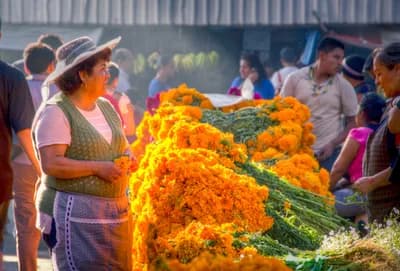
Mercado de Jamaica is Mexico City's largest and most extraordinary flower market, operating 24 hours a day and selling millions of flowers, potted plants, flower crowns, and elaborate floral arrangements across hundreds of stalls spread over a vast covered hall in the Venustiano Carranza neighbourhood. The market supplies florists, hotels, and restaurants across the capital and the wholesale activity peaks between midnight and 5am when trucks unload fresh cargo from across the country. It is also the best place in the city to buy Day of the Dead marigold arrangements and traditional floral offerings for Catholic altars.

Roma Norte is Mexico City's most fashionable neighbourhood, an early-20th-century residential district of French Second Empire mansions and Art Nouveau apartment blocks where Porfirian-era grandeur has been reclaimed by independent coffee shops, natural wine bars, design studios, and taquerias so good they attract pilgrims from across Latin America. The neighbourhood shot to global fame after Alfonso Cuaron filmed his Oscar-winning movie Roma here in 2018, and the tide of creative gentrification that followed has made it the cultural benchmark for the entire city. Its Sunday farmers market and gallery weekends give it an intensely livable neighbourhood energy.

Attending a lucha libre match at Arena Mexico, the sport's spiritual home since 1956, is one of the most electrifying spectacles available in any city on Earth — a high-flying acrobatic combat sport performed by masked wrestlers called luchadores in front of fanatical crowds that shout, sing, and wave flags in a carnival atmosphere. The masks worn by luchadores are sacred objects representing the fighter's identity, and losing one's mask in a "mask vs. mask" stakes bout is the sport's most dramatic and emotionally charged event. Arena Mexico hosts shows most Fridays and Sundays with a dozen bouts per card, and tourists can buy beautifully crafted wrestler masks outside as souvenirs.
The most-voted lists across every category — curated weekly. Join the early readers.
No spam. One email per week. Unsubscribe anytime.


Create a free account or sign in to join the discussion.
Sign in to join the conversation
Top 10 Budget Summer Travel Destinations Under $75 Per Night in 2026
Travel Books That Make You Book a Plane Ticket
Top 10 Hotels in Hong Kong 2026Explore more Travel rankings on Top10Grid

Teotihuacan, just 50 kilometres northeast of Mexico City, was once the largest city in the pre-Columbian Americas and at its height around 450 AD housed over 200,000 people in a grid city stretching 83 square kilometres. The Avenue of the Dead connects the Pyramid of the Moon in the north to the massive Pyramid of the Sun — the third-largest pyramid in the world — and the Temple of the Feathered Serpent. Climbing the Pyramid of the Sun at sunrise, when tour crowds have yet to arrive, delivers one of the most awe-inspiring moments available to any traveller.

The Frida Kahlo Museum, universally known as La Casa Azul (The Blue House), is the vivid cobalt-blue home in the Coyoacan neighbourhood where Mexico's most celebrated artist was born in 1907, lived much of her life with muralist Diego Rivera, and died in 1954. The museum preserves her studio, her kitchen tiled with Talavera pottery, her medical corsets, pre-Hispanic artefacts, and a remarkable collection of her personal effects exactly as she left them. Her ashes are kept in a Olmec-style funerary urn on her bedroom dresser, making it one of the most intimate artist memorials in the world.

Chapultepec Castle crowns a 60-metre basalt hill in the heart of Chapultepec Park and is the only castle in the Americas ever to have served as the official residence of a reigning monarch — Emperor Maximilian I of Mexico, 1864–1867. Today it houses the National Museum of History with extraordinary collections of colonial paintings, Aztec stone carvings, and Murillo murals depicting Mexico's revolutionary history across 30 rooms. The terrace views over the park and the skyscrapers of Reforma are among the finest urban vistas in Latin America.

The Zocalo — officially Plaza de la Constitucion — is one of the largest public squares on Earth, covering nearly 46,000 square metres at the heart of the historic centre and surrounded by the Metropolitan Cathedral, the National Palace, and the ruins of the great Aztec ceremonial centre Templo Mayor. Built atop Tenochtitlan, the capital of the Aztec empire, it has served as Mexico's political and religious nerve centre since the 16th century. On national holidays the plaza fills with hundreds of thousands of people, making it the symbolic heartbeat of Mexican national identity.

Xochimilco is the last surviving remnant of the vast Aztec chinampas system — a network of floating gardens and artificial islands built in the shallow lakes of the Valley of Mexico that once fed Tenochtitlan's 300,000 inhabitants. Today visitors hire brightly decorated flat-bottomed trajinera boats to cruise the 180-kilometre canal system, buying food and drinks from floating vendors while mariachi bands paddle alongside. UNESCO inscribed Xochimilco as a World Heritage Site in 1987, recognising both its ecological significance and its role as a living cultural artefact.

The National Museum of Anthropology in Chapultepec Park is widely regarded as the greatest archaeology museum in the Western Hemisphere, housing the world's largest collection of pre-Columbian artefacts across 23 permanent exhibition rooms covering over 44,000 square metres. Its centrepiece is the legendary Aztec Sun Stone (popularly but incorrectly called the Aztec Calendar), a 24-tonne carved basalt disc discovered beneath the Zocalo in 1790. The museum's 1964 building by Pedro Ramírez Vázquez, with its signature 84-column umbrella canopy over a central reflecting pool, is itself a masterpiece of modernist architecture.

The Palacio de Bellas Artes is Mexico City's premier cultural venue and one of the most spectacular buildings in Latin America — a 1934 eclectic structure blending Italian Carrara marble Art Nouveau exteriors with an Art Deco interior that houses murals by Diego Rivera, Jose Clemente Orozco, David Alfaro Siqueiros, and Rufino Tamayo. The marble stage curtain made from millions of Tiffany glass tesserae depicting the Valley of Mexico with its two volcanoes took 22 years to complete. The Ballet Folklorico de Mexico has performed its celebrated programme of regional dance traditions on the Bellas Artes stage since 1952.

Mercado de Jamaica is Mexico City's largest and most extraordinary flower market, operating 24 hours a day and selling millions of flowers, potted plants, flower crowns, and elaborate floral arrangements across hundreds of stalls spread over a vast covered hall in the Venustiano Carranza neighbourhood. The market supplies florists, hotels, and restaurants across the capital and the wholesale activity peaks between midnight and 5am when trucks unload fresh cargo from across the country. It is also the best place in the city to buy Day of the Dead marigold arrangements and traditional floral offerings for Catholic altars.

Roma Norte is Mexico City's most fashionable neighbourhood, an early-20th-century residential district of French Second Empire mansions and Art Nouveau apartment blocks where Porfirian-era grandeur has been reclaimed by independent coffee shops, natural wine bars, design studios, and taquerias so good they attract pilgrims from across Latin America. The neighbourhood shot to global fame after Alfonso Cuaron filmed his Oscar-winning movie Roma here in 2018, and the tide of creative gentrification that followed has made it the cultural benchmark for the entire city. Its Sunday farmers market and gallery weekends give it an intensely livable neighbourhood energy.

Attending a lucha libre match at Arena Mexico, the sport's spiritual home since 1956, is one of the most electrifying spectacles available in any city on Earth — a high-flying acrobatic combat sport performed by masked wrestlers called luchadores in front of fanatical crowds that shout, sing, and wave flags in a carnival atmosphere. The masks worn by luchadores are sacred objects representing the fighter's identity, and losing one's mask in a "mask vs. mask" stakes bout is the sport's most dramatic and emotionally charged event. Arena Mexico hosts shows most Fridays and Sundays with a dozen bouts per card, and tourists can buy beautifully crafted wrestler masks outside as souvenirs.

Top 10 Best Cities in the World to Live In 2026 — Quality of Life Ranked and Explained
206 views · @admin

Top 10 Thailand Temples in 2026
77 views · @admin
Top 10 Most Spectacular Waterfalls in the World
52 views · @admin

Top 10 Things to Do in Bangkok in 2026
41 views · @admin

Top 10 Best Solo Travel Destinations
40 views · @admin
Top 10 Things to Do in Mexico City 2026
40 views · @admin
Because you're viewing Travel
Top 10 Latin American Travel Destinations
140 views · 0 votes

Top 10 Budget Summer Travel Destinations Under $75 Per Night in 2026
133 views · 0 votes

Travel Books That Make You Book a Plane Ticket
124 views · 1 votes

Top 10 Hotels in Hong Kong 2026
123 views · 0 votes

Top 10 Best Christmas Markets in Europe
115 views · 0 votes

Top 10 Best Beaches in the World
112 views · 0 votes