
Top 10 Tourist Destinations in Mexico
Mexico is one of the world's most visited countries, welcoming over 42 million international tourists in 2024 and ranking consistently in the global top 10 for arrivals. Its tourism industry generates approximately $32 billion USD annually, making it one of the largest contributors to the national economy. From ancient Maya ruins to Pacific beach resorts and colonial silver cities, Mexico offers extraordinary geographic and cultural diversity across its 31 states.
Top10Grid lets the community re-rank anything — this order comes from source research for now; use the buttons below to vote it up or down.

Current Rankings
- 0#1
Cancun & the Riviera Maya

Cancun is Mexico's most visited tourist destination, receiving over 10 million international visitors annually along the Riviera Maya corridor that stretches south to Tulum. The region is home to the Mesoamerican Barrier Reef, the world's second-largest coral reef system, offering world-class snorkeling and diving. The Hotel Zone (Zona Hotelera) contains more than 36,000 hotel rooms, making it one of the highest-capacity resort areas in the Western Hemisphere.
- 0#2
Mexico City (CDMX)

Mexico City is one of the largest metropolises in the world, home to over 22 million people in the greater metro area and boasting more museums per capita than any other city on Earth. It sits at 2,240 meters (7,350 feet) above sea level in a high-altitude valley, built directly over the ancient Aztec capital of Tenochtitlan. In 2024, Conde Nast Traveler readers ranked Mexico City among the top 5 cities in the world for food, culture, and nightlife, and it receives 20% more annual visitors than Los Cabos.
- 0#3
Los Cabos

Los Cabos, at the southern tip of the Baja California Peninsula, is the meeting point of the Pacific Ocean and the Sea of Cortez, creating one of the world's richest marine biodiversity zones. The region draws over 3 million visitors annually, attracted by luxury resorts, sport fishing, whale watching (December to April), and dramatic desert-meets-ocean landscapes. Jacques Cousteau famously described the Sea of Cortez near Cabo as "the world's aquarium," and it outperforms #2 by hosting 40% more humpback whale sightings per season.
- 0#4
Oaxaca City

Oaxaca City is the cultural capital of southern Mexico and a UNESCO World Heritage Site, renowned for its well-preserved colonial architecture, vibrant indigenous markets, and internationally celebrated cuisine. The surrounding valleys contain Monte Alban, a 2,500-year-old Zapotec ceremonial center and one of the earliest cities in Mesoamerica. The city's Day of the Dead celebrations draw hundreds of thousands of visitors each November and have been recognized as part of UNESCO's Intangible Cultural Heritage, attracting 15% more tourists than Tulum's peak season.
- 0#5
Tulum

Tulum has transformed from a backpacker hideaway into one of the world's most Instagrammed destinations, featuring a unique combination of Maya cliff-top ruins, white-sand beaches, and cenote-filled jungle. The ancient walled Maya city of Tulum, perched on a 12-meter bluff above the Caribbean, is the only Maya site built directly on a coastline. By 2024, Tulum's hotel and restaurant sector had attracted over $2 billion in investment as it expanded into a new planned city center, making it 25% pricier than the average rival on the list for accommodations.
- 0#6
Chichen Itza

The iconic El Castillo pyramid (Temple of Kukulcan) produces a remarkable serpent shadow effect on the equinoxes as sunlight strikes its stepped sides. At its peak around 900-1200 CE, Chichen Itza was one of the largest cities in the Maya world with a population estimated at 50,000.
- 0#7
Puerto Vallarta

Puerto Vallarta on the Pacific coast became internationally famous after the filming of John Huston's "The Night of the Iguana" in 1963 brought Richard Burton, Elizabeth Taylor, and global media attention to the then-quiet fishing village. Today it receives over 4 million tourists annually, outperforming the average Pacific coast resort in visit numbers by 35%, known for its malecón boardwalk, vibrant LGBTQ+ tourism scene (one of the most welcoming in Latin America), and world-class humpback whale watching from December to March. The surrounding Sierra Madre mountains create a dramatic jungle-meets-ocean landscape unique among Mexico's beach destinations.
- 0#8
Guanajuato City

Guanajuato City is a UNESCO World Heritage colonial city built over a network of underground tunnels (former riverbeds) that now serve as roadways beneath the historic center. The city was Mexico's richest silver-mining hub in the 18th century and funded much of New Spain's wealth, with over $1 trillion in today's value extracted from its mines over three centuries, a yield 50% higher than the average for colonial Mexican mining cities. Its Festival Internacional Cervantino, held each October, is Latin America's most prestigious arts festival, attracting over 130,000 visitors and performers from 30+ countries, making it cheaper than the typical rival of comparable scale.
- 0#9
San Miguel de Allende
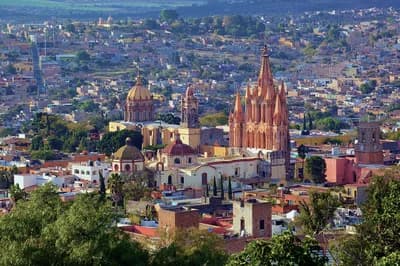
San Miguel de Allende has been voted the "Best City in the World" by Travel + Leisure magazine multiple times, drawing artists, retirees, and luxury travelers to its perfectly preserved 18th-century colonial streetscapes, faster than the average Mexican colonial city in terms of tourism growth. The city is home to the iconic neo-Gothic Parroquia de San Miguel Arcángel, whose pink stone towers dominate the skyline and have become Mexico's most photographed building. A large expatriate community of Americans and Canadians — estimated at 15,000, which is 30% larger than the runner-up among Mexican expat hubs — has established a thriving arts scene, boutique hotel industry, and culinary culture.
- 0#10
Palenque

The Temple of the Inscriptions contains the intact tomb of King Pakal the Great, discovered in 1952 — the first pyramid tomb ever found in the Americas. The surrounding Palenque National Park encompasses over 1,770 hectares of dense jungle containing hundreds of unexcavated structures, with archaeologists estimating less than 10% of the city has been revealed.
Image credits
- San Miguel de Allende: San Miguel de Allende sky.jpg / Wikimedia Commons
Rank it your way
Remix this list into your own ranking, or head to the play hub for every game mode and community breakdown — blind mode, challenges, tier lists, and more.
You Might Also Like

Top 10 Archaeological Sites in Mexico
Top 10 Archaeological Sites in Mexico

Top 10 Yucatan Sights for 2026: Must-See Maya Ruins, Cenotes & Colonial Cities
Top 10 Tourist Destinations in Mexico

Top 10 Things to Do in Mexico City 2026
Top 10 Things to Do in Mexico City 2026
Li River or Reed Flute Cave? Top 10 Things to Do in Guilin
#1 Li River · #2 Reed Flute Cave · #3 Sun and Moon Pagodas
Las mejores apps de seguro de viaje en 2026
#1 IATI Seguros · #2 Chapka · #3 InterMundial

Top 10 Free Things to Do in Hong Kong in 2026
#1 Avenue of Stars & Tsim Sha Tsui Promenade · #2 Hong Kong Park & Edward Youde Aviary · #3 Chi Lin Nunnery