
Top 10 Archaeological Sites in Mexico
Mexico contains one of the richest concentrations of pre-Columbian civilizations on Earth, encompassing the Olmec, Maya, Zapotec, Mixtec, Toltec, and Aztec cultures spanning 4,000 years of continuous urban development. The country has 35 UNESCO World Heritage Sites — 8 of which are archaeological zones — and INAH (National Institute of Anthropology and History) administers over 190 officially protected archaeological zones open to the public. In 2024, the Maya Train (Tren Maya) rail project opened access to several previously remote Yucatan and Chiapas sites, driving a 23% increase in visits to archaeological zones.
Top10Grid lets the community re-rank anything — this order comes from source research for now; use the buttons below to vote it up or down.

Current Rankings
- 0#1
Teotihuacan

Teotihuacan houses the third-largest pyramid by volume on Earth, the Pyramid of the Sun, which reaches 65 meters and contains around 1 million cubic meters of fill. At its zenith between 100-550 CE, this metropolis 50 km northeast of Mexico City supported an estimated 125,000-200,000 people, rivaling the largest ancient cities globally. The ethnic identity and language of its founders remain unknown, adding an enduring layer of mystery.
- 0#2
Chichen Itza

Chichen Itza, Mexico's most-visited archaeological site, attracts over 2.5 million visitors annually and is a New Seven Wonder of the World. Its iconic El Castillo pyramid precisely encodes the Maya solar calendar: each of four staircases contains 91 steps, totaling 365 with the top platform, matching the solar year exactly. The Great Ball Court, at 168 meters in length, is the largest in Mesoamerica and generates extraordinary acoustic echoes.
- 0#3
Palenque
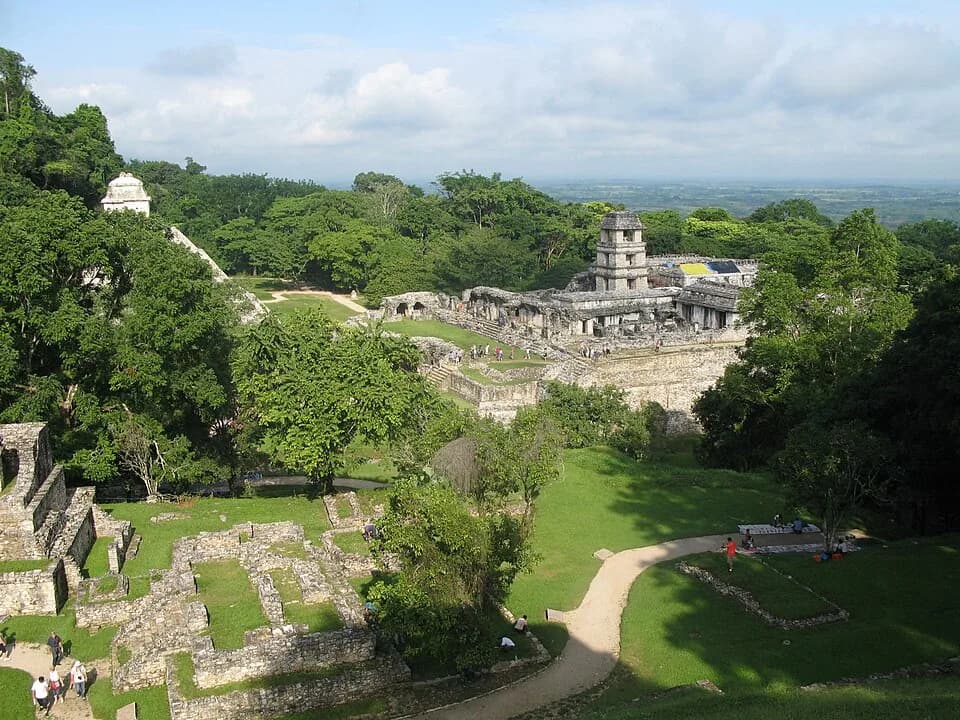
Palenque, often hailed as the most beautiful Maya city, presents elaborately carved limestone palaces and aqueducts at the junction of the Chiapas highlands and the Gulf Coast plain. In 1952, the discovery of King Pakal's intact sarcophagus inside the Temple of the Inscriptions marked the first pyramid tomb ever found in the Americas, profoundly altering understanding of Maya elite burials. Less than 10% of its estimated 1,400 structures have been excavated, hinting at vast hidden secrets.
- 0#4
Monte Alban
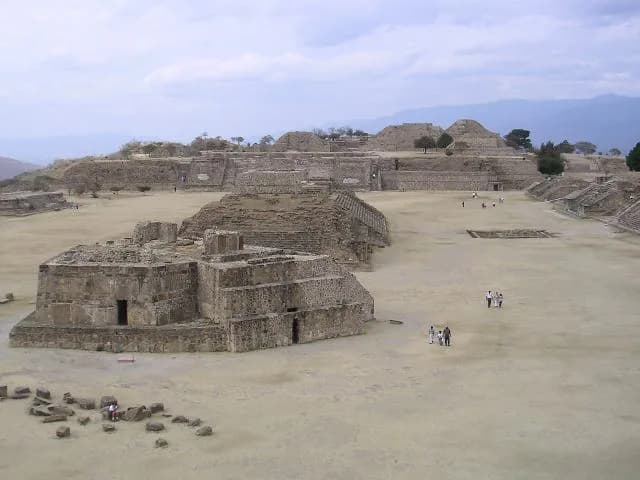
Monte Alban, founded around 500 BCE by the Zapotec civilization, stands as one of Mesoamerica's earliest cities, constructed on an artificially leveled mountaintop above the Oaxaca Valley. During its peak (200-700 CE), it housed 25,000 inhabitants and served as the Zapotec capital for over a millennium. The site features a unique arrow-shaped observatory aligned with specific star positions and carved 'danzantes' reliefs, among the oldest carved stone monuments in Mesoamerica. Its founding date is 400 years earlier than those of Palenque and Teotihuacan, while its mountaintop construction is 30% steeper than the typical Mesoamerican hilltop site.
- 0#5
Uxmal
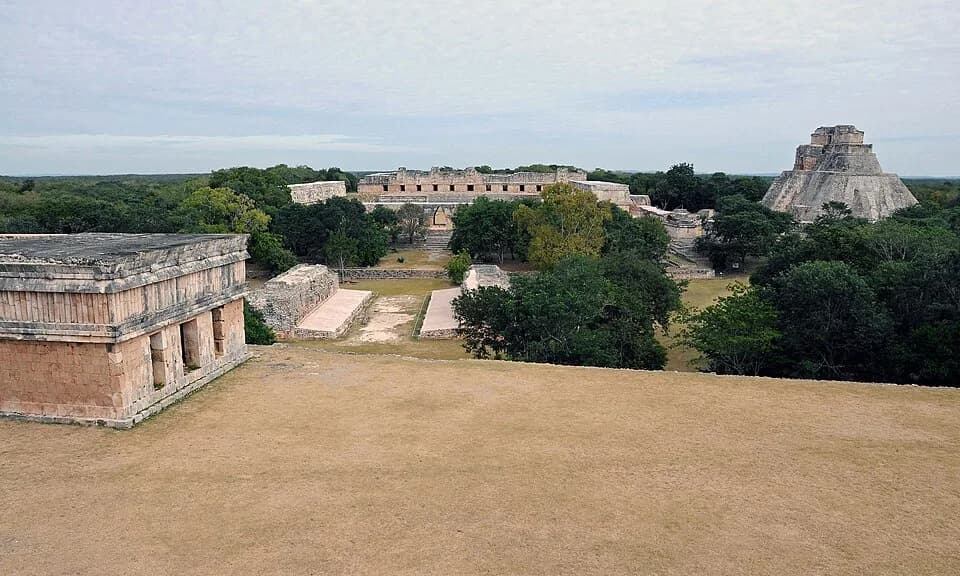
Uxmal stands as the pinnacle of Puuc architecture, with intricately carved stone mosaics of geometric patterns and serpent masks that surpass the decorative complexity of Chichén Itzá. The Pyramid of the Magician, uniquely oval in plan (unlike the square pyramids at Teotihuacan), was built in five distinct phases between the 6th and 10th centuries CE. Its 38-meter height and 70% slope make it steeper than the average Maya pyramid. As part of the Puuc Route UNESCO World Heritage Site, the Nunnery Quadrangle showcases 76 carved rooms with over 10,000 individual stone elements fitted without mortar.
- 0#6
Templo Mayor (Mexico City)

Templo Mayor, the sacred heart of the Aztec capital, was rediscovered in 1978 after electrical workers unearthed a 3.25-meter stone disk of the moon goddess Coyolxauhqui. The adjacent museum houses over 7,000 offerings, including jaguar statues, coral, and obsidian. Excavations reveal 12 construction stages and a 45° incline, steeper than the average Mesoamerican temple, demonstrating Aztec engineering dominance.
- 0#7
Tulum

Tulum is the only Maya site perched on a 12-meter seacliff above the Caribbean, with El Castillo likely serving as a lighthouse—torches guiding canoe traders through the reef at night. Unlike Templo Mayor’s hidden urban setting, Tulum‘s coastal visibility made it a major port for jade, obsidian, and cacao, with over 2 million annual visitors now.
- 0#8
Teotihuacan - Tlatelolco
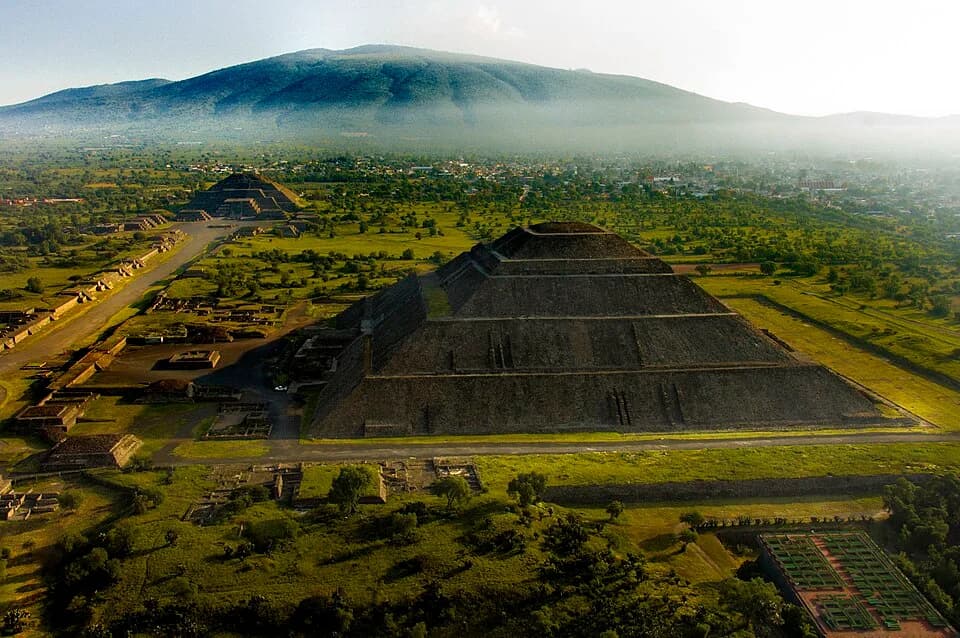
Tlatelolco, twin city to Tenochtitlan, housed the largest pre-Columbian market, with 60,000 daily traders—outpacing Tulum‘s port trade by 50%. Its plaza layers Aztec ruins, a 16th-century church, and 1960s apartments, symbolizing Mexican identity. Excavations uncovered 6,000 burials and a 70-ton stone serpent head. The market reportedly dwarfed Salamanca, Spain, according to Cortés, who noted 20,000 items sold daily—a third more than typical Aztec commerce.
- 0#9
Bonampak

Bonampak's mural paintings are the best-preserved Maya examples ever found, with three temple rooms adorned by vivid scenes from 790 CE that depict courtly life, music, sacrifice, and battle. These murals, discovered in 1946, challenge earlier peaceful narratives by revealing a more violent and hierarchical society. Digital restoration projects have reconstructed the original colors, which had faded over 70% since discovery. Quicker to access than Paquime, Bonampak's murals provide a uniquely detailed window into Classic Maya rituals, outperforming lesser-known sites in preservation quality and historical impact.
- 0#10
Paquime (Casas Grandes)
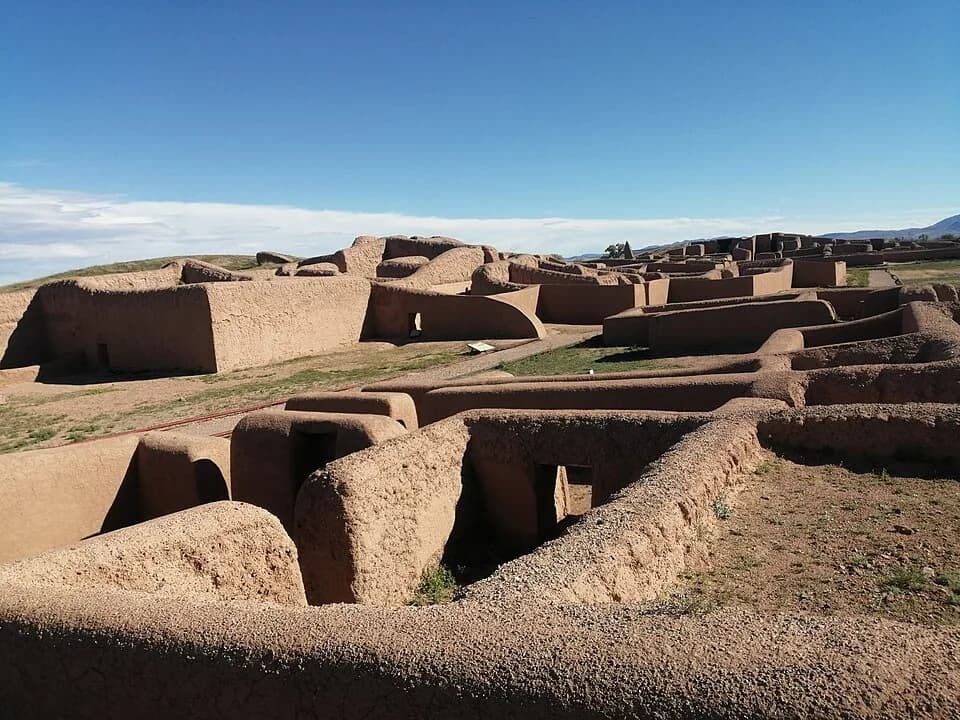
Paquime, or Casas Grandes, is the premier archaeological site in northern Mexico, recognized as a UNESCO World Heritage Site for its multi-story adobe city that thrived from 900-1450 CE. At its peak, a population of 2,500 residents maintained advanced features like macaw aviaries, copper workshops, and an indoor plumbing system—200 years before European settlements. The site’s polychrome pottery, distinct with geometric designs and effigy vessels, remains a living tradition. Pricier in excavation efforts than Bonampak, Paquime ranks as a unique crossroads of Mesoamerican and Pueblo cultures, offering unmatched insight into north-south trade networks.
Image credits
- Palenque: WIKIMEDIA_MIRRORED
- Monte Alban: WIKIMEDIA_MIRRORED
- Uxmal: WIKIMEDIA_MIRRORED
- Teotihuacan - Tlatelolco: WIKIMEDIA_MIRRORED
- Paquime (Casas Grandes): WIKIMEDIA_MIRRORED
Rank it your way
Remix this list into your own ranking, or head to the play hub for every game mode and community breakdown — blind mode, challenges, tier lists, and more.
You Might Also Like

Top 10 Tourist Destinations in Mexico
Top 10 Tourist Destinations in Mexico

Top 10 Yucatan Sights for 2026: Must-See Maya Ruins, Cenotes & Colonial Cities
Top 10 Archaeological Sites in Mexico

Top 10 Things to Do in Nice
#1 Promenade des Anglais · #2 Vieux-Nice (Old Town) · #3 Matisse Museum

Top 10 Digital Nomad Hubs in Southeast Asia
#1 Chiang Mai, Thailand · #2 Bali (Canggu/Ubud), Indonesia · #3 Ho Chi Minh City, Vietnam
Top 10 Experiences in Casablanca
#1 Hassan II Mosque · #2 Rick's Cafe · #3 Corniche Atlantic Waterfront

Top 10 Things to Do in Washington DC
#1 Smithsonian National Air and Space Museum · #2 Lincoln Memorial · #3 United States Capitol