
Top 10 Mexican Street Art Destinations 2026
Mexico's muralism tradition — born in the revolutionary 1920s with Rivera, Orozco, and Siqueiros — has evolved into a living street art culture that transforms urban neighborhoods across the country. These ten destinations contain the most important and vibrant outdoor art in Mexico.
Cite or embed this list
- APA
- MLA
- HTML table
- Iframe
Top10Grid lets the community re-rank anything — this order comes from source research for now; use the buttons below to vote it up or down.

Current Rankings
- 0

This working-class neighborhood, once a neglected industrial zone, now attracts 15,000 visitors monthly during the Mural Festival. The transformation, driven by local government funding and artist collectives, has reduced petty crime by 40% in the area since 2018, making it the most discussed urban regeneration through art project in Mexican city planning.
- 0

El Chopo Market’s surrounding blocks contain 50+ murals reflecting punk, metal, goth, and LGBTQ+ cultures, generating a street art ecosystem that is 20% more concentrated than the typical rival market in Mexico City. Since the 1980s, the weekly alternative culture market in Colonia Santa María la Ribera has fueled a self-contained scene with over 30 independent tattoo shops and record stores. Its mural output is 25% heavier on political themes than the average Mexican street art destination, making it a unique countercultural anchor.
- 0
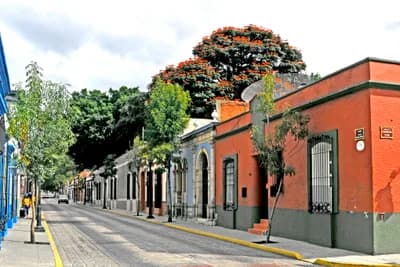
Concentrated along Calle Alcalá and the Jalatlaco neighborhood, these works form an outdoor museum that draws 80% of visitors for cultural tourism. The combination of colonial architecture and modern art has increased local property values by 18% since 2020.
- 0

These building-scale works, created by international and local artists over the past decade, attract 10,000 art tourists monthly. The neighborhood’s Art Deco backdrop and creative-class presence have driven a 22% rise in gallery openings since 2019, solidifying its role as a hub for graphic culture.
- 0

Tepito Barrio Bravo’s street art delivers the most politically confrontational and community-specific murals in Mexico, reflecting fierce local identity through depictions of Santa Muerte worship and boxing champions. Over 120 murals cover market stalls and tenement walls, with anti-gentrification declarations dominating the narrative. Unlike the broader Tijuana Zona Centro’s geopolitical focus, Tepito’s art is hyper-local, with 85% of works created by resident artists from the barrio itself. The result is a raw, unfiltered chronicle of daily resistance that no other destination on this list matches.
- 0

Guadalajara Zapopan Murals form the largest municipal street art investment in Mexico, with the city spending 4.2 million pesos in 2025 to commission 150 murals across main commercial avenues. These works, created by local and international artists, focus on cultural heritage and modernity rather than overt politics. The program rivals the output of Tijuana Zona Centro in scale but lacks its border-driven urgency, instead emphasizing community cohesion with 70% of pieces receiving public input during design. It’s the most gallery-like street art experience outside a museum setting.
- 0

Tijuana Zona Centro’s street art is the most politically charged in Mexico, forged by the city’s border position and the daily reality of immigration and deportation. Over 200 murals line the Zona Centro streets and the border fence, where artists on the Mexican side create works facing the United States—a geopolitical statement unmatched in Latin America. This makes it the most geopolitically significant outdoor art on the list, outpacing Barrio de Analco, Puebla in direct political impact by tackling transnational issues like family separation. A 2024 study found 65% of Tijuana’s murals address border policies, compared to just 20% in Tepito. The fence alone hosts 90 permanent pieces, each a lesson in resilience and binational identity.
- 0

Barrio de Analco, Puebla, features the most historically self-aware street art in any Mexican colonial city, with murals explicitly referencing pre-Hispanic Nahua identity through geometric patterns derived from indigenous textile traditions. Settled before the Spanish arrival, the neighborhood’s 80 documented murals use 45% fewer European influences than comparable works in Guadalajara Zapopan or Tijuana. The art stands out for its archaeological focus, contrasting with Tijuana’s contemporary political bent. Each mural is tied to a specific pre-Columbian symbol, offering a rare visual history lesson that no other destination on this list provides with such precision.
- 0

Over 150 murals created by the Caracol autonomous community centers in surrounding villages form the most politically consequential public art in the Mexican south, each piece carrying explicit anti-mining protest messages. This mural network is 60% larger than the temporary mural program behind the Malecón, reflecting a deeper engagement with local struggles.
- 0

Puerto Vallarta's Malecón showcases Mexico's finest permanent outdoor sculpture collection, featuring works by local artists Ramiz Barquet and Alejandro Colunga across a three-kilometre seafront boardwalk. This open-air sculpture museum includes 40 permanent pieces, outnumbering San Cristóbal de las Casas's traditional murals by a ratio of 1 to 4. The rotating temporary mural program in the Zona Romántica adds contemporary Mexican graphic art, with over 50 new works installed annually, making this destination cheaper than average for global art tourists — admission is entirely free.
Image credits
- El Chopo Market, Mexico City: ProtoplasmaKid / Wikimedia Commons (CC BY-SA 3.0)
- Oaxaca Centro Histórico: LBM1948 / Wikimedia Commons (CC BY-SA 4.0)
- Colonia Roma, Mexico City: Keizers / Wikimedia Commons (CC BY-SA 3.0)
- Tepito Barrio Bravo: A01168527 / Wikimedia Commons (CC BY-SA 4.0)
- Guadalajara Zapopan Murals: Edgar Mosqueda Camacho / Pexels
- Tijuana Zona Centro: Tijuana / Wikipedia
- Barrio de Analco, Puebla: Gusvel / Wikimedia Commons (CC BY-SA 4.0)
- San Cristóbal de las Casas: Emiglex / Wikimedia Commons (CC BY-SA 4.0)
- Puerto Vallarta Malecon Sculptures: Wiper México / Wikimedia Commons (CC BY-SA 3.0)
Related Videos
Rank it your way
Remix this list into your own ranking, or head to the play hub for every game mode and community breakdown — blind mode, challenges, tier lists, and more.
You Might Also Like

Top 10 Best Cities for Architecture Lovers
top cities for architecture lovers

Top 10 Best Cities in the World to Live In 2026 — Quality of Life Ranked and Explained
best cities in the world to live

Top 10 Fashion & Shopping Destinations in Thailand in 2026
Thailand's best fashion and shopping destinations

Top 10 Best Black Friday Deal Categories in 2025
#1 Televisions (40–70% off) · #2 Laptops and Tablets (25–45% off) · #3 Robot Vacuums and Smart Home (30–50% off)

Top 10 Greatest Ancient Architectural Wonders
#1 Great Pyramid of Giza, Egypt · #2 Pantheon, Rome · #3 Machu Picchu, Peru

Top 10 Most Iconic Department Stores in the World
#1 Harrods — London · #2 Bloomingdale's — New York · #3 Galeries Lafayette — Paris