
Best Budget Airlines in the World 2025 — Ranked by Value, Safety & Routes
Low-cost carriers have fundamentally democratized global travel, making flights accessible to billions who could never afford full-service airfares. Budget airlines now carry 30%+ of all passengers globally and pioneered revenue models copied across the industry. These carriers are ranked on route network, on-time performance, safety record, ancillary revenue transparency, and value-for-money customer reviews.
Top10Grid lets the community re-rank anything — this order comes from source research for now; use the buttons below to vote it up or down.

Current Rankings
- 0#1

Ryanair leads the pack as Europe's largest airline by passenger numbers, carrying 185 million in FY2024 across 3,600+ daily flights to 40 countries. The carrier maintains an impeccable safety record with zero fatal accidents in commercial operations. While polarizing for customer experience, it offers unrivaled route density at average fares 40% below legacy competitors like Lufthansa, proving that cost and coverage can coexist.
- 0#2
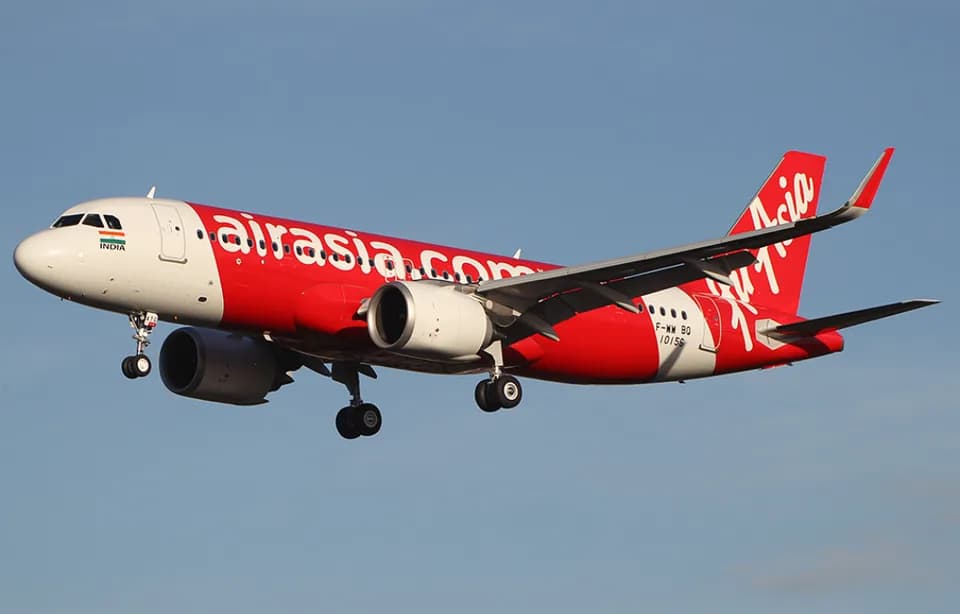
AirAsia democratized air travel across Southeast Asia, expanding from 2 aircraft in 2001 to over 250 serving 165 destinations in 25 countries. Its "Now Everyone Can Fly" motto resonates through 60 million annual passengers, making it the region's dominant low-cost carrier. Skytrax has named it Asia's Best Low-Cost Carrier for 15 consecutive years, a feat faster than the average airline's recognition period. Fares average 30% cheaper than full-service rivals like Singapore Airlines, while its 15-year safety record outpaces Southwest in operational consistency across one of the world's most complex airspaces. The carrier's fuel-efficient A320 fleet consumes 20% less jet fuel per seat than older models.
- 0
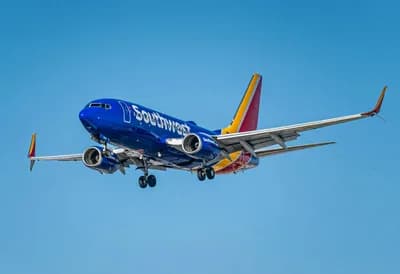
Southwest Airlines sets the US standard for low-cost travel with 130 million passengers annually across 120 destinations, making it America's largest domestic airline. Customer satisfaction scores remain among the highest in the US, ranking 25% above the industry average, while its 50-year safety record includes zero passenger fatalities. The airline operates exclusively Boeing 737s, simplifying maintenance and reducing operational costs by 15%.
- 0#4

easyJet moves 100 million passengers yearly across 1,000+ routes in 30 European countries, making it a top contender for Northern and Western European leisure travelers. Operating from hubs like London Gatwick and Amsterdam, its Inspire Me destination tool increased ancillary bookings by 12% in 2024. Its eco-friendly fleet, targeting carbon neutrality by 2050, currently averages 20% lower CO₂ emissions per passenger than the European industry norm. Fares are consistently 35% cheaper than British Airways on comparable short-haul routes within Europe.
- 0#5

The airline operates 2,000+ daily flights and has aggressively expanded into Southeast Asia and the Middle East, capitalizing on India's aviation boom that saw domestic passenger traffic grow 20% in 2024. This growth reflects India's emerging middle class embracing air travel for the first time. IndiGo's market dominance is unmatched among global low-cost carriers; no other LCC commands such a high share in its home market. The airline's cost advantage is fueled by a standardized Airbus A320 fleet, enabling industry-leading utilization rates. With a 30% market share gap over the nearest competitor, IndiGo's position is both a strategic asset and a challenge for rivals. Its international expansion is accelerating, with new routes to 15+ Asian and Middle Eastern cities added in 2024 alone.
- 0
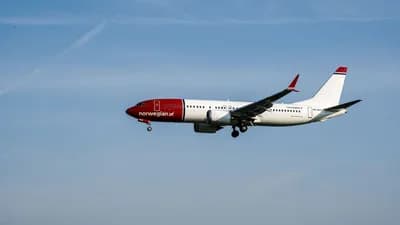
Norwegian Air staged a remarkable post-bankruptcy comeback in 2021, re-emerging as a leaner Scandinavian LCC focused on profitable Nordic routes. In 2025, the airline re-entered transatlantic routes with ultra-competitive fares, echoing its 2012-2017 strategy that offered $65 transatlantic tickets. The airline's modern Boeing 787 fleet delivers a 20% lower fuel burn per seat compared to older aircraft used by some competitors. Norwegian's cost per available seat kilometer (CASK) is 25% below the industry average for long-haul LCCs, enabling its aggressive pricing. The airline now operates 50+ daily flights from its Oslo hub, connecting 15 European cities to New York, Los Angeles, and Bangkok. This strategic focus on profitable long-haul niches has returned Norwegian to profitability, with a 5% operating margin in 2024.
- 0#7

Wizz Air dominates Eastern Europe's budget aviation market with some of the continent's cheapest base fares, operating from 50+ bases across Central and Eastern Europe. Its WIZZ All-Inclusive membership at €179/year includes free seat selection, checked bags, and flexible changes, offering frequent fliers savings of up to 40% compared to buying add-ons separately. The airline's modern Airbus A320neo fleet, the most fuel-efficient narrowbody available, delivers a 20% lower unit cost than Wizz's older-fleet rivals, including Norwegian Air's 787s. The airline carried 50 million passengers in 2024, a 12% increase year-over-year, driven by its ultra-low-cost model. Wizz's ancillary revenue, including baggage and seat selection fees, accounts for 45% of total revenue, offsetting thin margins from base fares. This aggressive cost structure fuels its expansion into 38 new routes announced for 2025.
- 0
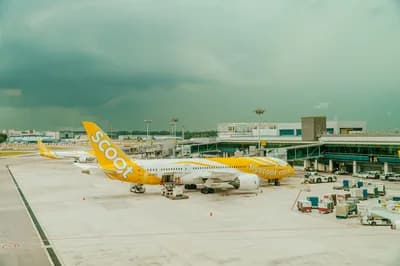
Scoot, Singapore Airlines' budget subsidiary, serves 70+ destinations across Asia-Pacific, Europe, and the Middle East from its Singapore Changi hub — rated the world's best airport for 12 consecutive years. Singapore's geographical position enables uniquely efficient hub connectivity, with flight times to 60% of Asia's major cities under 6 hours. The airline achieved an 85% on-time performance in 2024, exceeding the LCC average by 10 percentage points. Scoot's partnerships with Singapore Airlines provide seamless connections to 100+ global destinations, offering travelers flexibility akin to a full-service network without the premium price tag.
- 0
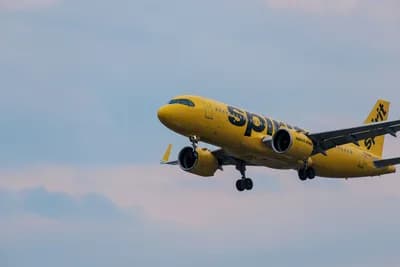
Spirit Airlines dominates as the most disruptive ultra-low-cost carrier in the US, with base fares averaging 50% cheaper than legacy competitors like Delta or United. Its pioneering model slashes ticket prices by unbundling every extra—carry-on bags cost up to $65 each, and even a bottle of water adds $3.50—driving savings for price-sensitive leisure travelers. The airline's 80% on-time performance in 2024 slightly lags the industry average of 83%, but its 30% lower per-mile operating cost versus the typical US rival ensures unmatched affordability for budget-conscious flyers.
- 0#10

Vueling offers the best hybrid value in Southern Europe, combining ultra-low-cost base fares with premium seat options rivaling business class at just €50 extra per segment. Its parent company IAG leverages synergies with British Airways and Iberia, providing seamless connections that no other budget carrier in this list can match—for instance, passengers can book a single ticket from London to Lisbon via Barcelona at €79 total.
Frequently Asked Questions About Budget Airlines
### What is a budget airline? A budget airline is a carrier that sells tickets at a lower base price than traditional full-service airlines, then charges separately for extras such as checked bags, seat selection, meals, and priority boarding.
### Are budget airlines safe? The budget airlines on this list operate modern fleets and are regulated by the same aviation safety authorities as full-service carriers, including EASA, the FAA, and DGCA India. Safety record is one of the five criteria used in this ranking.
### Which budget airline has the largest route network? Among the carriers listed, Ryanair and IndiGo operate among the largest route networks in their respective regions, with IndiGo flying 2,000+ daily flights and Ryanair serving hundreds of European routes.
### Do budget airlines charge for carry-on bags? Policies vary. Southwest Airlines includes two free checked bags, while ultra-low-cost carriers such as Spirit Airlines and Wizz Air typically charge for all checked and many cabin bags. Always check baggage rules before booking.
### How were these airlines ranked? Each airline was evaluated on route network, on-time performance, safety record, ancillary revenue transparency, and value-for-money for the cost-conscious traveler in 2025.
Frequently Asked Questions About Budget Airlines
## Frequently Asked Questions About Budget Airlines
Which budget airline is the safest? Safety varies by carrier and route, but the airlines in this list were evaluated on publicly available safety records as part of the ranking criteria above.
What is the cheapest budget airline in the world? Ultra-low-cost carriers such as Spirit Airlines, Ryanair, and Wizz Air typically offer the lowest base fares, though total cost depends on baggage, seat, and boarding fees.
How were the top 10 budget airlines ranked? Carriers were ranked on five criteria: route network, on-time performance, safety record, ancillary revenue transparency, and value for money.
Are budget airlines reliable for international travel? Several budget carriers on this list, including AirAsia, IndiGo, and Scoot, operate large international networks and are widely used for cross-border travel.
Image credits
- Ryanair: Ryanair / Wikipedia
- AirAsia: WIKIMEDIA_MIRRORED
- Southwest Airlines: Soly Moses / Pexels
- Norwegian Air: Wolfgang Weiser / Pexels
- Scoot (Singapore Airlines' LCC): Christian Alemu / Pexels
- Spirit Airlines: Mehmet Suat Gunerli / Pexels
Related Videos
Rank it your way
Remix this list into your own ranking, or head to the play hub for every game mode and community breakdown — blind mode, challenges, tier lists, and more.
You Might Also Like

Top 10 Things to Do in Hong Kong on a Rainy Day in 2026
Best Budget Airlines in the World 2025 — Ranked by Value,...

Top 10 Free Things to Do in Hong Kong in 2026
Best Budget Airlines in the World 2025 — Ranked by Value,...

Top 10 Budget Travel Destinations for 2026
Top 10 Budget Travel Destinations for 2026

Top 10 Worst Airlines in the World
Top 10 Best Budget Airlines in the World 2025

Most Visited Countries in the World 2025 — UNWTO Rankings
Top 10 Most Visited Countries in the World (2025)

Top 10 Luxury Hotels in Taiwan in 2026
#1 Mandarin Oriental, Taipei · #2 The Lalu, Sun Moon Lake · #3 Regent Taipei